Diab Rim, Pilotto Federica, Saxena Smita
Department of Neurology, Center for Experimental Neurology, Inselspital University Hospital, Bern, Switzerland.
Department for BioMedical Research (DBMR), University of Bern, Bern, Switzerland.
Front Cell Neurosci. 2023 Mar 16;17:1086895. doi: 10.3389/fncel.2023.1086895. eCollection 2023.
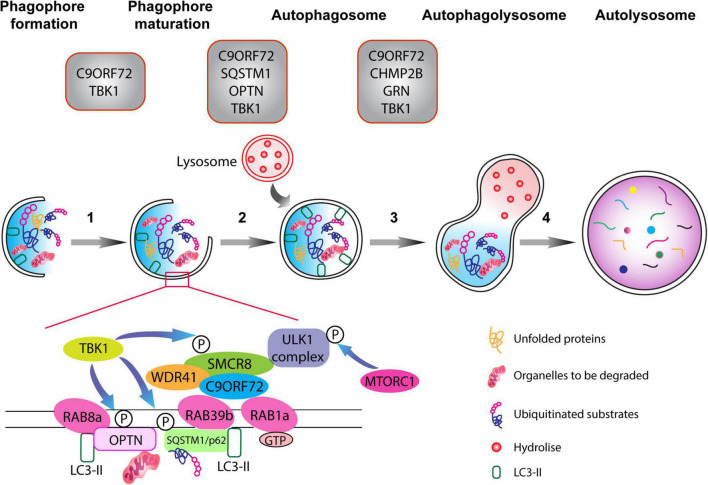
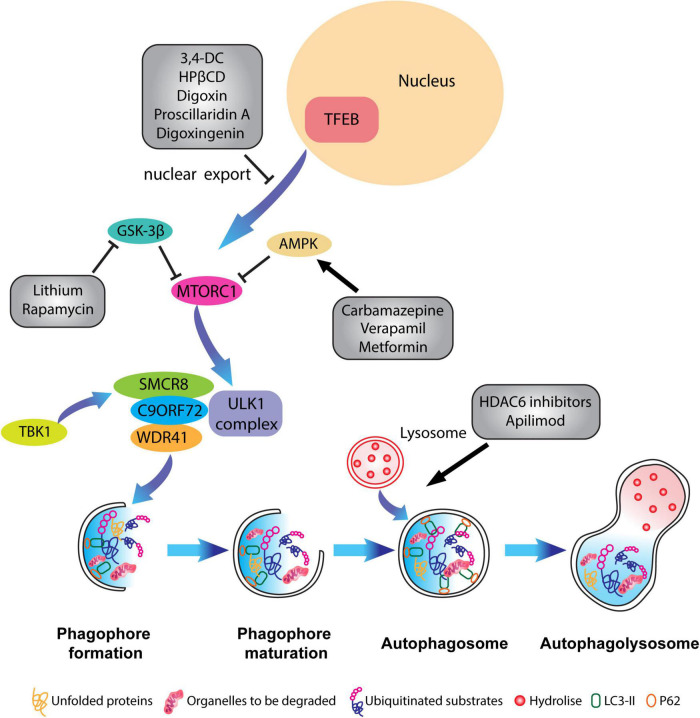
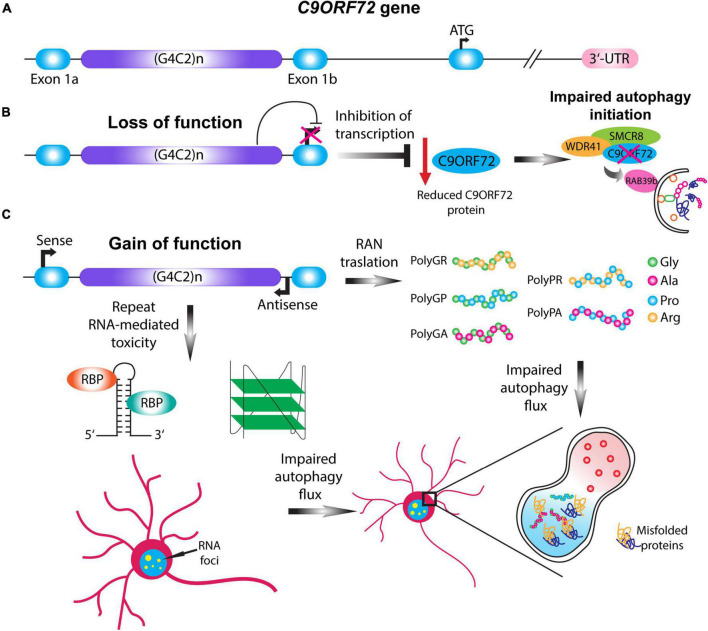
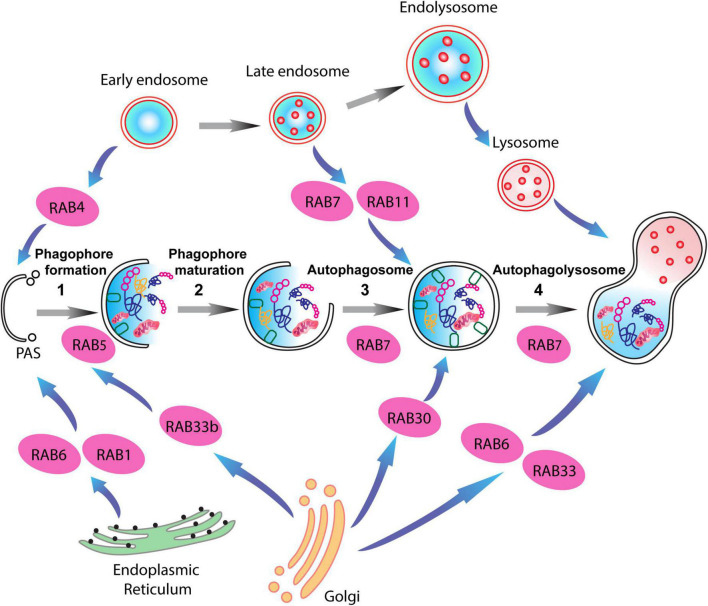
The proper functioning of the cell clearance machinery is critical for neuronal health within the central nervous system (CNS). In normal physiological conditions, the cell clearance machinery is actively involved in the elimination of misfolded and toxic proteins throughout the lifetime of an organism. The highly conserved and regulated pathway of autophagy is one of the important processes involved in preventing and neutralizing pathogenic buildup of toxic proteins that could eventually lead to the development of neurodegenerative diseases (NDs) such as Alzheimer's disease or Amyotrophic lateral sclerosis (ALS). The most common genetic cause of ALS and frontotemporal dementia (FTD) is a hexanucleotide expansion consisting of GGGGCC (G4C2) repeats in the chromosome 9 open reading frame 72 gene (C9ORF72). These abnormally expanded repeats have been implicated in leading to three main modes of disease pathology: loss of function of the C9ORF72 protein, the generation of RNA foci, and the production of dipeptide repeat proteins (DPRs). In this review, we discuss the normal physiological role of C9ORF72 in the autophagy-lysosome pathway (ALP), and present recent research deciphering how dysfunction of the ALP synergizes with C9ORF72 haploinsufficiency, which together with the gain of toxic mechanisms involving hexanucleotide repeat expansions and DPRs, drive the disease process. This review delves further into the interactions of C9ORF72 with RAB proteins involved in endosomal/lysosomal trafficking, and their role in regulating various steps in autophagy and lysosomal pathways. Lastly, the review aims to provide a framework for further investigations of neuronal autophagy in C9ORF72-linked ALS-FTD as well as other neurodegenerative diseases.
细胞清除机制的正常运作对于中枢神经系统(CNS)内的神经元健康至关重要。在正常生理条件下,细胞清除机制在生物体的整个生命周期中积极参与错误折叠和有毒蛋白质的清除。高度保守且受调控的自噬途径是预防和中和有毒蛋白质的致病性积累的重要过程之一,这些积累最终可能导致神经退行性疾病(NDs)的发展,如阿尔茨海默病或肌萎缩侧索硬化症(ALS)。ALS和额颞叶痴呆(FTD)最常见的遗传原因是9号染色体开放阅读框72基因(C9ORF72)中由GGGGCC(G4C2)重复组成的六核苷酸扩增。这些异常扩增的重复序列与三种主要的疾病病理模式有关:C9ORF72蛋白的功能丧失、RNA病灶的产生以及二肽重复蛋白(DPRs)的产生。在这篇综述中,我们讨论了C9ORF72在自噬 - 溶酶体途径(ALP)中的正常生理作用,并介绍了最近的研究,这些研究解读了ALP功能障碍如何与C9ORF72单倍体不足协同作用,再加上涉及六核苷酸重复扩增和DPRs的毒性机制的增强,共同推动疾病进程。这篇综述进一步深入探讨了C9ORF72与参与内体/溶酶体运输的RAB蛋白之间的相互作用,以及它们在调节自噬和溶酶体途径各个步骤中的作用。最后,这篇综述旨在为进一步研究C9ORF72相关的ALS - FTD以及其他神经退行性疾病中的神经元自噬提供一个框架。