• 文献检索
  • 文档翻译
  • 深度研究
  • 学术资讯
  • Suppr Zotero 插件Zotero 插件
  • 邀请有礼
  • 套餐&价格
  • 历史记录
应用&插件
Suppr Zotero 插件Zotero 插件浏览器插件Mac 客户端Windows 客户端微信小程序
定价
高级版会员购买积分包购买API积分包
服务
文献检索文档翻译深度研究API 文档MCP 服务
关于我们
关于 Suppr公司介绍联系我们用户协议隐私条款
关注我们

Suppr 超能文献

核心技术专利:CN118964589B侵权必究
粤ICP备2023148730 号-1Suppr @ 2026

文献检索

告别复杂PubMed语法,用中文像聊天一样搜索,搜遍4000万医学文献。AI智能推荐,让科研检索更轻松。

立即免费搜索

文件翻译

保留排版,准确专业,支持PDF/Word/PPT等文件格式,支持 12+语言互译。

免费翻译文档

深度研究

AI帮你快速写综述,25分钟生成高质量综述,智能提取关键信息,辅助科研写作。

立即免费体验

宫颈鳞状细胞癌免疫相关分子亚型的鉴定及预测预后、耐药性的预后模型

Identification of immune related molecular subtypes and prognosis model for predicting prognosis, drug resistance in cervical squamous cell carcinoma.

作者信息

Hu Dongzhi, Zhang Zijian, Zhang Yongjing, Huang Kangni, Li Xiaoxue

机构信息

Department of Obstetrics and Gynecology, Yiyang Central Hospital, Yiyang, China.

Department of General Surgery, The Second Xiangya Hospital of Central South University, Changsha, China.

出版信息

Front Genet. 2023 Mar 17;14:1137995. doi: 10.3389/fgene.2023.1137995. eCollection 2023.

DOI:10.3389/fgene.2023.1137995
PMID:37007965
原文链接:https://pmc.ncbi.nlm.nih.gov/articles/PMC10063826/
Abstract

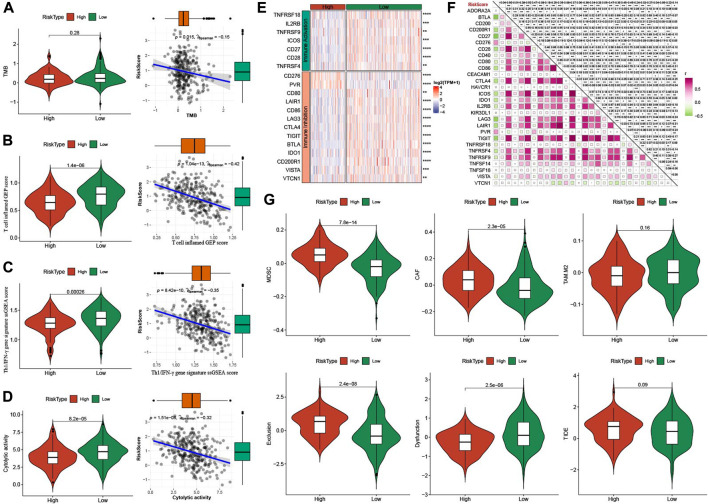
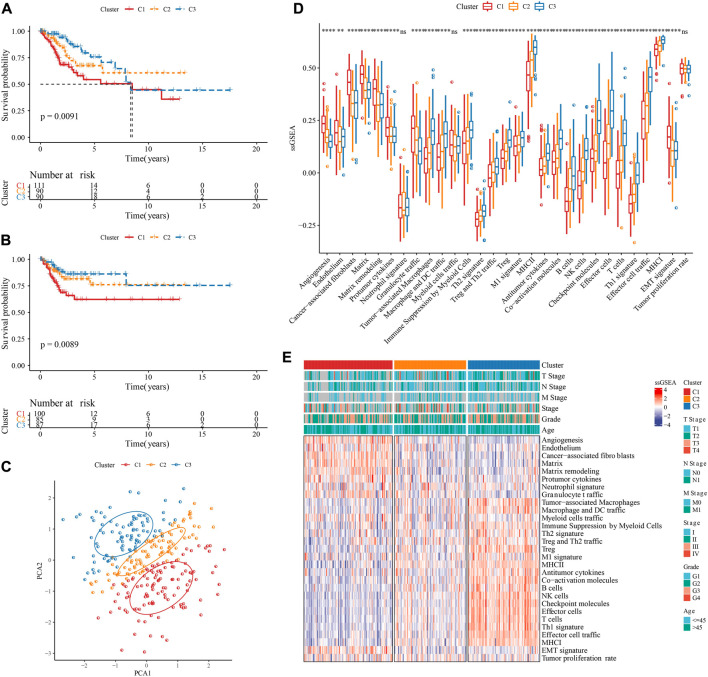
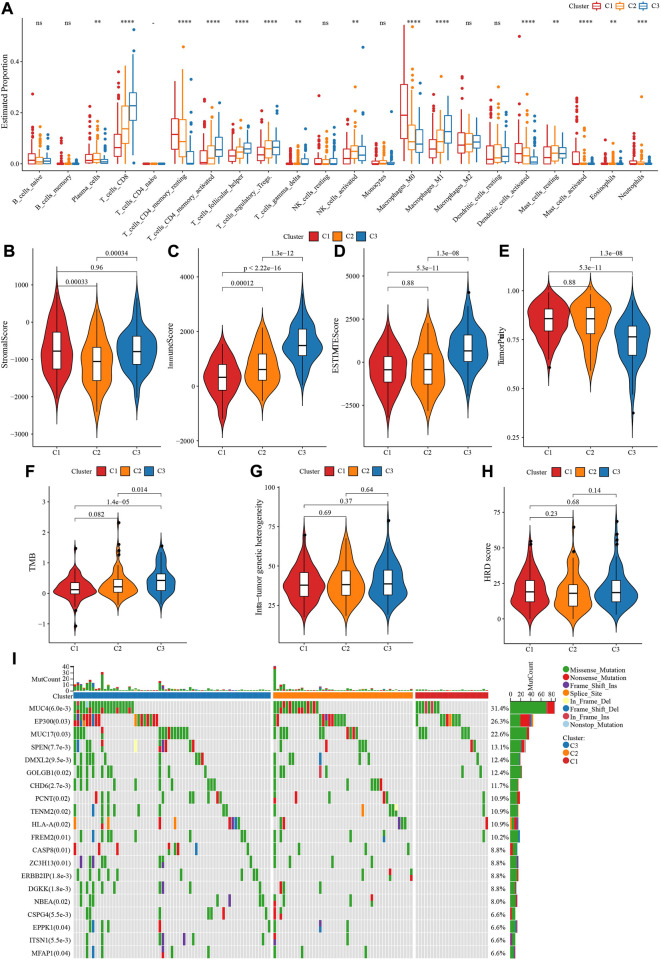
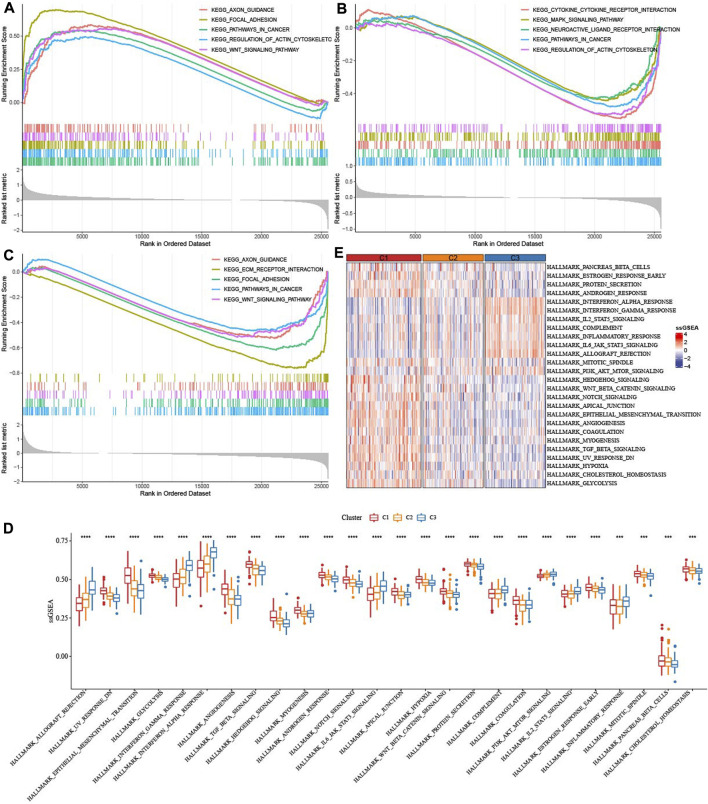
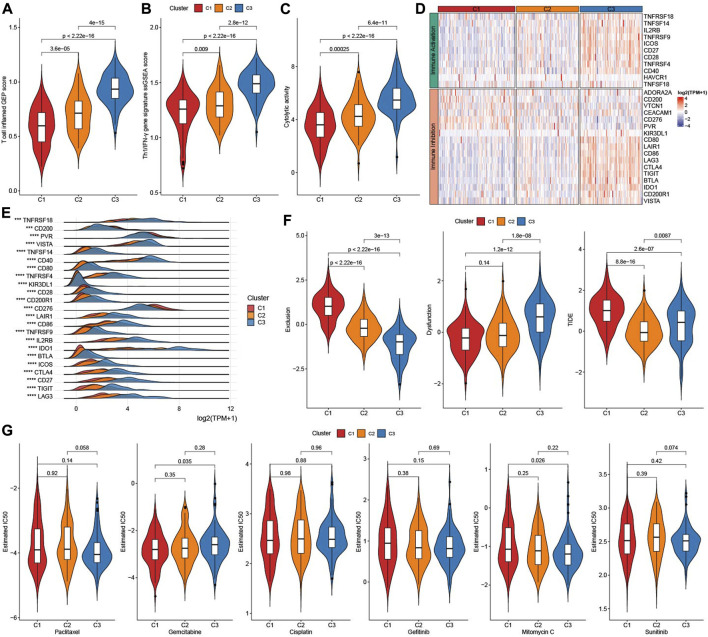
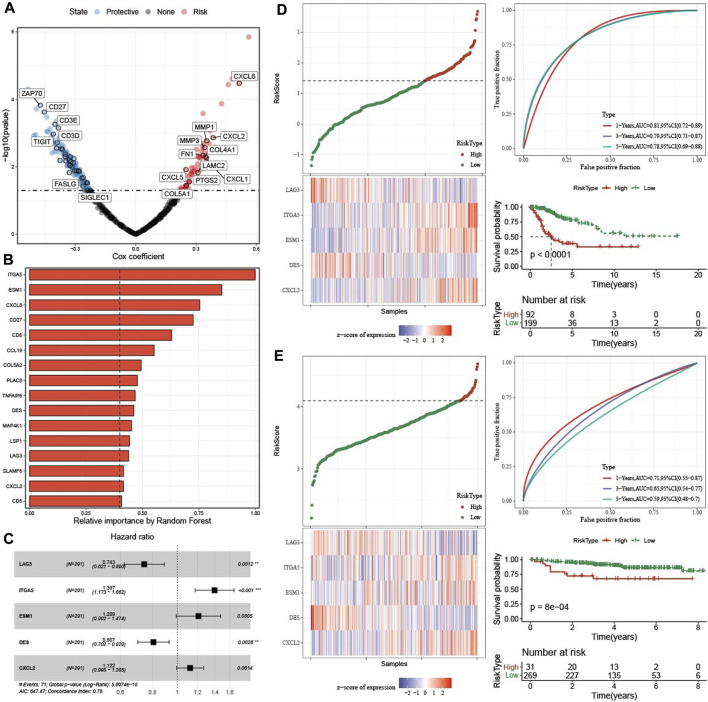
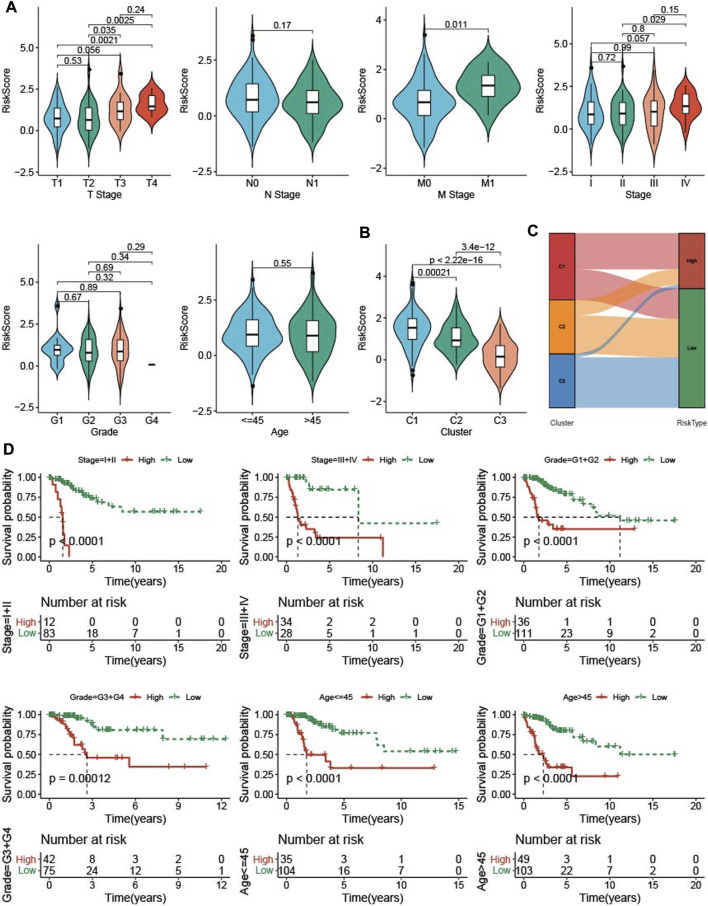
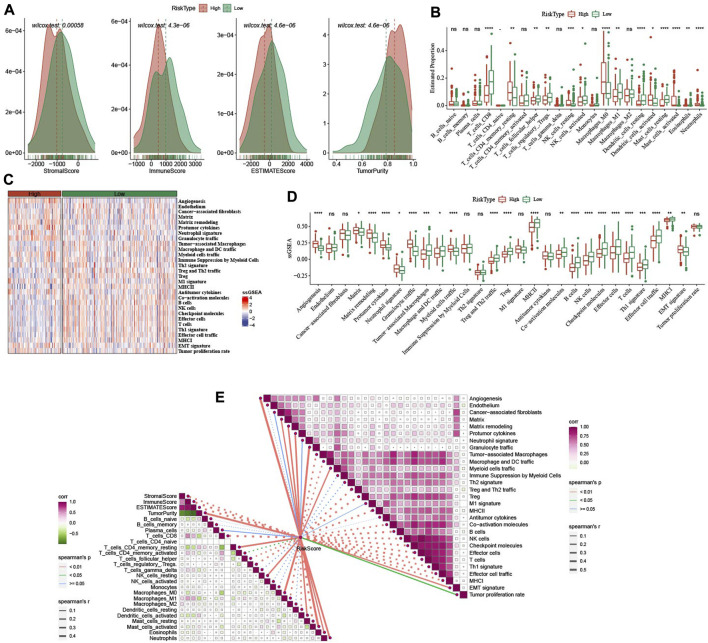
One of the features of tumor immunity is the immunosuppressive tumor microenvironment (TME). In this study, TME gene signatures were used to define the characteristics of Cervical squamous cell carcinoma (CESC) immune subtypes and construct a new prognostic model. Single sample gene set enrichment analysis (ssGSEA) was used to quantify pathway activity. RNA-seq of 291 CESC were obtained from the Cancer Genome Atlas (TCGA) database as a training set. Microarray-based data of 400 cases of CESC were obtained from the Gene Expression Compilation (GEO) database as an independent validation set. 29 TME related gene signatures were consulted from previous study. Consensus Cluster Plus was employed to identify molecular subtype. Univariate cox regression analysis and random survival forest (RSF) were used to establish the immune-related gene risk model based on the TCGA data set of CESC, and the accuracy of prognosis prediction was verified by GEO data set. ESTIMATE algorithm was used to perform immune and matrix scores on the data set. three molecular subtypes (C1, C2, C3) were screened in TCGA-CESC on account of 29 TME gene signatures. Among, C3 with better survival outcome had higher immune related gene signatures, while C1 with worse prognosis time had enhanced matrix related features. Increased immune infiltration, inhibition of tumor related pathways, widespread genomic mutations and prone immunotherapy were observed in C3. Furthermore, a five immune genes signature was constructed and predicted overall survival for CESC, which successfully validated in GSE44001 dataset. A positive phenomenon was observed between five hub genes expressions and methylation. Similarly, high group enriched in matrix related features, while immune related gene signatures were enriched in low group. Immune cell, immune checkpoints genes expression levels were negatively, while most TME gene signatures were positively correlated with Risk Score. In addition, high group was more sensitive to drug resistance. This work identified three distinct immune subtypes and a five genes signature for predicting prognosis in CESC patients, which provided a promising treatment strategy for CESC.

摘要

肿瘤免疫的特征之一是免疫抑制性肿瘤微环境(TME)。在本研究中,TME基因特征用于定义宫颈鳞状细胞癌(CESC)免疫亚型的特征并构建新的预后模型。采用单样本基因集富集分析(ssGSEA)来量化通路活性。从癌症基因组图谱(TCGA)数据库获取291例CESC的RNA测序数据作为训练集。从基因表达综合数据库(GEO)获取400例CESC的基于微阵列的数据作为独立验证集。参考先前研究中的29个TME相关基因特征。采用共识聚类加算法来识别分子亚型。基于CESC的TCGA数据集,采用单变量cox回归分析和随机生存森林(RSF)建立免疫相关基因风险模型,并通过GEO数据集验证预后预测的准确性。使用ESTIMATE算法对数据集进行免疫和基质评分。基于29个TME基因特征在TCGA-CESC中筛选出三种分子亚型(C1、C2、C3)。其中,生存结果较好的C3具有较高的免疫相关基因特征,而预后时间较差的C1具有增强的基质相关特征。在C3中观察到免疫浸润增加、肿瘤相关通路受抑制、广泛的基因组突变和易于免疫治疗。此外,构建了一个五个免疫基因的特征并预测CESC的总生存期,该特征在GSE44001数据集中成功得到验证。在五个枢纽基因的表达和甲基化之间观察到正相关现象。同样,高分组富含基质相关特征,而免疫相关基因特征在低分组中富集。免疫细胞、免疫检查点基因的表达水平呈负相关,而大多数TME基因特征与风险评分呈正相关。此外,高分组对耐药性更敏感。这项工作确定了三种不同的免疫亚型和一个用于预测CESC患者预后的五个基因的特征,为CESC提供了一种有前景的治疗策略。
https://cdn.ncbi.nlm.nih.gov/pmc/blobs/ac3a/10063826/9eab8012b1c6/fgene-14-1137995-g009.jpg
https://cdn.ncbi.nlm.nih.gov/pmc/blobs/ac3a/10063826/e71b91030932/fgene-14-1137995-g001.jpg
https://cdn.ncbi.nlm.nih.gov/pmc/blobs/ac3a/10063826/2fd149adafa0/fgene-14-1137995-g002.jpg
https://cdn.ncbi.nlm.nih.gov/pmc/blobs/ac3a/10063826/089b84c37222/fgene-14-1137995-g003.jpg
https://cdn.ncbi.nlm.nih.gov/pmc/blobs/ac3a/10063826/00039053024c/fgene-14-1137995-g004.jpg
https://cdn.ncbi.nlm.nih.gov/pmc/blobs/ac3a/10063826/cfa19ca68bc3/fgene-14-1137995-g005.jpg
https://cdn.ncbi.nlm.nih.gov/pmc/blobs/ac3a/10063826/a51dc608c1c4/fgene-14-1137995-g006.jpg
https://cdn.ncbi.nlm.nih.gov/pmc/blobs/ac3a/10063826/3b1715900e4b/fgene-14-1137995-g007.jpg
https://cdn.ncbi.nlm.nih.gov/pmc/blobs/ac3a/10063826/ca7de204c49e/fgene-14-1137995-g008.jpg
https://cdn.ncbi.nlm.nih.gov/pmc/blobs/ac3a/10063826/9eab8012b1c6/fgene-14-1137995-g009.jpg
https://cdn.ncbi.nlm.nih.gov/pmc/blobs/ac3a/10063826/e71b91030932/fgene-14-1137995-g001.jpg
https://cdn.ncbi.nlm.nih.gov/pmc/blobs/ac3a/10063826/2fd149adafa0/fgene-14-1137995-g002.jpg
https://cdn.ncbi.nlm.nih.gov/pmc/blobs/ac3a/10063826/089b84c37222/fgene-14-1137995-g003.jpg
https://cdn.ncbi.nlm.nih.gov/pmc/blobs/ac3a/10063826/00039053024c/fgene-14-1137995-g004.jpg
https://cdn.ncbi.nlm.nih.gov/pmc/blobs/ac3a/10063826/cfa19ca68bc3/fgene-14-1137995-g005.jpg
https://cdn.ncbi.nlm.nih.gov/pmc/blobs/ac3a/10063826/a51dc608c1c4/fgene-14-1137995-g006.jpg
https://cdn.ncbi.nlm.nih.gov/pmc/blobs/ac3a/10063826/3b1715900e4b/fgene-14-1137995-g007.jpg
https://cdn.ncbi.nlm.nih.gov/pmc/blobs/ac3a/10063826/ca7de204c49e/fgene-14-1137995-g008.jpg
https://cdn.ncbi.nlm.nih.gov/pmc/blobs/ac3a/10063826/9eab8012b1c6/fgene-14-1137995-g009.jpg

相似文献

1
Identification of immune related molecular subtypes and prognosis model for predicting prognosis, drug resistance in cervical squamous cell carcinoma.宫颈鳞状细胞癌免疫相关分子亚型的鉴定及预测预后、耐药性的预后模型
Front Genet. 2023 Mar 17;14:1137995. doi: 10.3389/fgene.2023.1137995. eCollection 2023.
2
Identification of prognostic biomarkers for cervical cancer based on programmed cell death-related genes and assessment of their immune profile and response to drug therapy.基于程序性细胞死亡相关基因的宫颈癌预后生物标志物的鉴定及其免疫特征评估和对药物治疗的反应。
J Gene Med. 2024 Jan;26(1):e3643. doi: 10.1002/jgm.3643. Epub 2023 Dec 4.
3
Ferroptosis-related genes identify tumor immune microenvironment characterization for the prediction of prognosis in cervical cancer.铁死亡相关基因可识别肿瘤免疫微环境特征以预测宫颈癌预后。
Ann Transl Med. 2022 Jan;10(2):123. doi: 10.21037/atm-21-6265.
4
Identification of a necroptosis-related prognostic gene signature associated with tumor immune microenvironment in cervical carcinoma and experimental verification.鉴定与宫颈癌肿瘤免疫微环境相关的坏死性凋亡相关预后基因特征,并进行实验验证。
World J Surg Oncol. 2022 Oct 17;20(1):342. doi: 10.1186/s12957-022-02802-z.
5
Exploration of a Robust and Prognostic Immune Related Gene Signature for Cervical Squamous Cell Carcinoma.探索一种用于宫颈鳞状细胞癌的稳健且具有预后价值的免疫相关基因特征。
Front Mol Biosci. 2021 Mar 3;8:625470. doi: 10.3389/fmolb.2021.625470. eCollection 2021.
6
Prognostic Value and Immune Infiltration of HPV-Related Genes in the Immune Microenvironment of Cervical Squamous Cell Carcinoma and Endocervical Adenocarcinoma.人乳头瘤病毒相关基因在宫颈鳞状细胞癌和宫颈管腺癌免疫微环境中的预后价值及免疫浸润
Cancers (Basel). 2023 Feb 23;15(5):1419. doi: 10.3390/cancers15051419.
7
Identification of Oxidative Stress-Associated Molecular Subtypes and Signature for Predicting Survival Outcome of Cervical Squamous Cell Carcinoma.识别氧化应激相关的分子亚型和特征,以预测宫颈鳞状细胞癌的生存结局。
Oxid Med Cell Longev. 2022 Oct 3;2022:1056825. doi: 10.1155/2022/1056825. eCollection 2022.
8
A Novel Prognostic Risk Model for Cervical Cancer Based on Immune Checkpoint HLA-G-Driven Differentially Expressed Genes.基于免疫检查点 HLA-G 驱动的差异表达基因的宫颈癌新型预后风险模型。
Front Immunol. 2022 Jul 18;13:851622. doi: 10.3389/fimmu.2022.851622. eCollection 2022.
9
Construction and validation of prognostic prediction established on N6-methyladenosine related genes in cervical squamous cell carcinoma.基于N6-甲基腺嘌呤相关基因建立的宫颈癌预后预测模型的构建与验证
Transl Cancer Res. 2022 Sep;11(9):3064-3079. doi: 10.21037/tcr-22-881.
10
A prognostic signature based on immune-related genes for cervical squamous cell carcinoma and endocervical adenocarcinoma.一种基于免疫相关基因的子宫颈鳞状细胞癌和子宫颈管腺癌预后标志物。
Int Immunopharmacol. 2020 Nov;88:106884. doi: 10.1016/j.intimp.2020.106884. Epub 2020 Aug 11.

引用本文的文献

1
Integrative Analysis of Bulk Multiomics and Single-Cell Transcriptomics Elucidates Age-Related Molecular Landscape Alterations in Cervical Cancer.批量多组学与单细胞转录组学的综合分析揭示了宫颈癌中与年龄相关的分子景观改变。
Ann Surg Oncol. 2025 May 26. doi: 10.1245/s10434-025-17464-w.
2
Therapeutic implications of endoplasmic reticulum stress gene CCL3 in cervical squamous cell carcinoma.内质网应激基因CCL3在宫颈鳞状细胞癌中的治疗意义
Cell Biol Toxicol. 2025 Feb 20;41(1):47. doi: 10.1007/s10565-024-09949-3.
3
The influence of genetic variants of IL-6 (-174 G/C) and INFγ (+ 874 A/T) and their impact on anemic Sudanese children with kidney failure.

本文引用的文献

1
Sangerbox: A comprehensive, interaction-friendly clinical bioinformatics analysis platform.Sangerbox:一个全面的、用户交互友好的临床生物信息学分析平台。
Imeta. 2022 Jul 8;1(3):e36. doi: 10.1002/imt2.36. eCollection 2022 Sep.
2
Analysis of core genes for colorectal cancer prognosis based on immune and stromal scores.基于免疫和基质评分的结直肠癌预后核心基因分析
PeerJ. 2021 Nov 19;9:e12452. doi: 10.7717/peerj.12452. eCollection 2021.
3
Comprehensive analysis of lymph nodes metastasis associated genes in cervical cancer and its significance in treatment and prognosis.
白细胞介素-6(-174 G/C)和干扰素γ(+874 A/T)基因变异对苏丹贫血性肾衰竭儿童的影响及其作用。
BMC Res Notes. 2025 Feb 17;18(1):70. doi: 10.1186/s13104-025-07095-5.
4
A novel hypoxia- and lactate metabolism-related prognostic signature to characterize the immune landscape and predict immunotherapy response in osteosarcoma.一种新型的与缺氧和乳酸代谢相关的预后标志物,用于描绘骨肉瘤的免疫图谱并预测免疫治疗反应。
Front Immunol. 2024 Nov 6;15:1467052. doi: 10.3389/fimmu.2024.1467052. eCollection 2024.
5
Constructing a prognostic model for hepatocellular carcinoma based on bioinformatics analysis of inflammation-related genes.基于炎症相关基因的生物信息学分析构建肝细胞癌预后模型
Front Med (Lausanne). 2024 Jul 11;11:1420353. doi: 10.3389/fmed.2024.1420353. eCollection 2024.
6
Sequencing-based transcriptome analysis reveals diversification of immune response- and angiogenesis-related expression patterns of early-stage cervical carcinoma as compared with high-grade CIN.基于测序的转录组分析显示,与高级别 CIN 相比,早期宫颈癌的免疫反应和血管生成相关表达模式呈现多样化。
Front Immunol. 2023 Sep 4;14:1215607. doi: 10.3389/fimmu.2023.1215607. eCollection 2023.
综合分析宫颈癌淋巴结转移相关基因及其在治疗和预后中的意义。
BMC Cancer. 2021 Nov 16;21(1):1230. doi: 10.1186/s12885-021-08945-8.
4
Conserved pan-cancer microenvironment subtypes predict response to immunotherapy.泛癌种保守的微环境亚型可预测免疫治疗的反应。
Cancer Cell. 2021 Jun 14;39(6):845-865.e7. doi: 10.1016/j.ccell.2021.04.014. Epub 2021 May 20.
5
Immune Cytolytic Activity as an Indicator of Immune Checkpoint Inhibitors Treatment for Prostate Cancer.免疫细胞溶解活性作为前列腺癌免疫检查点抑制剂治疗的指标
Front Bioeng Biotechnol. 2020 Aug 6;8:930. doi: 10.3389/fbioe.2020.00930. eCollection 2020.
6
ssGSEA score-based Ras dependency indexes derived from gene expression data reveal potential Ras addiction mechanisms with possible clinical implications.基于 ssGSEA 评分的 Ras 依赖性指数来源于基因表达数据,揭示了潜在的 Ras 成瘾机制,并具有潜在的临床意义。
Sci Rep. 2020 Jun 24;10(1):10258. doi: 10.1038/s41598-020-66986-8.
7
Exploration of a novel prognostic risk signatures and immune checkpoint molecules in endometrial carcinoma microenvironment.探讨子宫内膜癌微环境中的新型预后风险标志物和免疫检查点分子。
Genomics. 2020 Sep;112(5):3117-3134. doi: 10.1016/j.ygeno.2020.05.022. Epub 2020 May 29.
8
FS118, a Bispecific Antibody Targeting LAG-3 and PD-L1, Enhances T-Cell Activation Resulting in Potent Antitumor Activity.FS118,一种靶向 LAG-3 和 PD-L1 的双特异性抗体,增强 T 细胞激活,从而产生强大的抗肿瘤活性。
Clin Cancer Res. 2020 Jul 1;26(13):3333-3344. doi: 10.1158/1078-0432.CCR-19-3548. Epub 2020 Apr 16.
9
Identification and validation of stromal-tumor microenvironment-based subtypes tightly associated with PD-1/PD-L1 immunotherapy and outcomes in patients with gastric cancer.基于基质-肿瘤微环境的亚型的鉴定与验证,这些亚型与胃癌患者的PD-1/PD-L1免疫治疗及预后密切相关。
Cancer Cell Int. 2020 Mar 24;20:92. doi: 10.1186/s12935-020-01173-3. eCollection 2020.
10
Large-scale public data reuse to model immunotherapy response and resistance.大规模公共数据再利用以模拟免疫疗法反应和耐药性。
Genome Med. 2020 Feb 26;12(1):21. doi: 10.1186/s13073-020-0721-z.