Department of Biology, Georgetown University, Washington, DC, United States.
Elife. 2023 Apr 4;12:e80466. doi: 10.7554/eLife.80466.
Since the outset of the COVID-19 pandemic, substantial public attention has focused on the role of seasonality in impacting transmission. Misconceptions have relied on seasonal mediation of respiratory diseases driven solely by environmental variables. However, seasonality is expected to be driven by host social behavior, particularly in highly susceptible populations. A key gap in understanding the role of social behavior in respiratory disease seasonality is our incomplete understanding of the seasonality of indoor human activity.
We leverage a novel data stream on human mobility to characterize activity in indoor versus outdoor environments in the United States. We use an observational mobile app-based location dataset encompassing over 5 million locations nationally. We classify locations as primarily indoor (e.g. stores, offices) or outdoor (e.g. playgrounds, farmers markets), disentangling location-specific visits into indoor and outdoor, to arrive at a fine-scale measure of indoor to outdoor human activity across time and space.
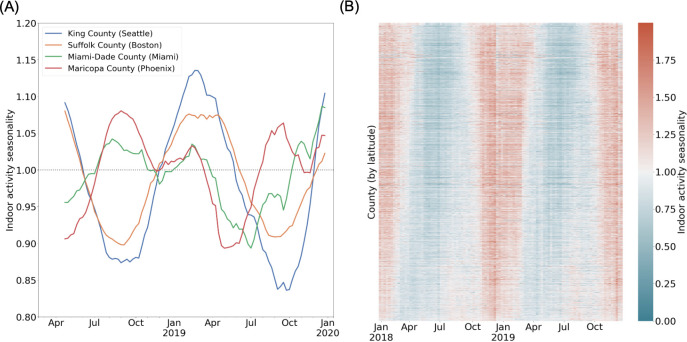
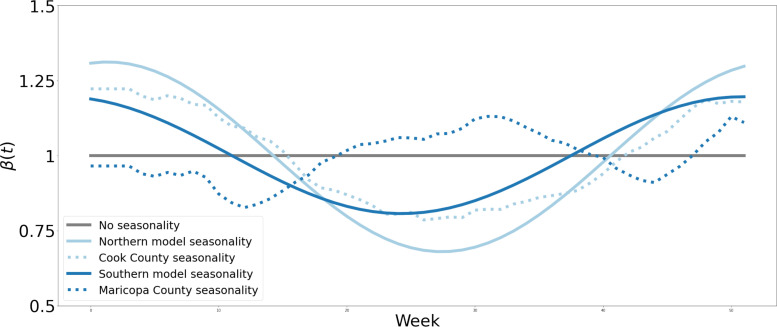
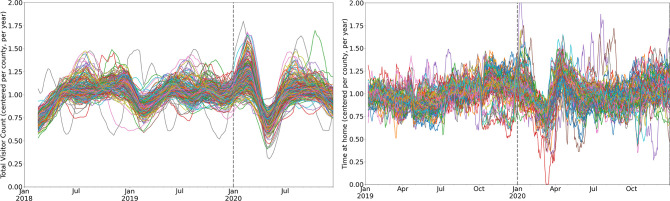
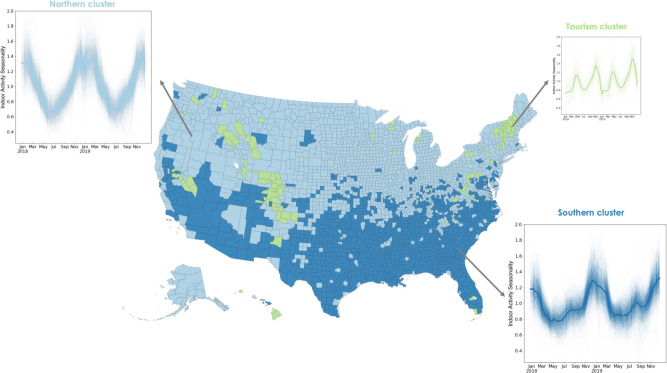
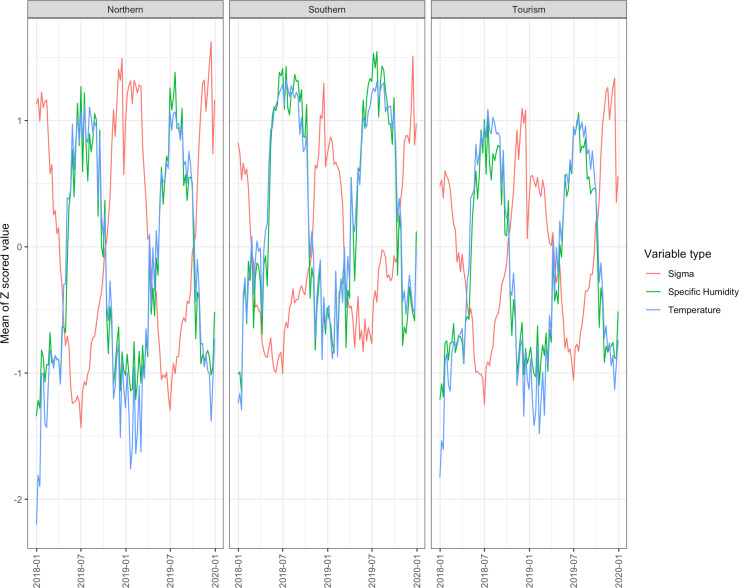
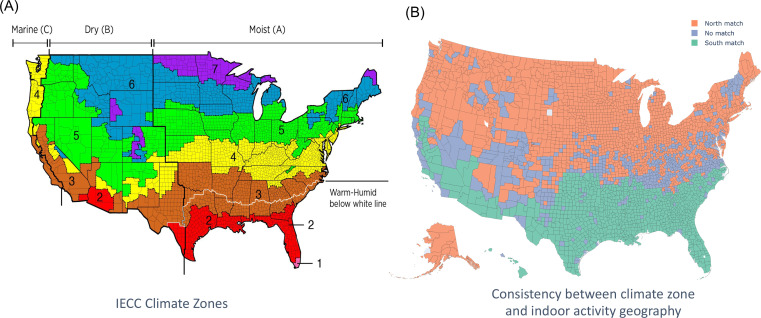
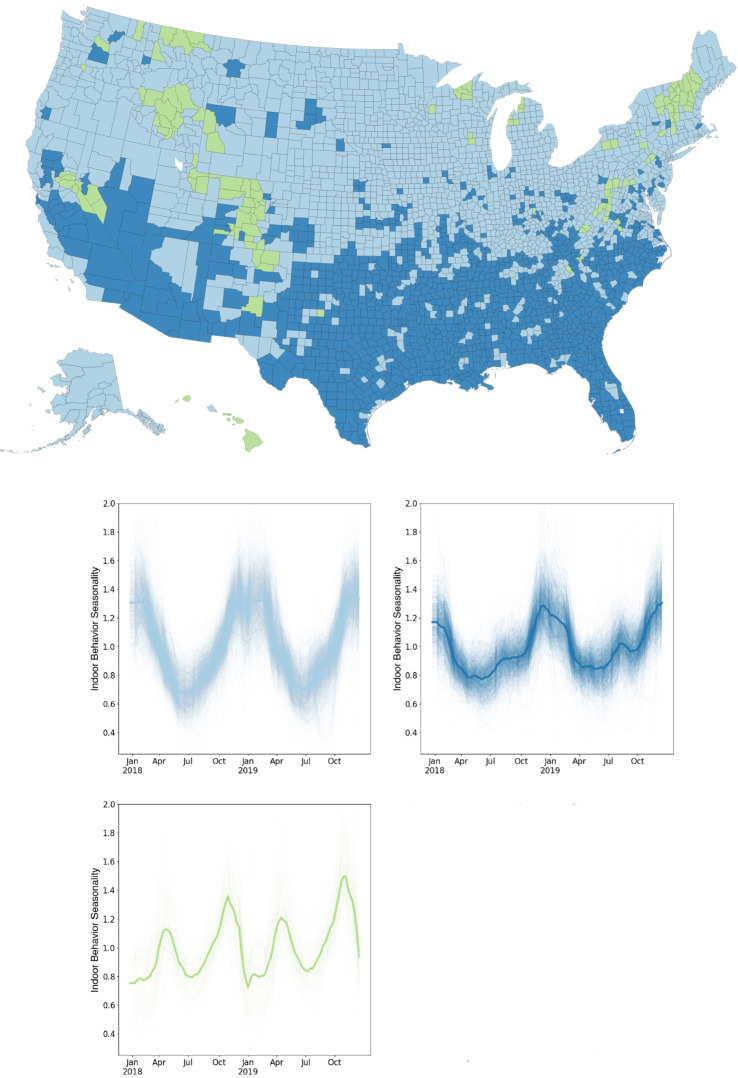
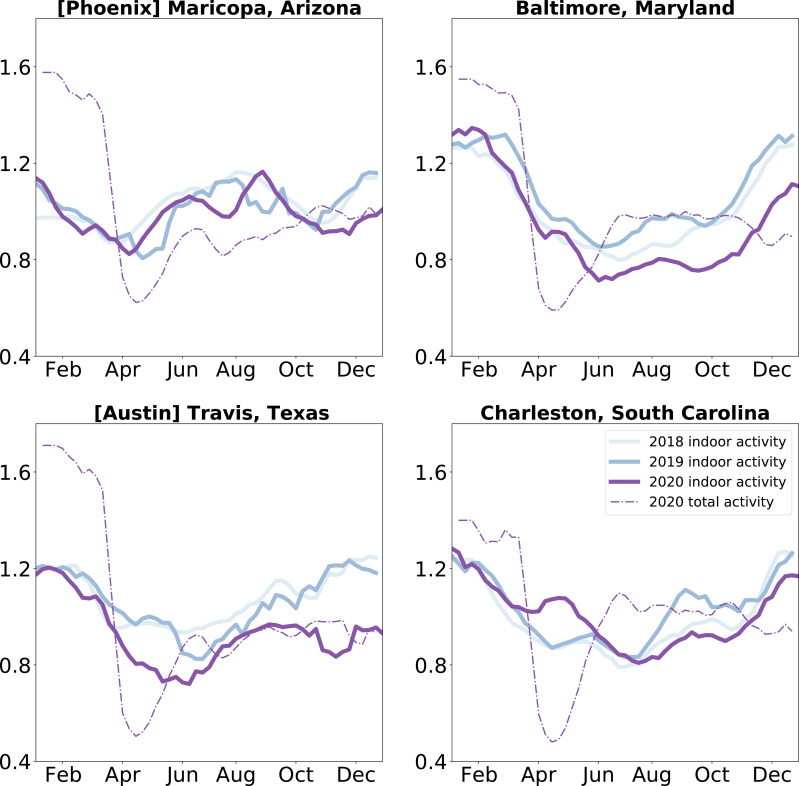
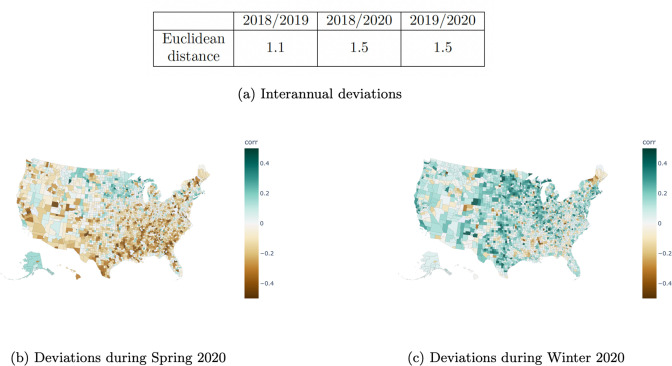
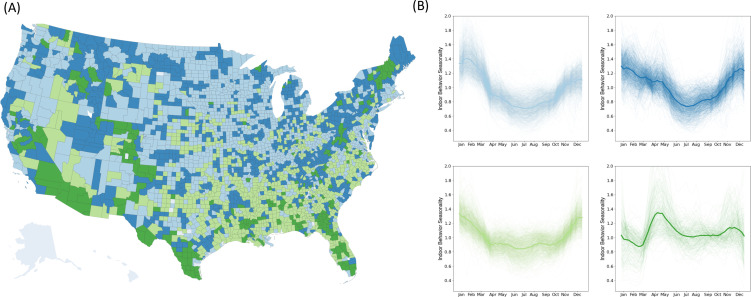
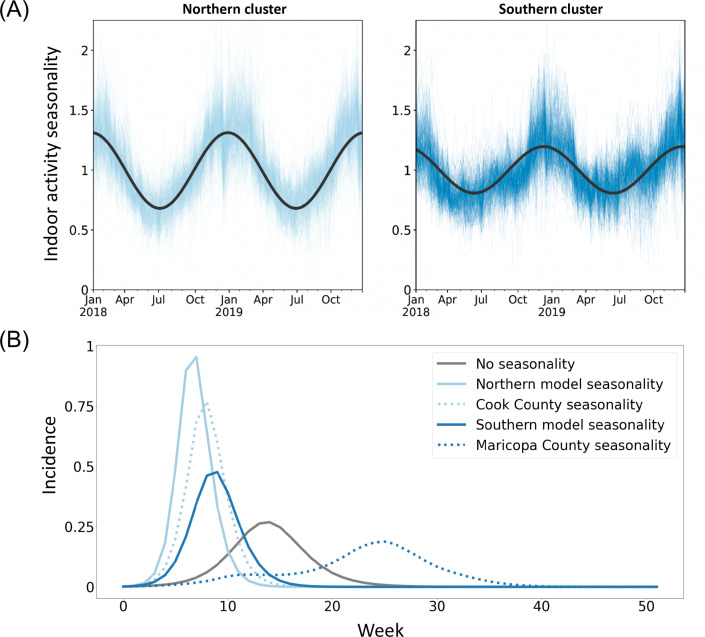
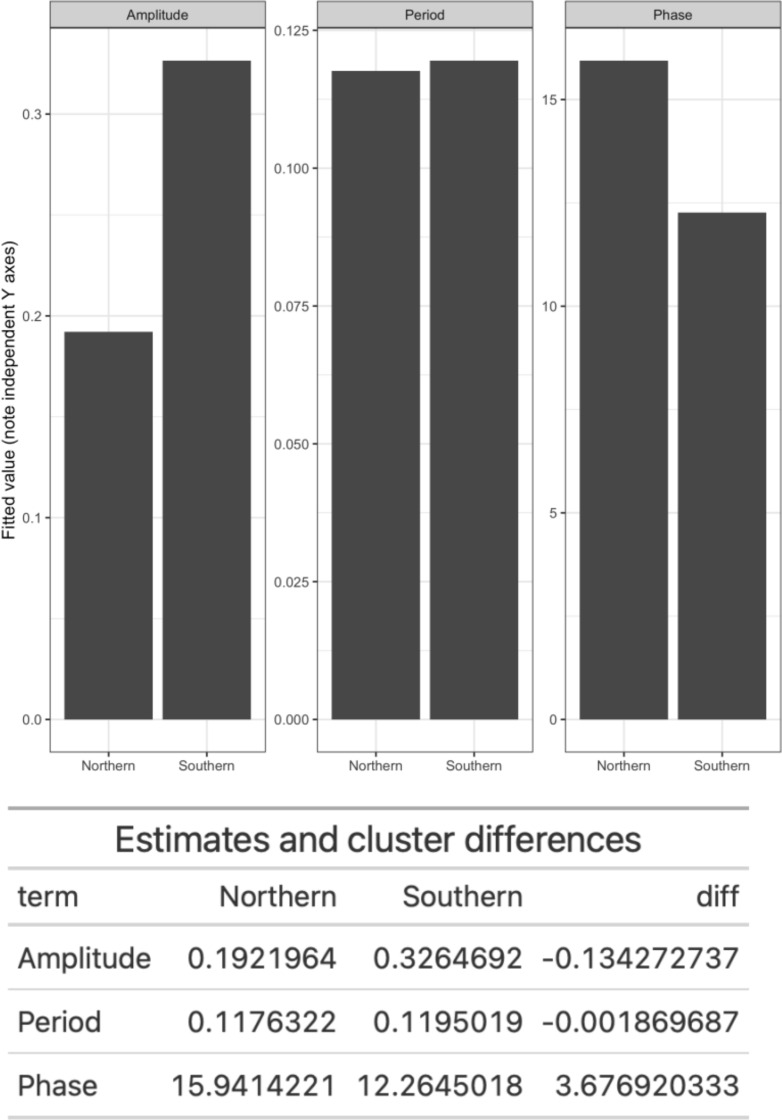
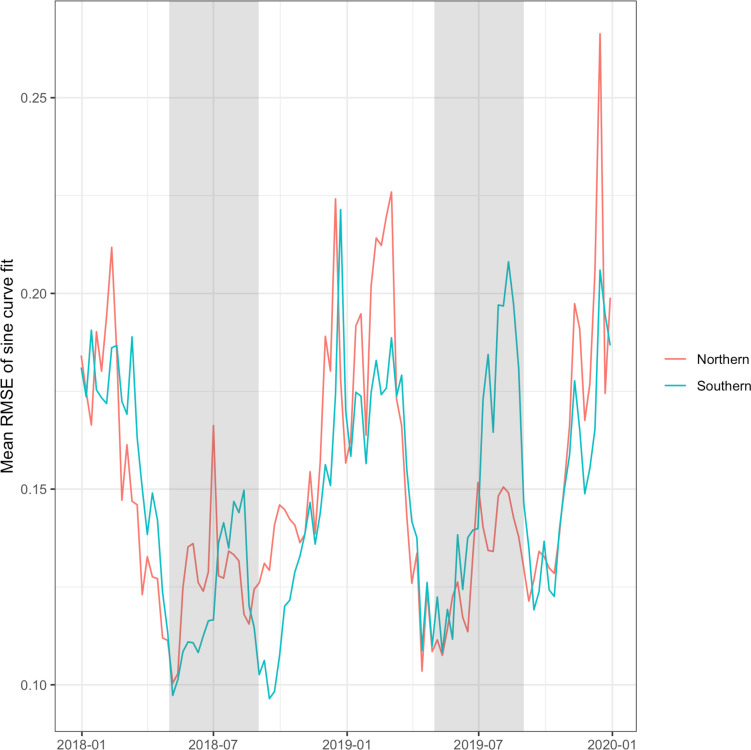
We find the proportion of indoor to outdoor activity during a baseline year is seasonal, peaking in winter months. The measure displays a latitudinal gradient with stronger seasonality at northern latitudes and an additional summer peak in southern latitudes. We statistically fit this baseline indoor-outdoor activity measure to inform the incorporation of this complex empirical pattern into infectious disease dynamic models. However, we find that the disruption of the COVID-19 pandemic caused these patterns to shift significantly from baseline and the empirical patterns are necessary to predict spatiotemporal heterogeneity in disease dynamics.
Our work empirically characterizes, for the first time, the seasonality of human social behavior at a large scale with a high spatiotemporal resolutio and provides a parsimonious parameterization of seasonal behavior that can be included in infectious disease dynamics models. We provide critical evidence and methods necessary to inform the public health of seasonal and pandemic respiratory pathogens and improve our understanding of the relationship between the physical environment and infection risk in the context of global change.
Research reported in this publication was supported by the National Institute of General Medical Sciences of the National Institutes of Health under award number R01GM123007.
自 COVID-19 大流行以来,大量公众关注的焦点集中在季节性对传播的影响上。误解依赖于仅由环境变量驱动的呼吸道疾病的季节性调节。然而,预计季节性将由宿主社会行为驱动,特别是在高度易感人群中。理解社会行为在呼吸道疾病季节性中的作用的一个关键差距是我们对室内人类活动季节性的理解不完整。
我们利用关于人类流动性的新数据流来描述美国室内与室外环境中的活动。我们使用了一个基于观察的移动应用程序位置数据集,该数据集涵盖了全国超过 500 万个地点。我们将地点分类为主要是室内(例如商店、办公室)或室外(例如操场、农贸市场),将特定地点的访问分解为室内和室外,从而在时间和空间上获得室内到室外人类活动的精细尺度衡量标准。
我们发现,在基准年内,室内到室外活动的比例是季节性的,在冬季达到高峰。该衡量标准显示出纬度梯度,在北纬地区季节性更强,并在南纬地区出现额外的夏季高峰。我们对该基线室内外活动衡量标准进行了统计拟合,以将这种复杂的经验模式纳入传染病动力学模型。然而,我们发现 COVID-19 大流行的破坏导致这些模式与基线发生了显著变化,并且经验模式是预测疾病动态时空异质性所必需的。
我们的工作首次以高时空分辨率对人类社会行为的季节性进行了实证描述,并提供了一种简约的季节性行为参数化,可以纳入传染病动力学模型。我们提供了必要的关键证据和方法,以告知季节性和大流行呼吸道病原体的公共卫生,并提高我们对全球变化背景下物理环境与感染风险之间关系的理解。
本出版物中报道的研究得到了美国国立卫生研究院国家普通医学科学研究所的 R01GM123007 资助。