Department of Nephrology, The Second Affiliated Hospital of Nanchang University, Nanchang 330006, Jiangxi Province, China.
Department of General Surgery, The Second Affiliated Hospital of Nanchang University, Nanchang 330006, Jiangxi Province, China.
Aging (Albany NY). 2023 Apr 3;15(7):2582-2609. doi: 10.18632/aging.204631.
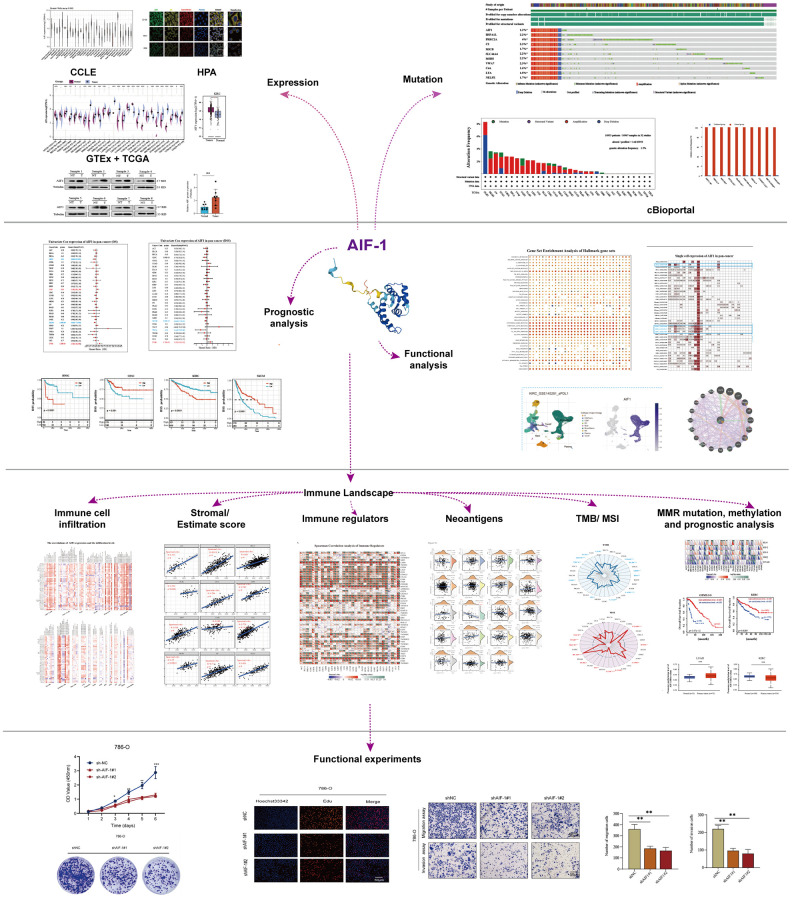
Allograft Inflammatory Factor 1 (AIF-1) is a member of the allograft inflammatory factor gene family and plays an essential role in the occurrence and development of malignant tumors. However, little is known about the expression pattern, predictive value, and biological function of AIF-1 across cancers.
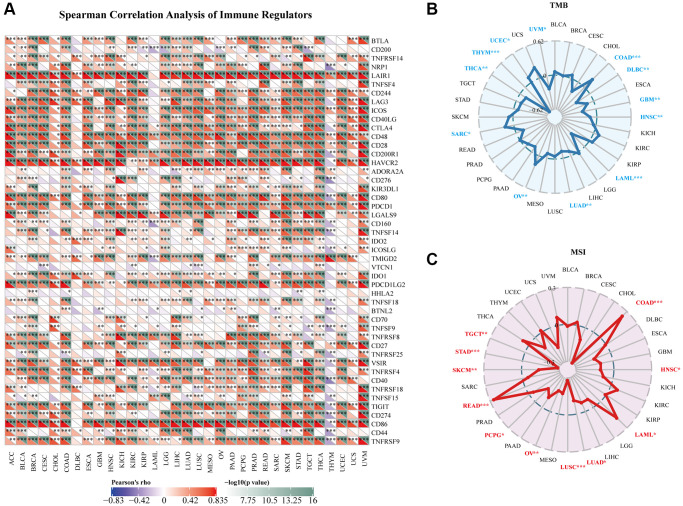
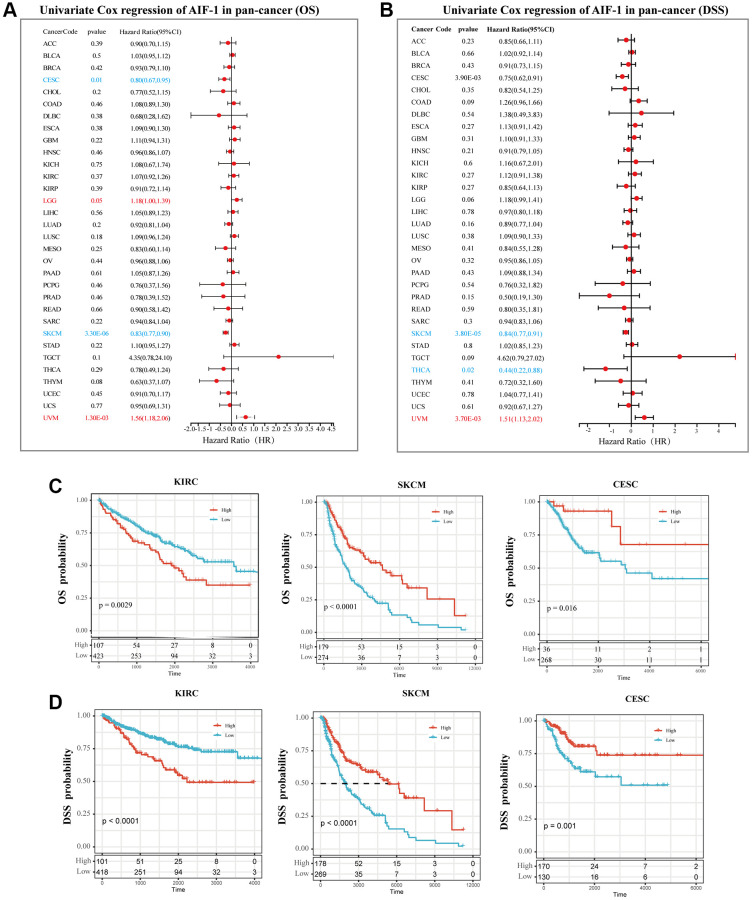
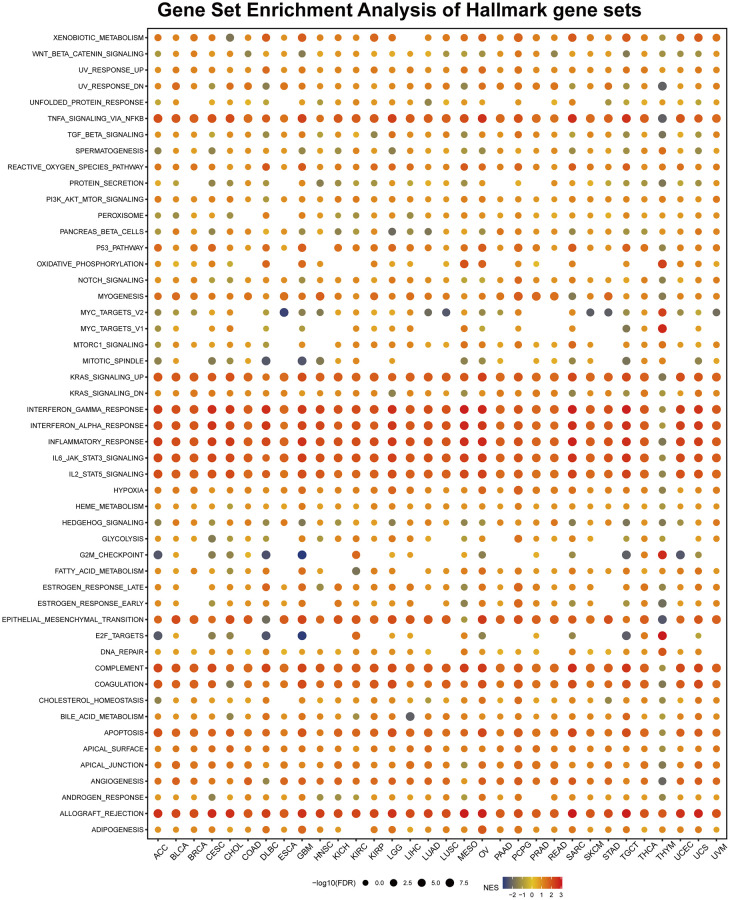
We first analyzed AIF-1 expression across cancers based on data from public databases. Univariate Cox regression and Kaplan-Meier analyses were used to explore the predictive value of AIF-1 expression in various cancers. Moreover, gene set enrichment analysis (GSEA) was applied to determine the cancer hallmarks associated with AIF-1 expression. Spearman correlation analysis was performed to investigate the association between AIF-1 expression and tumor microenvironment scores, immune cell infiltration, immune-related genes, TMB, MSI, and DNA methyltransferases.
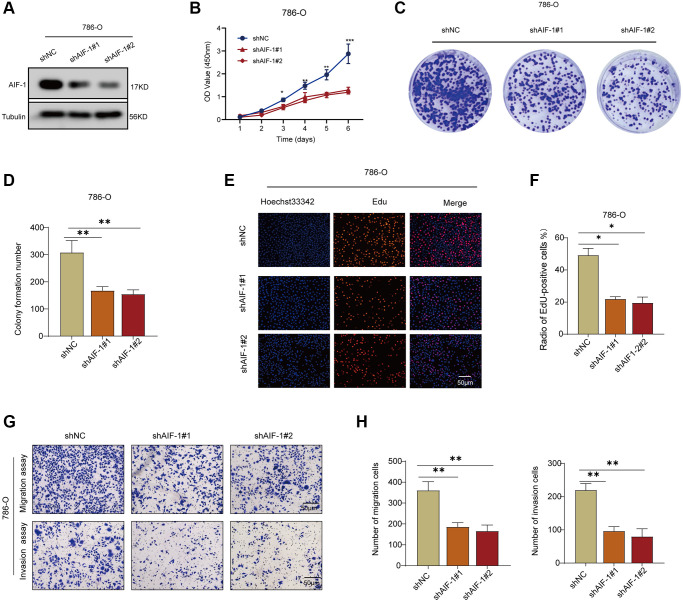
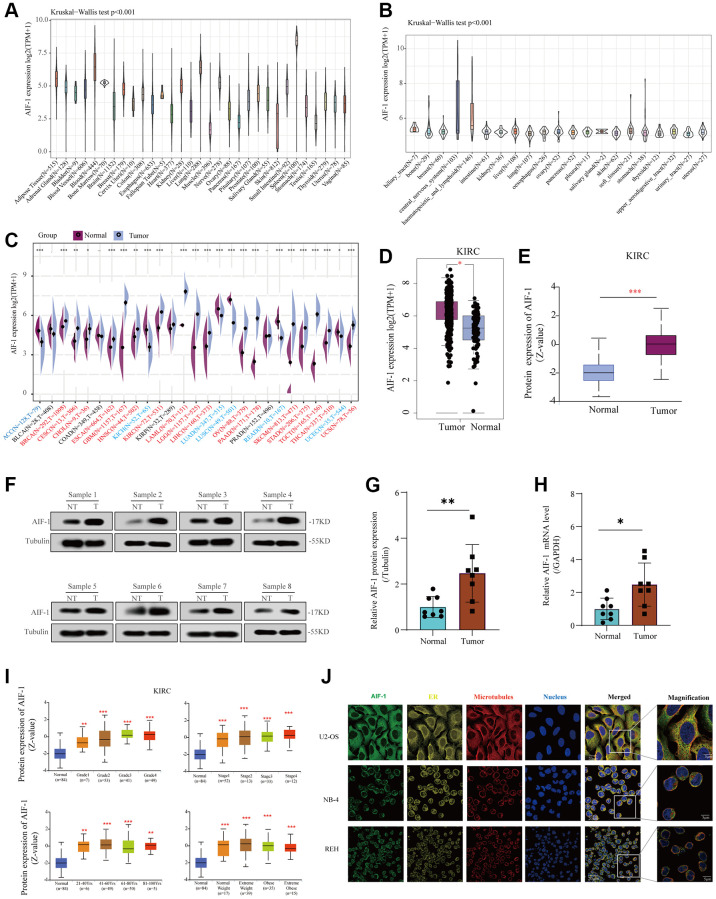
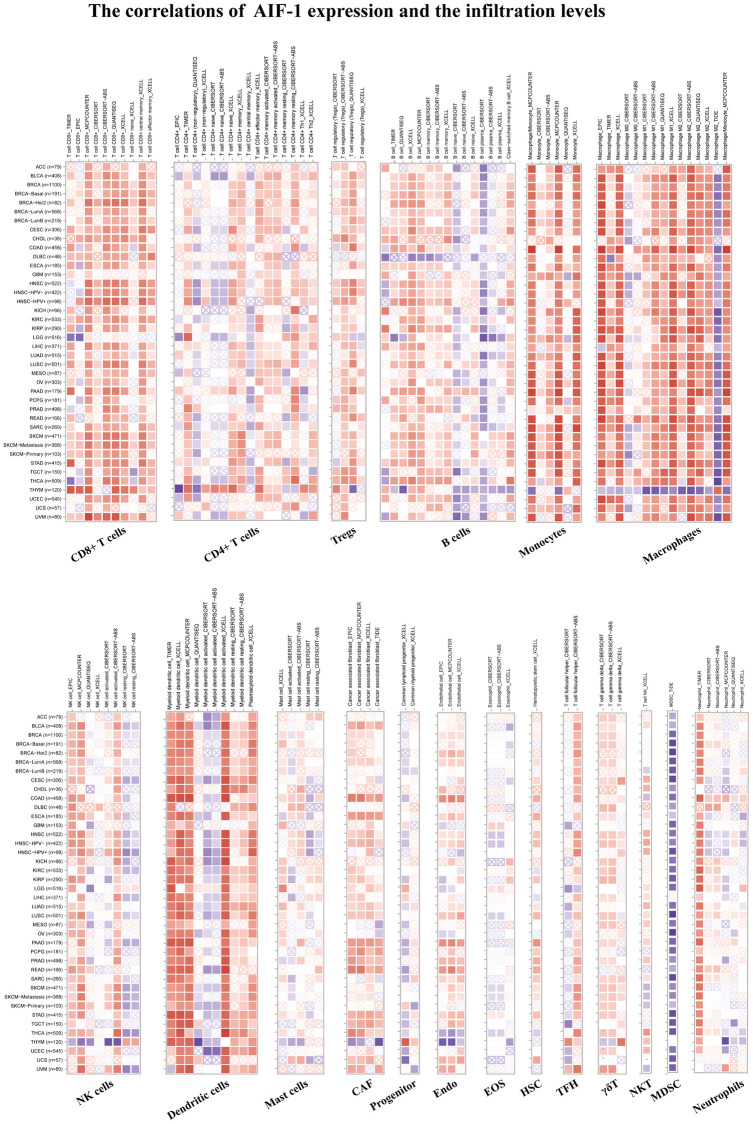
AIF-1 expression was upregulated in most cancer types and exhibited prognosis-predictive ability. AIF-1 expression was positively correlated with immune infiltrating cells and immune checkpoint-related genes in most cancers. Additionally, the promoter methylation level of AIF-1 was different in distinct tumors. High methylation levels of AIF-1 were associated with a worse prognosis in UCEC and melanoma, whereas they were associated with a better prognosis in GBM, KIRC, OV, and UVM. Finally, we found that AIF-1 was significantly highly expressed in KIRC tissues. Functionally, silencing AIF-1 dramatically decreased proliferation, migration, and invasion abilities.
Our results reveal that AIF-1 acts as a robust tumor biomarker and is closely correlated with tumor immune infiltration. Furthermore, AIF-1 may function as an oncogene and promote tumor progression in KIRC.
同种异体炎症因子 1(AIF-1)是同种异体炎症因子基因家族的一员,在恶性肿瘤的发生和发展中发挥着重要作用。然而,人们对 AIF-1 在各种癌症中的表达模式、预测价值和生物学功能知之甚少。
我们首先基于公共数据库中的数据分析了 AIF-1 在癌症中的表达。单因素 Cox 回归和 Kaplan-Meier 分析用于探索 AIF-1 表达在各种癌症中的预测价值。此外,还应用基因集富集分析(GSEA)来确定与 AIF-1 表达相关的癌症特征。采用 Spearman 相关分析来研究 AIF-1 表达与肿瘤微环境评分、免疫细胞浸润、免疫相关基因、TMB、MSI 和 DNA 甲基转移酶之间的关系。
AIF-1 在大多数癌症类型中表达上调,具有预后预测能力。在大多数癌症中,AIF-1 表达与免疫浸润细胞和免疫检查点相关基因呈正相关。此外,AIF-1 的启动子甲基化水平在不同的肿瘤中存在差异。AIF-1 的高甲基化水平与 UCEC 和黑色素瘤的预后较差相关,而与 GBM、KIRC、OV 和 UVM 的预后较好相关。最后,我们发现 AIF-1 在 KIRC 组织中表达显著升高。功能上,沉默 AIF-1 可显著降低增殖、迁移和侵袭能力。
我们的研究结果表明,AIF-1 作为一种强有力的肿瘤生物标志物,与肿瘤免疫浸润密切相关。此外,AIF-1 可能作为一种癌基因,促进 KIRC 中的肿瘤进展。