Department of Integrative Biology, University of Texas at Austin, TX 78712, USA.
HudsonAlpha Institute for Biotechnology, Huntsville, AL 35806, USA.
Plant Physiol. 2023 Jul 3;192(3):2374-2393. doi: 10.1093/plphys/kiad209.
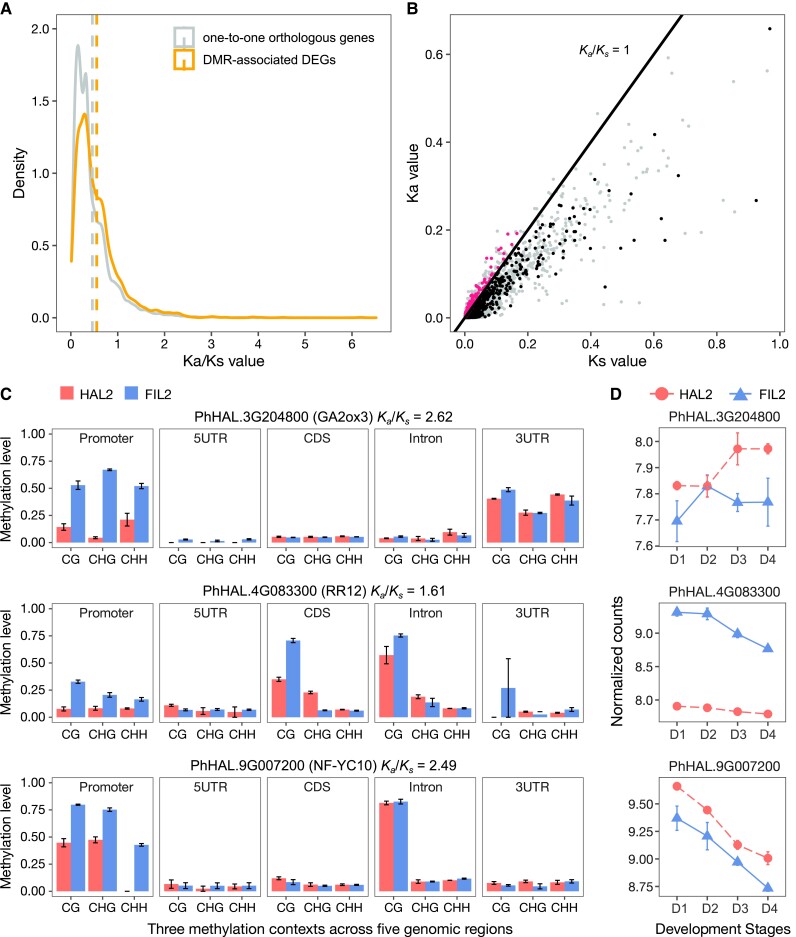
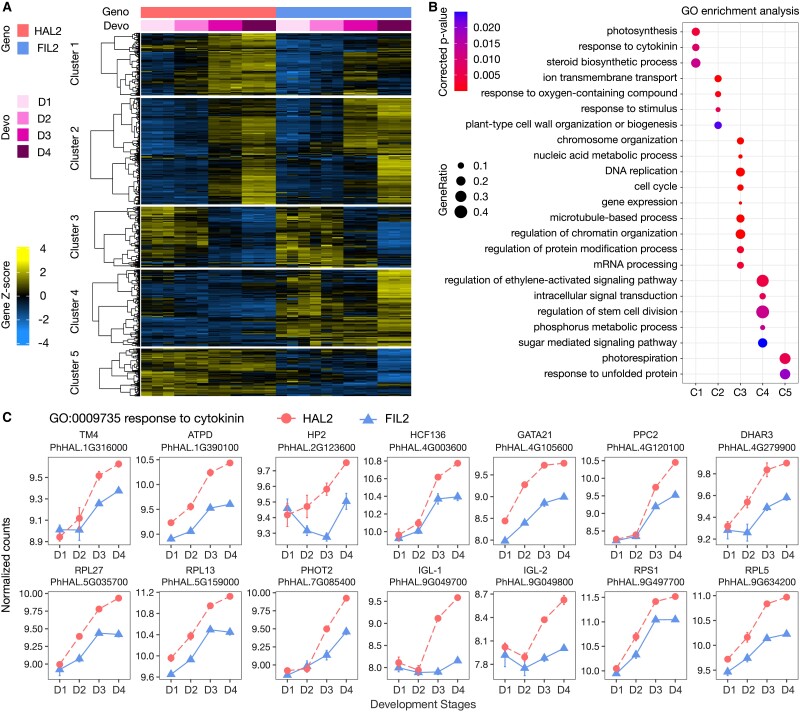
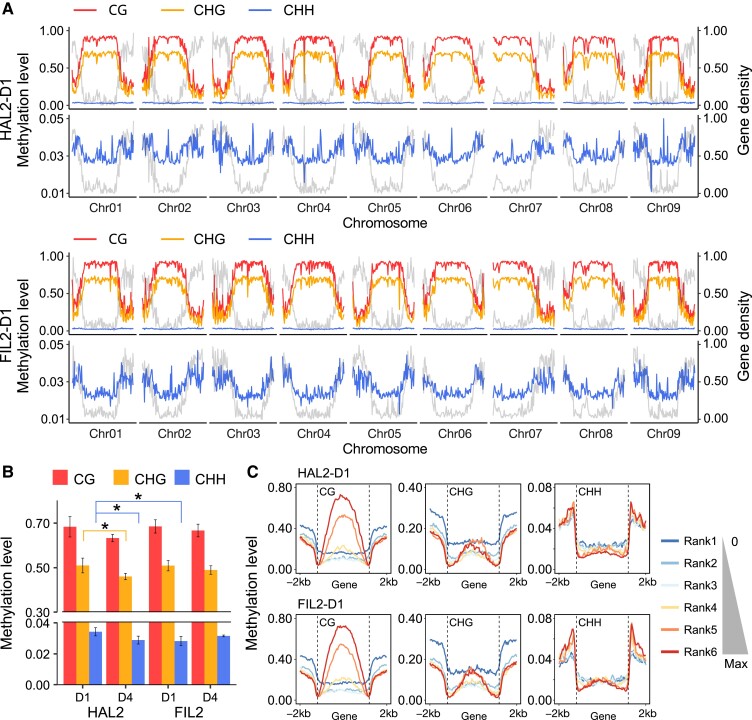
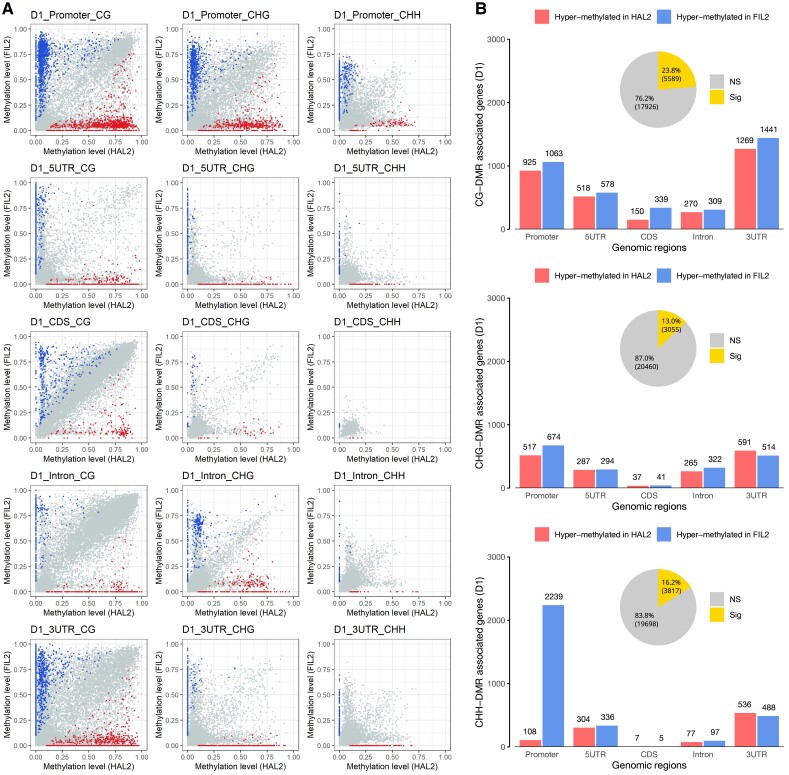
The morphological diversity of the inflorescence determines flower and seed production, which is critical for plant adaptation. Hall's panicgrass (Panicum hallii, P. hallii) is a wild perennial grass that has been developed as a model to study perennial grass biology and adaptive evolution. Highly divergent inflorescences have evolved between the 2 major ecotypes in P. hallii, the upland ecotype (P. hallii var hallii, HAL2 genotype) with compact inflorescence and large seed and the lowland ecotype (P. hallii var filipes, FIL2 genotype) with an open inflorescence and small seed. Here we conducted a comparative analysis of the transcriptome and DNA methylome, an epigenetic mark that influences gene expression regulation, across different stages of inflorescence development using genomic references for each ecotype. Global transcriptome analysis of differentially expressed genes (DEGs) and co-expression modules underlying the inflorescence divergence revealed the potential role of cytokinin signaling in heterochronic changes. Comparing DNA methylome profiles revealed a remarkable level of differential DNA methylation associated with the evolution of P. hallii inflorescence. We found that a large proportion of differentially methylated regions (DMRs) were located in the flanking regulatory regions of genes. Intriguingly, we observed a substantial bias of CHH hypermethylation in the promoters of FIL2 genes. The integration of DEGs, DMRs, and Ka/Ks ratio results characterized the evolutionary features of DMR-associated DEGs that contribute to the divergence of the P. hallii inflorescence. This study provides insights into the transcriptome and epigenetic landscape of inflorescence divergence in P. hallii and a genomic resource for perennial grass biology.
花序的形态多样性决定了花和种子的产生,这对植物的适应至关重要。 哈氏臂形草(Panicum hallii,P. hallii)是一种野生多年生草本植物,已被开发为研究多年生草本植物生物学和适应性进化的模式植物。 在 P. hallii 的 2 个主要生态型中,高地生态型(P. hallii var hallii,HAL2 基因型)具有紧凑的花序和大种子,而低地生态型(P. hallii var filipes,FIL2 基因型)具有开放的花序和小种子,其花序已经进化出高度的差异。 在这里,我们使用每个生态型的基因组参考,对不同花序发育阶段的转录组和 DNA 甲基化组(一种影响基因表达调控的表观遗传标记)进行了比较分析。 对差异表达基因(DEGs)和花序分歧相关的共表达模块的全转录组分析揭示了细胞分裂素信号在异时性变化中的潜在作用。 比较 DNA 甲基化组谱揭示了与 P. hallii 花序进化相关的差异 DNA 甲基化的显著水平。 我们发现,大量差异甲基化区域(DMRs)位于基因的侧翼调控区域。 有趣的是,我们观察到 FIL2 基因启动子中 CHH 超甲基化的大量偏倚。 DEGs、DMRs 和 Ka/Ks 比值的整合结果描述了 DMR 相关 DEGs 的进化特征,这些特征有助于 P. hallii 花序的分歧。 本研究为 P. hallii 花序分化的转录组和表观基因组景观提供了深入的了解,并为多年生草生物学提供了基因组资源。