• 文献检索
  • 文档翻译
  • 深度研究
  • 学术资讯
  • Suppr Zotero 插件Zotero 插件
  • 邀请有礼
  • 套餐&价格
  • 历史记录
应用&插件
Suppr Zotero 插件Zotero 插件浏览器插件Mac 客户端Windows 客户端微信小程序
定价
高级版会员购买积分包购买API积分包
服务
文献检索文档翻译深度研究API 文档MCP 服务
关于我们
关于 Suppr公司介绍联系我们用户协议隐私条款
关注我们

Suppr 超能文献

核心技术专利:CN118964589B侵权必究
粤ICP备2023148730 号-1Suppr @ 2026

文献检索

告别复杂PubMed语法,用中文像聊天一样搜索,搜遍4000万医学文献。AI智能推荐,让科研检索更轻松。

立即免费搜索

文件翻译

保留排版,准确专业,支持PDF/Word/PPT等文件格式,支持 12+语言互译。

免费翻译文档

深度研究

AI帮你快速写综述,25分钟生成高质量综述,智能提取关键信息,辅助科研写作。

立即免费体验

对 COVID-19 患者的基因表达谱数据进行全面分析,以发现特异性和差异性的血液生物标志物特征。

A comprehensive analysis of gene expression profiling data in COVID-19 patients for discovery of specific and differential blood biomarker signatures.

机构信息

Department of Biotechnology, Faculty of Biological Science and Technology, The University of Isfahan, Isfahan, Iran.

Department of Plant Sciences and Biotechnology, Faculty of Life Sciences and Biotechnology, Shahid Beheshti University, Tehran, Iran.

出版信息

Sci Rep. 2023 Apr 5;13(1):5599. doi: 10.1038/s41598-023-32268-2.

DOI:10.1038/s41598-023-32268-2
PMID:37019895
原文链接:https://pmc.ncbi.nlm.nih.gov/articles/PMC10075178/
Abstract

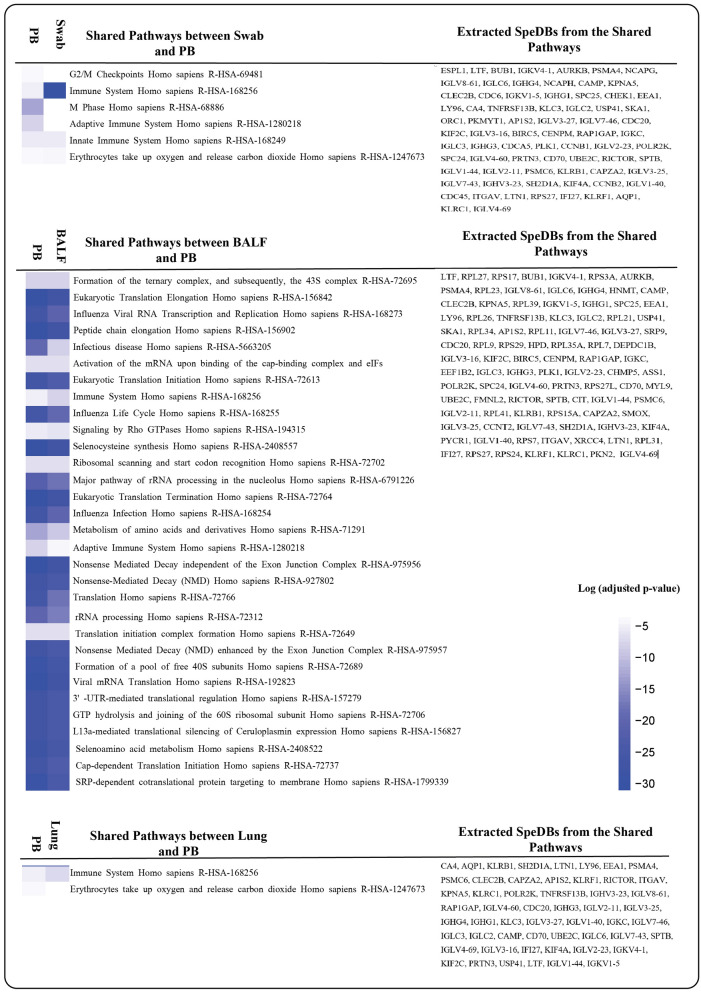
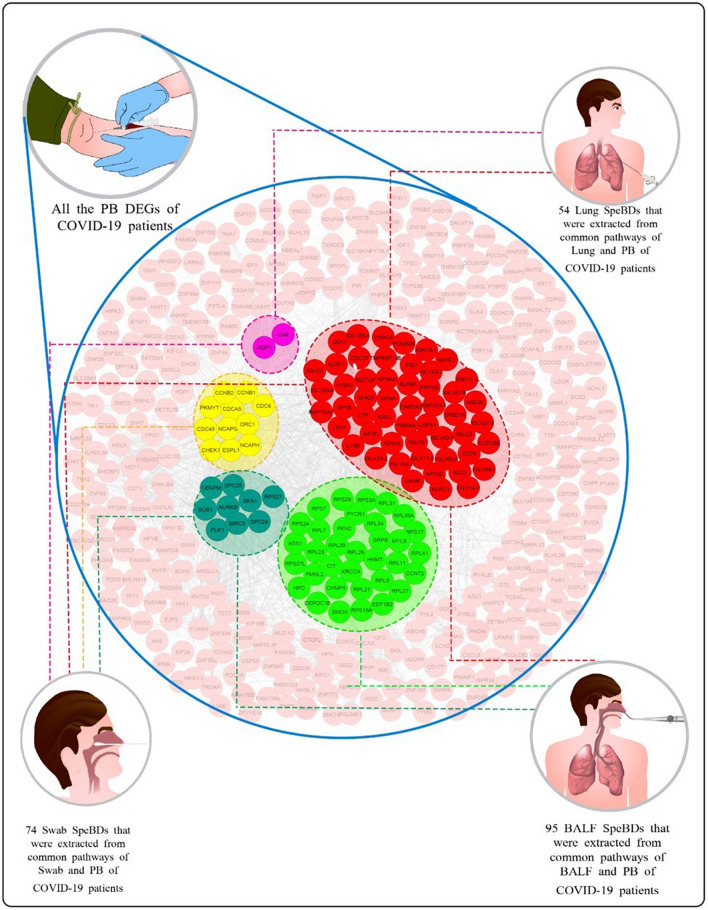
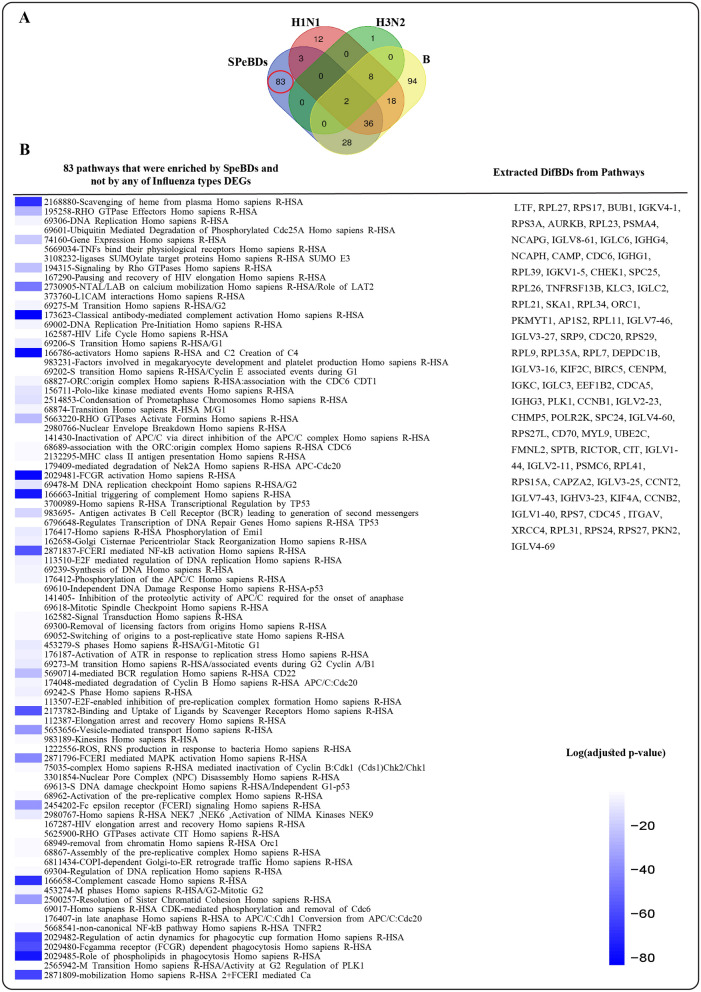
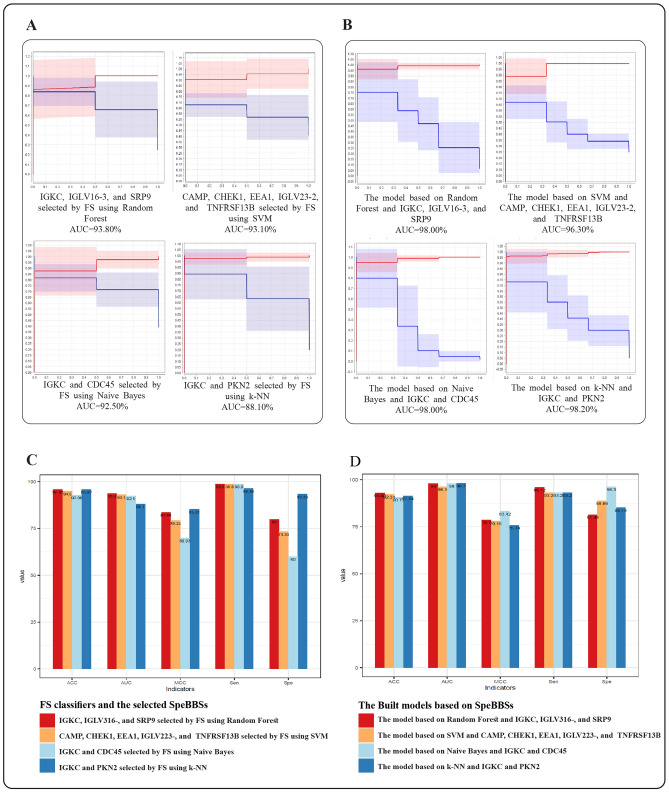
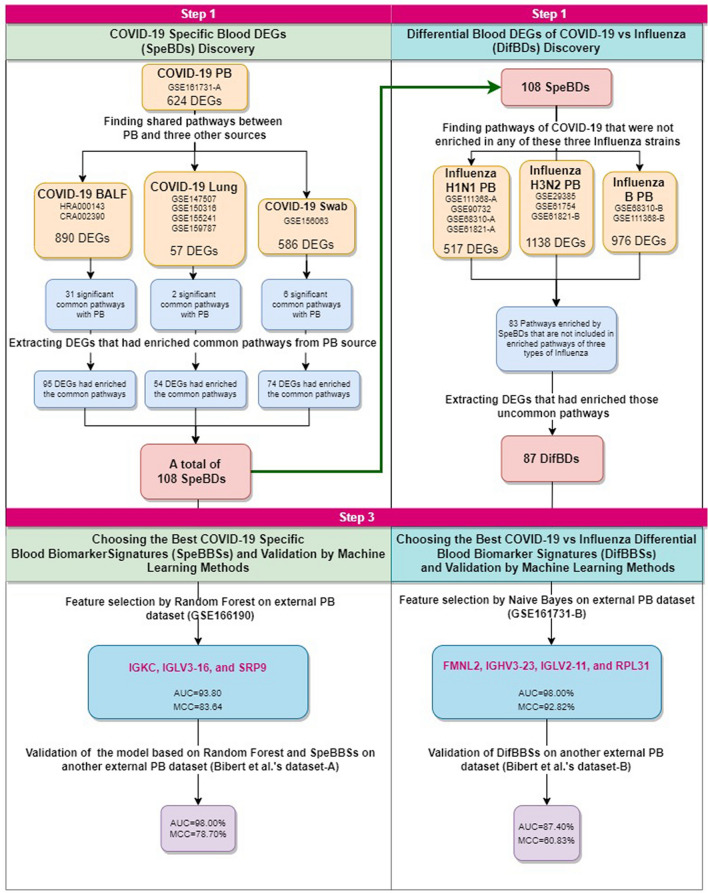
COVID-19 is a newly recognized illness with a predominantly respiratory presentation. Although initial analyses have identified groups of candidate gene biomarkers for the diagnosis of COVID-19, they have yet to identify clinically applicable biomarkers, so we need disease-specific diagnostic biomarkers in biofluid and differential diagnosis in comparison with other infectious diseases. This can further increase knowledge of pathogenesis and help guide treatment. Eight transcriptomic profiles of COVID-19 infected versus control samples from peripheral blood (PB), lung tissue, nasopharyngeal swab and bronchoalveolar lavage fluid (BALF) were considered. In order to find COVID-19 potential Specific Blood Differentially expressed genes (SpeBDs), we implemented a strategy based on finding shared pathways of peripheral blood and the most involved tissues in COVID-19 patients. This step was performed to filter blood DEGs with a role in the shared pathways. Furthermore, nine datasets of the three types of Influenza (H1N1, H3N2, and B) were used for the second step. Potential Differential Blood DEGs of COVID-19 versus Influenza (DifBDs) were found by extracting DEGs involved in only enriched pathways by SpeBDs and not by Influenza DEGs. Then in the third step, a machine learning method (a wrapper feature selection approach supervised by four classifiers of k-NN, Random Forest, SVM, Naïve Bayes) was utilized to narrow down the number of SpeBDs and DifBDs and find the most predictive combination of them to select COVID-19 potential Specific Blood Biomarker Signatures (SpeBBSs) and COVID-19 versus influenza Differential Blood Biomarker Signatures (DifBBSs), respectively. After that, models based on SpeBBSs and DifBBSs and the corresponding algorithms were built to assess their performance on an external dataset. Among all the extracted DEGs from the PB dataset (from common PB pathways with BALF, Lung and Swab), 108 unique SpeBD were obtained. Feature selection using Random Forest outperformed its counterparts and selected IGKC, IGLV3-16 and SRP9 among SpeBDs as SpeBBSs. Validation of the constructed model based on these genes and Random Forest on an external dataset resulted in 93.09% Accuracy. Eighty-three pathways enriched by SpeBDs and not by any of the influenza strains were identified, including 87 DifBDs. Using feature selection by Naive Bayes classifier on DifBDs, FMNL2, IGHV3-23, IGLV2-11 and RPL31 were selected as the most predictable DifBBSs. The constructed model based on these genes and Naive Bayes on an external dataset was validated with 87.2% accuracy. Our study identified several candidate blood biomarkers for a potential specific and differential diagnosis of COVID-19. The proposed biomarkers could be valuable targets for practical investigations to validate their potential.

摘要

新型冠状病毒肺炎(COVID-19)是一种以呼吸系统表现为主的新出现的疾病。虽然最初的分析已经确定了 COVID-19 候选基因生物标志物的候选群体,但尚未确定临床上可应用的生物标志物,因此我们需要在生物液中寻找疾病特异性诊断生物标志物,并与其他传染病进行鉴别诊断。这可以进一步增加对发病机制的了解,并有助于指导治疗。我们考虑了来自外周血(PB)、肺组织、鼻咽拭子和支气管肺泡灌洗液(BALF)的 8 个 COVID-19 感染与对照样本的转录组谱。为了找到 COVID-19 的潜在特异性血液差异表达基因(SpeBDs),我们实施了一种基于在外周血和 COVID-19 患者最相关组织中寻找共同途径的策略。这一步是为了筛选在外周血中具有共同途径作用的血液差异表达基因(DEGs)。此外,还使用了三种类型流感(H1N1、H3N2 和 B)的 9 个数据集进行第二步分析。通过提取仅与 SpeBDs 相关且与流感 DEGs 无关的富集途径中的差异表达基因,找到了 COVID-19 与流感的潜在差异血液 DEGs(DifBDs)。然后,在第三步中,利用一种机器学习方法(一种由四个分类器的 k-NN、随机森林、SVM、朴素贝叶斯进行监督的包装特征选择方法)来缩小 SpeBDs 和 DifBDs 的数量,并找到它们最具预测性的组合,以分别选择 COVID-19 的潜在特异性血液生物标志物特征(SpeBBSs)和 COVID-19 与流感的差异血液生物标志物特征(DifBBSs)。之后,基于 SpeBBSs 和 DifBBSs 以及相应的算法构建了模型,以评估它们在外部数据集上的性能。在外周血数据集(与 BALF、肺和拭子的共同外周血途径)中提取的所有差异表达基因中,获得了 108 个独特的 SpeBD。随机森林的特征选择优于其他方法,并选择 IGKC、IGLV3-16 和 SRP9 作为 SpeBBSs。基于这些基因和随机森林在外部数据集上构建的模型的验证结果准确率为 93.09%。确定了 83 个由 SpeBD 富集但不受任何流感株影响的途径,包括 87 个 DifBD。使用朴素贝叶斯分类器对 DifBDs 进行特征选择,选择 FMNL2、IGHV3-23、IGLV2-11 和 RPL31 作为最具预测性的 DifBBSs。基于这些基因和朴素贝叶斯在外部数据集上构建的模型的验证准确率为 87.2%。我们的研究确定了一些候选血液生物标志物,可用于 COVID-19 的潜在特异性和鉴别诊断。所提出的生物标志物可能是验证其潜在价值的实际研究的有价值的靶点。
https://cdn.ncbi.nlm.nih.gov/pmc/blobs/9b43/10076301/a67353e17b4b/41598_2023_32268_Fig6_HTML.jpg
https://cdn.ncbi.nlm.nih.gov/pmc/blobs/9b43/10076301/3eaa64fd9732/41598_2023_32268_Fig1_HTML.jpg
https://cdn.ncbi.nlm.nih.gov/pmc/blobs/9b43/10076301/b77a9690971b/41598_2023_32268_Fig2_HTML.jpg
https://cdn.ncbi.nlm.nih.gov/pmc/blobs/9b43/10076301/acd54d4c95a3/41598_2023_32268_Fig3_HTML.jpg
https://cdn.ncbi.nlm.nih.gov/pmc/blobs/9b43/10076301/85a7bb534dba/41598_2023_32268_Fig4_HTML.jpg
https://cdn.ncbi.nlm.nih.gov/pmc/blobs/9b43/10076301/f205502fec9a/41598_2023_32268_Fig5_HTML.jpg
https://cdn.ncbi.nlm.nih.gov/pmc/blobs/9b43/10076301/a67353e17b4b/41598_2023_32268_Fig6_HTML.jpg
https://cdn.ncbi.nlm.nih.gov/pmc/blobs/9b43/10076301/3eaa64fd9732/41598_2023_32268_Fig1_HTML.jpg
https://cdn.ncbi.nlm.nih.gov/pmc/blobs/9b43/10076301/b77a9690971b/41598_2023_32268_Fig2_HTML.jpg
https://cdn.ncbi.nlm.nih.gov/pmc/blobs/9b43/10076301/acd54d4c95a3/41598_2023_32268_Fig3_HTML.jpg
https://cdn.ncbi.nlm.nih.gov/pmc/blobs/9b43/10076301/85a7bb534dba/41598_2023_32268_Fig4_HTML.jpg
https://cdn.ncbi.nlm.nih.gov/pmc/blobs/9b43/10076301/f205502fec9a/41598_2023_32268_Fig5_HTML.jpg
https://cdn.ncbi.nlm.nih.gov/pmc/blobs/9b43/10076301/a67353e17b4b/41598_2023_32268_Fig6_HTML.jpg

相似文献

1
A comprehensive analysis of gene expression profiling data in COVID-19 patients for discovery of specific and differential blood biomarker signatures.对 COVID-19 患者的基因表达谱数据进行全面分析,以发现特异性和差异性的血液生物标志物特征。
Sci Rep. 2023 Apr 5;13(1):5599. doi: 10.1038/s41598-023-32268-2.
2
Identifying novel host-based diagnostic biomarker panels for COVID-19: a whole-blood/nasopharyngeal transcriptome meta-analysis.基于全血/鼻咽转录组的荟萃分析:鉴定 COVID-19 的新型宿主诊断生物标志物组合。
Mol Med. 2022 Aug 3;28(1):86. doi: 10.1186/s10020-022-00513-5.
3
Identifying Hub Genes and miRNA-mRNA Regulatory Networks in Mice Infected with H1N1 Influenza Virus.鉴定感染 H1N1 流感病毒的小鼠中的枢纽基因和 miRNA-mRNA 调控网络。
Dis Markers. 2023 May 16;2023:2291051. doi: 10.1155/2023/2291051. eCollection 2023.
4
Bioinformatics analysis of diagnostic biomarkers for Alzheimer's disease in peripheral blood based on sex differences and support vector machine algorithm.基于性别差异和支持向量机算法的外周血阿尔茨海默病诊断生物标志物的生物信息学分析。
Hereditas. 2022 Oct 4;159(1):38. doi: 10.1186/s41065-022-00252-x.
5
Identifying COVID-19-Specific Transcriptomic Biomarkers with Machine Learning Methods.运用机器学习方法识别新冠病毒特异性转录组生物标志物
Biomed Res Int. 2021 Jul 6;2021:9939134. doi: 10.1155/2021/9939134. eCollection 2021.
6
CXCL17 Is a Specific Diagnostic Biomarker for Severe Pandemic Influenza A(H1N1) That Predicts Poor Clinical Outcome.趋化因子 (C-X-C 基元) 配体 17 是严重大流行性流感 A(H1N1)的特异性诊断生物标志物,可预测不良临床结局。
Front Immunol. 2021 Feb 26;12:633297. doi: 10.3389/fimmu.2021.633297. eCollection 2021.
7
Blood transcriptome analysis revealed the crosstalk between COVID-19 and HIV.血液转录组分析揭示了 COVID-19 与 HIV 之间的相互作用。
Front Immunol. 2022 Oct 28;13:1008653. doi: 10.3389/fimmu.2022.1008653. eCollection 2022.
8
Microarray analysis of microRNA expression in peripheral blood mononuclear cells of critically ill patients with influenza A (H1N1).危重症甲型 H1N1 流感患者外周血单个核细胞 microRNA 表达的微阵列分析。
BMC Infect Dis. 2013 Jun 3;13:257. doi: 10.1186/1471-2334-13-257.
9
Robust biomarker screening from gene expression data by stable machine learning-recursive feature elimination methods.基于稳健机器学习-递归特征消除方法的基因表达数据的稳健生物标志物筛选。
Comput Biol Chem. 2022 Oct;100:107747. doi: 10.1016/j.compbiolchem.2022.107747. Epub 2022 Jul 29.
10
Identification of immune-associated biomarkers of diabetes nephropathy tubulointerstitial injury based on machine learning: a bioinformatics multi-chip integrated analysis.基于机器学习的糖尿病肾病肾小管间质损伤免疫相关生物标志物的鉴定:一项生物信息学多芯片综合分析
BioData Min. 2024 Jul 1;17(1):20. doi: 10.1186/s13040-024-00369-x.

引用本文的文献

1
Integrated multi-sample transcriptomic analysis of COVID-19 patients against controls using a bioinformatics pipeline.使用生物信息学流程对COVID-19患者与对照进行综合多样本转录组分析。
Sci Rep. 2025 Jun 4;15(1):19644. doi: 10.1038/s41598-025-03640-1.
2
Investigating the impact of feed-induced, subacute ruminal acidosis on rumen epimural transcriptome and metatranscriptome in young calves at 8- and 17-week of age.研究饲料诱导的亚急性瘤胃酸中毒对8周龄和17周龄犊牛瘤胃壁转录组和宏转录组的影响。
Front Vet Sci. 2024 Feb 21;11:1328539. doi: 10.3389/fvets.2024.1328539. eCollection 2024.
3
Differential detection workflows for multi-sample single-cell RNA-seq data.

本文引用的文献

1
Identifying novel host-based diagnostic biomarker panels for COVID-19: a whole-blood/nasopharyngeal transcriptome meta-analysis.基于全血/鼻咽转录组的荟萃分析:鉴定 COVID-19 的新型宿主诊断生物标志物组合。
Mol Med. 2022 Aug 3;28(1):86. doi: 10.1186/s10020-022-00513-5.
2
A Review of SARS-CoV-2 Disease (COVID-19): Pandemic in Our Time.2019冠状病毒病(COVID-19)综述:我们这个时代的大流行
Pathogens. 2022 Mar 17;11(3):368. doi: 10.3390/pathogens11030368.
3
Promising Assays for Examining a Putative Role of Ribosomal Heterogeneity in COVID-19 Susceptibility and Severity.
多样本单细胞RNA测序数据的差异检测工作流程。
bioRxiv. 2023 Dec 19:2023.12.17.572043. doi: 10.1101/2023.12.17.572043.
用于研究核糖体异质性在新冠病毒易感性和严重性中假定作用的有前景的检测方法。
Life (Basel). 2022 Jan 28;12(2):203. doi: 10.3390/life12020203.
4
Mutational Landscape and Interaction of SARS-CoV-2 with Host Cellular Components.严重急性呼吸综合征冠状病毒2(SARS-CoV-2)的突变图谱及其与宿主细胞成分的相互作用
Microorganisms. 2021 Aug 24;9(9):1794. doi: 10.3390/microorganisms9091794.
5
COVID-19 Shuts Doors to Flu but Keeps Them Open to Rhinoviruses.新冠病毒使流感传播受限,但对鼻病毒却“网开一面”。
Biology (Basel). 2021 Jul 31;10(8):733. doi: 10.3390/biology10080733.
6
COVID-19 and Influenza Co-infection: A Systematic Review and Meta-Analysis.新型冠状病毒肺炎与流感合并感染:一项系统评价与荟萃分析
Front Med (Lausanne). 2021 Jun 25;8:681469. doi: 10.3389/fmed.2021.681469. eCollection 2021.
7
Transcriptomic Signature Differences Between SARS-CoV-2 and Influenza Virus Infected Patients.SARS-CoV-2 与流感病毒感染患者的转录组特征差异。
Front Immunol. 2021 May 31;12:666163. doi: 10.3389/fimmu.2021.666163. eCollection 2021.
8
Rapid isolation and immune profiling of SARS-CoV-2 specific memory B cell in convalescent COVID-19 patients via LIBRA-seq.通过 LIBRA-seq 技术从康复期 COVID-19 患者中快速分离和免疫分析 SARS-CoV-2 特异性记忆 B 细胞。
Signal Transduct Target Ther. 2021 May 17;6(1):195. doi: 10.1038/s41392-021-00610-7.
9
Elevated and Slowed EEG Oscillations in Patients with Post-Concussive Syndrome and Chronic Pain Following a Motor Vehicle Collision.机动车碰撞后患有脑震荡后综合征和慢性疼痛患者的脑电图振荡升高和减慢
Brain Sci. 2021 Apr 24;11(5):537. doi: 10.3390/brainsci11050537.
10
The Spike Glycoprotein of SARS-CoV-2 Binds to β1 Integrins Expressed on the Surface of Lung Epithelial Cells.SARS-CoV-2 的刺突糖蛋白与肺上皮细胞表面表达的β1 整合素结合。
Viruses. 2021 Apr 9;13(4):645. doi: 10.3390/v13040645.