Escuela Nacional de Ciencias Biológicas, Instituto Politécnico Nacional, Mexico City, Mexico.
Laboratorio de Inmunobiología y Genética, Instituto Nacional de Enfermedades Respiratorias "Ismael Cosío Villegas", Mexico City, Mexico.
Front Immunol. 2021 Feb 26;12:633297. doi: 10.3389/fimmu.2021.633297. eCollection 2021.
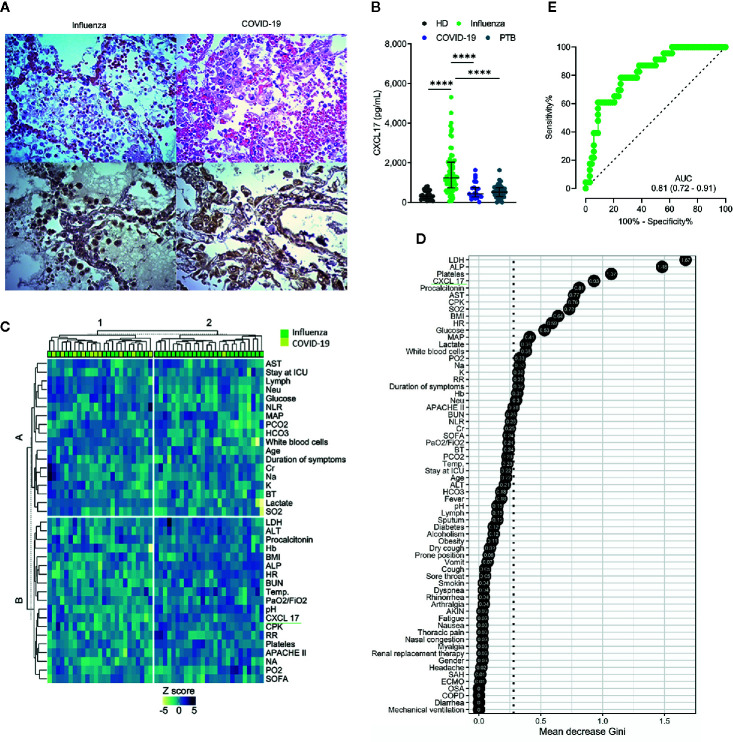
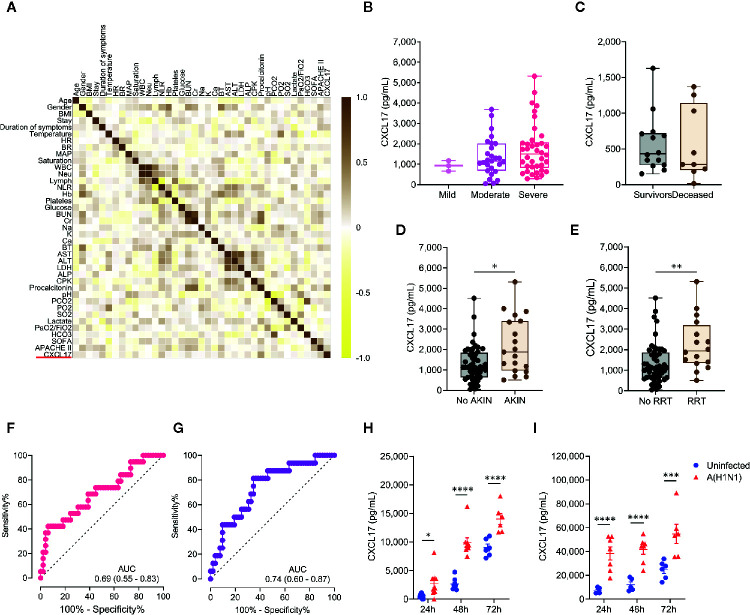
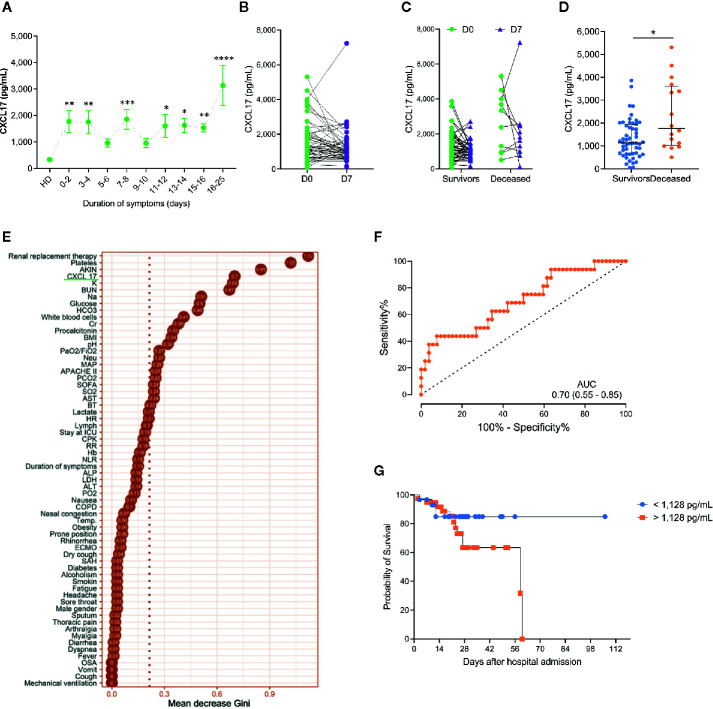
The C-X-C motif chemokine ligand 17 (CXCL17) is chemotactic for myeloid cells, exhibits bactericidal activity, and exerts anti-viral functions. This chemokine is constitutively expressed in the respiratory tract, suggesting a role in lung defenses. However, little is known about the participation of CXCL17 against relevant respiratory pathogens in humans. Here, we evaluated the serum levels and lung tissue expression pattern of CXCL17 in a cohort of patients with severe pandemic influenza A(H1N1) from Mexico City. Peripheral blood samples obtained on admission and seven days after hospitalization were processed for determinations of serum CXCL17 levels by enzyme-linked immunosorbent assay (ELISA). The expression of CXCL17 was assessed by immunohistochemistry (IHQ) in lung autopsy specimens from patients that succumbed to the disease. Serum CXCL17 levels were also analyzed in two additional comparative cohorts of coronavirus disease 2019 (COVID-19) and pulmonary tuberculosis (TB) patients. Additionally, the expression of CXCL17 was tested in lung autopsy specimens from COVID-19 patients. A total of 122 patients were enrolled in the study, from which 68 had pandemic influenza A(H1N1), 24 had COVID-19, and 30 with PTB. CXCL17 was detected in lung specimens from patients that died of pandemic influenza A(H1N1) and COVID-19. Interestingly, serum levels of CXCL17 were increased only in patients with pandemic influenza A(H1N1), but not COVID-19 and PTB. CXCL17 not only differentiated pandemic influenza A(H1N1) from other respiratory infections but showed prognostic value for influenza-associated mortality and renal failure in machine-learning algorithms and regression analyses. Using cell culture assays, we also identified that human alveolar A549 cells and peripheral blood monocyte-derived macrophages increase their CXCL17 production capacity after influenza A(H1N1) pdm09 virus infection. Our results for the first time demonstrate an induction of CXCL17 specifically during pandemic influenza A(H1N1), but not COVID-19 and PTB in humans. These findings could be of great utility to differentiate influenza and COVID-19 and to predict poor prognosis specially at settings of high incidence of pandemic A(H1N1). Future studies on the role of CXCL17 not only in severe pandemic influenza, but also in seasonal influenza, COVID-19, and PTB are required to validate our results.
C-X-C 基序趋化因子配体 17(CXCL17)对髓样细胞具有趋化作用,具有杀菌活性,并发挥抗病毒作用。这种趋化因子在呼吸道中持续表达,提示其在肺部防御中具有重要作用。然而,关于 CXCL17 在人类相关呼吸道病原体中的作用知之甚少。在这里,我们评估了来自墨西哥城的严重大流行性流感 A(H1N1)患者队列中的血清 CXCL17 水平和肺组织表达模式。入院时和住院后 7 天采集的外周血样本通过酶联免疫吸附测定(ELISA)进行血清 CXCL17 水平的测定。通过免疫组织化学(IHQ)评估死于疾病的患者肺尸检标本中 CXCL17 的表达。还在另外两个比较队列中分析了 2019 年冠状病毒病(COVID-19)和肺结核(TB)患者的血清 CXCL17 水平。此外,还在 COVID-19 患者的肺尸检标本中测试了 CXCL17 的表达。共纳入 122 例患者进行研究,其中 68 例为大流行性流感 A(H1N1),24 例为 COVID-19,30 例为 PTB。死于大流行性流感 A(H1N1)和 COVID-19 的患者的肺标本中检测到 CXCL17。有趣的是,只有大流行性流感 A(H1N1)患者的血清 CXCL17 水平升高,而 COVID-19 和 PTB 患者则没有。CXCL17 不仅可以区分大流行性流感 A(H1N1)与其他呼吸道感染,而且在机器学习算法和回归分析中对流感相关死亡率和肾功能衰竭具有预后价值。使用细胞培养测定,我们还发现人类肺泡 A549 细胞和外周血单核细胞衍生的巨噬细胞在感染 A(H1N1)pdm09 病毒后增加了 CXCL17 的产生能力。我们的研究结果首次证明,在人类中,特别是在大流行性流感 A(H1N1)高发地区,CXCL17 的诱导是特异性的,但 COVID-19 和 PTB 则不是。这些发现对于区分流感和 COVID-19 以及预测预后不良特别有用,尤其是在大流行性流感 A(H1N1)高发地区。需要进一步研究 CXCL17 在大流行性流感、季节性流感、COVID-19 和 PTB 中的作用,以验证我们的结果。