ELKH-PTE Clinical Neuroscience MR Research Group, Ret Str. 2, 7623, Pecs, Hungary.
Pecs Diagnostic Centre, Rét Street 2, 7623, Pecs, Hungary.
Sci Rep. 2023 Apr 5;13(1):5598. doi: 10.1038/s41598-023-32679-1.
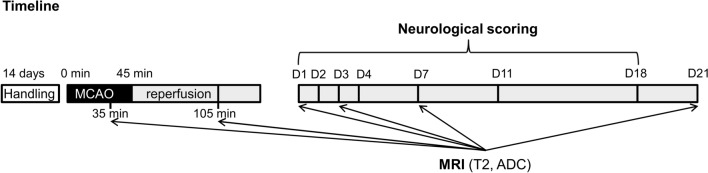
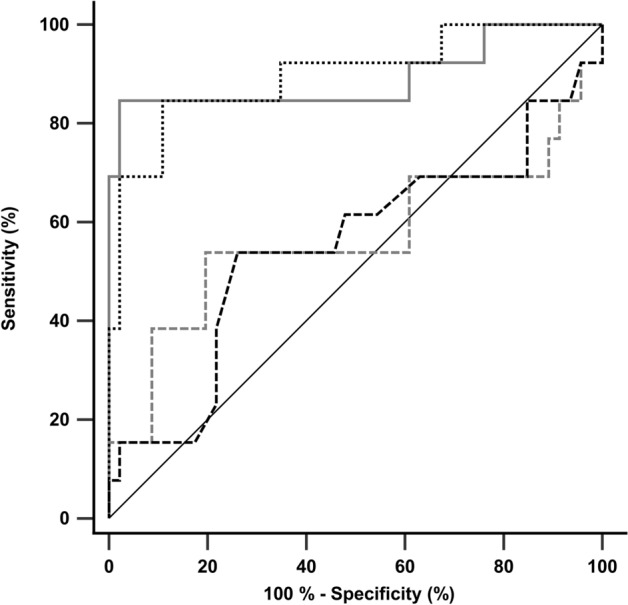
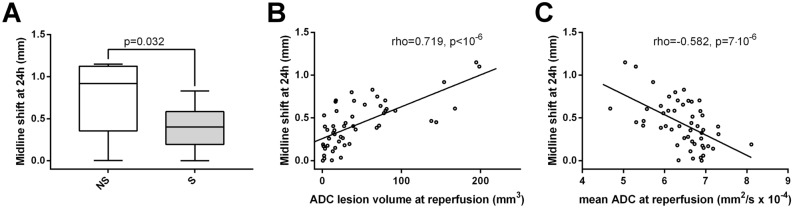
Middle cerebral artery occlusion (MCAO) models show substantial variability in outcome, introducing uncertainties in the evaluation of treatment effects. Early outcome predictors would be essential for prognostic purposes and variability control. We aimed to compare apparent diffusion coefficient (ADC) MRI data obtained during MCAO and shortly after reperfusion for their potentials in acute-phase outcome prediction. Fifty-nine male rats underwent a 45-min MCAO. Outcome was defined in three ways: 21-day survival; 24 h midline-shift and neurological scores. Animals were divided into two groups: rats surviving 21 days after MCAO (survival group, n = 46) and rats dying prematurely (non-survival/NS group, n = 13). At reperfusion, NS group showed considerably larger lesion volume and lower mean ADC of the initial lesion site (p < 0.0001), while during occlusion there were no significant group differences. At reperfusion, each survival animal showed decreased lesion volume and increased mean ADC of the initial lesion site compared to those during occlusion (p < 10), while NS group showed a mixed pattern. At reperfusion, lesion volume and mean ADC of the initial lesion site were significantly associated with 24 h midline-shift and neurological scores. Diffusion MRI performed soon after reperfusion has a great impact in early-phase outcome prediction, and it works better than the measurement during occlusion.
大脑中动脉闭塞 (MCAO) 模型的结果存在很大的变异性,这给治疗效果的评估带来了不确定性。早期的预后预测指标对于预后和变异性控制至关重要。我们旨在比较 MCAO 期间和再灌注后不久获得的表观扩散系数 (ADC) MRI 数据,以评估它们在急性预后预测中的潜力。59 只雄性大鼠接受了 45 分钟的 MCAO。采用三种方法定义结局:21 天存活率;24 小时中线移位和神经评分。将动物分为两组:MCAO 后存活 21 天的大鼠(存活组,n = 46)和过早死亡的大鼠(非存活/NS 组,n = 13)。在再灌注时,NS 组的病灶体积明显较大,初始病灶部位的平均 ADC 值较低(p < 0.0001),而在闭塞期间无明显组间差异。在再灌注时,与闭塞期间相比,每个存活动物的病灶体积减小,初始病灶部位的平均 ADC 值增加(p < 10),而 NS 组表现出混合模式。在再灌注时,初始病灶部位的病灶体积和平均 ADC 值与 24 小时中线移位和神经评分显著相关。再灌注后不久进行的弥散 MRI 对早期预后预测有很大影响,效果优于闭塞期间的测量。