Li Dong, Wang Deng, Cui Wenlai, Yan Jin, Zang Wanli, Li Chenmu
School of Physical Education and Sports Science, Guangzhou Sport University, Guangzhou, China.
LFE Research Group, Department of Health and Human Performance, Universidad Politécnica de Madrid, Madrid, Spain.
Front Neurosci. 2023 Mar 20;17:1139263. doi: 10.3389/fnins.2023.1139263. eCollection 2023.
Previous studies have shown that physical activity interventions positively affect core symptoms and executive functioning in children with attention-deficit/hyperactivity disorder (ADHD). However, comparisons between different physical activity interventions still need to be made. This study is the first to analyze the effects of 10 different types of physical activity on children with ADHD through a network meta-analysis.
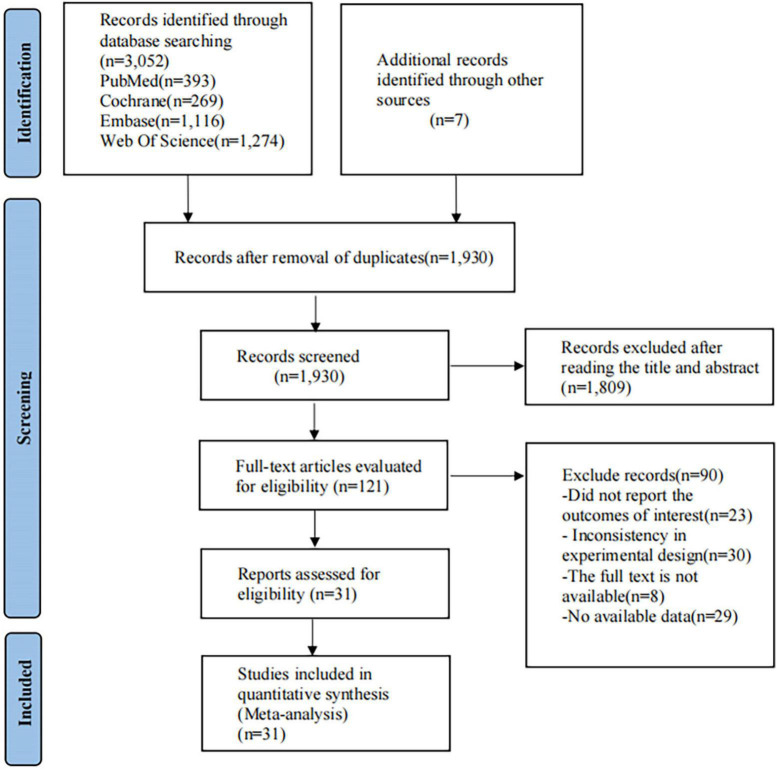
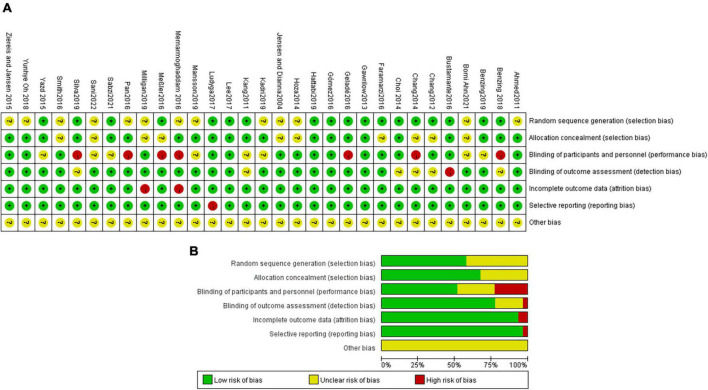
PubMed, Embase, Web of Science, and Cochrane Library databases were searched for randomized controlled trials on the effects of physical activity interventions on children with ADHD. The search time frame was from database creation to October 2022. Two investigators independently performed literature screening, extraction, and quality assessment. Network meta-analysis was performed with Stata 15.1.
A total of 31 studies were included, and the results indicated that perceptual-motor training was the most effective in terms of motor ability and working memory (SUCRA = 82.7 and 73.3%, respectively). For attention problems and cognitive flexibility, aquatic exercise was the most effective (SUCRA = 80.9 and 86.6%, respectively). For social problems, horsemanship was the most effective (SUCRA = 79.4%). For inhibition switching, cognitive-motor training was the most effective (SUCRA = 83.5%).
Our study revealed that aquatic exercise and perceptual-motor training had a superior overall performance. However, the effects of various physical activity interventions on different indicators in children with ADHD can vary depending on the individual and the intervention's validity. To ensure an appropriate physical activity intervention is selected, it is important to assess the severity of symptoms exhibited by children with ADHD beforehand.
先前的研究表明,体育活动干预对注意力缺陷多动障碍(ADHD)儿童的核心症状和执行功能有积极影响。然而,仍需对不同的体育活动干预进行比较。本研究首次通过网络荟萃分析来分析10种不同类型的体育活动对ADHD儿童的影响。
检索PubMed、Embase、Web of Science和Cochrane图书馆数据库,查找关于体育活动干预对ADHD儿童影响的随机对照试验。检索时间范围为从数据库创建至2022年10月。两名研究者独立进行文献筛选、提取和质量评估。使用Stata 15.1进行网络荟萃分析。
共纳入31项研究,结果表明,就运动能力和工作记忆而言,感知运动训练最为有效(累积排序曲线下面积分别为82.7%和73.3%)。对于注意力问题和认知灵活性,水上运动最为有效(累积排序曲线下面积分别为80.9%和86.6%)。对于社交问题,马术最为有效(累积排序曲线下面积为79.4%)。对于抑制转换,认知运动训练最为有效(累积排序曲线下面积为83.5%)。
我们的研究表明,水上运动和感知运动训练具有更优的总体表现。然而,各种体育活动干预对ADHD儿童不同指标的影响可能因个体和干预的有效性而异。为确保选择合适的体育活动干预措施,事先评估ADHD儿童所表现出症状的严重程度很重要。