Department of Clinical Nutrition, Inner Mongolia People's Hospital, Hohhot, Inner Mongolia, China.
Inner Mongolia Key Laboratory of Nutrition and Health, Inner Mongolia People's Hospital, Hohhot, Inner Mongolia, China.
Microbiol Spectr. 2023 Jun 15;11(3):e0444022. doi: 10.1128/spectrum.04440-22. Epub 2023 Apr 6.
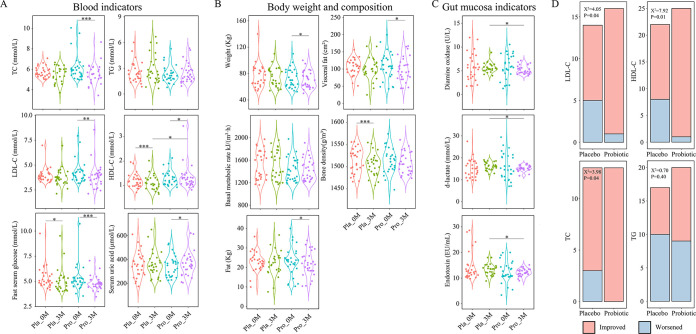
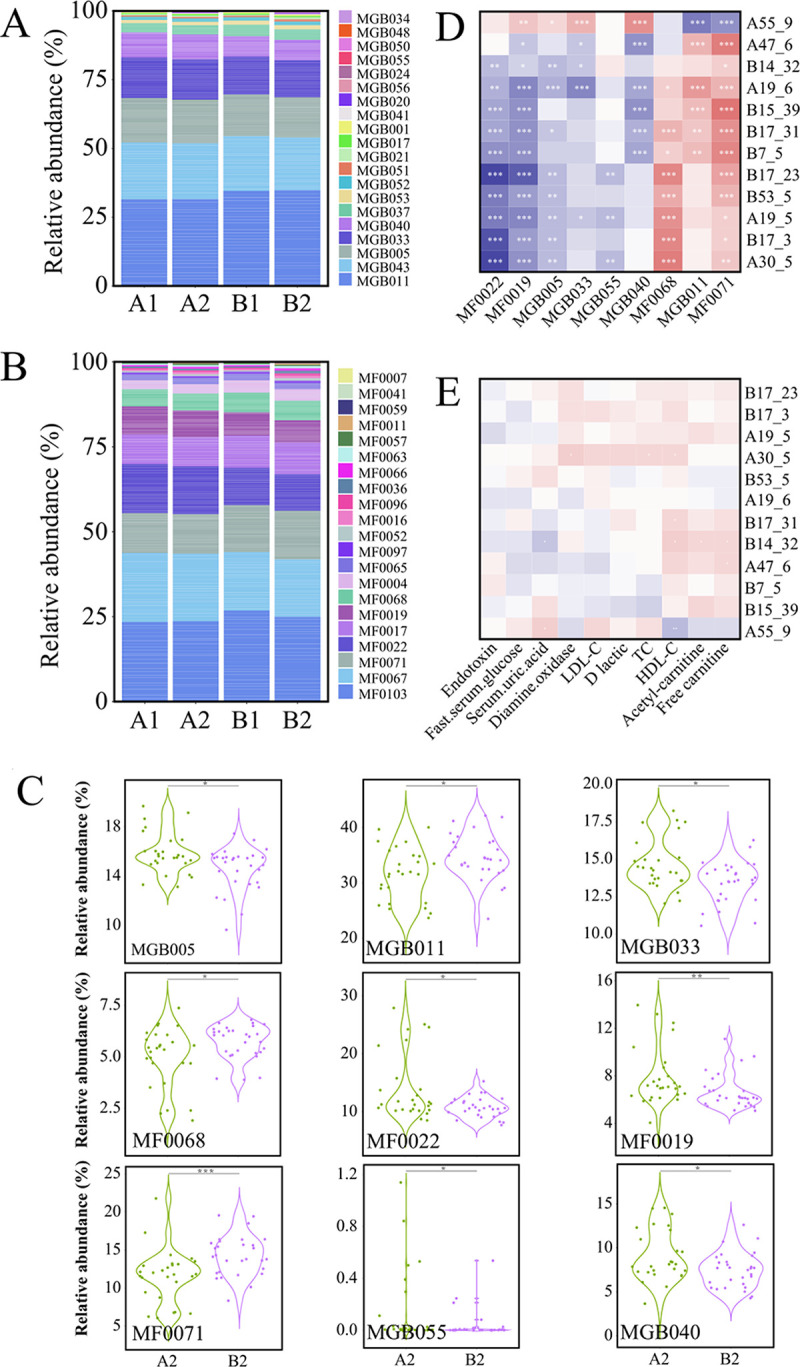
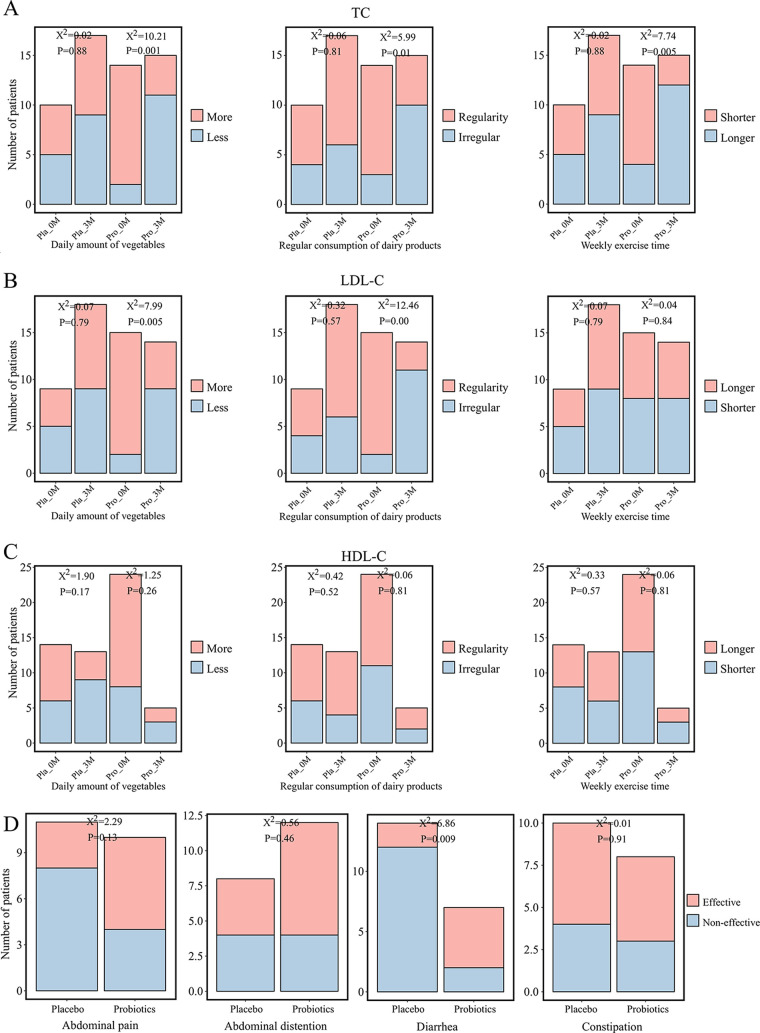
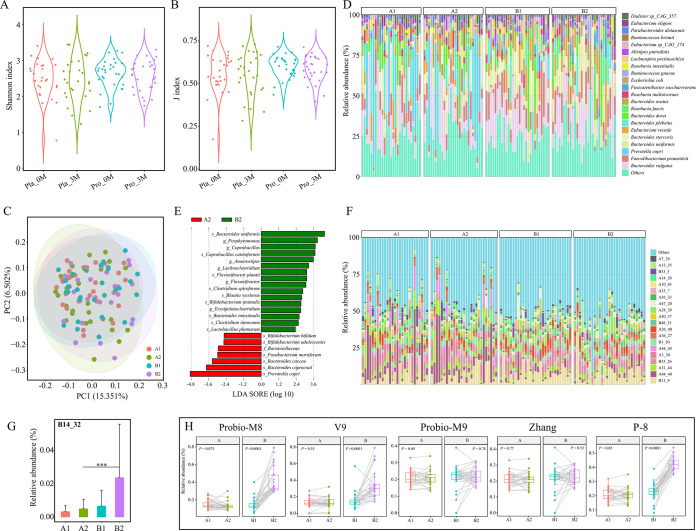
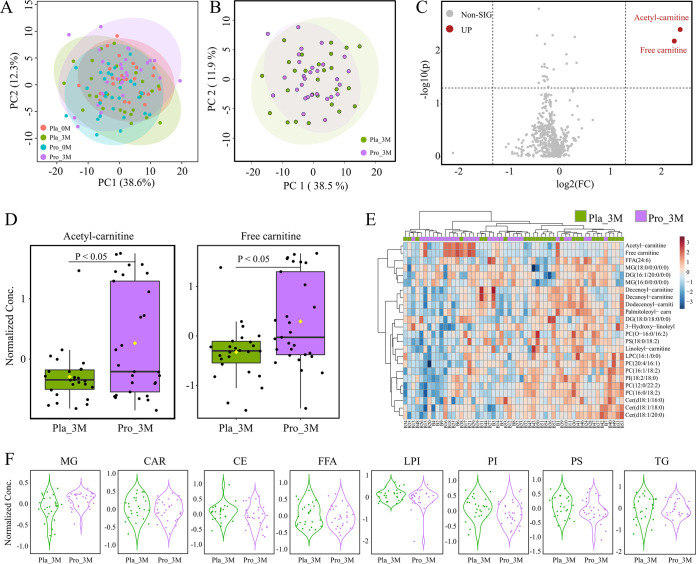
Hyperlipidemia is a key risk factor for cardiovascular disease, and it is associated with lipid metabolic disorders and gut microbiota dysbiosis. Here, we aimed to investigate the beneficial effects of 3-month intake of a mixed probiotic formulation in hyperlipidemic patients ( = 27 and 29 in placebo and probiotic groups, respectively). The blood lipid indexes, lipid metabolome, and fecal microbiome before and after the intervention were monitored. Our results showed that probiotic intervention could significantly decrease the serum levels of total cholesterol, triglyceride, and low-density lipoprotein cholesterol (0.05), while increasing the levels of high-density lipoprotein cholesterol (0.05) in patients with hyperlipidemia. Probiotic recipients showing improved blood lipid profile also exhibited significant differences in their lifestyle habits after the 3-month intervention, with an increase in daily intake of vegetable and dairy products, as well as weekly exercise time (0.05). Moreover, two blood lipid metabolites (namely, acetyl-carnitine and free carnitine) significantly increased after probiotic supplementation cholesterol (0.05). In addition, probiotic-driven mitigation of hyperlipidemic symptoms were accompanied by increases in beneficial bacteria like Bifidobacterium animalis subsp. and Lactiplantibacillus plantarum in patients' fecal microbiota. These results supported that mixed probiotic application could regulate host gut microbiota balance, lipid metabolism, and lifestyle habits, through which hyperlipidemic symptoms could be alleviated. The findings of this study urge further research and development of probiotics into nutraceuticals for managing hyperlipidemia. The human gut microbiota have a potential effect on the lipid metabolism and are closely related to the disease hyperlipidemia. Our trial has demonstrated that 3-month intake of a mixed probiotic formulation alleviates hyperlipidemic symptoms, possibly by modulation of gut microbes and host lipid metabolism. The findings of the present study provide new insights into the treatment of hyperlipidemia, mechanisms of novel therapeutic strategies, and application of probiotics-based therapy.
高脂血症是心血管疾病的一个关键风险因素,它与脂质代谢紊乱和肠道微生物失调有关。在这里,我们旨在研究混合益生菌配方对高脂血症患者(分别为安慰剂组和益生菌组的 27 人和 29 人)摄入 3 个月的有益效果。监测干预前后的血脂指标、脂质代谢组和粪便微生物群。我们的结果表明,益生菌干预可显著降低高脂血症患者的血清总胆固醇、甘油三酯和低密度脂蛋白胆固醇水平(0.05),同时增加高密度脂蛋白胆固醇水平(0.05)。接受益生菌治疗的患者在 3 个月的干预后,血脂谱得到改善,他们的生活习惯也有显著差异,蔬菜和乳制品的日摄入量以及每周运动时间都有所增加(0.05)。此外,两种血脂代谢物(即乙酰肉碱和游离肉碱)在益生菌补充后显著增加胆固醇(0.05)。此外,益生菌缓解高脂血症症状的同时,患者粪便微生物群中的双歧杆菌动物亚种和植物乳杆菌等有益细菌数量增加。这些结果表明,混合益生菌的应用可以通过调节宿主肠道微生物群平衡、脂质代谢和生活习惯来缓解高脂血症症状。本研究的结果促使进一步研究和开发益生菌作为治疗高脂血症的营养保健品。人类肠道微生物群对脂质代谢有潜在影响,与疾病高脂血症密切相关。我们的试验表明,混合益生菌配方摄入 3 个月可缓解高脂血症症状,可能是通过调节肠道微生物和宿主脂质代谢。本研究的结果为高脂血症的治疗、新治疗策略的机制以及益生菌治疗的应用提供了新的见解。