Department of Biology, The Johns Hopkins University, Baltimore, MD 21218, USA.
Department of Biology, Tufts University, Medford, MA 02155, USA.
Sci Adv. 2023 Apr 7;9(14):eadh0411. doi: 10.1126/sciadv.adh0411.
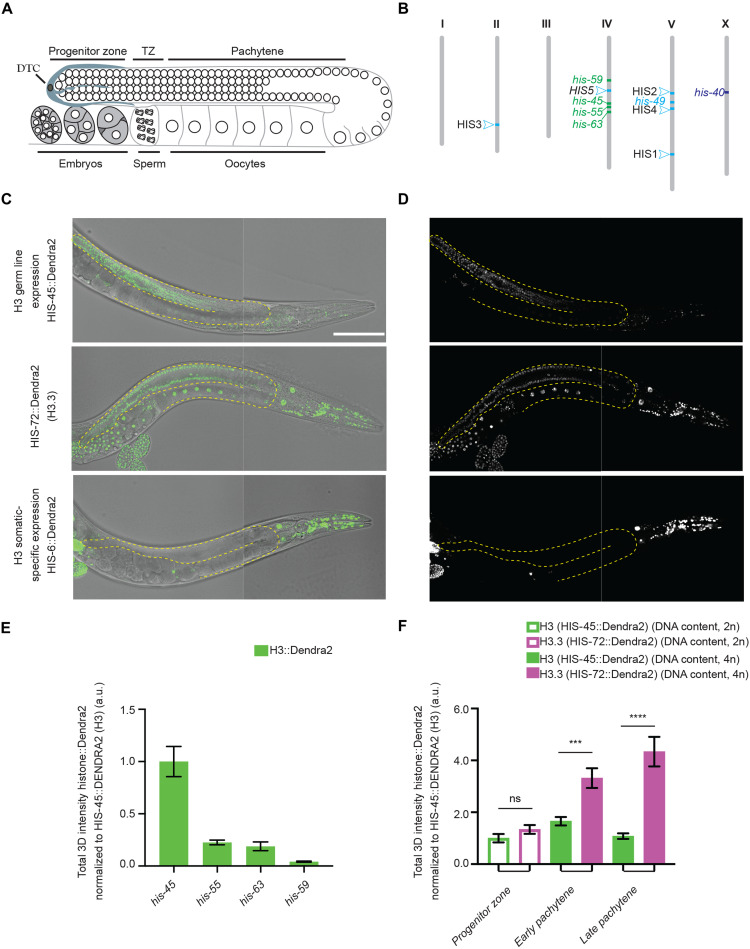
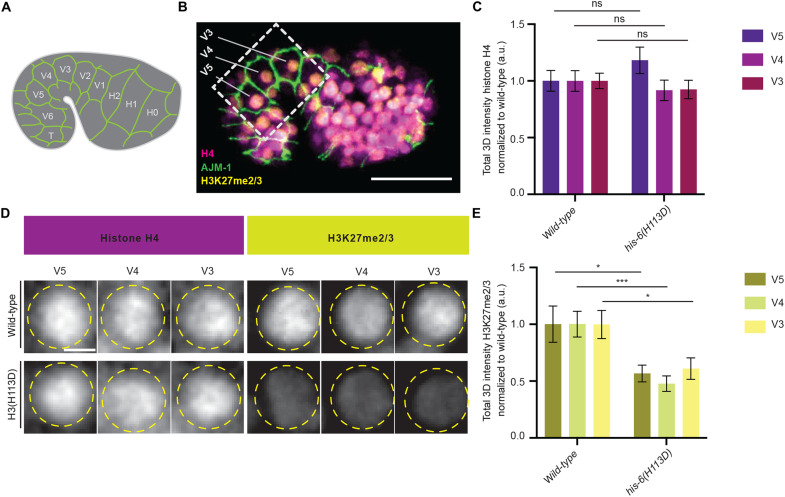
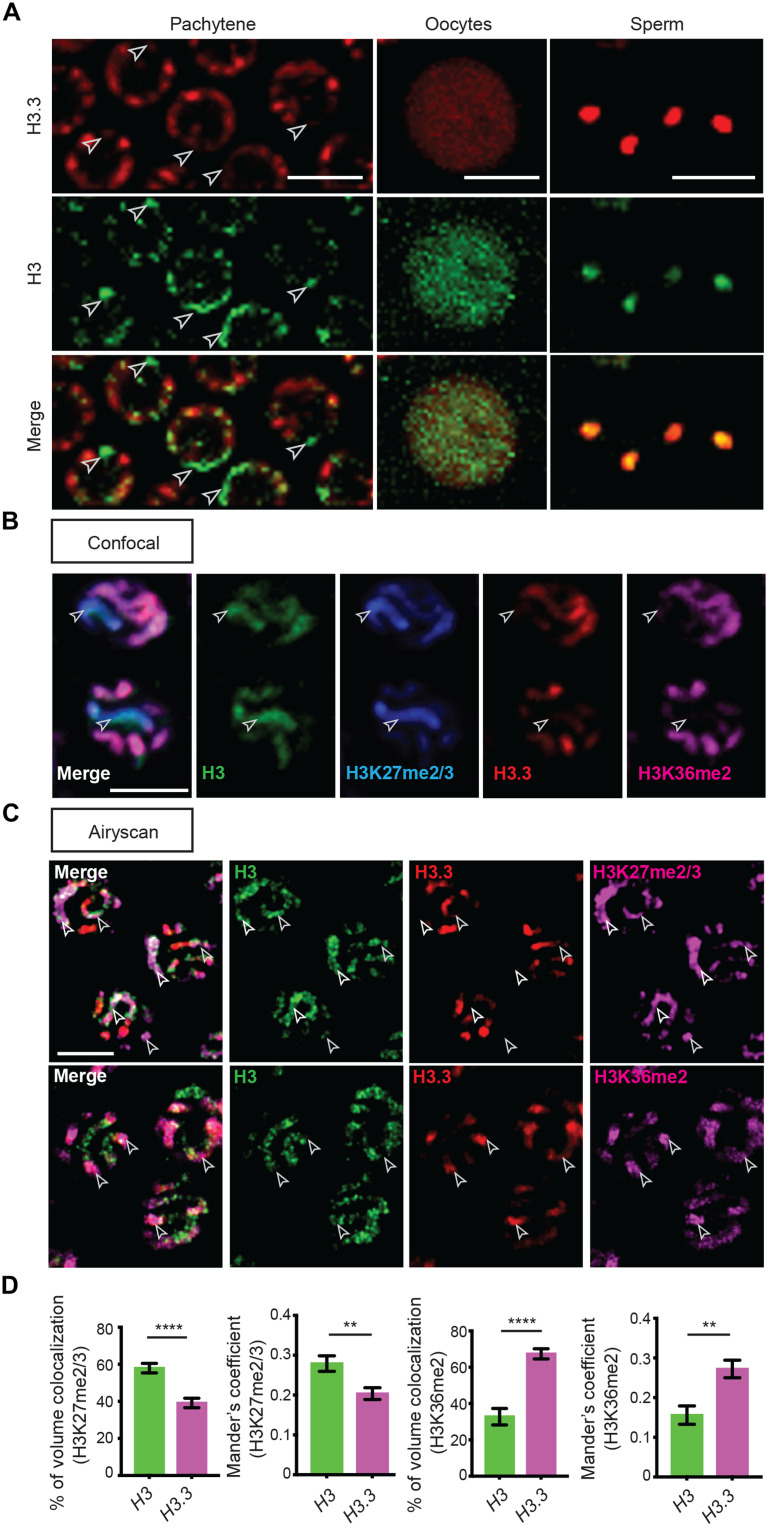
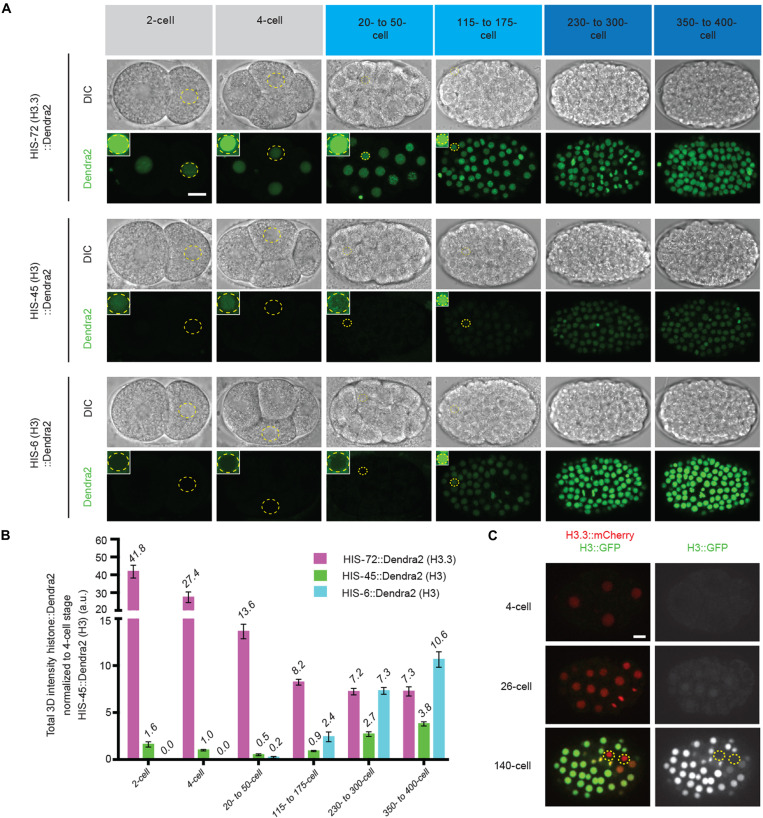
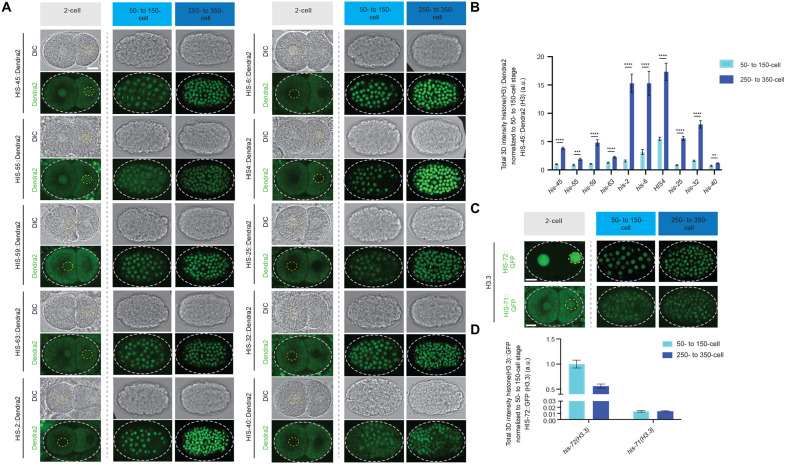
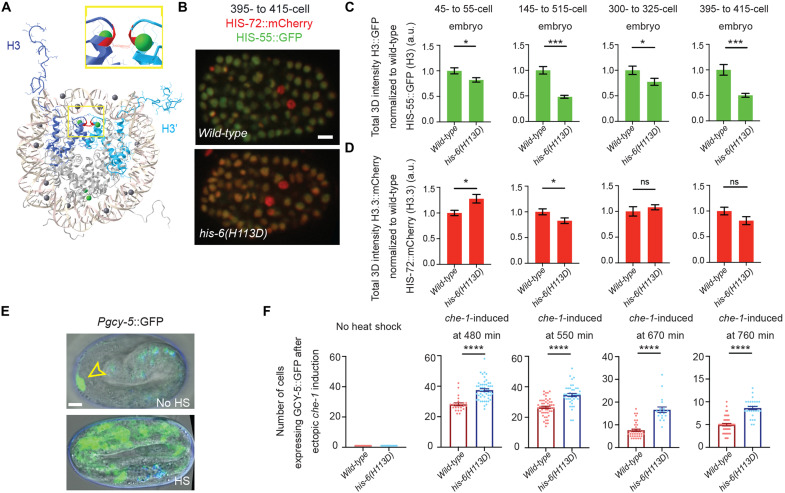
During metazoan development, the marked change in developmental potential from the parental germline to the embryo raises an important question regarding how the next life cycle is reset. As the basic unit of chromatin, histones are essential for regulating chromatin structure and function and, accordingly, transcription. However, the genome-wide dynamics of the canonical, replication-coupled (RC) histones during gametogenesis and embryogenesis remain unknown. In this study, we use CRISPR-Cas9-mediated gene editing in to investigate the expression pattern and role of individual RC histone genes and compare them to the histone variant, . We report a tightly regulated epigenome landscape change from the germline to embryos that are regulated through differential expression of distinct histone gene clusters. Together, this study reveals that a change from a H3.3- to H3-enriched epigenome during embryogenesis restricts developmental plasticity and uncovers distinct roles for individual genes in regulating germline chromatin.
在后生动物的发育过程中,从亲代生殖细胞到胚胎的发育潜力的显著变化提出了一个重要的问题,即如何重置下一个生命周期。作为染色质的基本单位,组蛋白对于调节染色质结构和功能以及转录是必不可少的。然而,在配子发生和胚胎发生过程中,经典的、与复制偶联的(RC)组蛋白的全基因组动力学仍然未知。在这项研究中,我们使用 CRISPR-Cas9 介导的基因编辑在 中研究单个 RC 组蛋白 基因的表达模式和作用,并将其与组蛋白变体 进行比较。我们报告了从生殖细胞到胚胎的严格调控的表观基因组景观变化,这些变化是通过不同的组蛋白基因簇的差异表达来调节的。总的来说,这项研究揭示了胚胎发生过程中从 H3.3 到 H3 富集的表观基因组的变化限制了发育的可塑性,并揭示了单个 基因在调节生殖细胞染色质方面的不同作用。