Zhao Qi, Pan Zhenghui, Liu Binbin, Bao Changyuan, Liu Ximeng, Sun Jianguo, Xie Shaorong, Wang Qing, Wang John, Gao Yanfeng
Department of Materials Science and Engineering, Shanghai University, Shanghai, 200444, People's Republic of China.
Department of Materials Science and Engineering, National University of Singapore, Singapore, 117574, Singapore.
Nanomicro Lett. 2023 Apr 7;15(1):87. doi: 10.1007/s40820-023-01056-y.
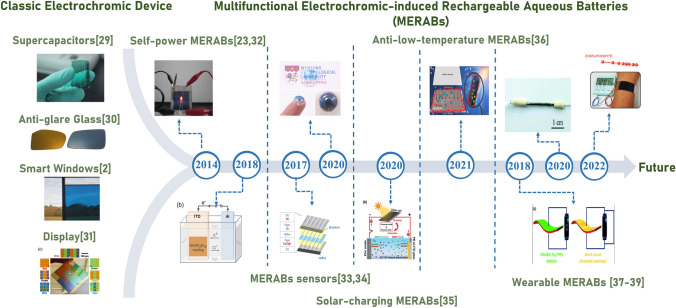
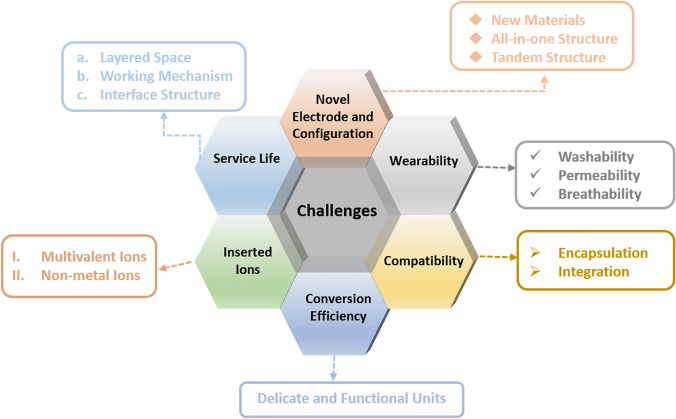
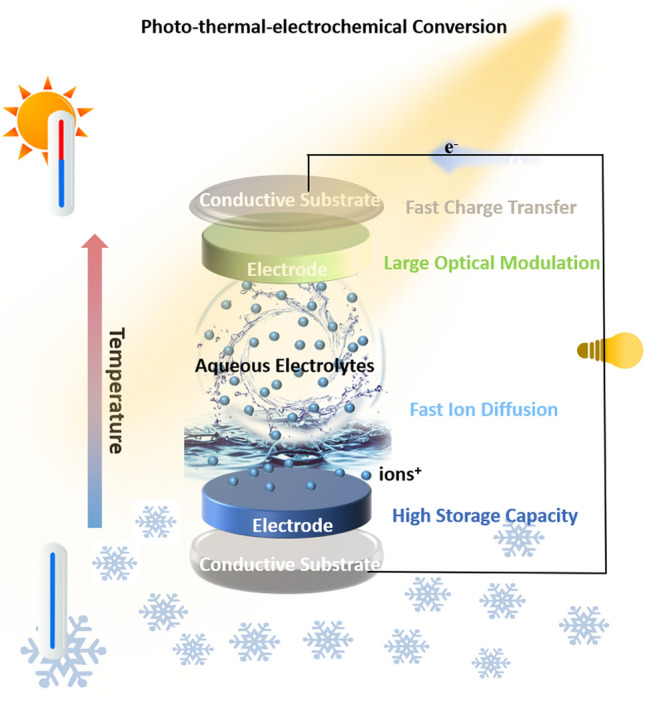
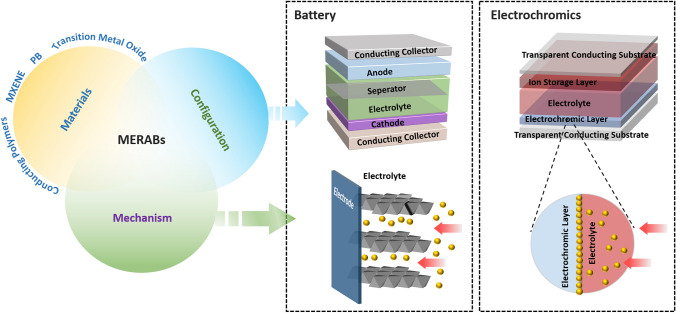
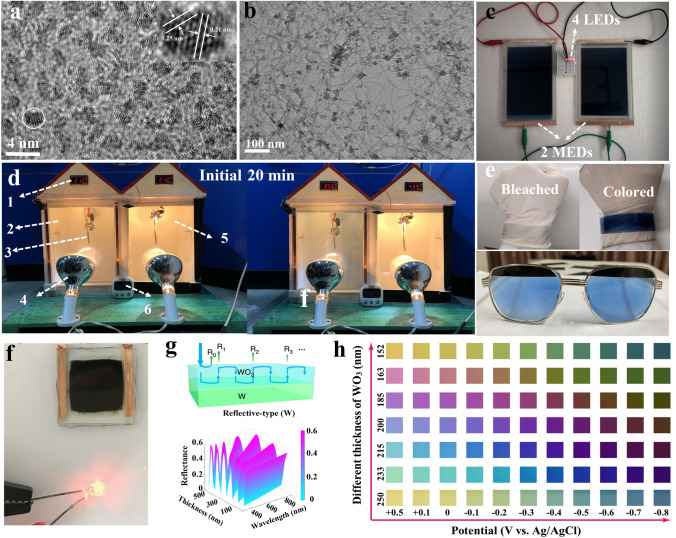
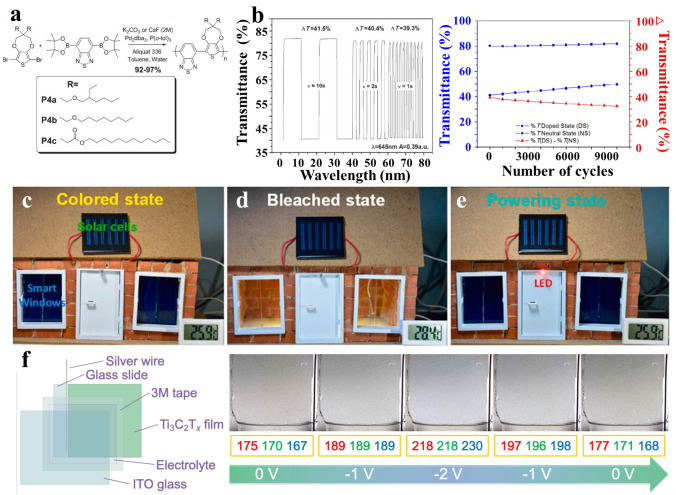
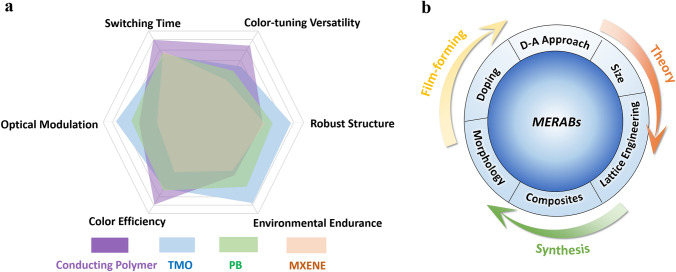
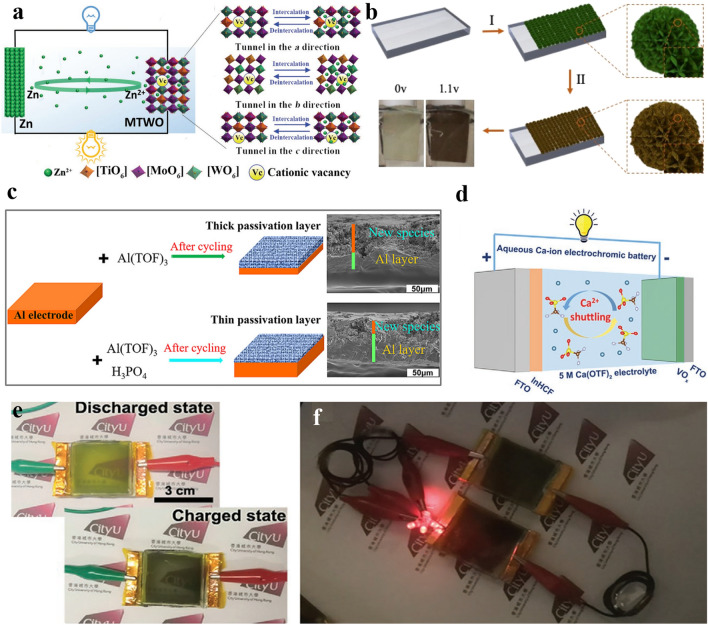
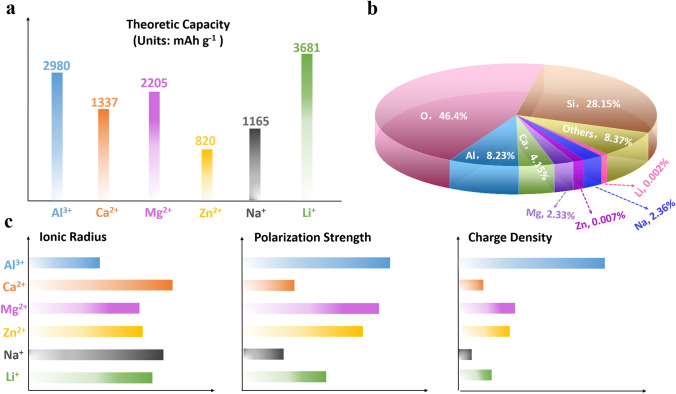
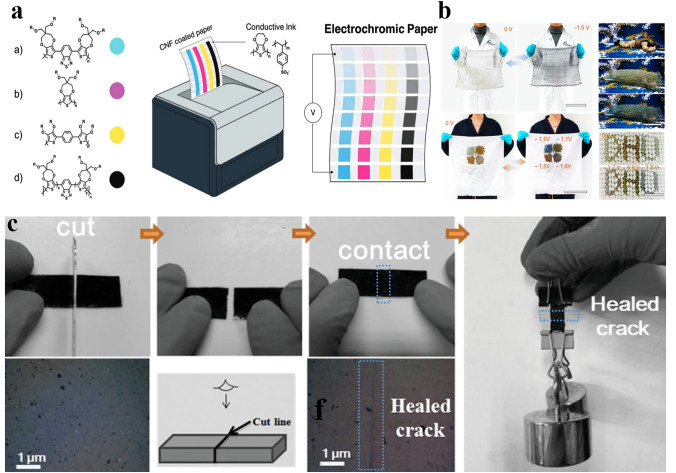
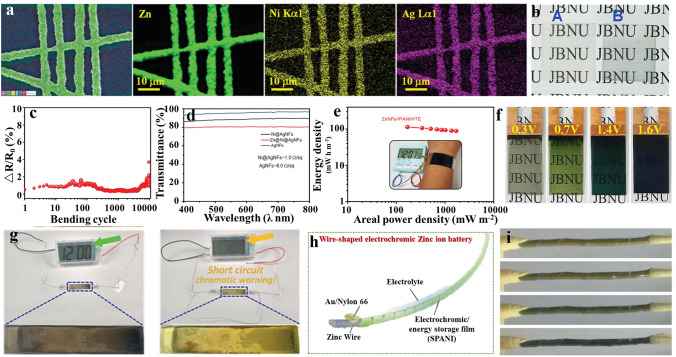
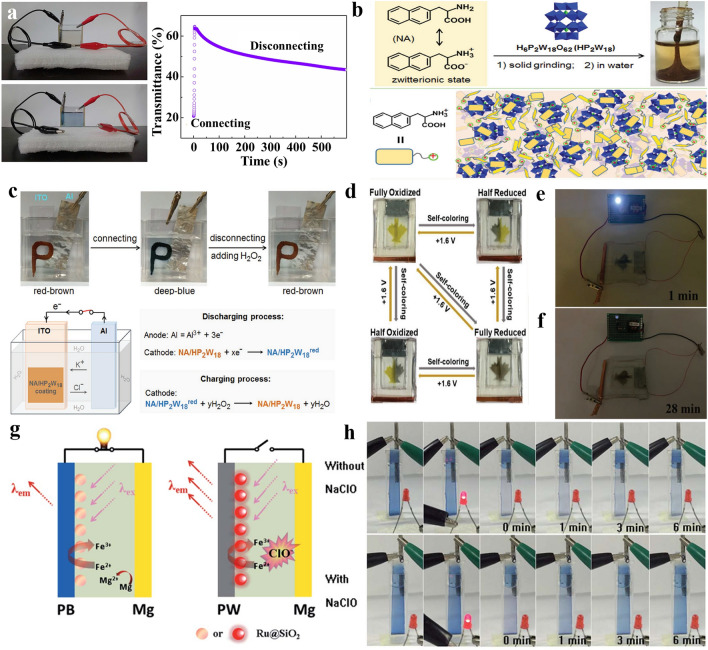
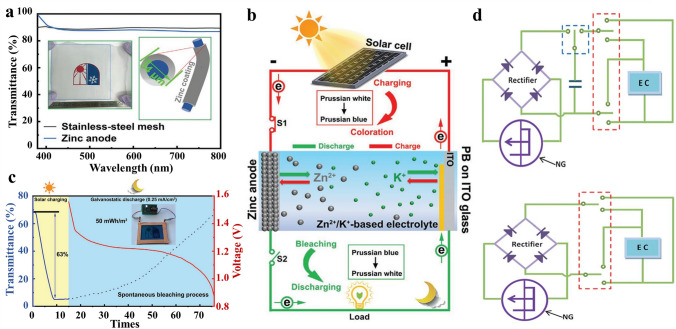
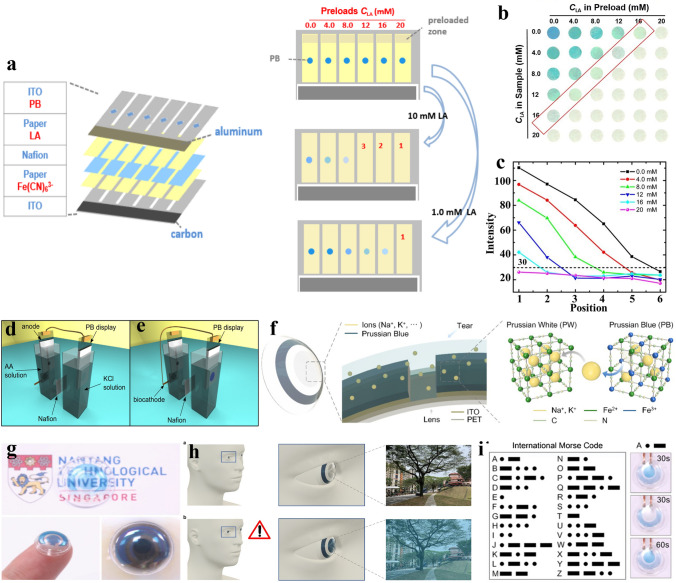
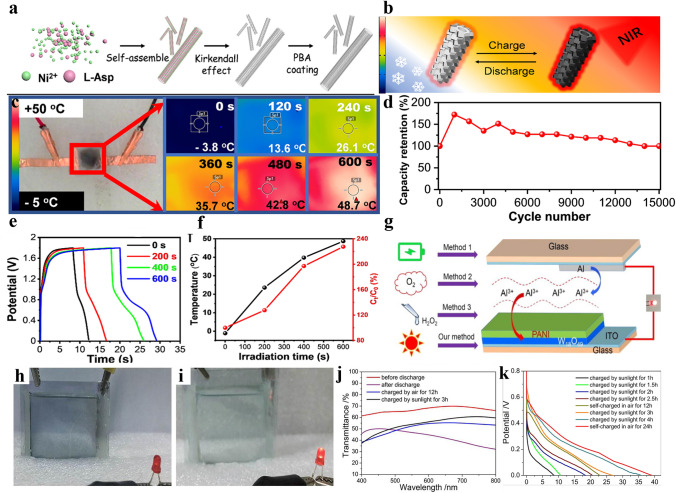
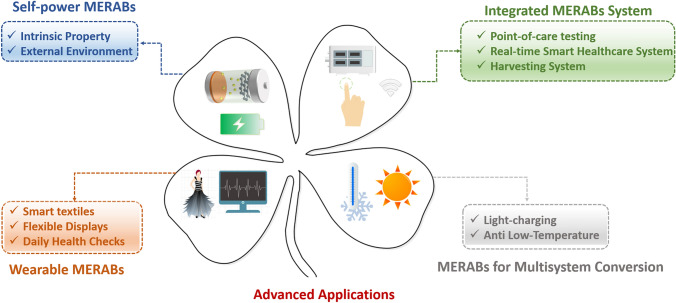
Multifunctional electrochromic-induced rechargeable aqueous batteries (MERABs) integrate electrochromism and aqueous ion batteries into one platform, which is able to deliver the conversion and storage of photo-thermal-electrochemical sources. Aqueous ion batteries compensate for the drawbacks of slow kinetic reactions and unsatisfied storage capacities of electrochromic devices. On the other hand, electrochromic technology can enable dynamically regulation of solar light and heat radiation. However, MERABs still face several technical issues, including a trade-off between electrochromic and electrochemical performance, low conversion efficiency and poor service life. In this connection, novel device configuration and electrode materials, and an optimized compatibility need to be considered for multidisciplinary applications. In this review, the unique advantages, key challenges and advanced applications are elucidated in a timely and comprehensive manner. Firstly, the prerequisites for effective integration of the working mechanism and device configuration, as well as the choice of electrode materials are examined. Secondly, the latest advances in the applications of MERABs are discussed, including wearable, self-powered, integrated systems and multisystem conversion. Finally, perspectives on the current challenges and future development are outlined, highlighting the giant leap required from laboratory prototypes to large-scale production and eventual commercialization.
多功能电致变色诱导可充电水系电池(MERABs)将电致变色和水系离子电池集成到一个平台,能够实现光热 - 电化学源的转换与存储。水系离子电池弥补了电致变色器件动力学反应缓慢和存储容量不足的缺点。另一方面,电致变色技术能够动态调节太阳光和热辐射。然而,MERABs仍面临一些技术问题,包括电致变色性能与电化学性能之间的权衡、转换效率低和使用寿命短。就此而言,需要考虑新颖的器件结构和电极材料,以及优化兼容性以实现多学科应用。在本综述中,及时且全面地阐明了其独特优势、关键挑战和先进应用。首先,研究了有效整合工作机制和器件结构的前提条件以及电极材料的选择。其次,讨论了MERABs应用的最新进展,包括可穿戴、自供电、集成系统和多系统转换。最后,概述了当前挑战和未来发展的前景,强调了从实验室原型到大规模生产并最终实现商业化所需的巨大飞跃。