Gilead Sciences, Foster City, CA, USA.
Department of Internal Medicine, Kyung Hee University College of Medicine, Seoul, Korea.
Korean J Intern Med. 2023 May;38(3):338-348. doi: 10.3904/kjim.2022.215. Epub 2023 Apr 10.
BACKGROUND/AIMS: Chronic hepatitis C (CHC) is the second leading cause of liver-related mortality and is more prevalent in the elderly population in Korea. Decisions to initiate treatment and selection of proper antiviral agents may be challenging among elderly patients due to relevant comorbidities, comedications, and drug-drug interaction (DDI). It may be helpful to understand the current demographic status and comorbidities of CHC patients in the country.
Patients aged ≥ 18 years and diagnosed with CHC (KCD-7 code B18.2) were extracted from the Korean Health Insurance Review & Assessment Service database in 2018. Data on comorbidities and comedications were assessed and potential DDIs were analyzed.
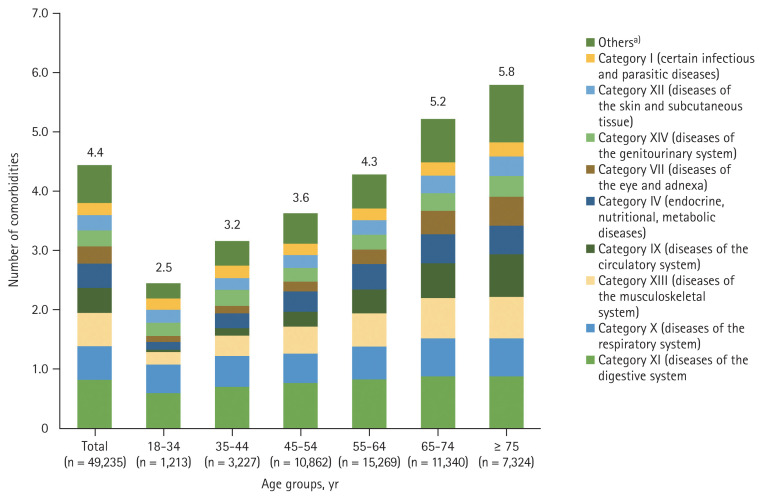
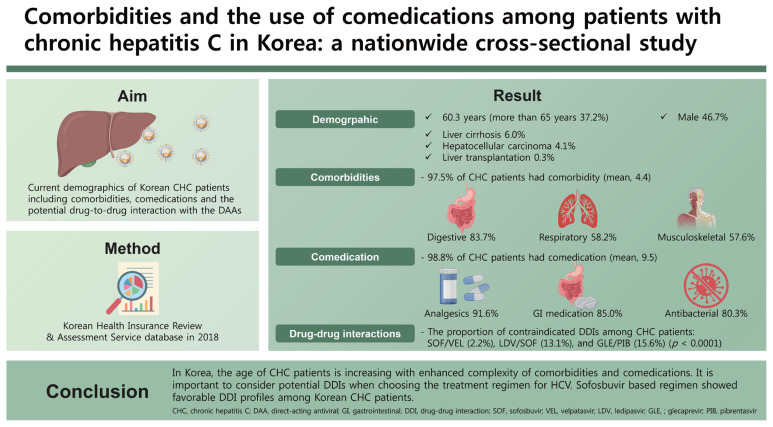
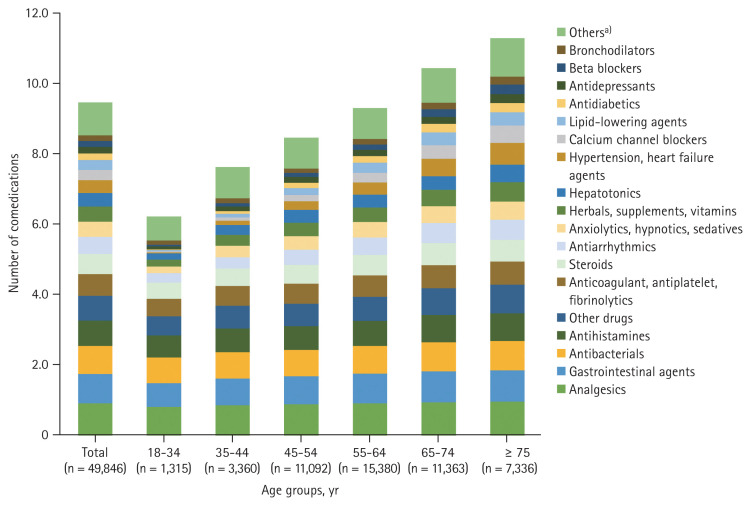
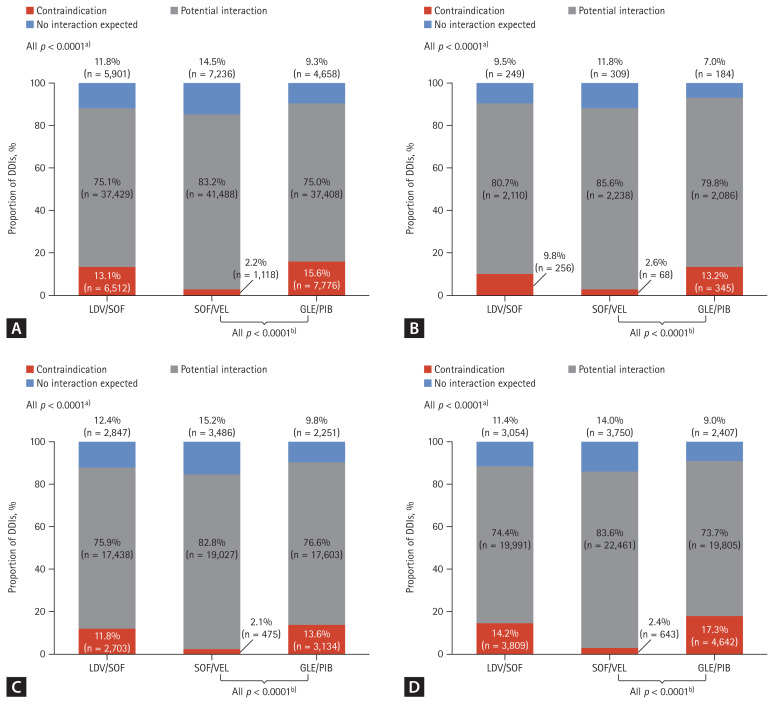
A total of 50,476 patients with CHC, with a mean age of 60.3 years and 46.7% male patients were identified. The proportion of patients with cirrhosis, hepatocellular carcinoma, and liver transplantation was 6.0%, 4.1%, and 0.3%, respectively and 37.2% of patients were more than 65 years of age. The three most common comorbidities were diseases of the digestive system (83.7%), respiratory system (58.2%), and musculoskeletal system and connective tissue (57.6%). The three most common comedications were analgesics (91.6%), gastrointestinal agents (85%), and antibacterials (80.3%). Lipid-lowering agents and anticonvulsants were prescribed in 28.5% and 14.8% of patients. Rate of potential DDI for contraindication was 2.2%, 13.1%, and 15.6% with sofosbuvir/velpatasvir, ledipasvir/sofosbuvir, and glecaprevir/pibrentasvir.
With the increasing age of patients with CHC, comorbidity, comedication, and potential DDI should be considered when choosing antivirals in Korea. Sofosbuvir-based regimens showed favorable DDI profiles among Korean patients.
背景/目的:慢性丙型肝炎(CHC)是导致与肝脏相关死亡的第二大原因,在韩国老年人群中更为普遍。由于相关合并症、合并用药和药物-药物相互作用(DDI),老年患者开始治疗和选择适当的抗病毒药物的决策可能具有挑战性。了解该国 CHC 患者的当前人口统计学状况和合并症可能会有所帮助。
从 2018 年韩国健康保险审查与评估服务数据库中提取年龄≥18 岁且诊断为 CHC(KCD-7 代码 B18.2)的患者。评估合并症和合并用药数据,并分析潜在的 DDI。
共确定了 50476 例 CHC 患者,平均年龄为 60.3 岁,男性患者占 46.7%。肝硬化、肝细胞癌和肝移植患者的比例分别为 6.0%、4.1%和 0.3%,37.2%的患者年龄超过 65 岁。最常见的三种合并症是消化系统疾病(83.7%)、呼吸系统疾病(58.2%)和肌肉骨骼系统和结缔组织疾病(57.6%)。最常见的三种合并用药是镇痛药(91.6%)、胃肠药(85%)和抗菌药(80.3%)。降脂药和抗惊厥药分别在 28.5%和 14.8%的患者中开具。索磷布韦/维帕他韦、达拉他韦/索磷布韦和格卡瑞韦/哌仑他韦的潜在 DDI 因禁忌证而出现的发生率分别为 2.2%、13.1%和 15.6%。
随着 CHC 患者年龄的增长,在韩国选择抗病毒药物时应考虑合并症、合并用药和潜在的 DDI。基于索磷布韦的方案在韩国患者中显示出良好的 DDI 特征。