Bhavsar Swapnil Parashram, Olsen Lotte, Løkke Cecilie, Koster Jan, Flægstad Trond, Einvik Christer
Pediatric Research Group, Department of Clinical Medicine, Faculty of Health Science, UiT-The Arctic University of Norway, Tromsø, Norway.
Department of Oncogenomics, Center for Experimental and Molecular Medicine (CEMM), Amsterdam University Medical Centers, University of Amsterdam, Amsterdam, Netherlands.
Front Pediatr. 2023 Mar 24;11:1098999. doi: 10.3389/fped.2023.1098999. eCollection 2023.
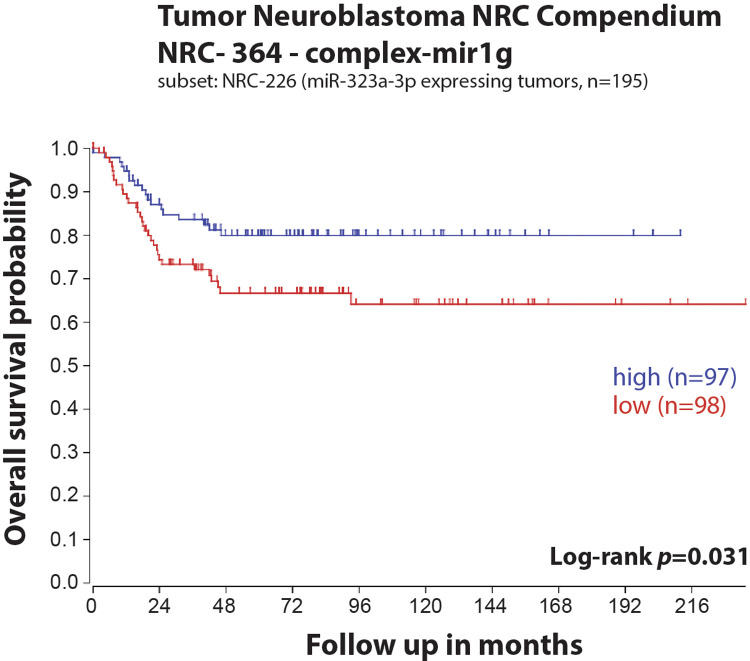
Studies conducted in the last decades have revealed a role for the non-coding microRNAs (miRNAs) in cancer development and progression. Several miRNAs within the chromosome region 14q32, a region commonly deleted in cancers, are associated with poor clinical outcome in the childhood cancer neuroblastoma. We have previously identified from this region to be downregulated in chemotherapy treated neuroblastoma cells compared to pre-treatment cells from the same patients. Furthermore, in neuroblastoma tumors, this miRNA is downregulated in advanced stage 4 disease compared to stage 1-2. In this study, we attempt to delineate the unknown functional roles of in neuroblastoma.
Synthetic miRNA mimics were used to overexpress in neuroblastoma cell lines. To investigate the functional roles of cell viability assay, flow cytometry, reverse transcription-quantitative polymerase chain reaction, luciferase reporter assay and western blot were conducted on the neuroblastoma cell lines Kelly, SH-SY5Y and SK-N-BE(2)-C.
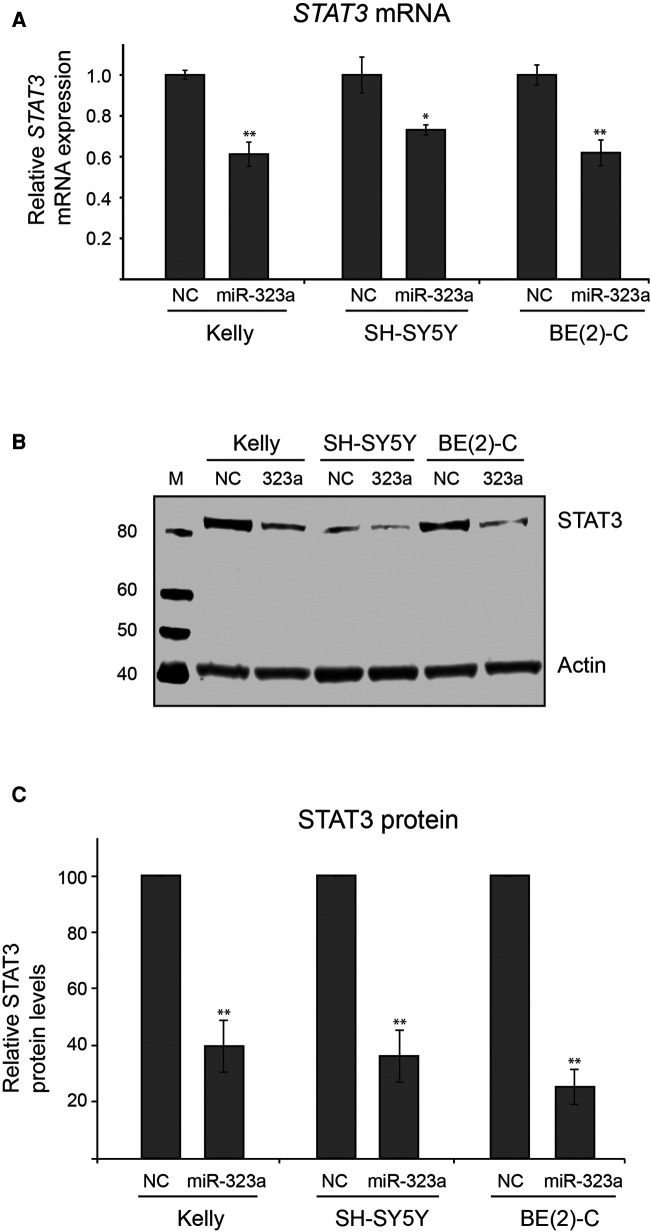
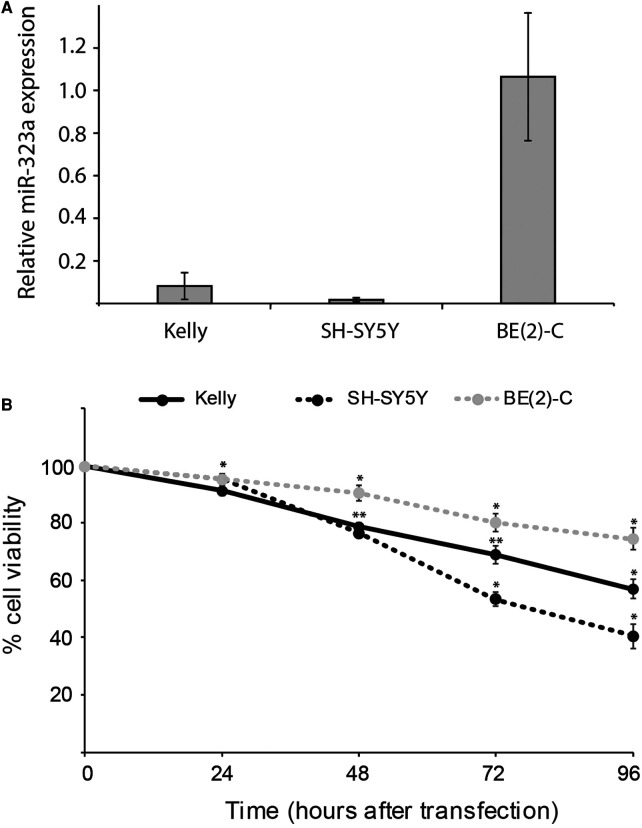
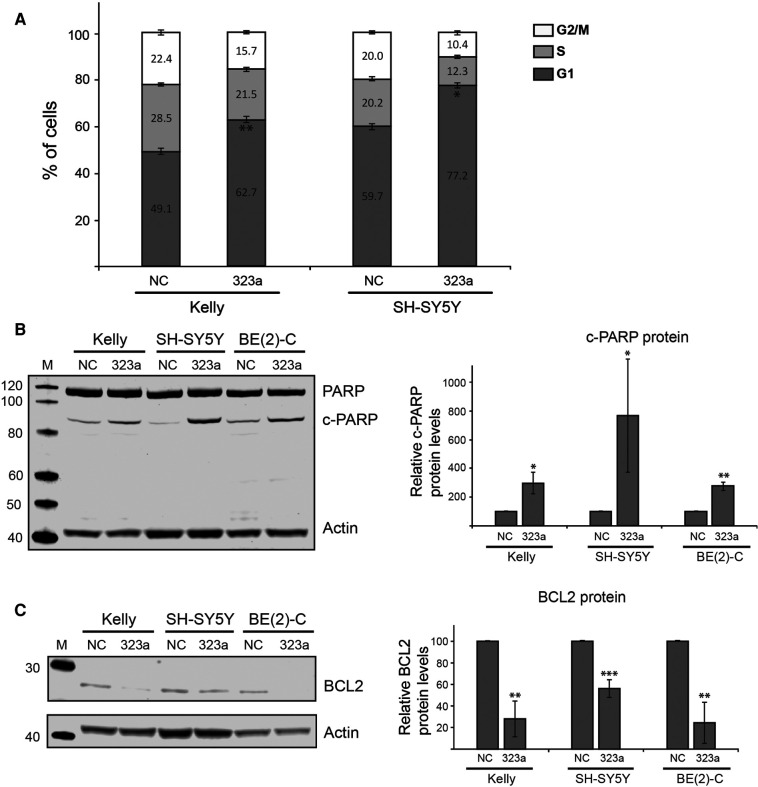
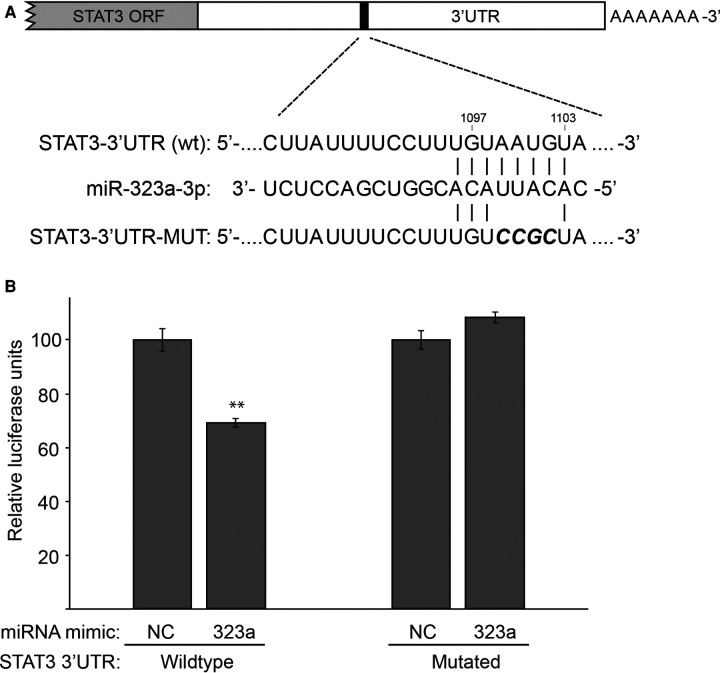
Ectopic expression of resulted in marked reduction of cell viability in Kelly, SH-SY5Y and SK-N-BE(2)-C by causing G1-cell cycle arrest in Kelly and SH-SY5Y and apoptosis in all the cell lines tested. Furthermore, mRNA and protein levels of signal transducer and activator of transcription 3 () were reduced upon overexpression. A direct binding of the to the 3'UTR of was experimentally validated by luciferase reporter assay, where reduced luminescent signal from full length 3'UTR luciferase reporter, but not from a reporter with mutation in the predicted seed sequence.
inhibits growth of neuroblastoma cell lines through G1-cell cycle arrest and apoptosis, and the well-known oncogene is a direct target of this miRNA.
过去几十年进行的研究揭示了非编码微小RNA(miRNA)在癌症发生和发展中的作用。14号染色体q32区域(癌症中常见的缺失区域)内的几种miRNA与儿童癌症神经母细胞瘤的不良临床结局相关。我们之前已经确定,与同一患者治疗前的细胞相比,该区域的一种miRNA在化疗处理的神经母细胞瘤细胞中表达下调。此外,在神经母细胞瘤肿瘤中,与1 - 2期相比,这种miRNA在晚期4期疾病中表达下调。在本研究中,我们试图阐明该miRNA在神经母细胞瘤中未知的功能作用。
使用合成的miRNA模拟物在神经母细胞瘤细胞系中过表达该miRNA。为了研究其功能作用,对神经母细胞瘤细胞系Kelly、SH - SY5Y和SK - N - BE(2)-C进行了细胞活力测定、流式细胞术、逆转录定量聚合酶链反应、荧光素酶报告基因测定和蛋白质印迹分析。
该miRNA的异位表达导致Kelly、SH - SY5Y和SK - N - BE(2)-C细胞活力显著降低,在Kelly和SH - SY5Y中引起G1期细胞周期停滞,并在所有测试细胞系中诱导凋亡。此外,过表达该miRNA后,信号转导和转录激活因子3(STAT3)的mRNA和蛋白质水平降低。通过荧光素酶报告基因测定实验验证了该miRNA与STAT3的3'非翻译区(3'UTR)直接结合,该miRNA降低了全长STAT3 3'UTR荧光素酶报告基因的发光信号,但未降低预测种子序列发生突变的报告基因的发光信号。
该miRNA通过G1期细胞周期停滞和凋亡抑制神经母细胞瘤细胞系的生长,并且著名的癌基因STAT3是这种miRNA的直接靶标。