Parkinson Disorders Research Laboratory, Iowa Center for Advanced Neurotoxicology, Department of Biomedical Sciences, Iowa State University, Ames, IA, United States.
Center for Neurological Disease Research, Department of Physiology and Pharmacology, University of Georgia, Athens, GA, United States.
Front Immunol. 2023 Mar 22;14:1052925. doi: 10.3389/fimmu.2023.1052925. eCollection 2023.
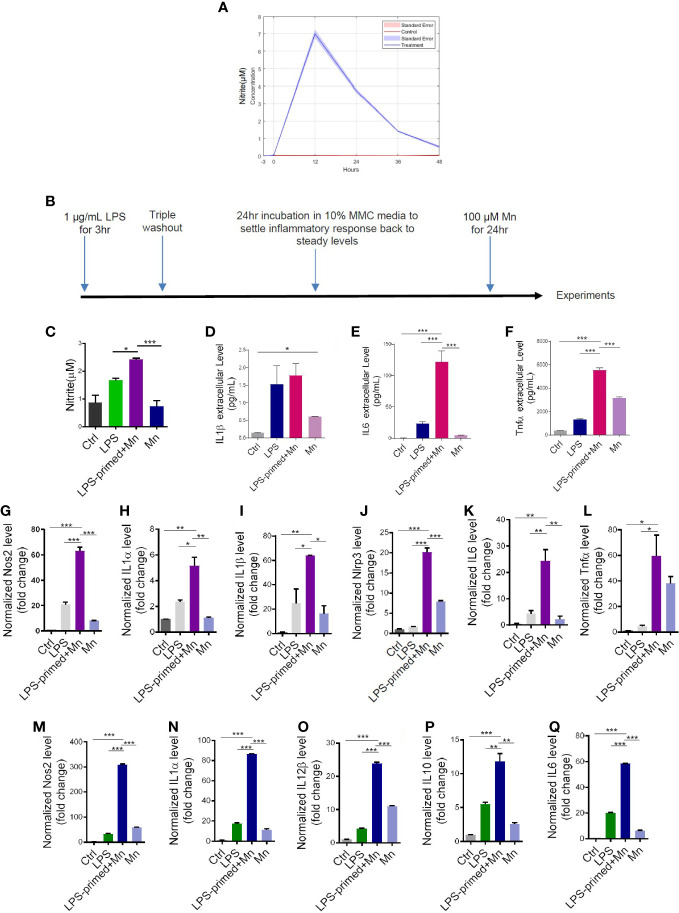
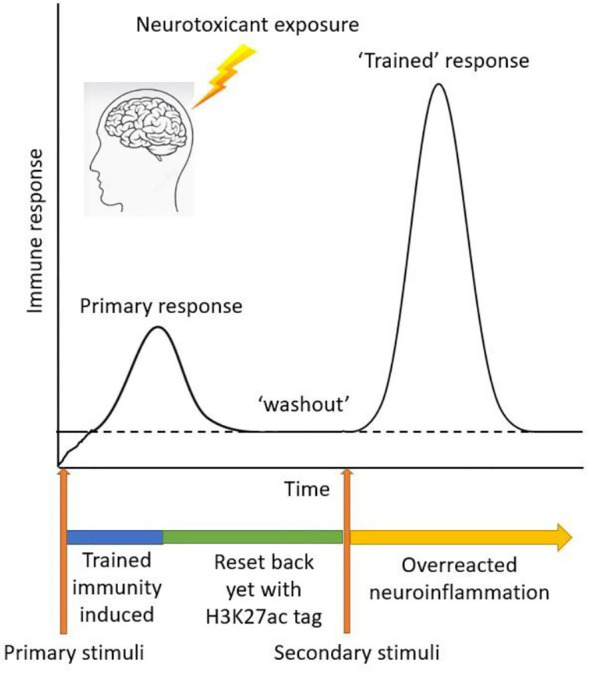
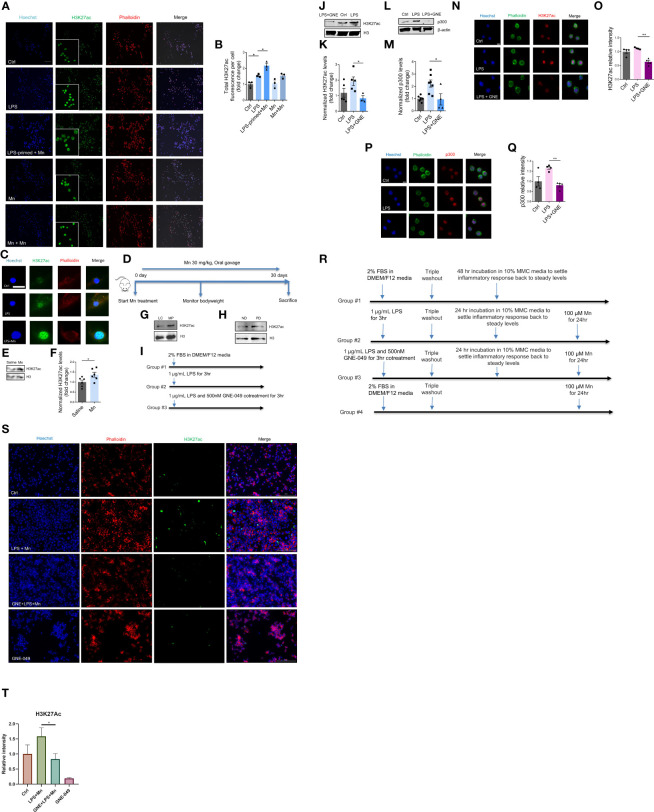
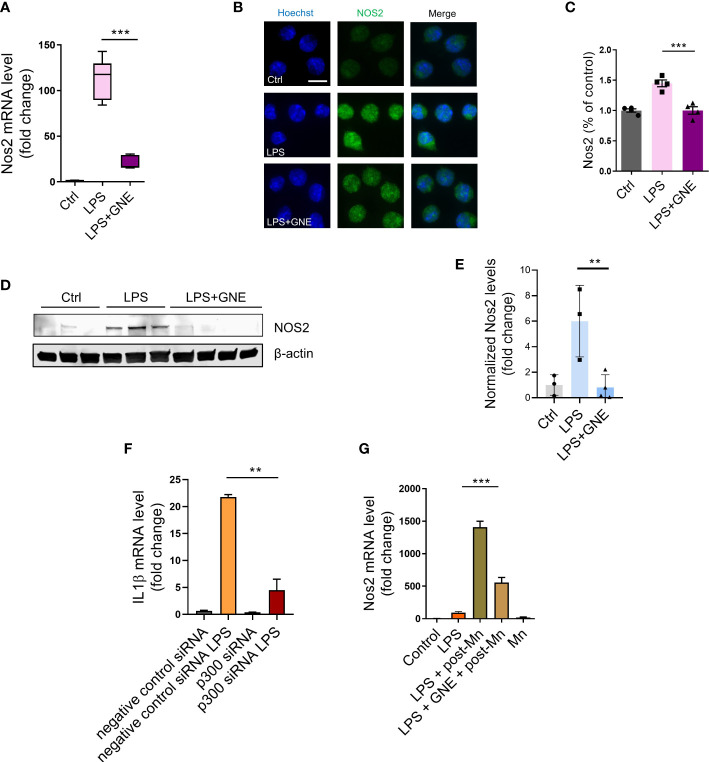
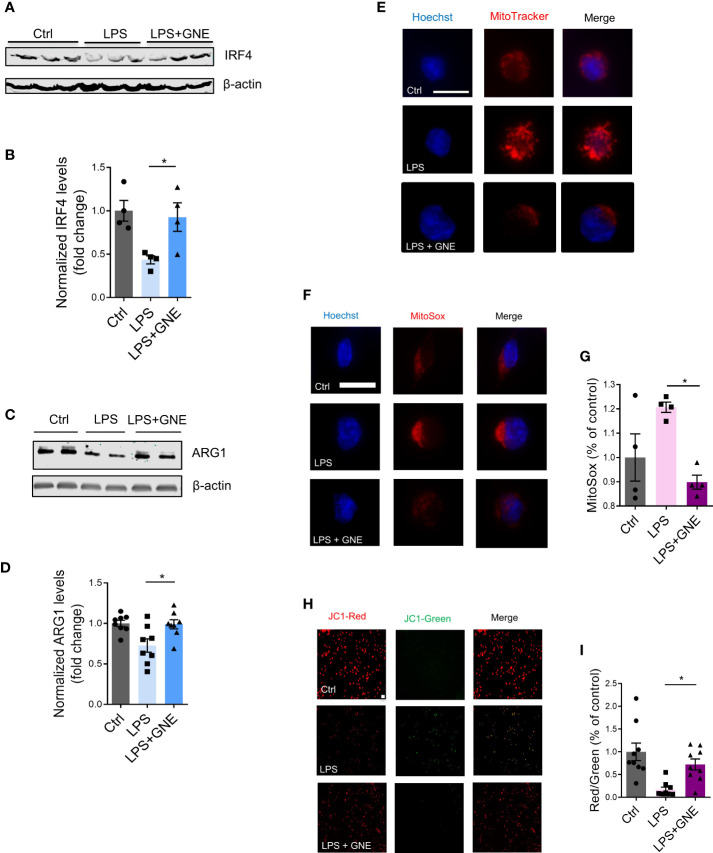
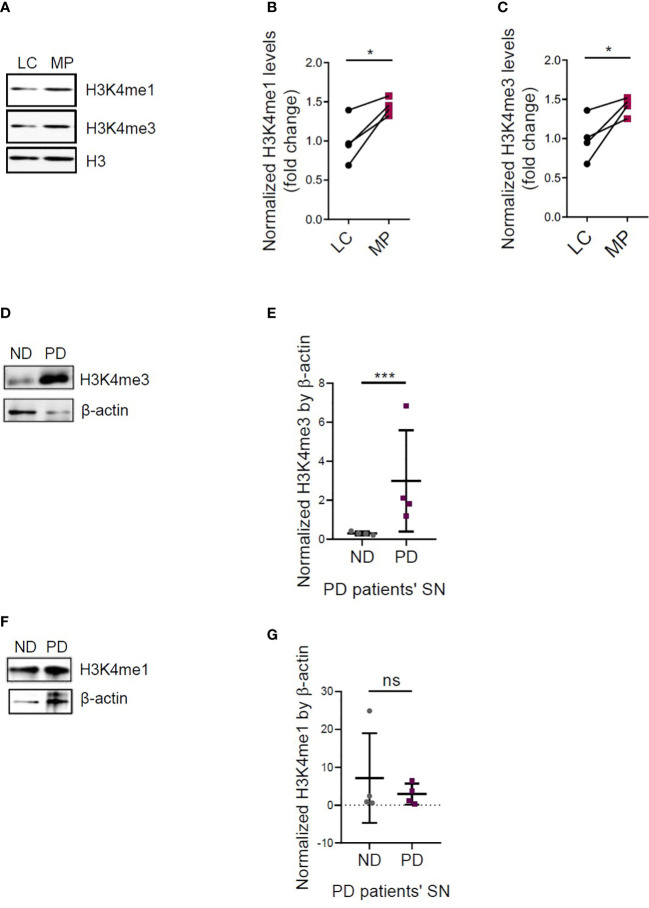
Epigenetic reprogramming is the ability of innate immune cells to form memories of environmental stimuli (priming), allowing for heightened responses to secondary stressors. Herein, we explored microglial epigenetic marks using the known inflammagen LPS as a memory priming trigger and Parkinsonian-linked environmental neurotoxic stressor manganese (Mn) as the secondary environmental trigger. To mimic physiological responses, the memory priming trigger LPS treatment was removed by triple-washing to allow the cells' acute inflammatory response to reset back before applying the secondary insult. Our results show that after the secondary Mn insult, levels of key proinflammatory markers, including nitrite release, iNOS mRNA and protein expression, Il-6, Il-α and cytokines were exaggerated in LPS-primed microglia. Our paradigm implies primed microglia retain immune memory that can be reprogrammed to augment inflammatory response by secondary environmental stress. To ascertain the molecular underpinning of this neuroimmune memory, we further hypothesize that epigenetic reprogramming contributes to the retention of a heightened immune response. Interestingly, Mn-exposed, LPS-primed microglia showed enhanced deposition of H3K27ac and H3K4me3 along with H3K4me1. We further confirmed the results using a PD mouse model (MitoPark) and postmortem human PD brains, thereby adding clinical relevance to our findings. Co-treatment with the p300/H3K27ac inhibitor GNE-049 reduced p300 expression and H3K27ac deposition, decreased iNOS, and increased ARG1 and IRF4 levels. Lastly, since mitochondrial stress is a driver of environmentally linked Parkinson's disease (PD) progression, we examined the effects of GNE-049 on primary trigger-induced mitochondrial stress. GNE-049 reduced mitochondrial superoxide, mitochondrial circularity and stress, and mitochondrial membrane depolarization, suggesting beneficial consequences of GNE-049 on mitochondrial function. Collectively, our findings demonstrate that proinflammatory primary triggers can shape microglial memory the epigenetic mark H3K27ac and that inhibiting H3K27ac deposition can prevent primary trigger immune memory formation and attenuate subsequent secondary inflammatory responses.
表观遗传重编程是先天免疫细胞形成环境刺激记忆(启动)的能力,使它们能够对二次应激源产生更高的反应。在此,我们使用已知的炎症原 LPS 作为记忆启动触发物和帕金森病相关的环境神经毒性应激源锰 (Mn) 作为二次环境触发物来探索小胶质细胞的表观遗传标记。为了模拟生理反应,通过三重洗涤去除记忆启动触发 LPS 处理,以使细胞的急性炎症反应在施加二次损伤之前重置。我们的结果表明,在二次 Mn 损伤后,关键促炎标志物的水平,包括亚硝酸盐释放、iNOS mRNA 和蛋白表达、IL-6、IL-α 和细胞因子,在 LPS 启动的小胶质细胞中被夸大。我们的范例表明,启动的小胶质细胞保留可以通过二次环境应激重新编程以增强炎症反应的免疫记忆。为了确定这种神经免疫记忆的分子基础,我们进一步假设表观遗传重编程有助于保留增强的免疫反应。有趣的是,暴露于 Mn 的 LPS 启动的小胶质细胞显示出 H3K27ac 和 H3K4me3 以及 H3K4me1 的增强沉积。我们使用 PD 小鼠模型(MitoPark)和死后人类 PD 大脑进一步证实了这些结果,从而为我们的发现增加了临床相关性。用 p300/H3K27ac 抑制剂 GNE-049 共同处理可降低 p300 表达和 H3K27ac 沉积,降低 iNOS,增加 ARG1 和 IRF4 水平。最后,由于线粒体应激是与环境相关的帕金森病 (PD) 进展的驱动因素,我们研究了 GNE-049 对原发性触发诱导的线粒体应激的影响。GNE-049 降低了线粒体超氧化物、线粒体圆形度和应激以及线粒体膜去极化,表明 GNE-049 对线粒体功能有有益的影响。总之,我们的研究结果表明,促炎原性启动触发可以塑造小胶质细胞记忆——表观遗传标记 H3K27ac,并且抑制 H3K27ac 沉积可以防止原发性触发免疫记忆的形成并减轻随后的二次炎症反应。