Toikumo Sylvanus, Jennings Mariela V, Pham Benjamin K, Lee Hyunjoon, Mallard Travis T, Bianchi Sevim B, Meredith John J, Vilar-Ribó Laura, Xu Heng, Hatoum Alexander S, Johnson Emma C, Pazdernik Vanessa, Jinwala Zeal, Pakala Shreya R, Leger Brittany S, Niarchou Maria, Ehinmowo Michael, Jenkins Greg D, Batzler Anthony, Pendegraft Richard, Palmer Abraham A, Zhou Hang, Biernacka Joanna M, Coombes Brandon J, Gelernter Joel, Xu Ke, Hancock Dana B, Cox Nancy J, Smoller Jordan W, Davis Lea K, Justice Amy C, Kranzler Henry R, Kember Rachel L, Sanchez-Roige Sandra
Mental Illness Research, Education and Clinical Center, Crescenz VAMC, Philadelphia, PA, USA.
Department of Psychiatry, University of Pennsylvania Perelman School of Medicine, Philadelphia, PA, USA.
medRxiv. 2023 Sep 18:2023.03.27.23287713. doi: 10.1101/2023.03.27.23287713.
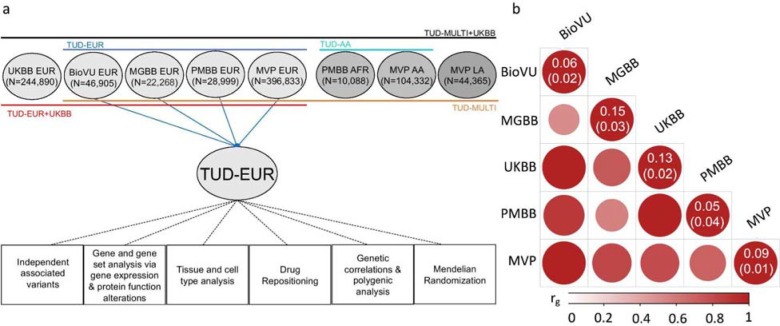
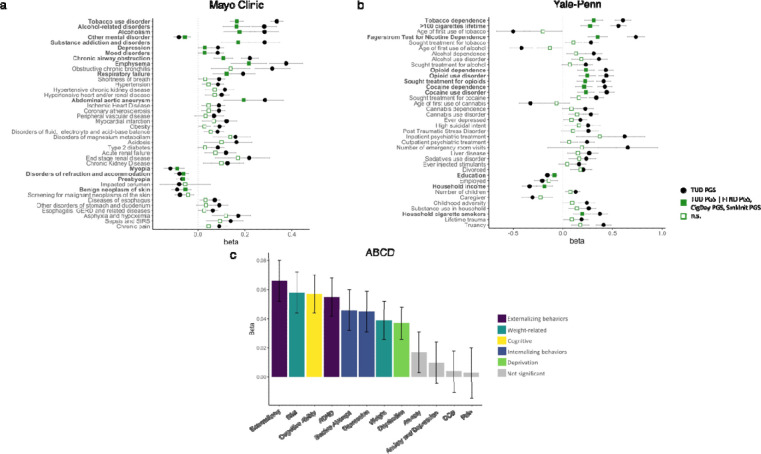
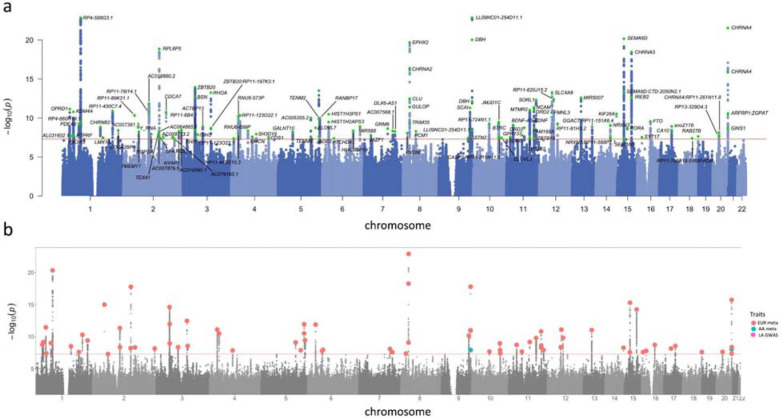
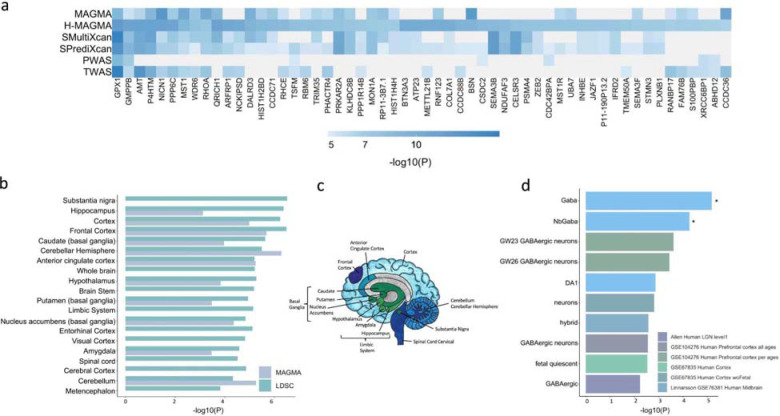
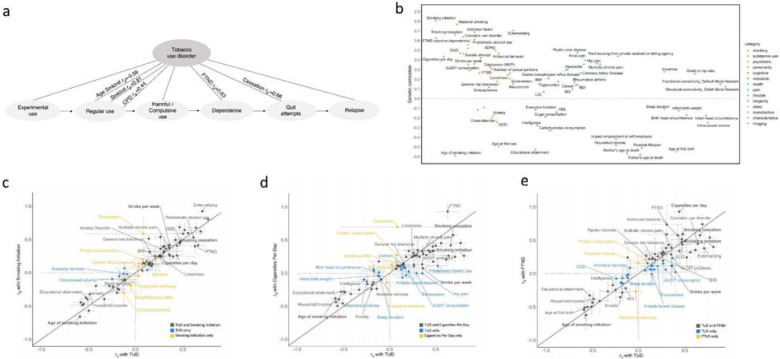
Tobacco use disorder () is the most prevalent substance use disorder in the world. Genetic factors influence smoking behaviors, and although strides have been made using genome-wide association studies () to identify risk variants, the majority of variants identified have been for nicotine consumption, rather than TUD. We leveraged five biobanks to perform a multi-ancestral meta-analysis of TUD (derived via electronic health records, ) in 898,680 individuals (739,895 European, 114,420 African American, 44,365 Latin American). We identified 88 independent risk loci; integration with functional genomic tools uncovered 461 potential risk genes, primarily expressed in the brain. TUD was genetically correlated with smoking and psychiatric traits from traditionally ascertained cohorts, externalizing behaviors in children, and hundreds of medical outcomes, including HIV infection, heart disease, and pain. This work furthers our biological understanding of TUD and establishes EHR as a source of phenotypic information for studying the genetics of TUD.
烟草使用障碍(TUD)是世界上最普遍的物质使用障碍。遗传因素会影响吸烟行为,尽管在利用全基因组关联研究(GWAS)来识别风险变异方面已取得进展,但所识别出的大多数变异都是针对尼古丁消费,而非针对烟草使用障碍。我们利用五个生物样本库,对898,680名个体(739,895名欧洲人、114,420名非裔美国人、44,365名拉丁美洲人)的烟草使用障碍(通过电子健康记录得出)进行了多祖先荟萃分析。我们识别出88个独立的风险位点;与功能基因组工具相结合发现了461个潜在风险基因,主要在大脑中表达。烟草使用障碍与传统确定队列中的吸烟和精神特质、儿童的外化行为以及数百种医学结局在遗传上相关,这些医学结局包括艾滋病毒感染、心脏病和疼痛。这项工作加深了我们对烟草使用障碍的生物学理解,并将电子健康记录确立为研究烟草使用障碍遗传学的表型信息来源。