Benjamin Kynon J M, Chen Qiang, Eagles Nicholas J, Huuki-Myers Louise A, Collado-Torres Leonardo, Stolz Joshua M, Pertea Geo, Shin Joo Heon, Paquola Apuã C M, Hyde Thomas M, Kleinman Joel E, Jaffe Andrew E, Han Shizhong, Weinberger Daniel R
Lieber Institute for Brain Development, Baltimore, MD, USA.
Department of Neurology, Johns Hopkins University School of Medicine, Baltimore, MD, USA.
bioRxiv. 2023 Oct 5:2023.03.28.534458. doi: 10.1101/2023.03.28.534458.
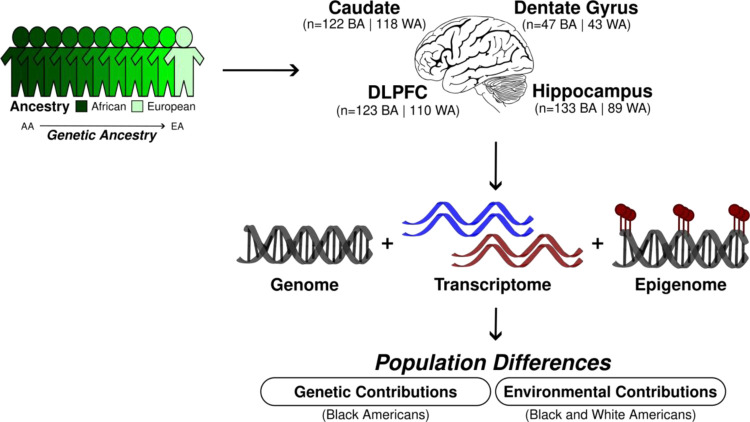
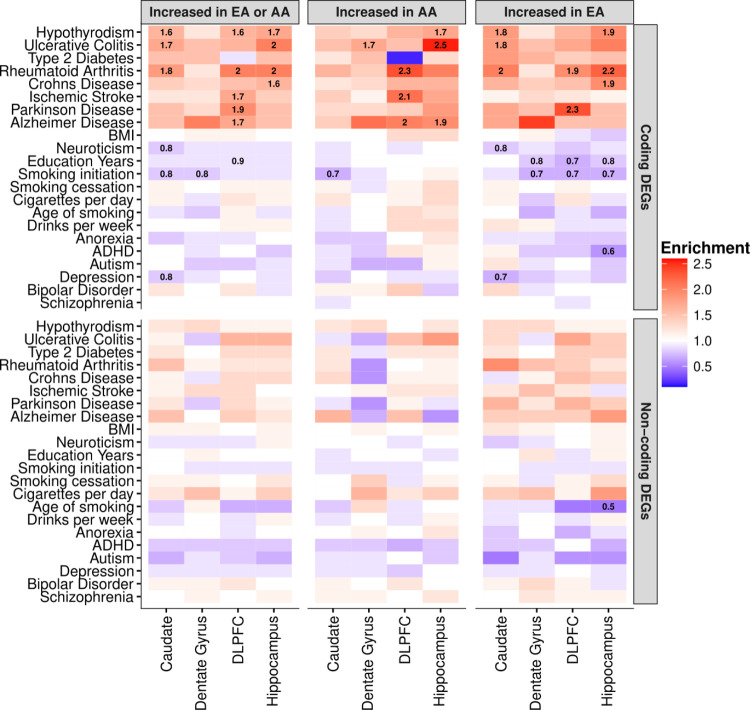
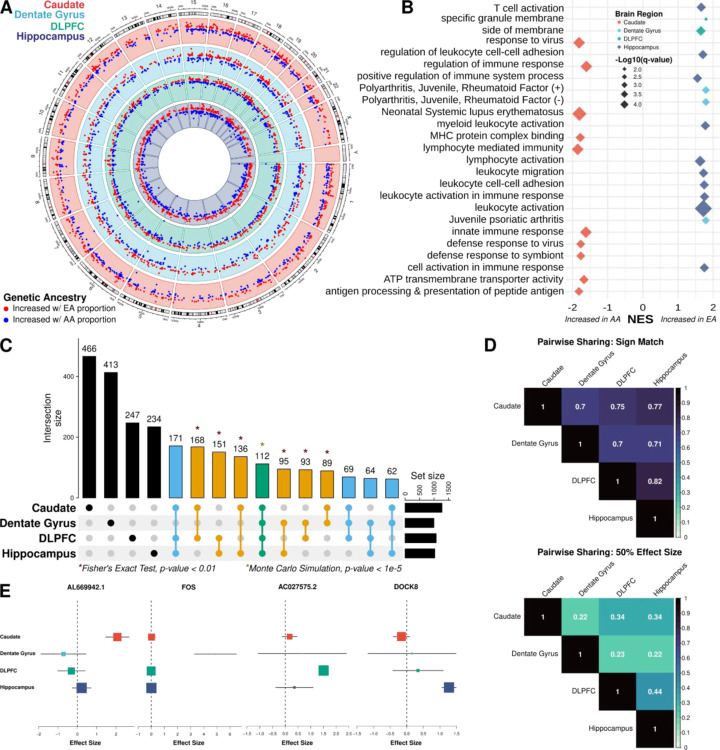
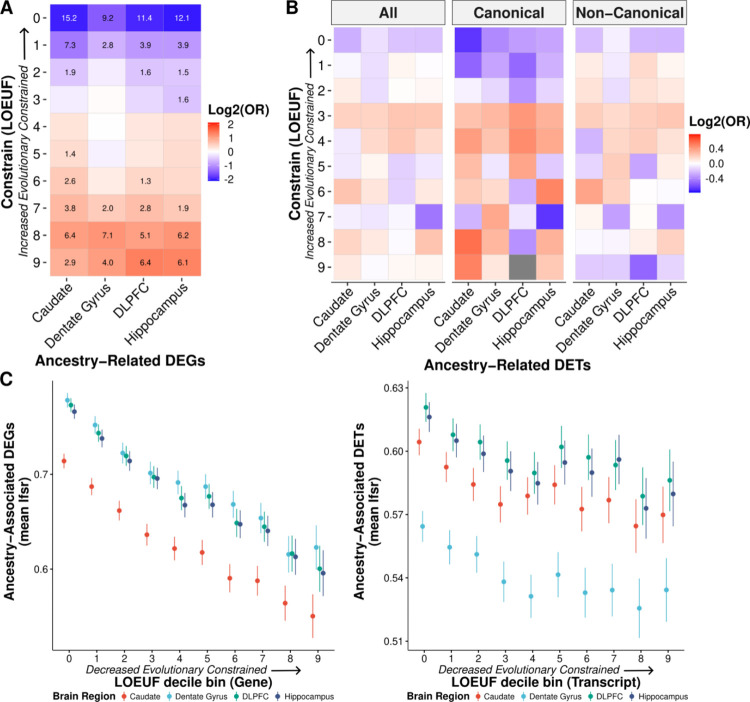
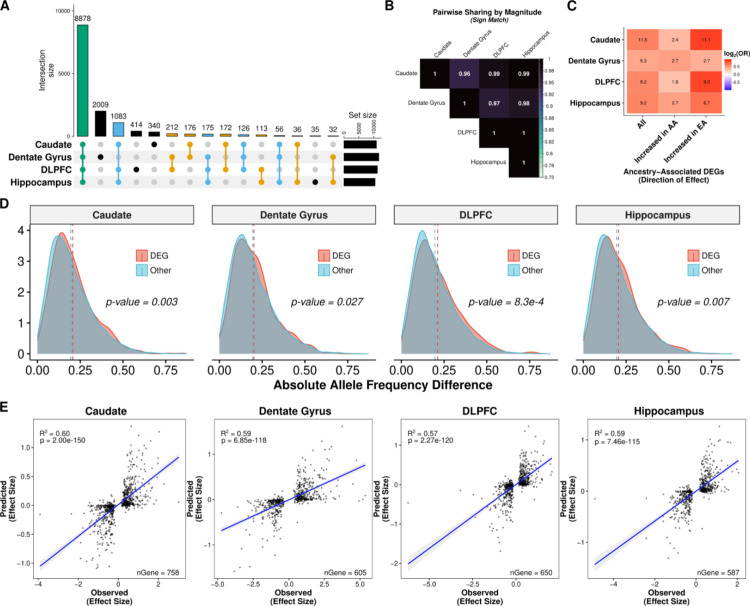
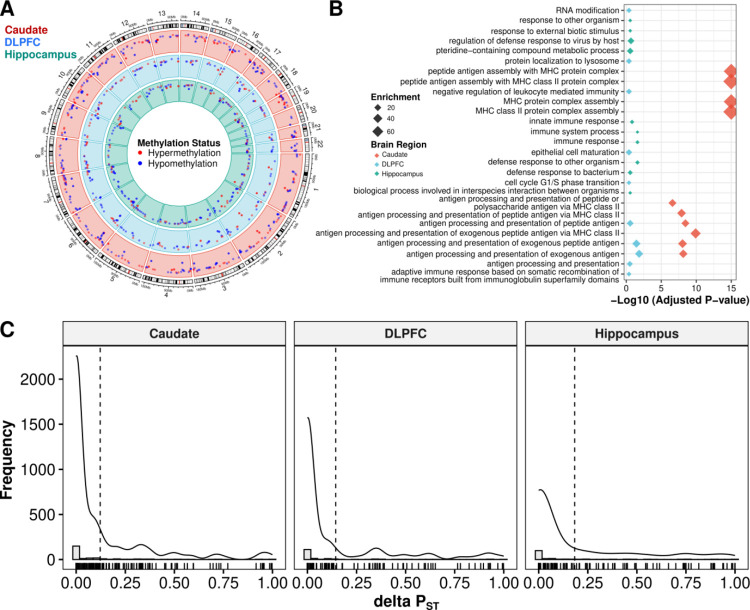
Ancestral differences in genomic variation are determining factors in gene regulation; however, most gene expression studies have been limited to European ancestry samples or adjusted for ancestry to identify ancestry-independent associations. We instead examined the impact of genetic ancestry on gene expression and DNA methylation (DNAm) in admixed African/Black American neurotypical individuals to untangle effects of genetic and environmental factors. Ancestry-associated differentially expressed genes (DEGs), transcripts, and gene networks, while notably not implicating neurons, are enriched for genes related to immune response and vascular tissue and explain up to 26% of heritability for ischemic stroke, 27% of heritability for Parkinson's disease, and 30% of heritability for Alzhemier's disease. Ancestry-associated DEGs also show general enrichment for heritability of diverse immune-related traits but depletion for psychiatric-related traits. The cell-type enrichments and direction of effects vary by brain region. These DEGs are less evolutionarily constrained and are largely explained by genetic variations; roughly 15% are predicted by DNAm variation implicating environmental exposures. We also compared Black and White Americans, confirming most of these ancestry-associated DEGs. Our results highlight how environment and genetic background affect genetic ancestry differences in gene expression in the human brain and affect risk for brain illness.
基因组变异中的祖先差异是基因调控的决定因素;然而,大多数基因表达研究仅限于欧洲血统样本,或对血统进行调整以识别与血统无关的关联。相反,我们研究了遗传血统对非洲/非裔美国神经典型个体基因表达和DNA甲基化(DNAm)的影响,以理清遗传和环境因素的作用。与血统相关的差异表达基因(DEG)、转录本和基因网络,虽然明显未涉及神经元,但富含与免疫反应和血管组织相关的基因,并解释了缺血性中风高达26%的遗传力、帕金森病27%的遗传力和阿尔茨海默病30%的遗传力。与血统相关的DEG在多种免疫相关性状的遗传力方面也普遍富集,但在精神疾病相关性状方面则减少。细胞类型富集和效应方向因脑区而异。这些DEG在进化上受到的限制较少,并且在很大程度上由遗传变异解释;大约15%由涉及环境暴露的DNAm变异预测。我们还比较了非裔美国人和白人,证实了大多数这些与血统相关的DEG。我们的结果突出了环境和遗传背景如何影响人类大脑中基因表达的遗传血统差异,并影响脑部疾病的风险。