Sbirkov Y, Schenk T, Kwok C, Stengel S, Brown R, Brown G, Chesler L, Zelent A, Fuchter M J, Petrie K
Division of Clinical Studies, The Institute of Cancer Research, London, United Kingdom.
Department of Medical Biology, Medical University of Plovdiv, Plovdiv, Bulgaria.
Front Cell Dev Biol. 2023 Mar 23;11:1076458. doi: 10.3389/fcell.2023.1076458. eCollection 2023.
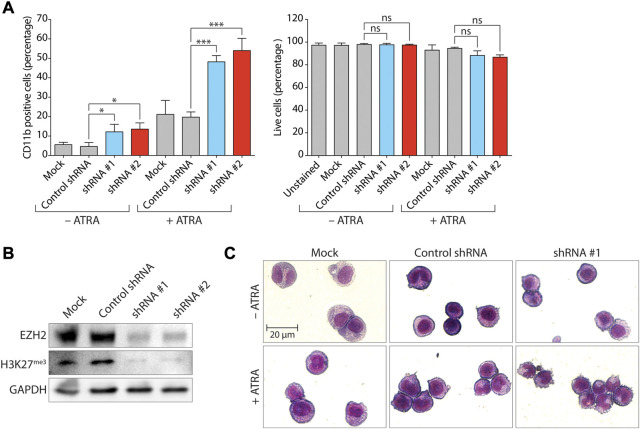
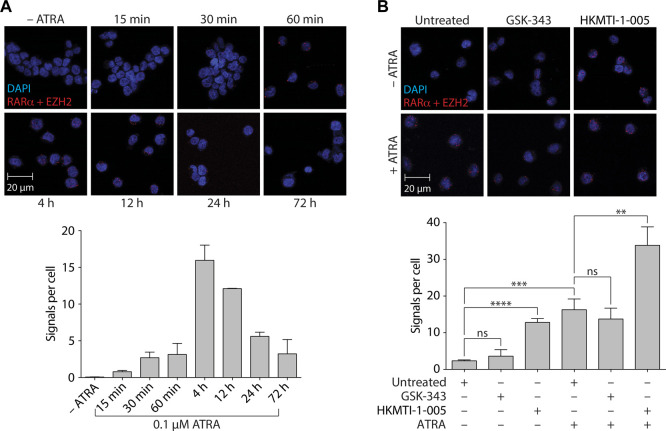
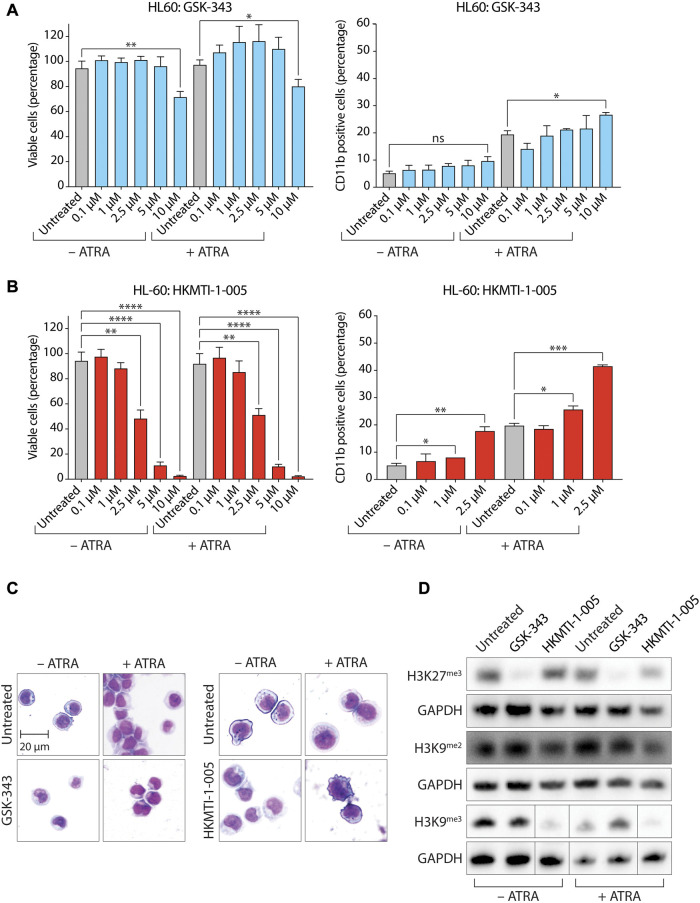
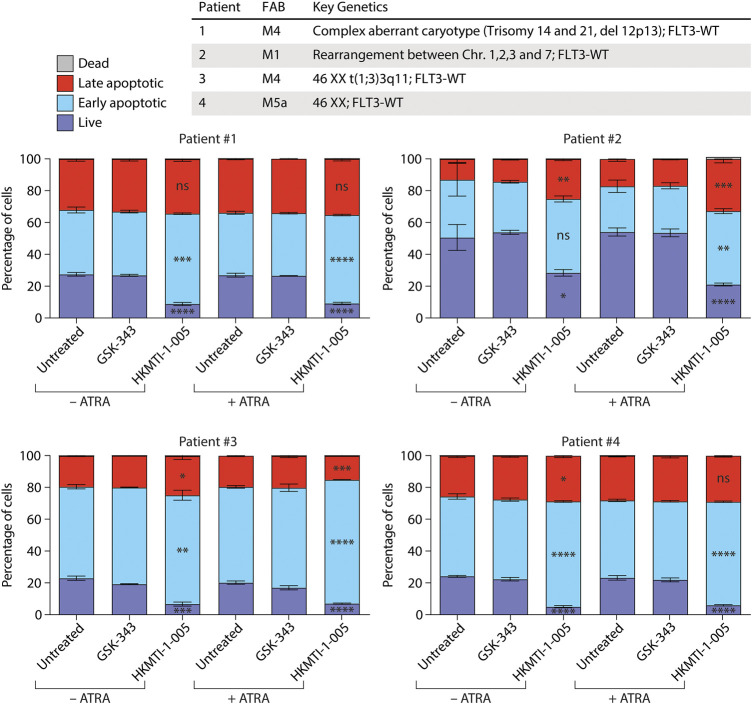
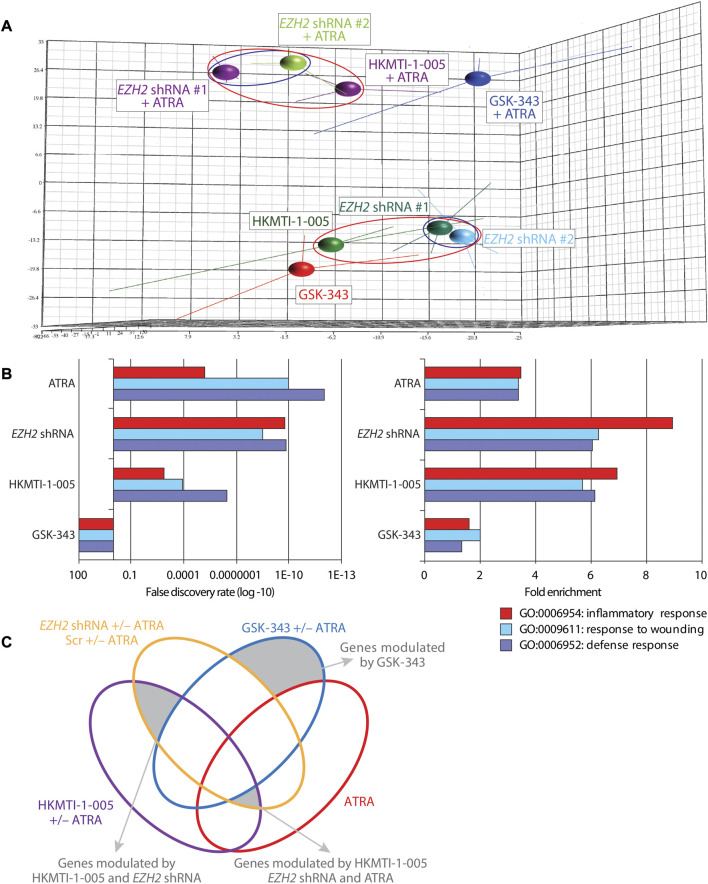
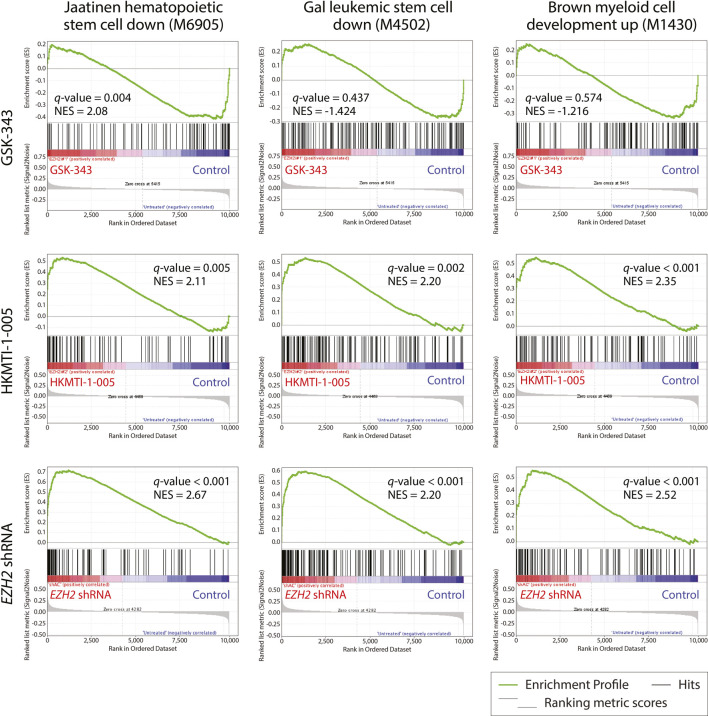
All--retinoic acid (ATRA)-based differentiation therapy of acute promyelocytic leukemia (APL) represents one of the most clinically effective examples of precision medicine and the first example of targeted oncoprotein degradation. The success of ATRA in APL, however, remains to be translated to non-APL acute myeloid leukemia (AML). We previously showed that aberrant histone modifications, including histone H3 lysine 4 (H3K4) and lysine 27 (H3K27) methylation, were associated with this lack of response and that epigenetic therapy with small molecule inhibitors of the H3K4 demethylase LSD1/KDM1A could reprogram AML cells to respond to ATRA. Serving as the enzymatic component of Polycomb Repressive Complex 2, EZH2/KMT6A methyltransferase plays a critical role in normal hematopoiesis by affecting the balance between self-renewal and differentiation. The canonical function of EZH2 is methylation of H3K27, although important non-canonical roles have recently been described. EZH2 mutation or deregulated expression has been conclusively demonstrated in the pathogenesis of AML and response to treatment, thus making it an attractive therapeutic target. In this study, we therefore investigated whether inhibition of EZH2 might also improve the response of non-APL AML cells to ATRA-based therapy. We focused on GSK-343, a pyridone-containing S-adenosyl-L-methionine cofactor-competitive EZH2 inhibitor that is representative of its class, and HKMTI-1-005, a substrate-competitive dual inhibitor targeting EZH2 and the closely related G9A/GLP H3K9 methyltransferases. We found that treatment with HKMTI-1-005 phenocopied knockdown and was more effective in inducing differentiation than GSK-343, despite the efficacy of GSK-343 in terms of abolishing H3K27 trimethylation. Furthermore, transcriptomic analysis revealed that in contrast to treatment with GSK-343, HKMTI-1-005 upregulated the expression of differentiation pathway genes with and without ATRA, while downregulating genes associated with a hematopoietic stem cell phenotype. These results pointed to a non-canonical role for EZH2, which was supported by the finding that EZH2 associates with the master regulator of myeloid differentiation, RARα, in an ATRA-dependent manner that was enhanced by HKMTI-1-005, possibly playing a role in co-regulator complex exchange during transcriptional activation. In summary, our results strongly suggest that addition of HKMTI-1-005 to ATRA is a new therapeutic approach against AML that warrants further investigation.
全反式维甲酸(ATRA)治疗急性早幼粒细胞白血病(APL)是精准医学中临床效果最为显著的例子之一,也是靶向癌蛋白降解的首个实例。然而,ATRA在APL治疗中的成功尚未推广至非APL急性髓系白血病(AML)。我们之前的研究表明,包括组蛋白H3赖氨酸4(H3K4)和赖氨酸27(H3K27)甲基化在内的异常组蛋白修饰与这种无反应性相关,并且使用H3K4去甲基化酶LSD1/KDM1A的小分子抑制剂进行表观遗传治疗可使AML细胞重新对ATRA产生反应。EZH2/KMT6A甲基转移酶作为多梳抑制复合物2的酶组分,通过影响自我更新与分化之间的平衡在正常造血过程中发挥关键作用。EZH2的经典功能是H3K27甲基化,不过最近也发现了其重要的非经典作用。EZH2突变或表达失调已在AML发病机制及治疗反应中得到确凿证实,因此使其成为一个颇具吸引力的治疗靶点。所以在本研究中,我们探究了抑制EZH2是否也能提高非APL AML细胞对基于ATRA治疗的反应。我们聚焦于GSK - 343,一种含吡啶酮的S -腺苷 - L -甲硫氨酸辅因子竞争性EZH2抑制剂,它是该类抑制剂的代表,以及HKMTI - 1 - 005,一种靶向EZH2和密切相关的G9A/GLP H3K9甲基转移酶的底物竞争性双重抑制剂。我们发现,HKMTI - 1 - 005处理模拟了基因敲除效果,并且在诱导分化方面比GSK - 343更有效,尽管GSK - 343在消除H3K27三甲基化方面有效果。此外,转录组分析显示,与GSK - 343处理不同,HKMTI - 1 - 005无论有无ATRA均上调分化途径基因的表达,同时下调与造血干细胞表型相关的基因。这些结果表明EZH2具有非经典作用,这一发现得到了支持,即EZH2以ATRA依赖的方式与髓系分化的主调节因子RARα结合,且HKMTI - 1 - 005可增强这种结合,这可能在转录激活过程中的共调节复合物交换中发挥作用。总之,我们的结果强烈表明,在ATRA治疗中添加HKMTI - 1 - 005是一种针对AML的新治疗方法,值得进一步研究。