Department of Molecular and Comparative Pathobiology, Johns Hopkins University, Baltimore, Maryland, USA.
Research Animal Resources, Johns Hopkins University, Baltimore, Maryland, USA.
mBio. 2023 Apr 25;14(2):e0007823. doi: 10.1128/mbio.00078-23. Epub 2023 Apr 10.
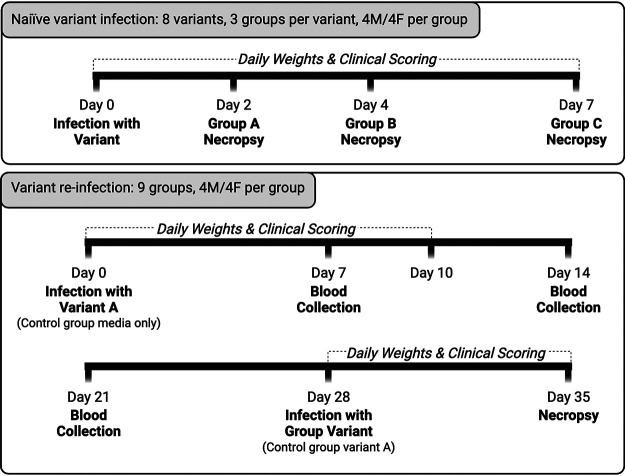
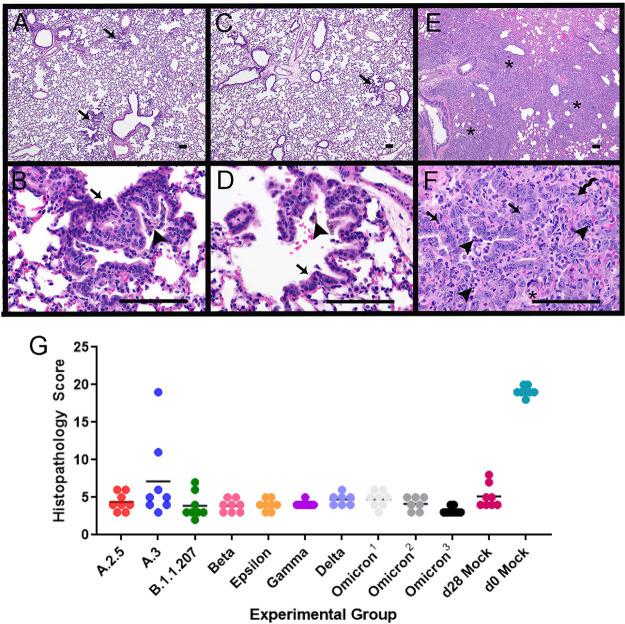
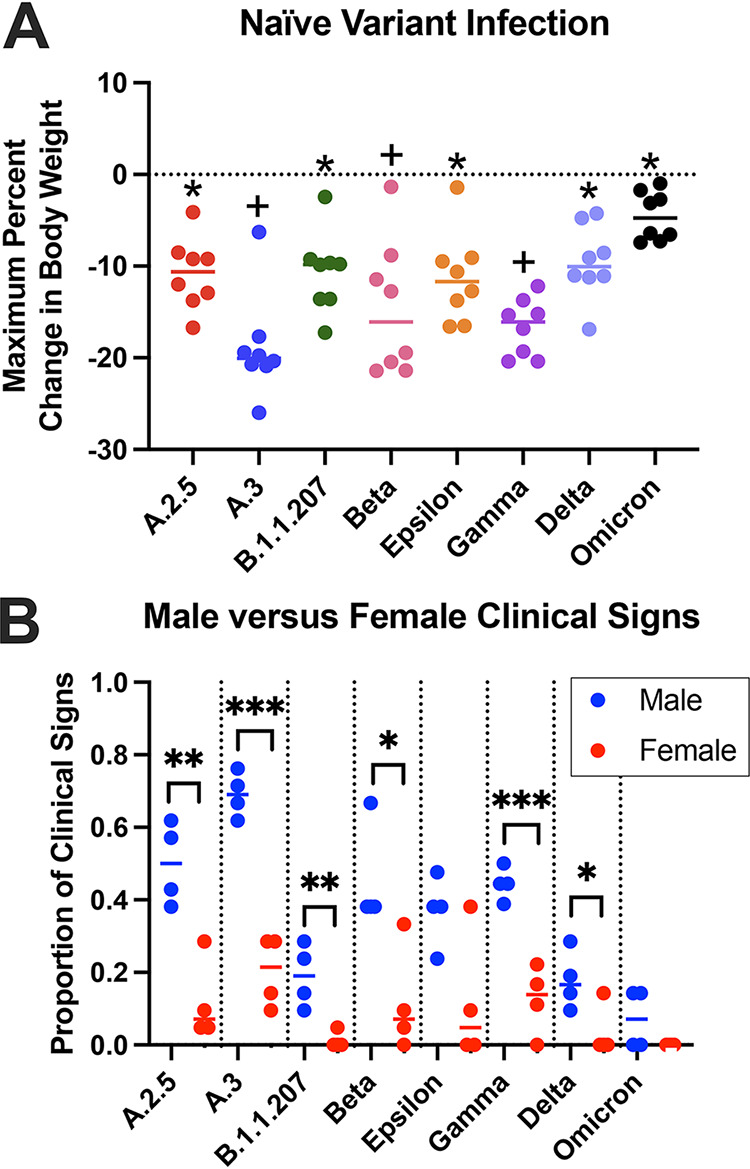
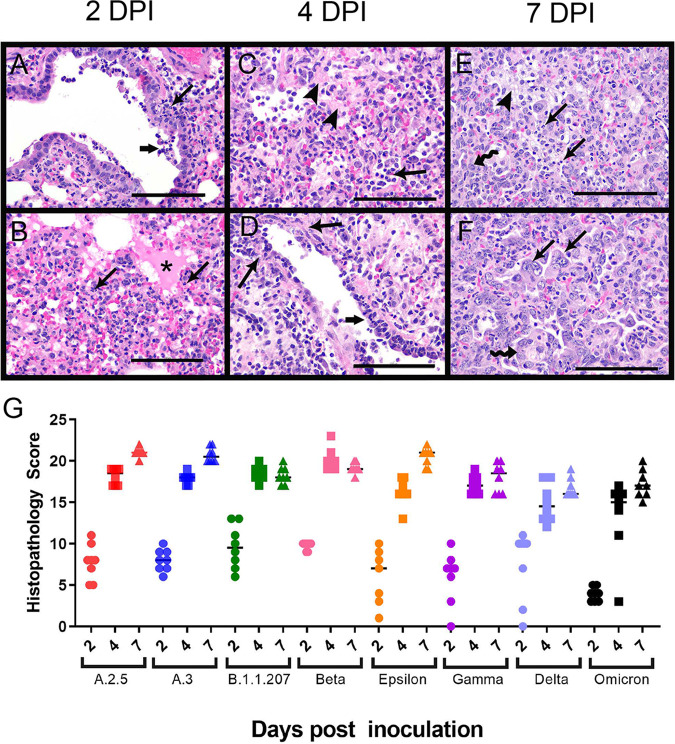
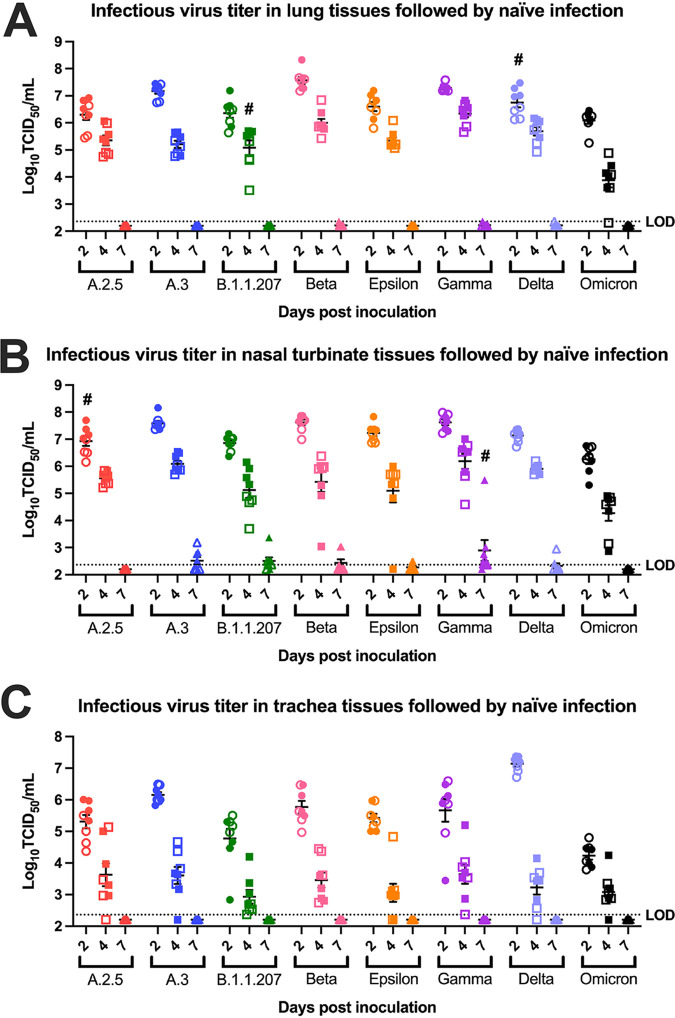
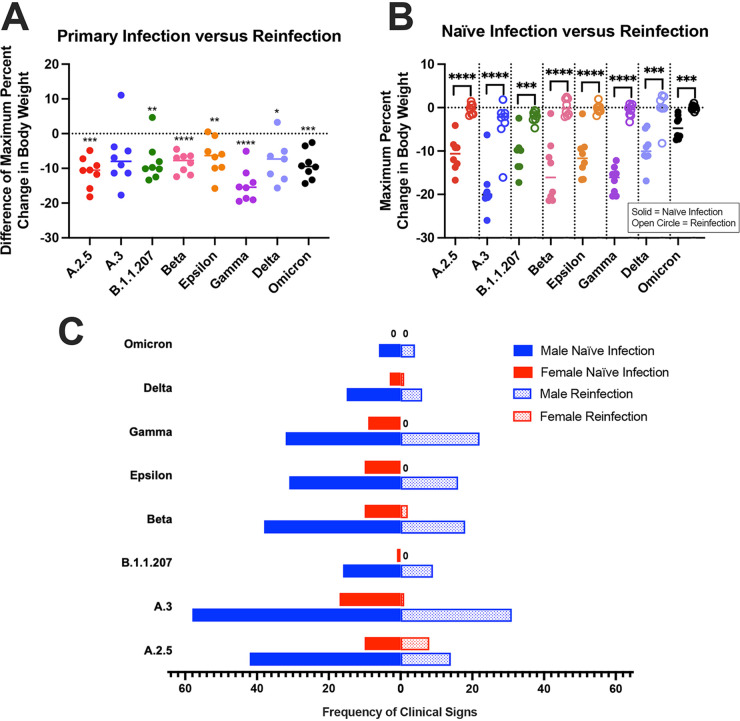
Severe acute respiratory syndrome coronavirus 2 (SARS-CoV-2), the causative agent of COVID-19, has evolved into multiple variants. Animal models are important to understand variant pathogenesis, particularly for variants with mutations that have significant phenotypic or epidemiological effects. Here, cohorts of naive or previously infected Syrian hamsters (Mesocricetus auratus) were infected with variants to investigate viral pathogenesis and disease protection. Naive hamsters infected with SARS-CoV-2 variants had consistent clinical outcomes, tissue viral titers, and pathology, while hamsters that recovered from initial infection and were reinfected demonstrated less severe clinical disease and lung pathology than their naive counterparts. Males had more frequent clinical signs than females in most variant groups, but few sex variations in tissue viral titers and lung pathology were observed. These findings support the use of Syrian hamsters as a SARS-CoV-2 model and highlight the importance of considering sex differences when using this species. With the continued circulation and emergence of new severe acute respiratory syndrome coronavirus 2 (SARS-CoV-2) variants, understanding differences in the effects between the initial infection and a subsequent reinfection on disease pathogenesis is critical and highly relevant. This study characterizes Syrian hamsters as an animal model to study reinfection with SARS-CoV-2. Previous infection reduced the disease severity of reinfection with different SARS-CoV-2 variants.
严重急性呼吸综合征冠状病毒 2(SARS-CoV-2)是 COVID-19 的病原体,已经进化出多种变体。动物模型对于了解变体发病机制非常重要,特别是对于那些具有显著表型或流行病学影响的突变变体。在这里,我们用未经感染或先前感染过的叙利亚仓鼠(Mesocricetus auratus)作为研究对象,用不同变体来感染这些仓鼠,以研究病毒发病机制和疾病保护。感染 SARS-CoV-2 变体的未经感染仓鼠表现出一致的临床结局、组织病毒滴度和病理学特征,而从初次感染中恢复并再次感染的仓鼠则表现出比初次感染的仓鼠更轻微的临床疾病和肺部病理学特征。在大多数变体组中,雄性仓鼠比雌性仓鼠更频繁地出现临床症状,但在组织病毒滴度和肺部病理学方面,很少观察到性别差异。这些发现支持使用叙利亚仓鼠作为 SARS-CoV-2 模型,并强调在使用这种物种时考虑性别差异的重要性。随着新的严重急性呼吸综合征冠状病毒 2(SARS-CoV-2)变体的持续传播和出现,了解初次感染和随后再感染之间对发病机制的影响差异至关重要。本研究将叙利亚仓鼠作为研究 SARS-CoV-2 再感染的动物模型。先前的感染减轻了不同 SARS-CoV-2 变体再感染的疾病严重程度。