International Genome Center, Jiangsu University, Zhenjiang, China.
Department of Laboratory Medicine, Jiangning Hospital Affiliated to Nanjing Medical University, Nanjing, 211100, China.
Inflammation. 2023 Aug;46(4):1305-1317. doi: 10.1007/s10753-023-01809-2. Epub 2023 Apr 10.
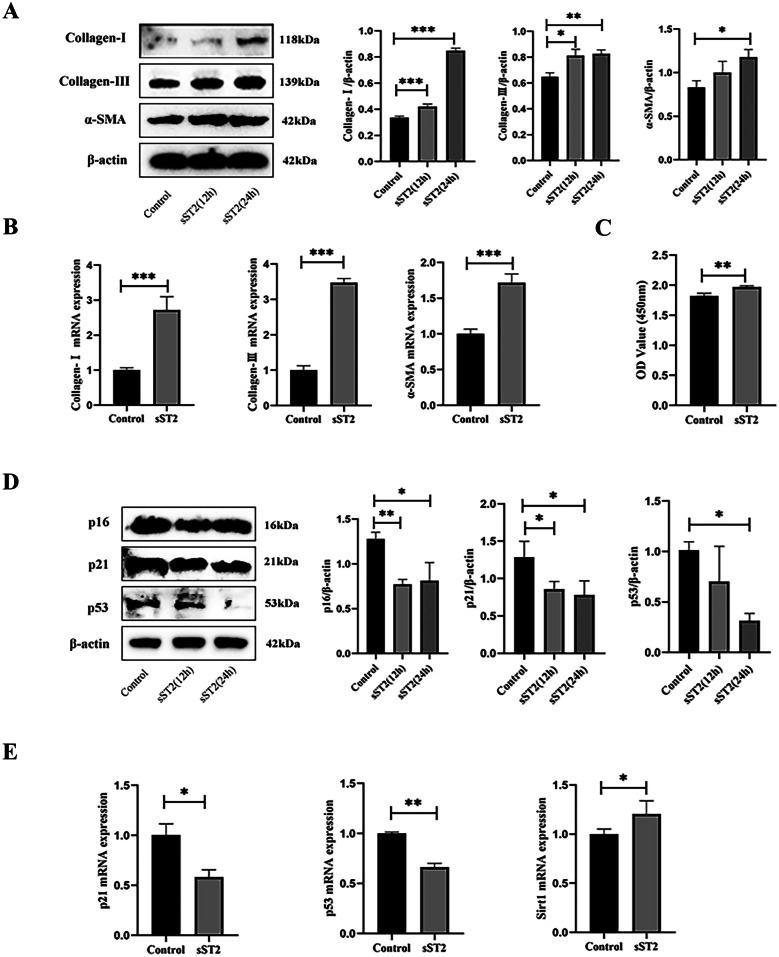
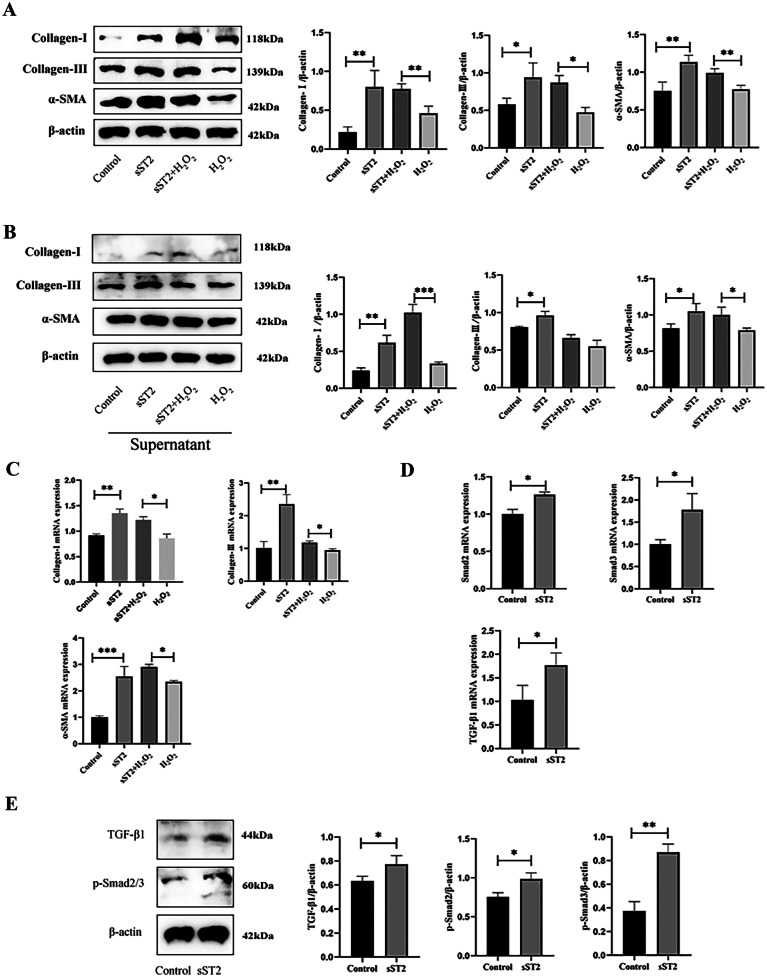
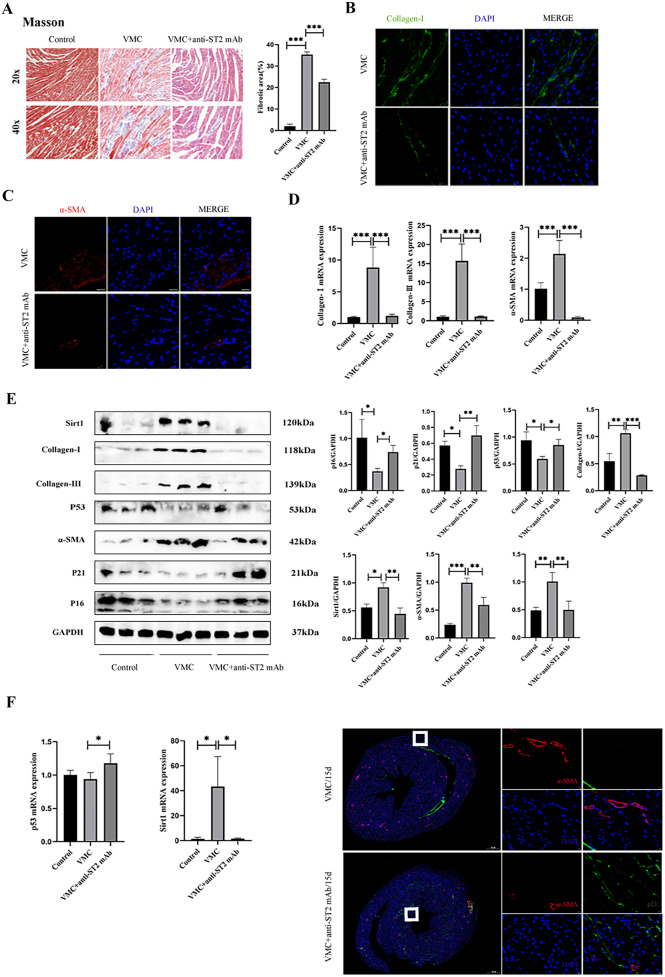
Soluble interleukin 1 receptor-like 1 (sST2) is a novel predictor of poor outcomes, which is involved in inflammatory response and fibrosis of myocarditis. Cellular senescence is a state of irreversible cell cycle arrest. Studies have shown that senescence of myofibroblasts can limit or reduce cardiac fibrosis. However, the molecular mechanism of sST2 regulating cellular senescence is still unclear. Here, we investigate the role of sST2 on cellular senescence in cardiac fibrosis. Our results found that sST2 was upregulated in coxsackievirus group B type 3 (CVB3)-induced viral myocarditis (VMC), which correlated with the expression of senescence markers. In vitro, sST2 activated TGFβ signaling through the phosphorylation of the SMAD complex to induce mouse cardiac fibroblast (MCF) activation and inhibit cellular senescence by the Sirt1/p53/p21 signaling pathway. In vivo, anti-ST2 mAb attenuated CVB3-induced cardiac fibrosis. Our findings elucidate a crucial mechanism underlying through which sST2 inhibits cellular senescence and regulates MCF activation, providing a potential treatment strategy for cardiac fibrosis.
可溶性白细胞介素 1 受体样 1(sST2)是一种预测不良预后的新型标志物,与心肌炎的炎症反应和纤维化有关。细胞衰老(cellular senescence)是一种不可逆的细胞周期停滞状态。研究表明,肌成纤维细胞的衰老可以限制或减少心脏纤维化。然而,sST2 调节细胞衰老的分子机制尚不清楚。在这里,我们研究了 sST2 在心脏纤维化中的细胞衰老中的作用。我们的研究结果发现,sST2 在柯萨奇病毒 B 型 3(CVB3)诱导的病毒性心肌炎(VMC)中上调,与衰老标志物的表达相关。在体外,sST2 通过磷酸化 SMAD 复合物激活 TGFβ 信号通路,诱导小鼠心肌成纤维细胞(MCF)激活,并通过 Sirt1/p53/p21 信号通路抑制细胞衰老。在体内,抗 sST2 mAb 可减轻 CVB3 诱导的心脏纤维化。我们的研究结果阐明了 sST2 抑制细胞衰老和调节 MCF 激活的关键机制,为心脏纤维化提供了一种潜在的治疗策略。