Key Laboratory of Regenerative Medicine, Ministry of Education, Jinan University, Guangzhou, China.
Joint Laboratory for Regenerative Medicine, Chinese University of Hong Kong-Jinan University, Guangzhou, China.
J Cell Mol Med. 2022 Oct;26(20):5135-5149. doi: 10.1111/jcmm.17539. Epub 2022 Sep 18.
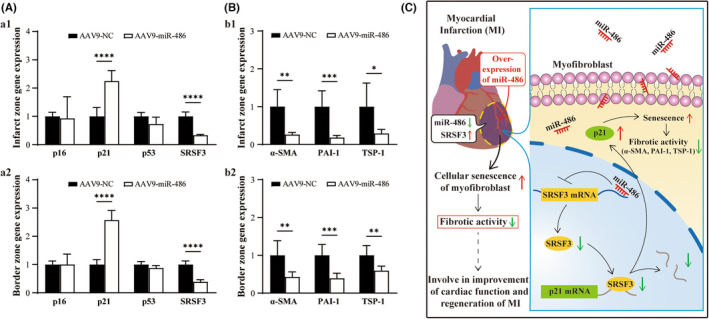
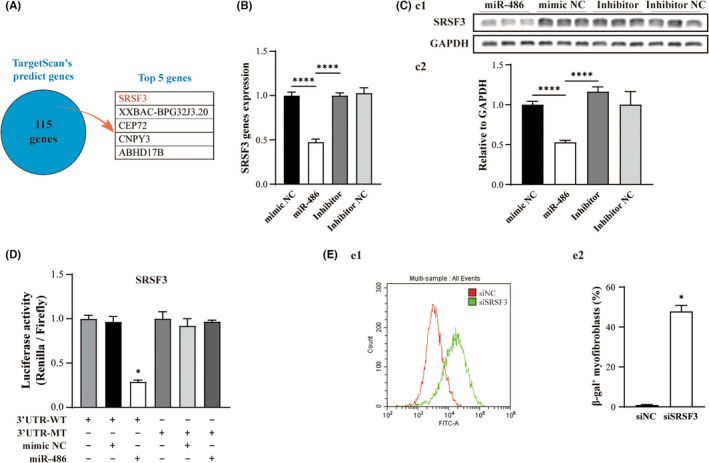
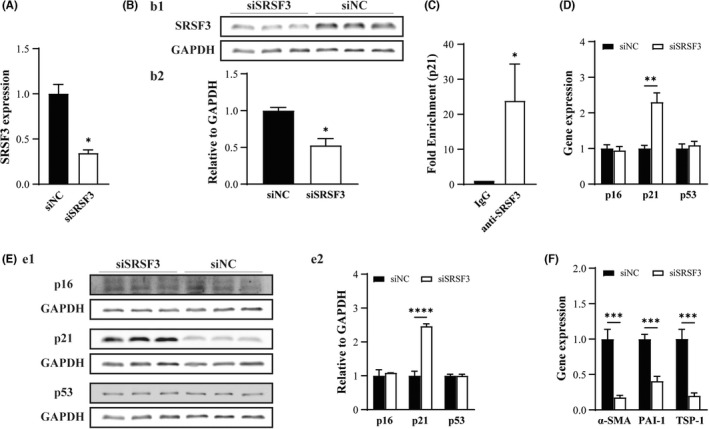
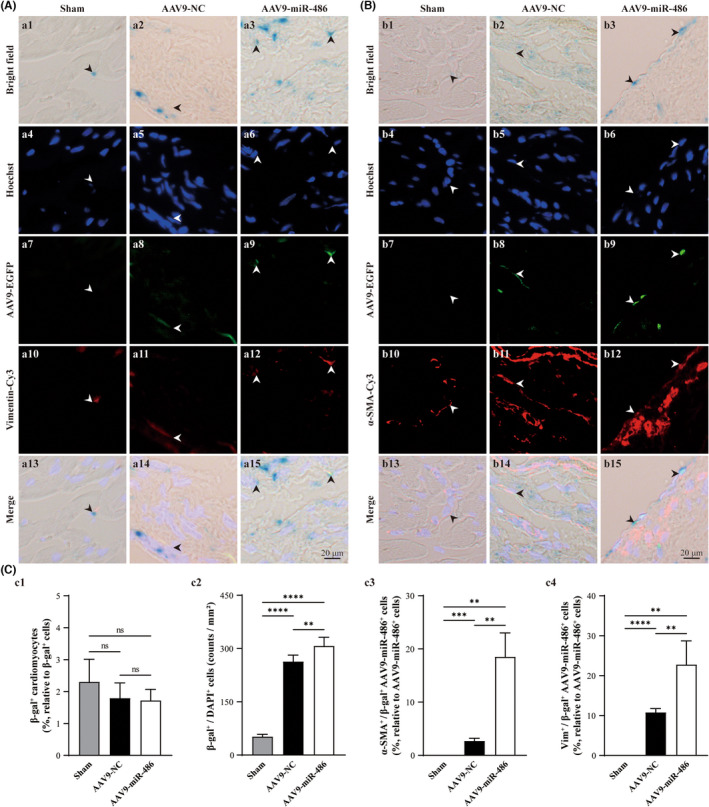
The regulation of fibrotic activities is key to improving pathological remodelling post-myocardial infarction (MI). Currently, in the clinic, safe and curative therapies for cardiac fibrosis and improvement of the pathological fibrotic environment, scar formation and pathological remodelling post-MI are lacking. Previous studies have shown that miR-486 is involved in the regulation of fibrosis. However, it is still unclear how miR-486 functions in post-MI regeneration. Here, we first demonstrated that miR-486 targeting SRSF3/p21 mediates the senescence of cardiac myofibroblasts to improve their fibrotic activity, which benefits the regeneration of MI by limiting scar size and post-MI remodelling. miR-486-targeted silencing has high potential as a novel target to improve fibrotic activity, cardiac fibrosis and pathological remodelling.
调控纤维化活性是改善心肌梗死后病理重塑的关键。目前临床上缺乏针对心脏纤维化的安全有效的治疗方法,也无法改善心肌梗死后的病理性纤维环境、瘢痕形成和病理性重塑。先前的研究表明 miR-486 参与了纤维化的调控。然而,miR-486 在心肌梗死后再生中的作用仍不清楚。在这里,我们首先证明 miR-486 通过靶向 SRSF3/p21 来调控心肌成纤维细胞的衰老,从而改善其纤维化活性,通过限制瘢痕大小和心肌梗死后重塑来促进 MI 的再生。miR-486 靶向沉默具有改善纤维化活性、心脏纤维化和病理性重塑的巨大潜力,是一种有前途的新型治疗靶点。