Department of Endocrinology and Metabolism, Endocrine Research Laboratory (KMEB), Odense University Hospital & University of Southern Denmark, Odense, Denmark.
Dept. of Pathology and Physiopathology, Guangxi Key Laboratory of Tumor Immunology and Microenvironmental Regulation, Guilin Medical University, Guilin, Guangxi, China.
Nat Commun. 2023 Apr 10;14(1):2016. doi: 10.1038/s41467-023-37651-1.
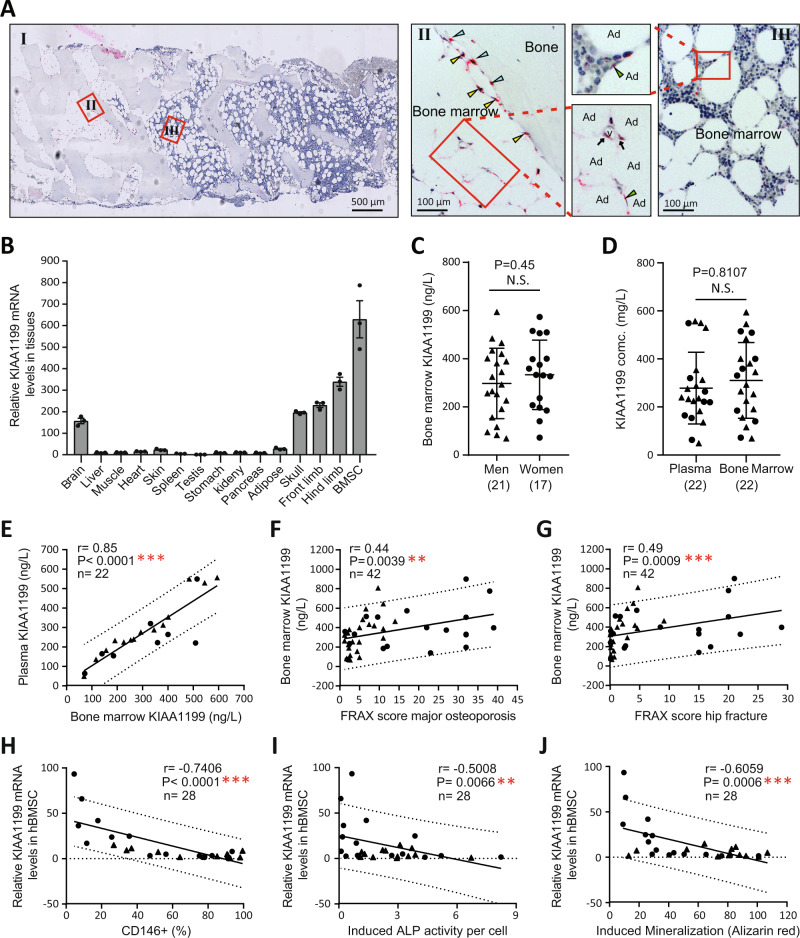
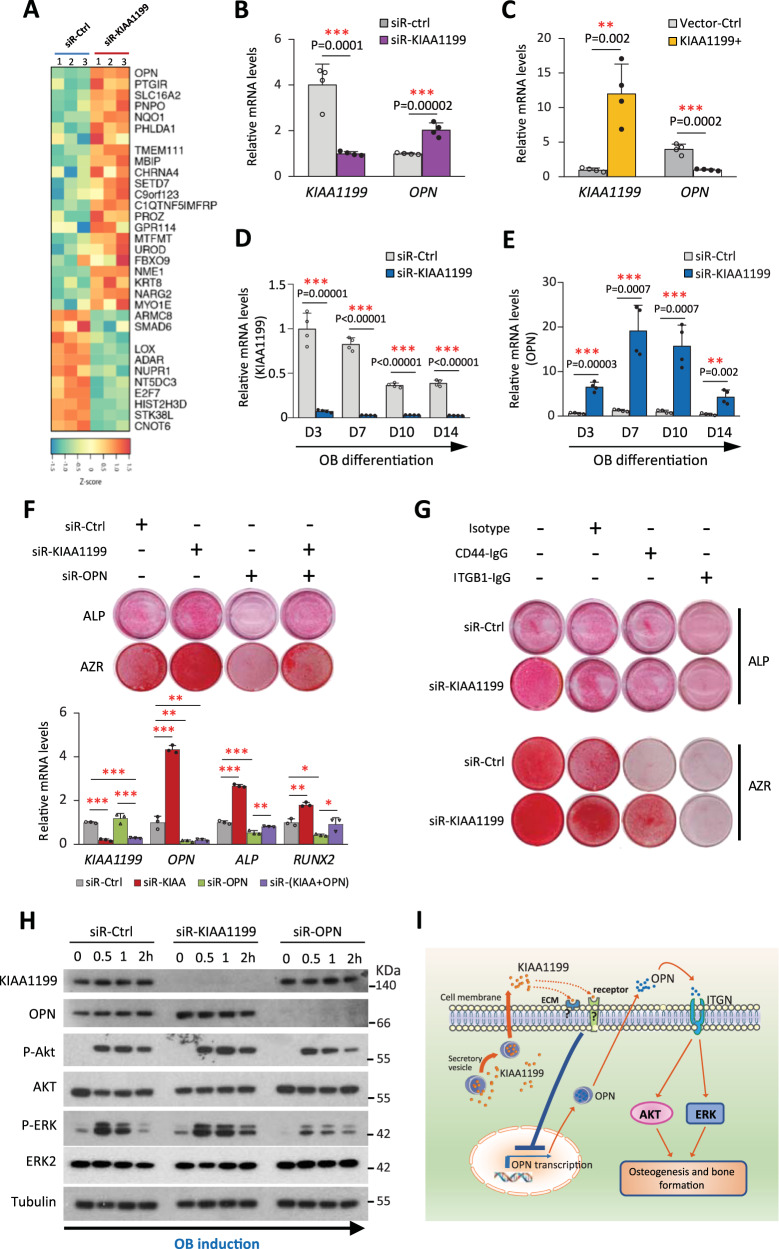
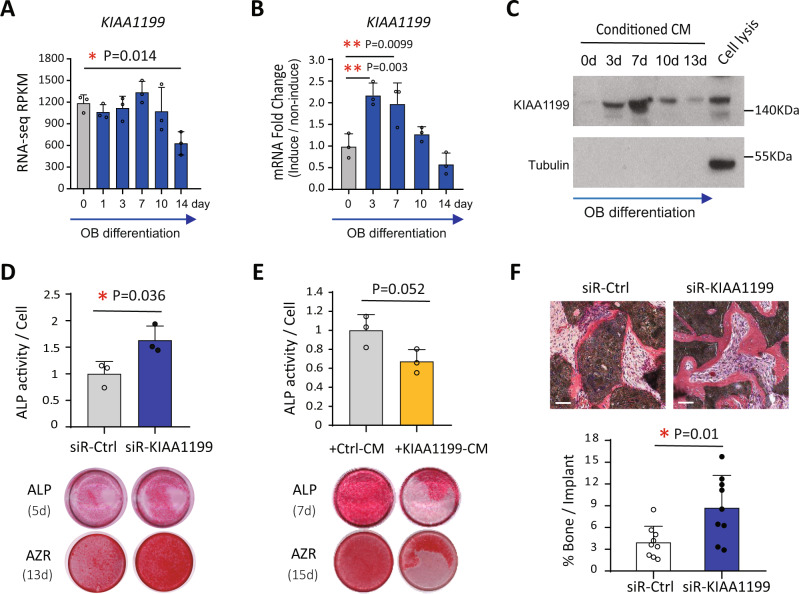
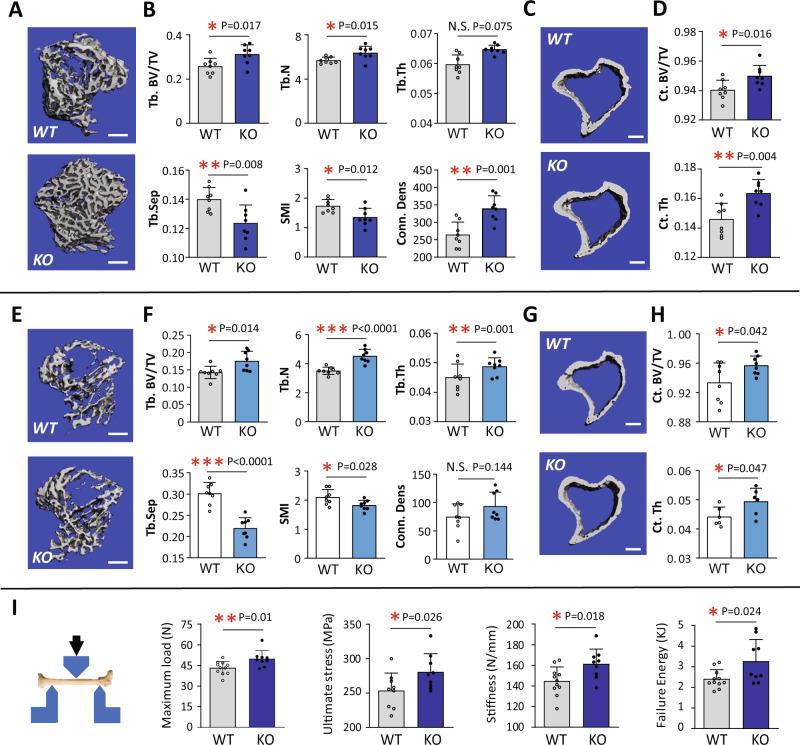
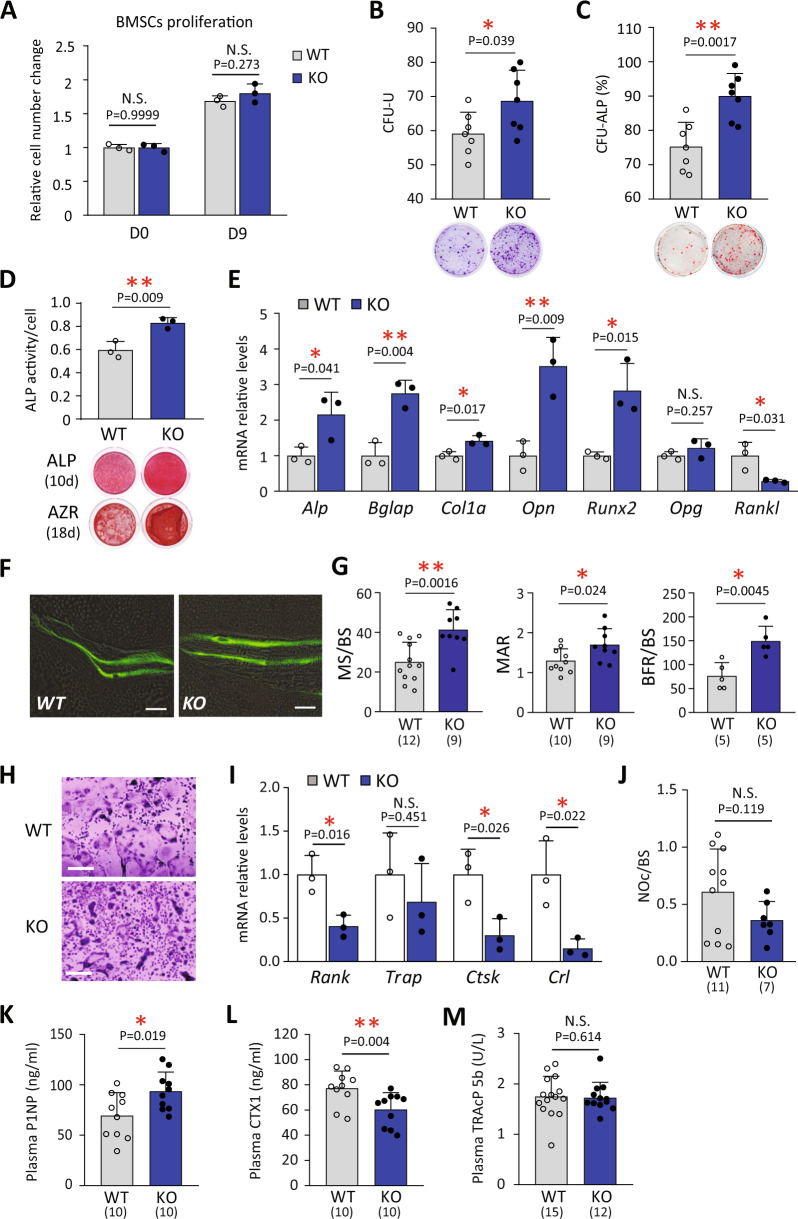
Upon transplantation, skeletal stem cells (also known as bone marrow stromal or mesenchymal stem cells) can regulate bone regeneration by producing secreted factors. Here, we identify KIAA1199 as a bone marrow stromal cell-secreted factor in vitro and in vivo. KIAA1199 plasma levels of patients positively correlate with osteoporotic fracture risk and expression levels of KIAA1199 in patient bone marrow stromal cells negatively correlates with their osteogenic differentiation potential. KIAA1199-deficient bone marrow stromal cells exhibit enhanced osteoblast differentiation in vitro and ectopic bone formation in vivo. Consistently, KIAA1199 knockout mice display increased bone mass and biomechanical strength, as well as an increased bone formation rate. They also exhibit accelerated healing of surgically generated bone defects and are protected from ovariectomy-induced bone loss. Mechanistically, KIAA1199 regulates osteogenesis by inhibiting the production of osteopontin by osteoblasts, via integrin-mediated AKT and ERK-MAPK intracellular signaling. Thus, KIAA1199 is a regulator of osteoblast differentiation and bone regeneration and could be targeted for the treatment or management of low bone mass conditions.
移植后,骨骼干细胞(也称为骨髓基质或间充质干细胞)可以通过产生分泌因子来调节骨再生。在这里,我们鉴定出 KIAA1199 是体外和体内骨髓基质细胞分泌的一种因子。患者的 KIAA1199 血浆水平与骨质疏松性骨折风险呈正相关,患者骨髓基质细胞中 KIAA1199 的表达水平与其成骨分化潜能呈负相关。缺乏 KIAA1199 的骨髓基质细胞在体外表现出增强的成骨细胞分化和体内异位骨形成。一致地,KIAA1199 基因敲除小鼠表现出增加的骨量和生物力学强度,以及增加的骨形成率。它们还表现出手术生成的骨缺损的加速愈合,并免受卵巢切除术引起的骨丢失的保护。从机制上讲,KIAA1199 通过整合素介导的 AKT 和 ERK-MAPK 细胞内信号转导抑制成骨细胞中骨桥蛋白的产生,从而调节成骨细胞分化和骨再生。因此,KIAA1199 是成骨细胞分化和骨再生的调节剂,可作为治疗或管理低骨量疾病的靶点。