Department of Endocrinology and Metabolism, Endocrine Research Laboratory (KMEB), Odense University Hospital and University of Southern Denmark, 5000, Odense, Denmark.
Department of Clinical Cell Biology, Vejle Hospital-Lillebaelt Hospital, Institute of Regional Health Research, University of Southern Denmark, 7100, Vejle, Denmark.
Cell Death Dis. 2019 Feb 12;10(2):126. doi: 10.1038/s41419-018-1202-9.
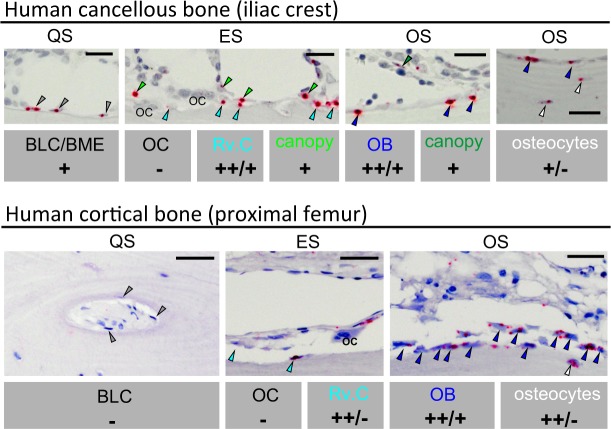
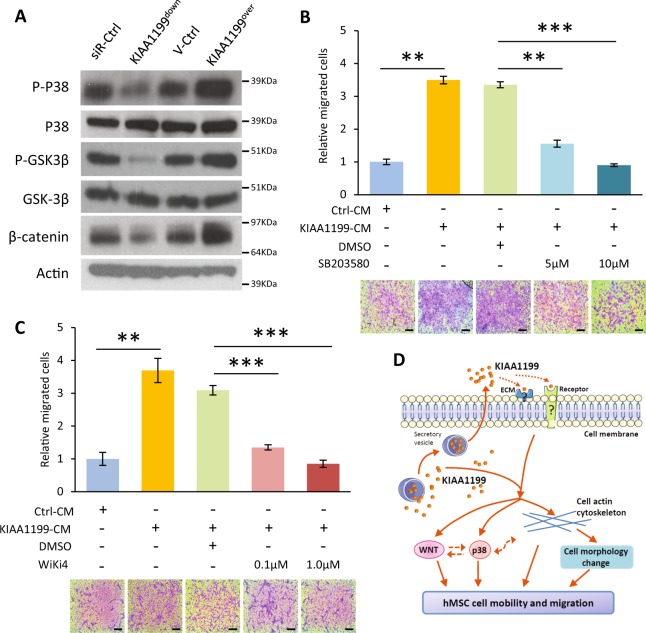
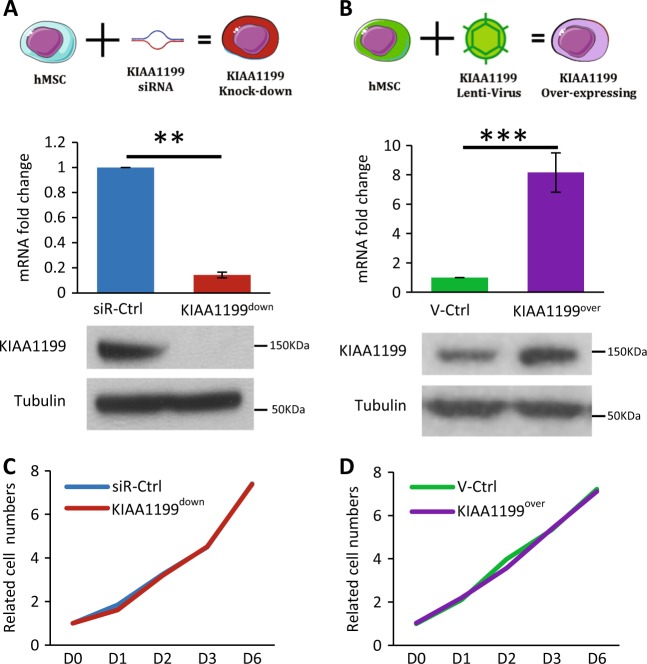
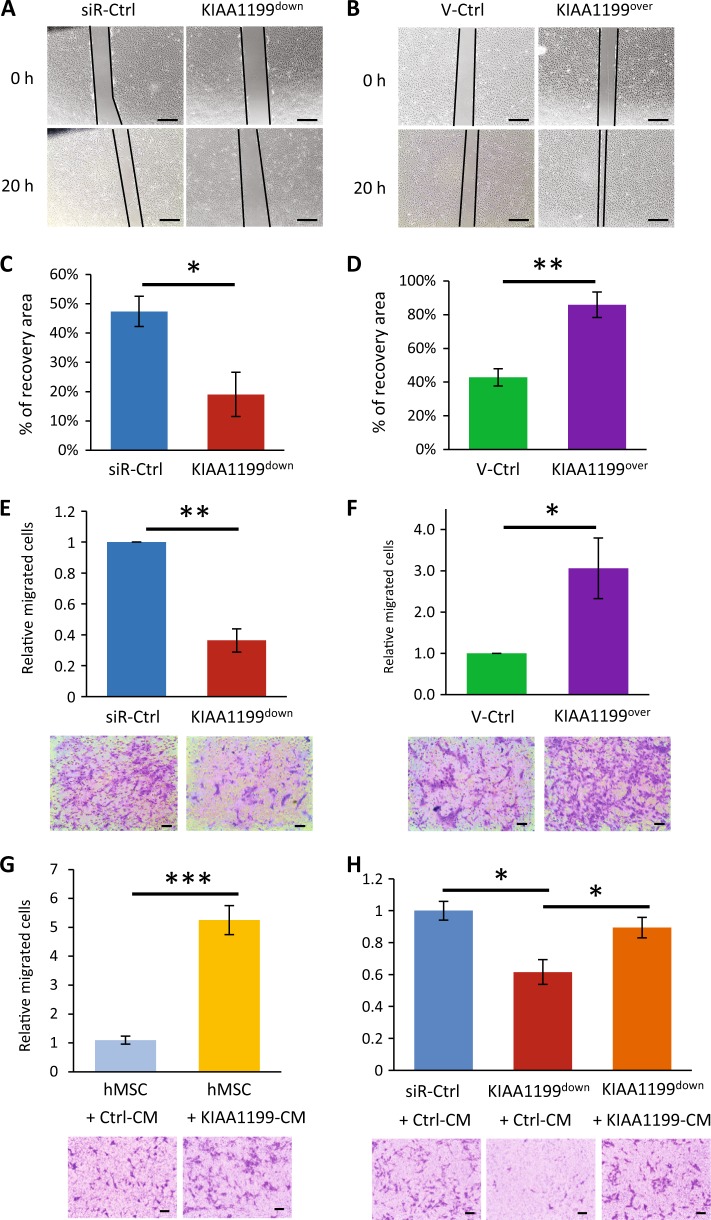
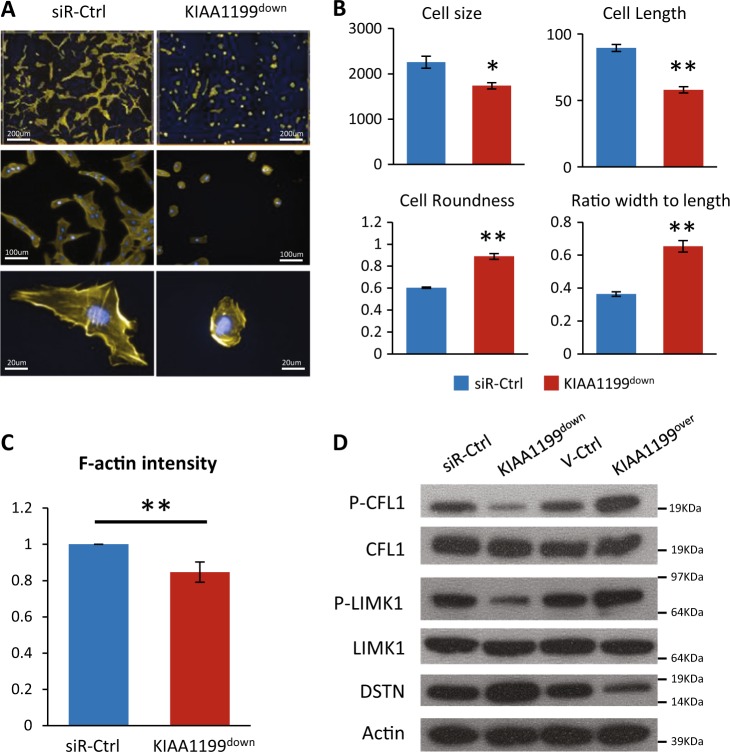
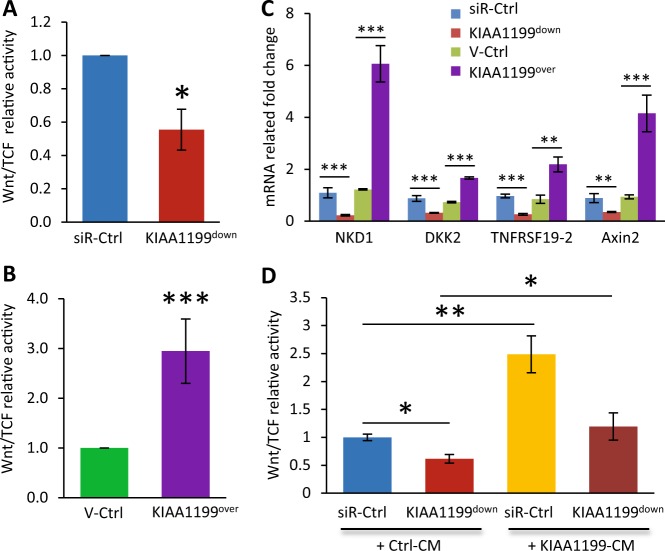
Factors mediating mobilization of osteoblastic stem and progenitor cells from their bone marrow niche to be recruited to bone formation sites during bone remodeling are poorly known. We have studied secreted factors present in the bone marrow microenvironment and identified KIAA1199 (also known as CEMIP, cell migration inducing hyaluronan binding protein) in human bone biopsies as highly expressed in osteoprogenitor reversal cells (Rv.C) recruited to the eroded surfaces (ES), which are the future bone formation sites. In vitro, KIAA1199 did not affect the proliferation of human osteoblastic stem cells (also known as human bone marrow skeletal or stromal stem cells, hMSCs); but it enhanced cell migration as determined by scratch assay and trans-well migration assay. KIAA1199 deficient hMSCs (KIAA1199) exhibited significant changes in cell size, cell length, ratio of cell width to length and cell roundness, together with reduction of polymerization actin (F-actin) and changes in phos-CFL1 (cofflin1), phos-LIMK1 (LIM domain kinase 1) and DSTN (destrin), key factors regulating actin cytoskeletal dynamics and cell motility. Moreover, KIAA1199 hMSC exhibited impaired Wnt signaling in TCF-reporter assay and decreased expression of Wnt target genes and these effects were rescued by KIAA1199 treatment. Finally, KIAA1199 regulated the activation of P38 kinase and its associated changes in Wnt-signaling. Thus, KIAA1199 is a mobilizing factor that interacts with P38 and Wnt signaling, and induces changes in actin cytoskeleton, as a mechanism mediating recruitment of hMSC to bone formation sites.
介导成骨细胞干细胞和祖细胞从骨髓龛动员到骨重塑过程中骨形成部位的因素知之甚少。我们研究了存在于骨髓微环境中的分泌因子,并在人类骨活检中鉴定出 KIAA1199(也称为 CEMIP,细胞迁移诱导透明质酸结合蛋白)在招募到侵蚀表面(ES)的成骨前体细胞逆转细胞(Rv.C)中高度表达,ES 是未来的骨形成部位。在体外,KIAA1199 不会影响人成骨细胞干细胞(也称为人骨髓骨骼或基质干细胞,hMSCs)的增殖;但通过划痕试验和 Trans-well 迁移试验确定,它增强了细胞迁移。KIAA1199 缺陷 hMSCs(KIAA1199)的细胞大小、细胞长度、细胞宽度与长度比和细胞圆度发生显著变化,同时聚合肌动蛋白(F-actin)减少,phos-CFL1(cofflin1)、phos-LIMK1(LIM 结构域激酶 1)和 DSTN(destrin)变化,这些关键因素调节肌动蛋白细胞骨架动力学和细胞迁移。此外,KIAA1199 hMSC 在 TCF-报告基因测定中表现出 Wnt 信号受损,Wnt 靶基因的表达降低,这些效应通过 KIAA1199 处理得到挽救。最后,KIAA1199 调节 P38 激酶的激活及其对 Wnt 信号的相关变化。因此,KIAA1199 是一种动员因子,与 P38 和 Wnt 信号相互作用,诱导肌动蛋白细胞骨架的变化,作为介导 hMSC 招募到骨形成部位的机制。