Department of Biosciences, Rice University, Houston, TX, USA.
Department of Oceanography, Texas A&M University, College Station, TX, USA.
Sci Rep. 2023 Apr 10;13(1):5813. doi: 10.1038/s41598-023-31507-w.
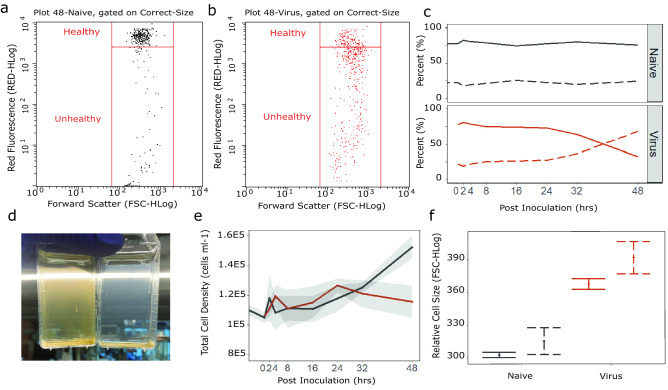
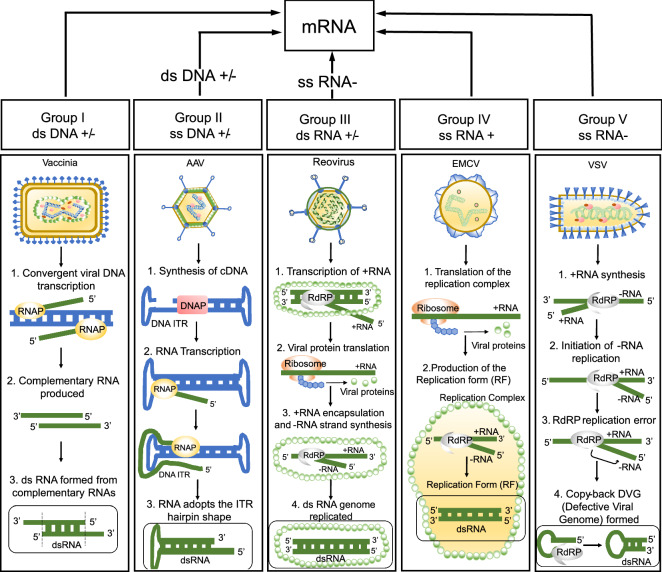
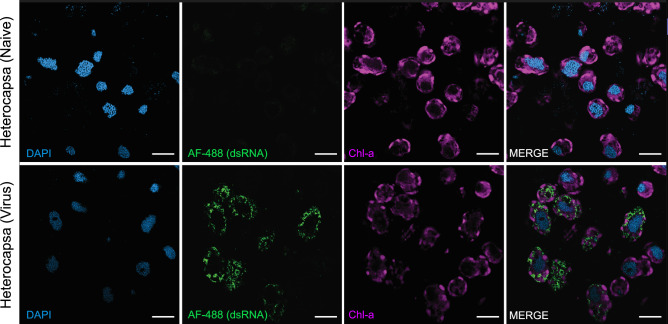
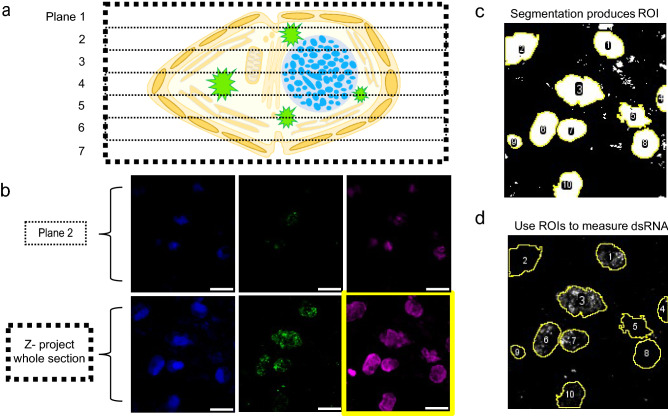
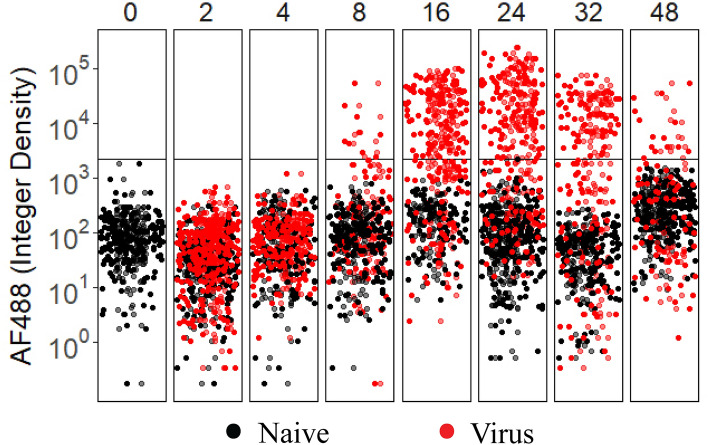
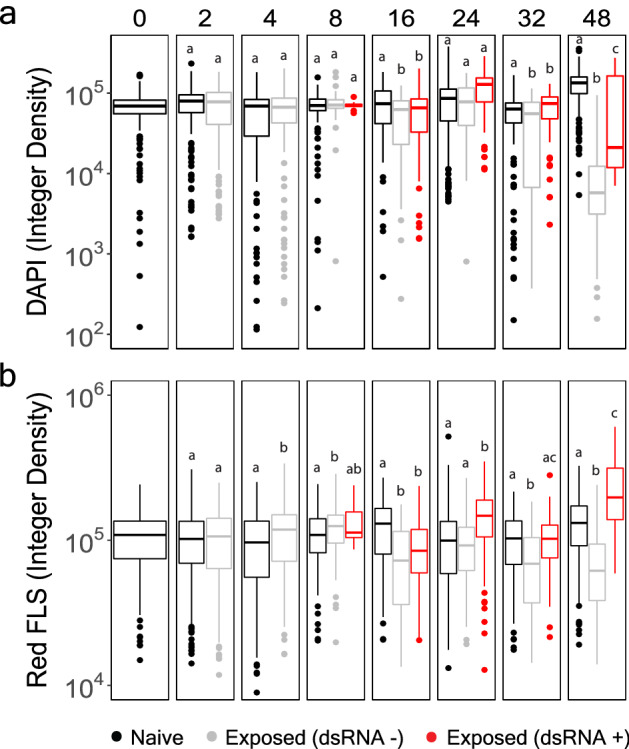
Half of the marine virosphere is hypothesized to be RNA viruses (kingdom Orthornavirae) that infect abundant micro-eukaryotic hosts (e.g. protists). To test this, quantitative approaches that broadly track infections in situ are needed. Here, we describe a technique-dsRNA-Immunofluorescence (dsRIF)-that uses a double-stranded RNA (dsRNA) targeting monoclonal antibody to assess host infection status based on the presence of dsRNA, a replicative intermediate of all Orthornavirae infections. We show that the dinoflagellate Heterocapsa circularisquama produces dsRIF signal ~ 1000 times above background autofluorescence when infected by the + ssRNA virus HcRNAV. dsRNA-positive virocells were detected across > 50% of the 48-h infection cycle and accumulated to represent at least 63% of the population. Photosynthetic and chromosomal integrity remained intact during peak replication, indicating HcRNAV infection does not interrupt these processes. This work validates the use of dsRIF on marine RNA viruses and their hosts, setting the stage for quantitative environmental applications that will accelerate understanding of virus-driven ecosystem impacts.
海洋病毒组的一半被假设为感染丰富的微真核宿主(如原生动物)的 RNA 病毒(正粘病毒界)。为了验证这一点,需要广泛追踪原位感染的定量方法。在这里,我们描述了一种技术 - dsRNA-免疫荧光(dsRIF)-它使用靶向双链 RNA(dsRNA)的单克隆抗体,根据 dsRNA 的存在来评估宿主的感染状态,dsRNA 是所有正粘病毒感染的复制中间体。我们表明,当被+ssRNA 病毒 HcRNAV 感染时,双鞭毛藻 Heterocapsa circularisquama 产生的 dsRIF 信号比背景自发荧光高约 1000 倍。在 48 小时的感染周期中,dsRNA 阳性病毒细胞的检测超过了> 50%,并且积累到代表至少 63%的种群。在峰值复制期间,光合作用和染色体完整性保持完整,表明 HcRNAV 感染不会中断这些过程。这项工作验证了 dsRIF 在海洋 RNA 病毒及其宿主中的应用,为加速了解病毒驱动的生态系统影响的定量环境应用奠定了基础。