Department of Orthopaedics, Union Hospital, Tongji Medical College, Huazhong University of Science and Technology, Jiefang Avenue No.1277, Wuhan, Hubei, 430022, People's Republic of China.
Department of Orthopaedics, Shandong Provincial Hospital Affiliated to Shandong University, Jinan, People's Republic of China.
J Orthop Surg Res. 2023 Apr 11;18(1):294. doi: 10.1186/s13018-023-03715-7.
To compare the biomechanical properties and stability, using a finite element model, of four fixation constructs used for the treatment of anterior column and posterior hemi-transverse (ACPHT) acetabular fractures under two physiological loading conditions (standing and sitting).
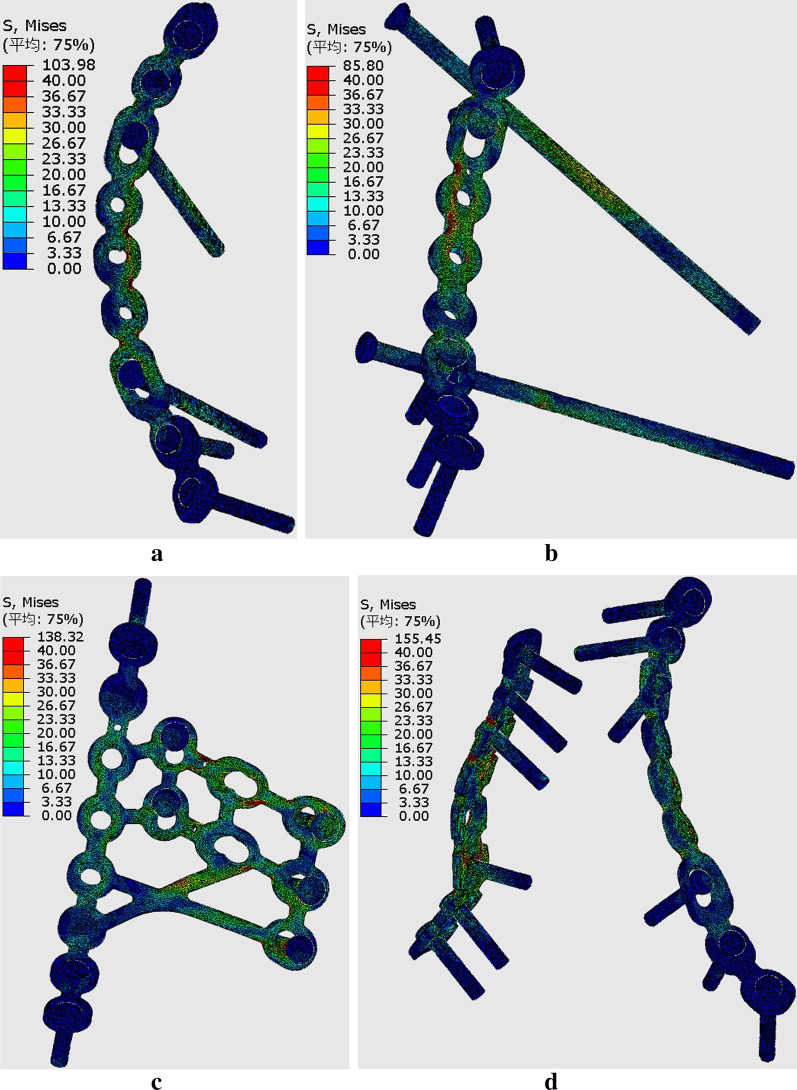
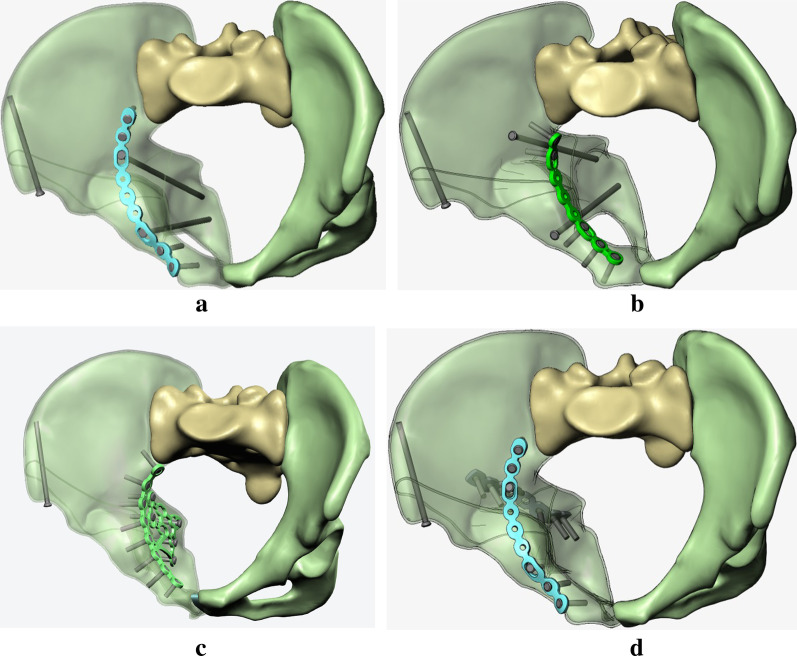
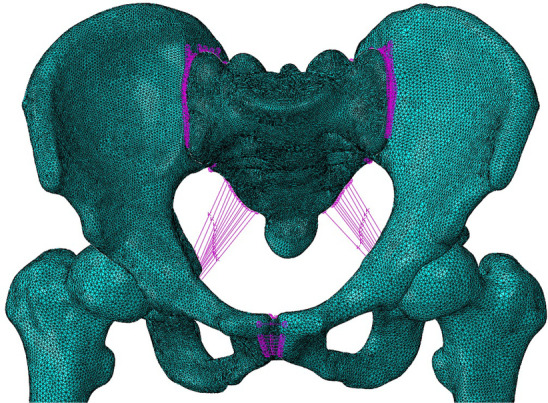
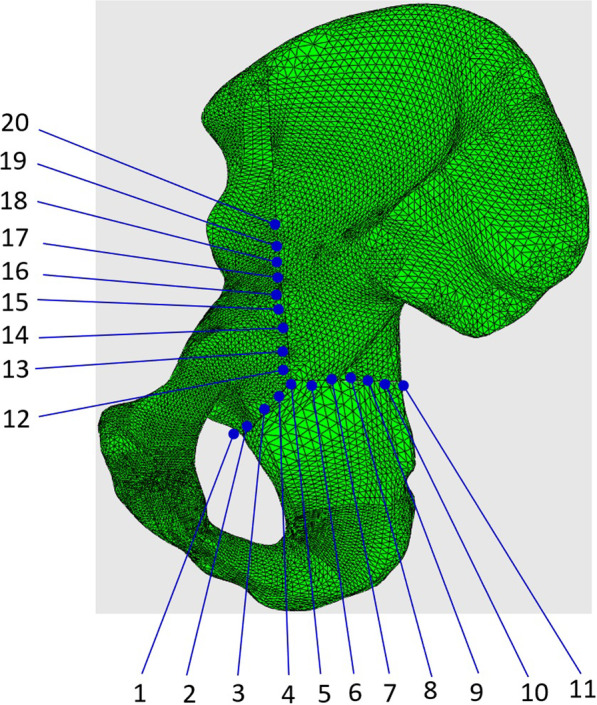
A finite element model simulating ACPHT acetabular fractures was created for four different scenarios: a suprapectineal plate combined with posterior column and infra-acetabular screws (SP-PS-IS); an infrapectineal plate combined with posterior column and infra-acetabular screws (IP-PS-IS); a special infrapectineal quadrilateral surface buttress plate (IQP); and a suprapectineal plate combined with a posterior column plate (SP-PP). Three-dimensional finite element stress analysis was performed on these models with a load of 700 N in standing and sitting positions. Biomechanical stress distributions and fracture displacements were analysed and compared between these fixation techniques.
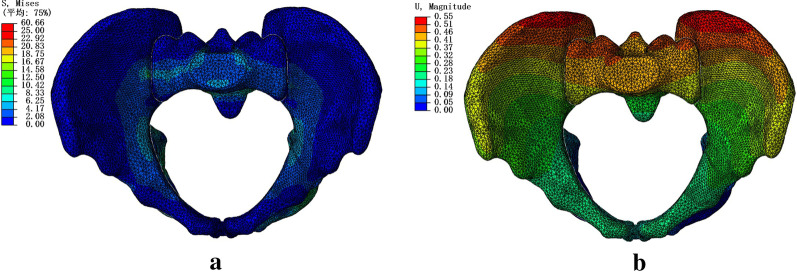
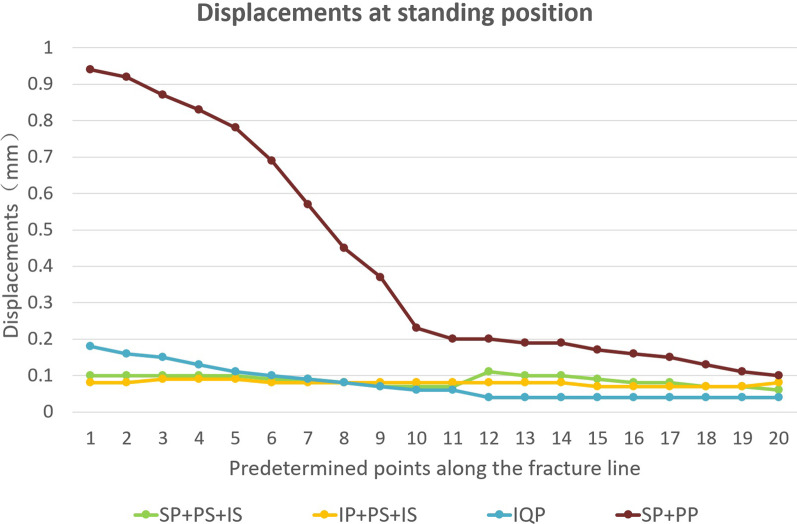
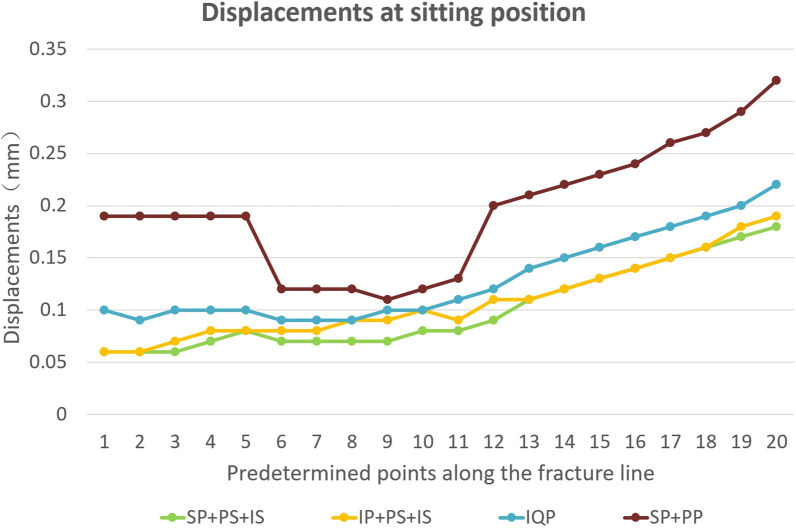
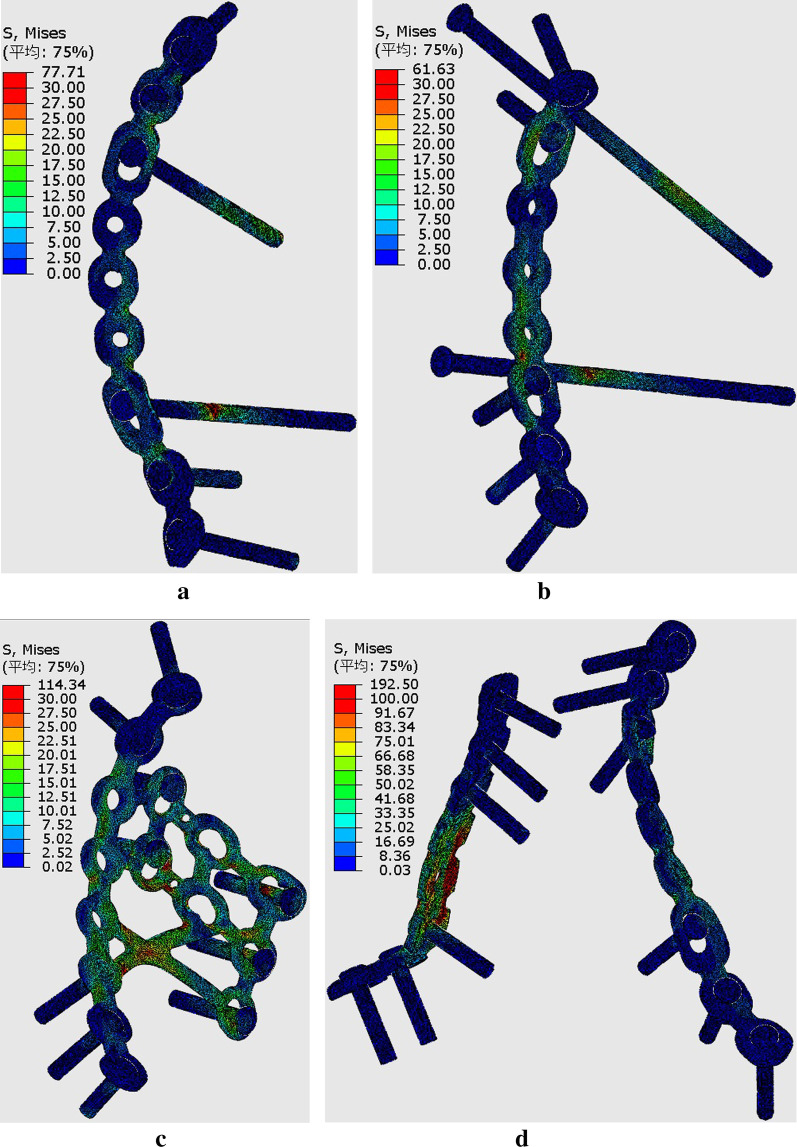
In models simulating the standing position, high displacements and stress distributions were observed at the infra-acetabulum regions. The degree of these fracture displacements was low in the IQP (0.078 mm), as compared to either the IP-PS-IS (0.079 mm) or the SP & PP (0.413 mm) fixation constructs. However, the IP-PS-IS fixation construct had the highest effective stiffness. In models simulating the sitting position, high fracture displacements and stress distributions were observed at the regions of the anterior and posterior columns. The degree of these fracture displacements was low in the SP-PS-IS (0.101 mm), as compared to the IP-PS-IS (0.109 mm) and the SP-PP (0.196 mm) fixation constructs.
In both standing and sitting positions, the stability and stiffness index were comparable between the IQP, SP-PS-IS, and IP-PS-IS. These 3 fixation constructs had smaller fracture displacements than the SP-PP construct. The stress concentrations at the regions of quadrilateral surface and infra-acetabulum suggest that the buttressing fixation of quadrilateral plate was required for ACPHT fractures.
为比较四种固定方式在两种生理负荷条件(站立和坐立)下治疗前柱和后半月形横断(ACPHT)髋臼骨折的生物力学特性和稳定性,采用有限元模型进行研究。
建立了四种不同情况下 ACPHT 髋臼骨折的有限元模型:耻骨上钢板联合后侧柱和髋臼下螺钉(SP-PS-IS);耻骨下钢板联合后侧柱和髋臼下螺钉(IP-PS-IS);特殊耻骨下四边形表面支撑钢板(IQP);耻骨上钢板联合后侧柱钢板(SP-PP)。在站立和坐立位置下,对这些模型施加 700N 的负荷进行三维有限元应力分析。分析并比较了这些固定技术的生物力学应力分布和骨折位移。
在模拟站立位的模型中,髋臼下区域观察到高位移和高应力分布。与 IP-PS-IS(0.079mm)或 SP-PP(0.413mm)固定方式相比,IQP(0.078mm)的骨折位移程度较低。然而,IP-PS-IS 固定方式的有效刚度最高。在模拟坐立位的模型中,前柱和后柱区域观察到高骨折位移和高应力分布。与 IP-PS-IS(0.109mm)和 SP-PP(0.196mm)固定方式相比,SP-PS-IS(0.101mm)的骨折位移程度较低。
在站立和坐立位两种情况下,IQP、SP-PS-IS 和 IP-PS-IS 的稳定性和刚度指数相当。这 3 种固定方式的骨折位移均小于 SP-PP 固定方式。四边形和髋臼下区域的应力集中表明,对于 ACPHT 骨折,需要进行四边形钢板的支撑固定。