Cherradi Sara, Garambois Véronique, Marines Johanna, Andrade Augusto Faria, Fauvre Alexandra, Morand Olivia, Fargal Manon, Mancouri Ferial, Ayrolles-Torro Adeline, Vezzo-Vié Nadia, Jarlier Marta, Loussaint Gerald, Huvelle Steve, Joubert Nicolas, Mazard Thibault, Gongora Céline, Pourquier Philippe, Boissière-Michot Florence, Rio Maguy Del
Institut de Recherche en Cancérologie de Montpellier, INSERM U1194, Université de Montpellier, Institut du Cancer de Montpellier, 208 rue des Apothicaires, Montpellier Cedex 5, F-34298, France.
Biometry Department, ICM, Montpellier, France.
Cell Biosci. 2023 Apr 11;13(1):72. doi: 10.1186/s13578-023-01015-5.
Tumor resistance is a frequent cause of therapy failure and remains a major challenge for the long-term management of colorectal cancer (CRC). The aim of this study was to determine the implication of the tight junctional protein claudin 1 (CLDN1) in the acquired resistance to chemotherapy.
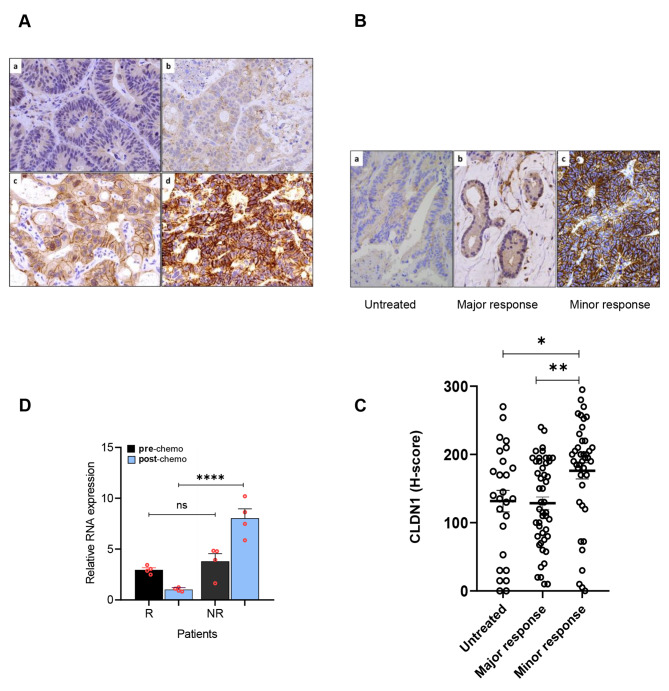
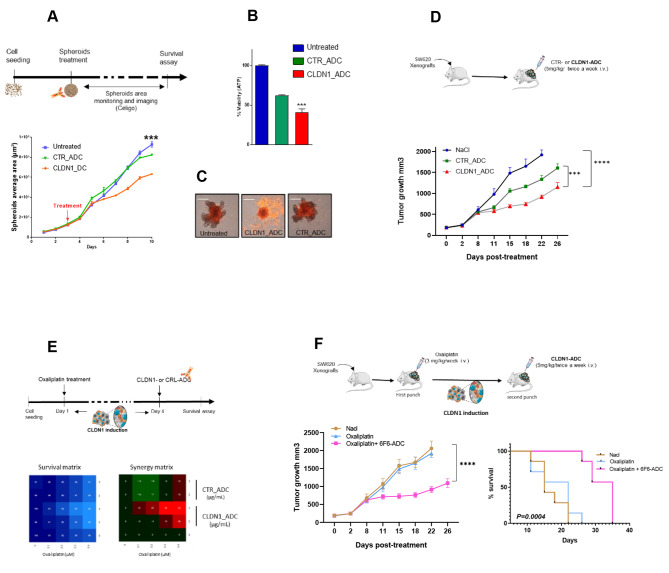
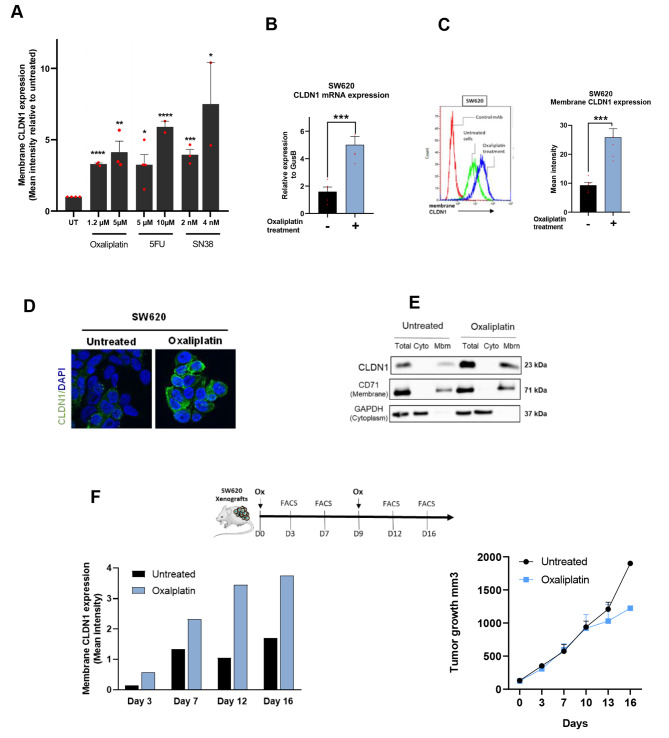
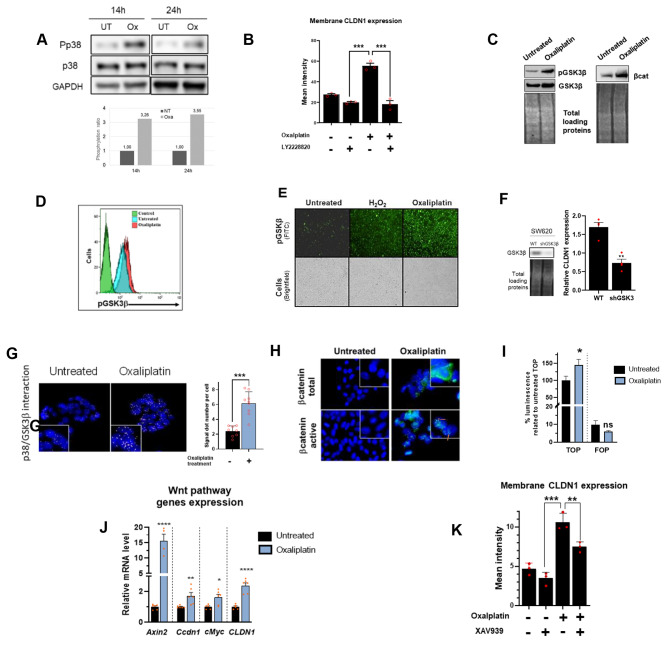
Immunohistochemistry was used to determine CLDN1 expression in post-chemotherapy liver metastases from 58 CRC patients. The effects of oxaliplatin on membrane CLDN1 expression were evaluated by flow cytometry, immunofluorescence and western blotting experiments in vitro and in vivo. Phosphoproteome analyses, proximity ligation and luciferase reporter assays were used to unravel the mechanism of CLDN1 induction. RNAseq experiments were performed on oxaliplatin-resistant cell lines to investigate the role of CLDN1 in chemoresistance. The "one-two punch" sequential combination of oxaliplatin followed by an anti-CLDN1 antibody-drug conjugate (ADC) was tested in both CRC cell lines and murine models.
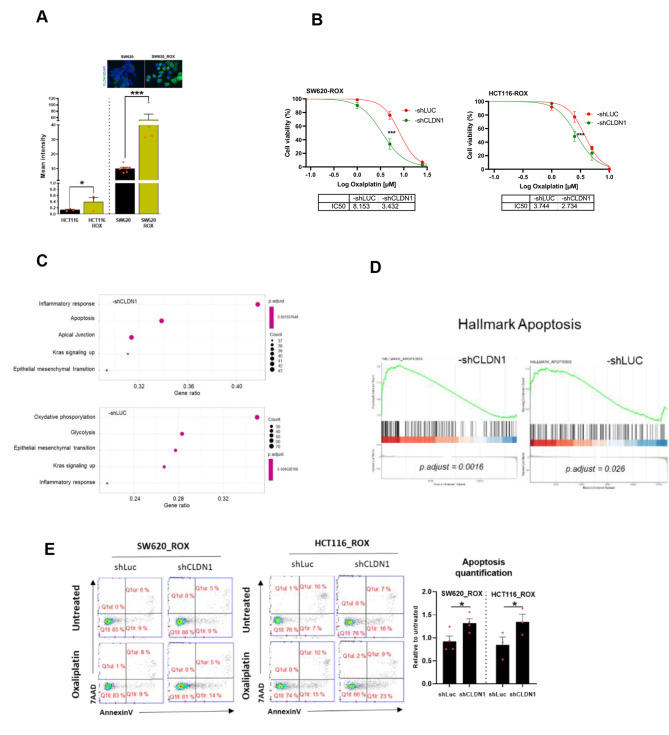
We found a significant correlation between CLDN1 expression level and histologic response to chemotherapy, CLDN1 expression being the highest in resistant metastatic residual cells of patients showing minor responses. Moreover, in both murine xenograft model and CRC cell lines, CLDN1 expression was upregulated after exposure to conventional chemotherapies used in CRC treatment. CLDN1 overexpression was, at least in part, functionally related to the activation of the MAPKp38/GSK3β/Wnt/β-catenin pathway. Overexpression of CLDN1 was also observed in oxaliplatin-resistant CRC cell lines and was associated with resistance to apoptosis, suggesting an anti-apoptotic role for CLDN1. Finally, we demonstrated that the sequential treatment with oxaliplatin followed by an anti-CLDN1 ADC displayed a synergistic effect in vitro and in in vivo.
Our study identifies CLDN1 as a new biomarker of acquired resistance to chemotherapy in CRC patients and suggests that a "one-two punch" approach targeting chemotherapy-induced CLDN1 expression may represent a therapeutic opportunity to circumvent resistance and to improve the outcome of patients with advanced CRC.
肿瘤耐药是治疗失败的常见原因,仍然是结直肠癌(CRC)长期管理面临的主要挑战。本研究的目的是确定紧密连接蛋白claudin 1(CLDN1)在获得性化疗耐药中的作用。
采用免疫组织化学法检测58例CRC患者化疗后肝转移灶中CLDN1的表达。通过体外和体内的流式细胞术、免疫荧光和蛋白质印迹实验评估奥沙利铂对膜CLDN1表达的影响。利用磷酸化蛋白质组分析、邻近连接和荧光素酶报告基因检测来揭示CLDN1诱导的机制。对奥沙利铂耐药细胞系进行RNA测序实验,以研究CLDN1在化疗耐药中的作用。在CRC细胞系和小鼠模型中测试奥沙利铂后接抗CLDN1抗体-药物偶联物(ADC)的“两次打击”序贯联合治疗。
我们发现CLDN1表达水平与化疗的组织学反应之间存在显著相关性,在反应较小的患者的耐药转移性残留细胞中CLDN1表达最高。此外,在小鼠异种移植模型和CRC细胞系中,暴露于CRC治疗中使用的传统化疗后,CLDN1表达均上调。CLDN1的过表达至少部分在功能上与MAPKp38/GSK3β/Wnt/β-连环蛋白通路的激活有关。在奥沙利铂耐药的CRC细胞系中也观察到CLDN1的过表达,并且与抗凋亡相关,提示CLDN1具有抗凋亡作用。最后,我们证明奥沙利铂后接抗CLDN1 ADC的序贯治疗在体外和体内均显示出协同作用。
我们的研究将CLDN1鉴定为CRC患者获得性化疗耐药的新生物标志物,并表明针对化疗诱导的CLDN1表达的“两次打击”方法可能代表一种治疗机会,以规避耐药并改善晚期CRC患者的预后。