Cancer Research UK Lung Cancer Centre of Excellence, University College London Cancer Institute, London, UK.
Cancer Genome Evolution Research Group, Cancer Research UK Lung Cancer Centre of Excellence, University College London Cancer Institute, London, UK.
Nature. 2023 Apr;616(7957):543-552. doi: 10.1038/s41586-023-05706-4. Epub 2023 Apr 12.
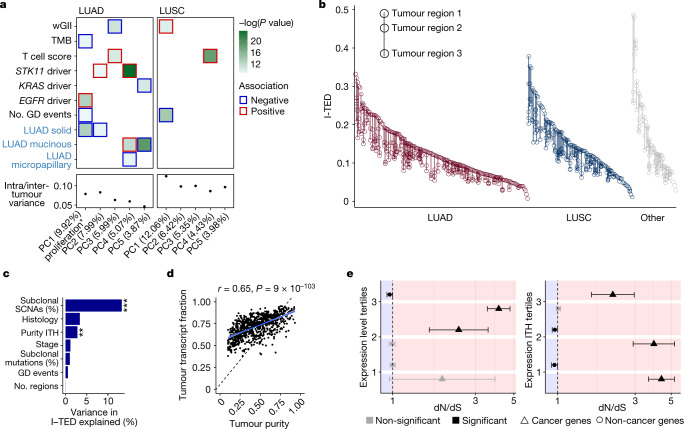
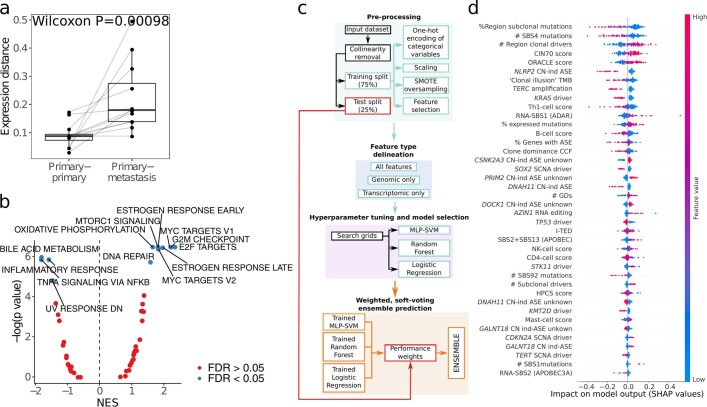
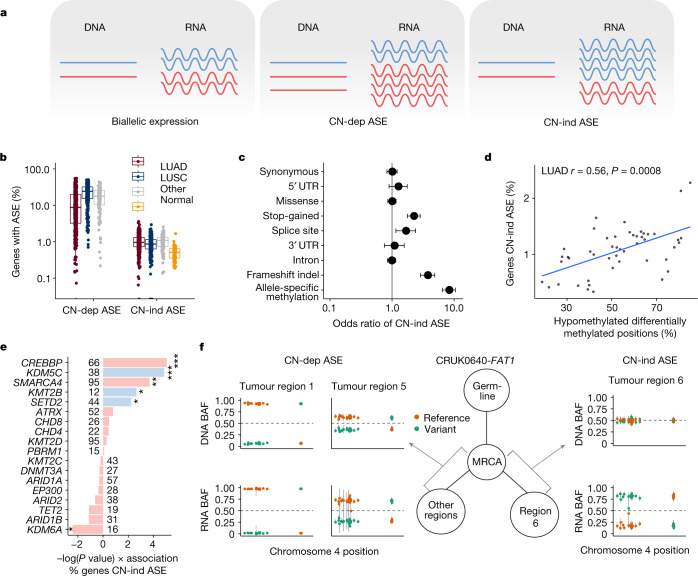
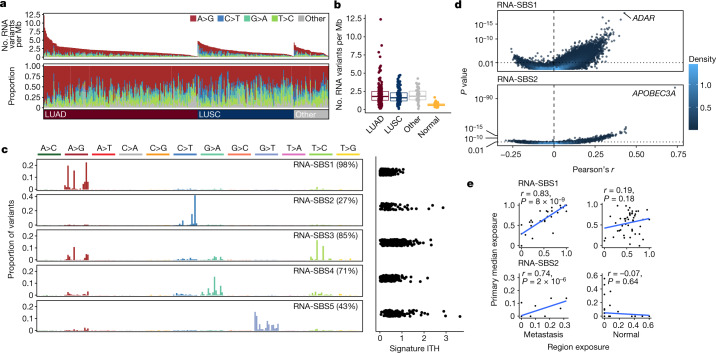
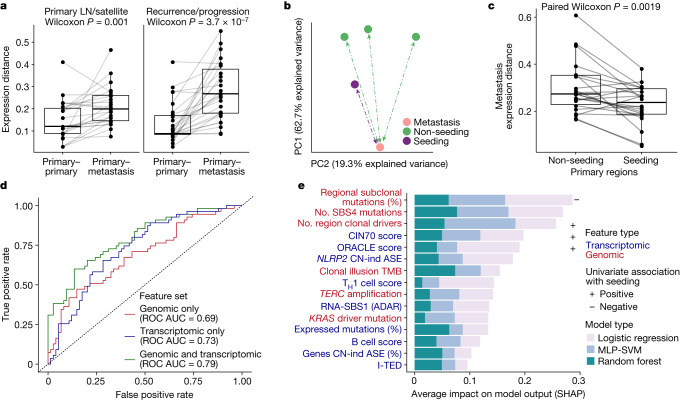
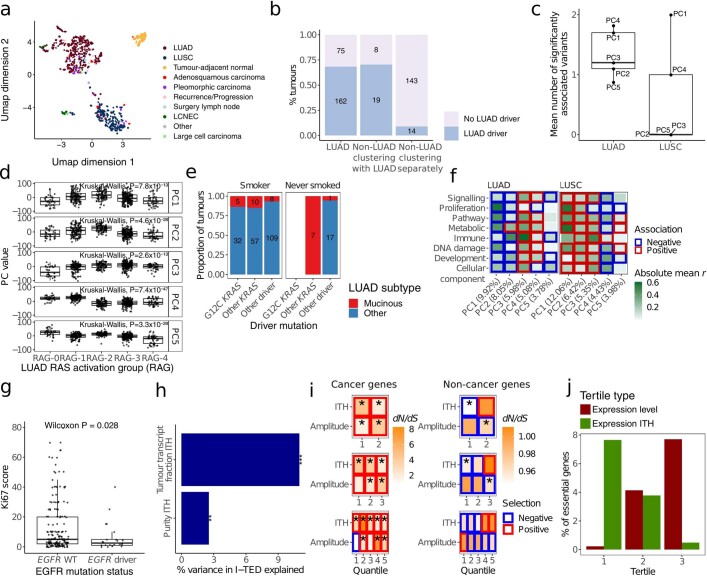
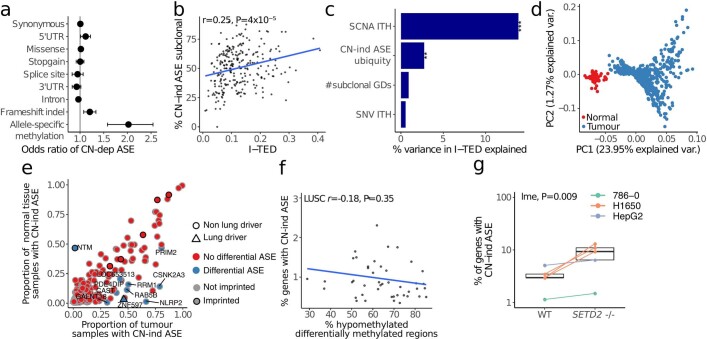
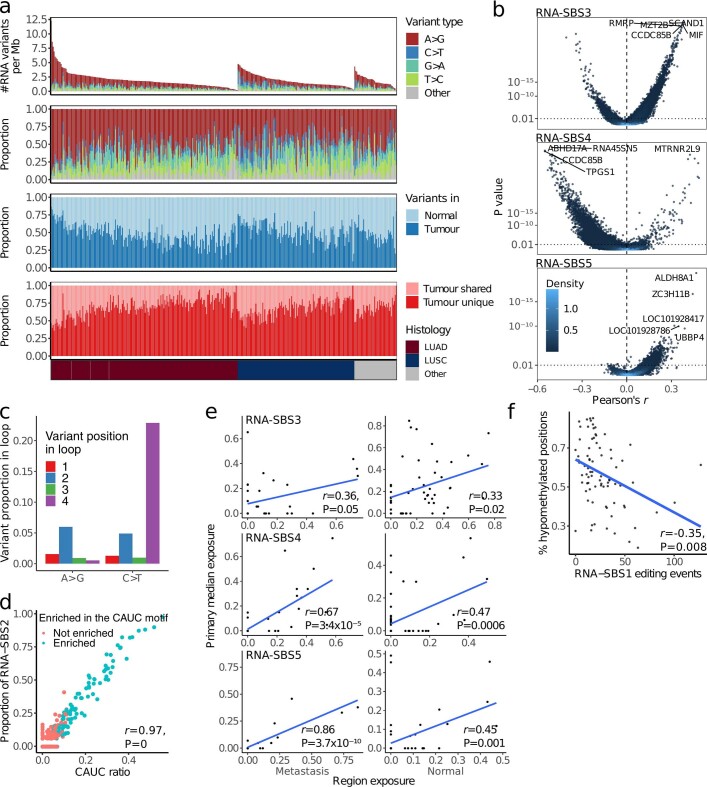
Intratumour heterogeneity (ITH) fuels lung cancer evolution, which leads to immune evasion and resistance to therapy. Here, using paired whole-exome and RNA sequencing data, we investigate intratumour transcriptomic diversity in 354 non-small cell lung cancer tumours from 347 out of the first 421 patients prospectively recruited into the TRACERx study. Analyses of 947 tumour regions, representing both primary and metastatic disease, alongside 96 tumour-adjacent normal tissue samples implicate the transcriptome as a major source of phenotypic variation. Gene expression levels and ITH relate to patterns of positive and negative selection during tumour evolution. We observe frequent copy number-independent allele-specific expression that is linked to epigenomic dysfunction. Allele-specific expression can also result in genomic-transcriptomic parallel evolution, which converges on cancer gene disruption. We extract signatures of RNA single-base substitutions and link their aetiology to the activity of the RNA-editing enzymes ADAR and APOBEC3A, thereby revealing otherwise undetected ongoing APOBEC activity in tumours. Characterizing the transcriptomes of primary-metastatic tumour pairs, we combine multiple machine-learning approaches that leverage genomic and transcriptomic variables to link metastasis-seeding potential to the evolutionary context of mutations and increased proliferation within primary tumour regions. These results highlight the interplay between the genome and transcriptome in influencing ITH, lung cancer evolution and metastasis.
肿瘤内异质性(ITH)促进肺癌的演进,导致免疫逃逸和对治疗的耐药性。在这里,我们使用配对的全外显子组和 RNA 测序数据,对前瞻性招募的 TRACERx 研究中的前 421 名患者中的 347 名患者的 354 个非小细胞肺癌肿瘤中的肿瘤内转录组多样性进行了研究。对 947 个肿瘤区域(包括原发性和转移性疾病)以及 96 个肿瘤邻近正常组织样本的分析表明,转录组是表型变异的主要来源。基因表达水平和 ITH 与肿瘤进化过程中的正选择和负选择模式相关。我们观察到频繁的拷贝数独立的等位基因特异性表达,这与表观基因组功能障碍有关。等位基因特异性表达也可能导致基因组-转录组平行进化,最终导致癌症基因的破坏。我们提取了 RNA 单碱基替换的特征,并将其病因与 RNA 编辑酶 ADAR 和 APOBEC3A 的活性联系起来,从而揭示了肿瘤中原本未被发现的持续 APOBEC 活性。通过对原发性-转移性肿瘤对的转录组进行表征,我们结合了多种机器学习方法,利用基因组和转录组变量将转移播种潜力与突变的进化背景以及原发性肿瘤区域内增殖的增加联系起来。这些结果强调了基因组和转录组在影响 ITH、肺癌演进和转移中的相互作用。