Cancer Evolution and Genome Instability Laboratory, The Francis Crick Institute, London, UK.
Cancer Research UK Lung Cancer Centre of Excellence, University College London Cancer Institute, London, UK.
Nature. 2023 Apr;616(7957):525-533. doi: 10.1038/s41586-023-05783-5. Epub 2023 Apr 12.
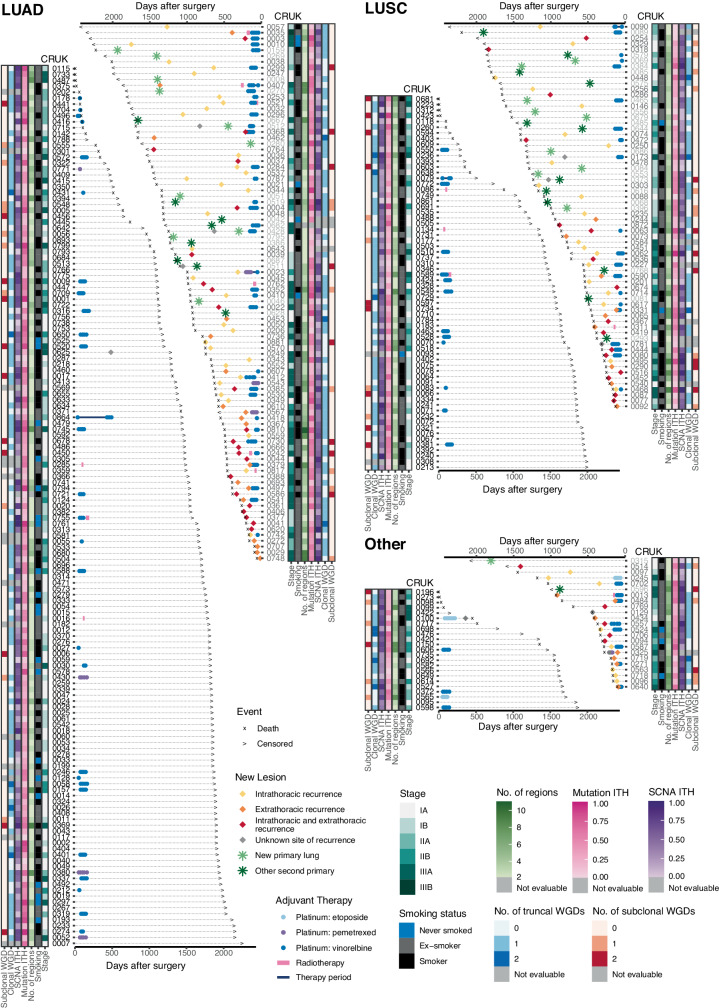
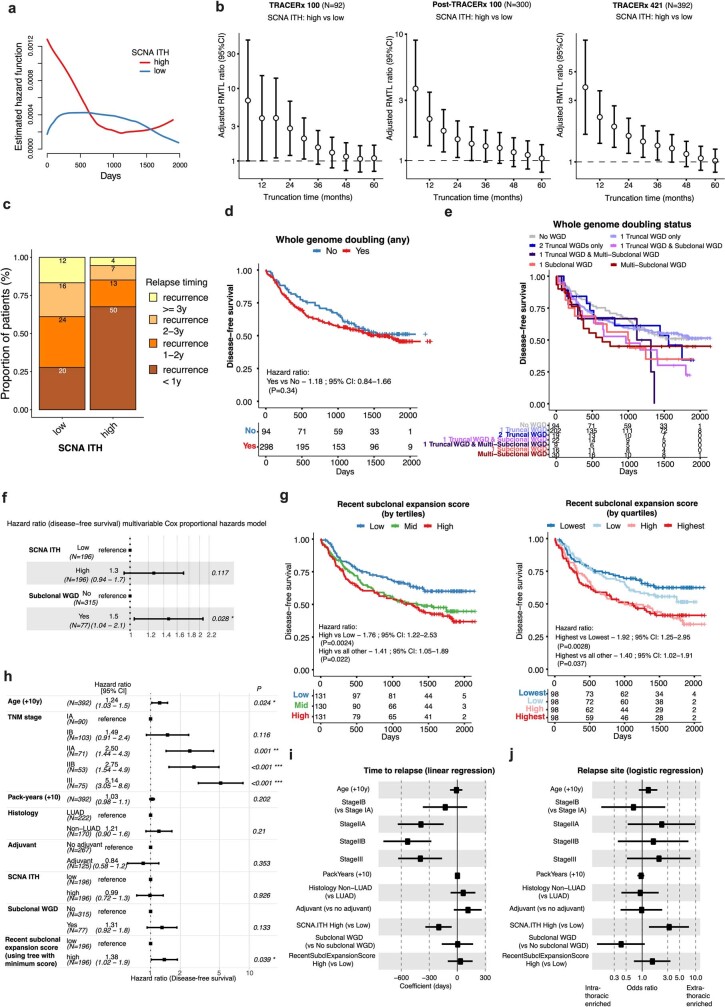
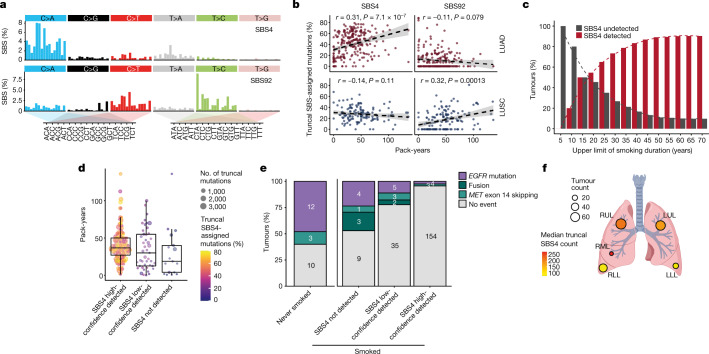
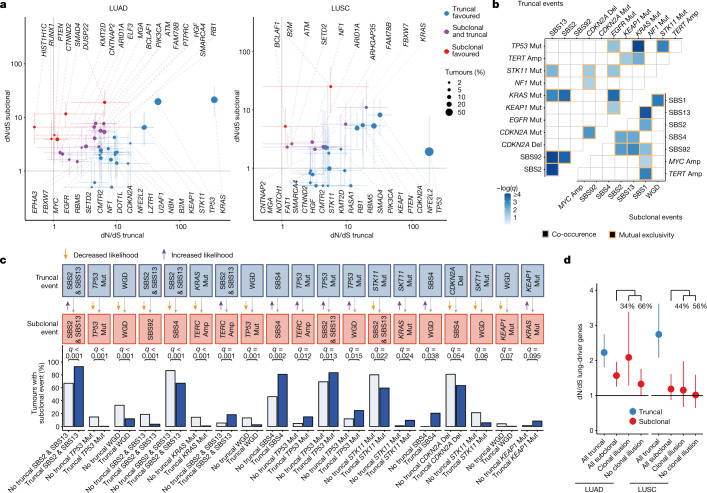
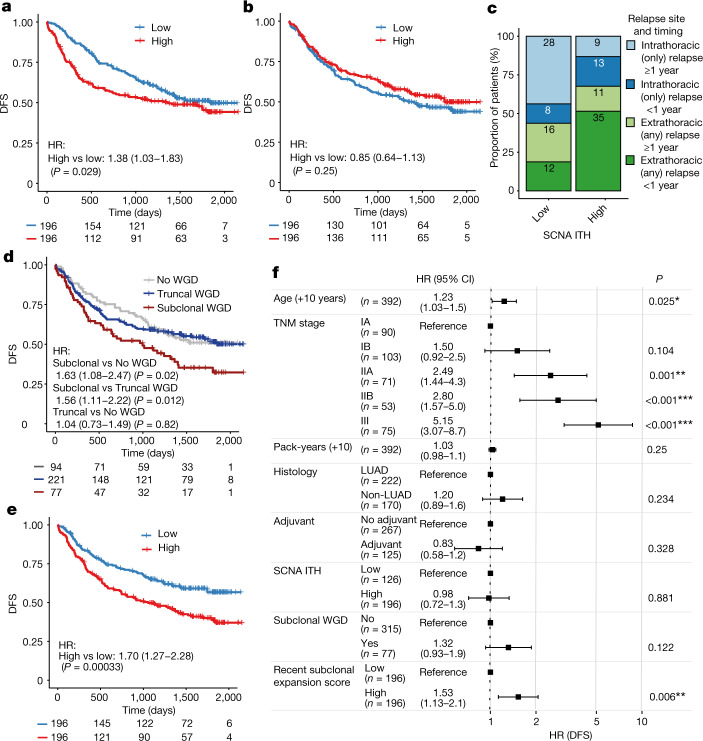
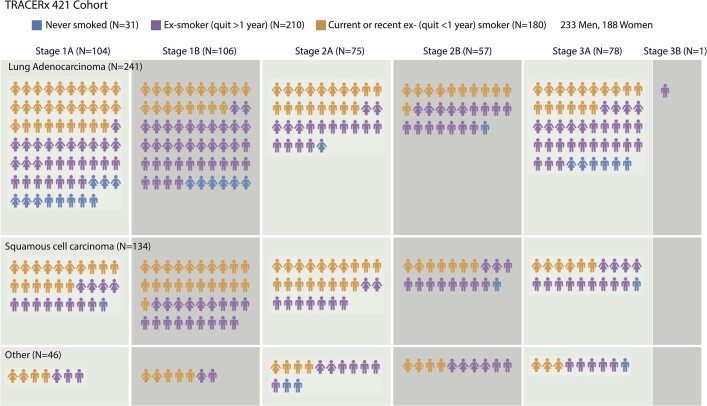
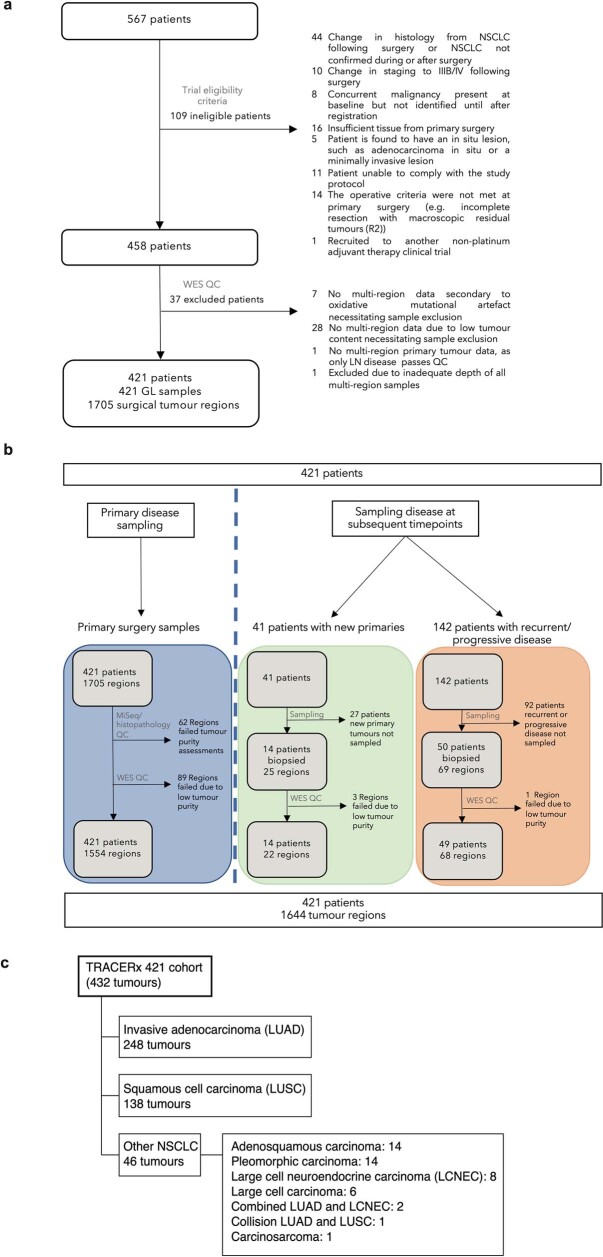
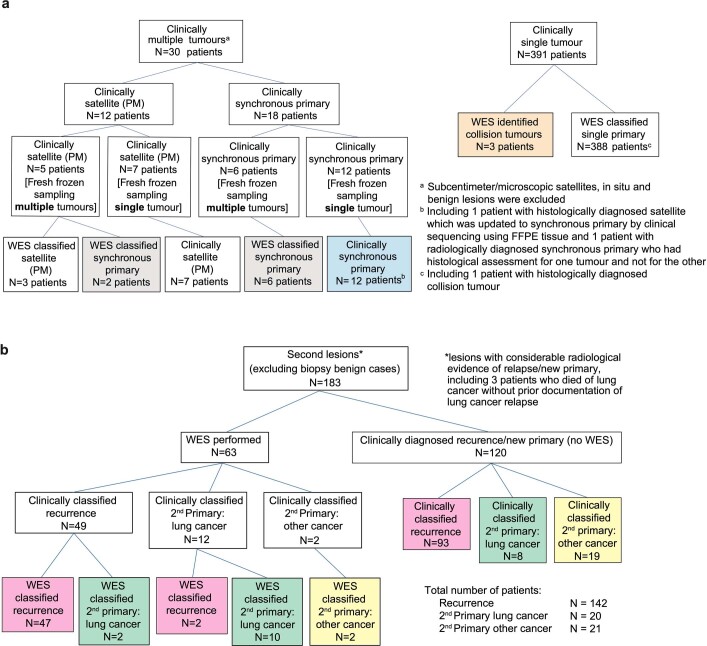
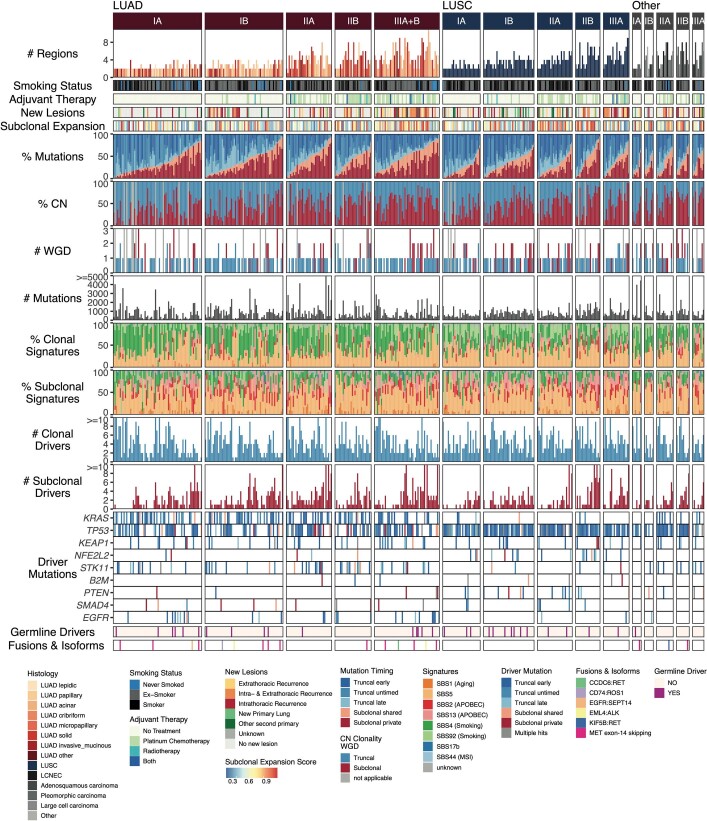
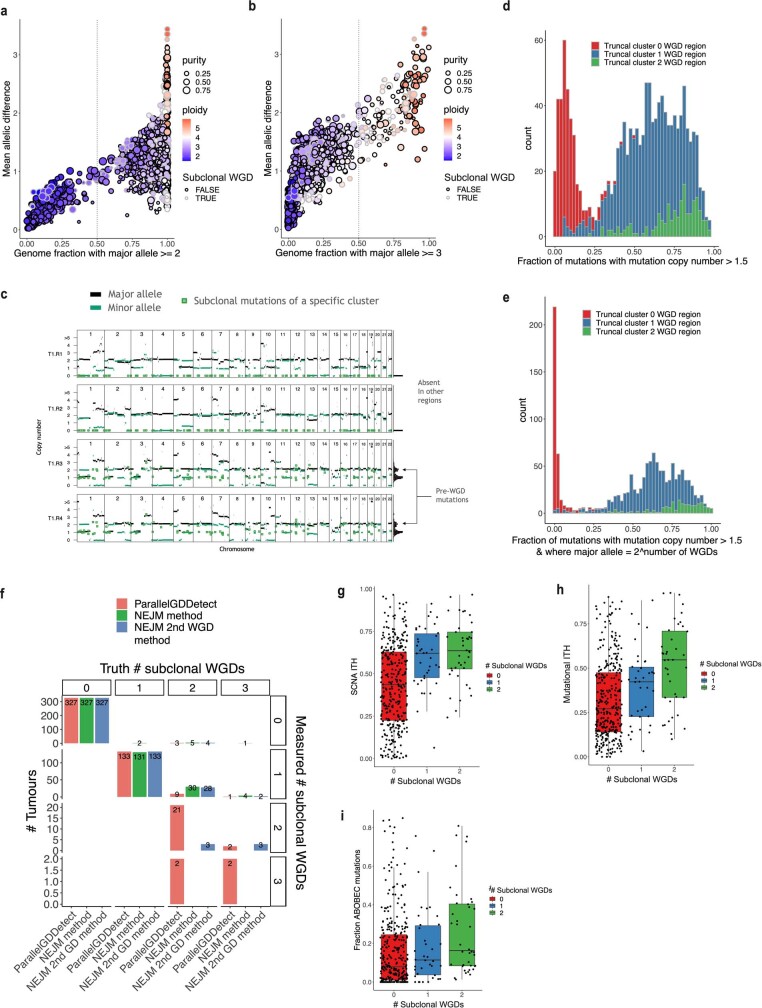
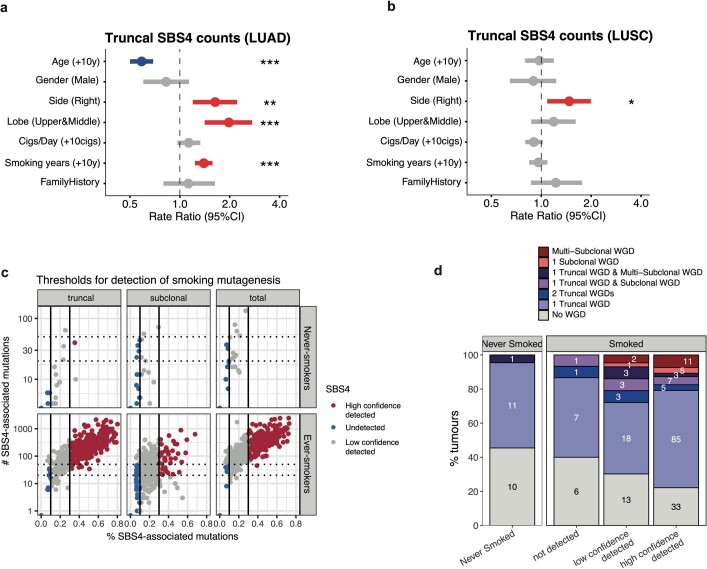
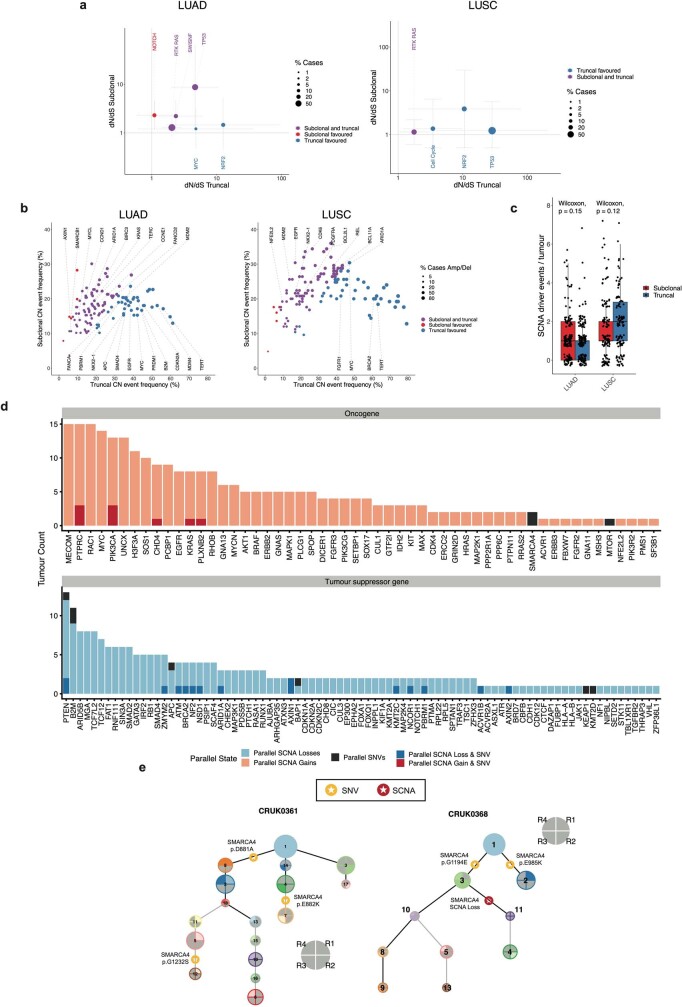
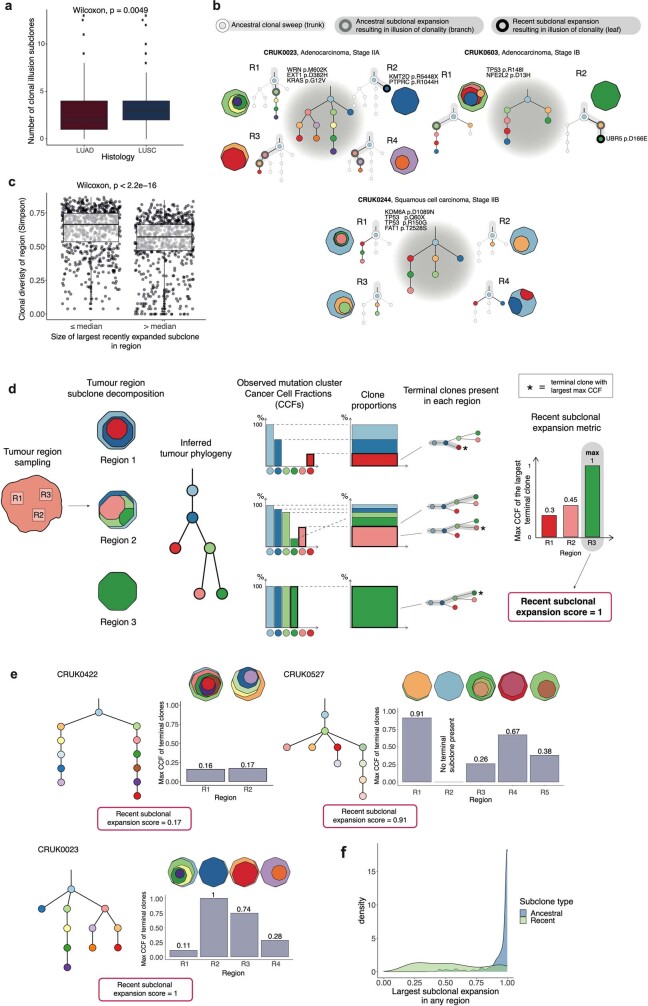
Lung cancer is the leading cause of cancer-associated mortality worldwide. Here we analysed 1,644 tumour regions sampled at surgery or during follow-up from the first 421 patients with non-small cell lung cancer prospectively enrolled into the TRACERx study. This project aims to decipher lung cancer evolution and address the primary study endpoint: determining the relationship between intratumour heterogeneity and clinical outcome. In lung adenocarcinoma, mutations in 22 out of 40 common cancer genes were under significant subclonal selection, including classical tumour initiators such as TP53 and KRAS. We defined evolutionary dependencies between drivers, mutational processes and whole genome doubling (WGD) events. Despite patients having a history of smoking, 8% of lung adenocarcinomas lacked evidence of tobacco-induced mutagenesis. These tumours also had similar detection rates for EGFR mutations and for RET, ROS1, ALK and MET oncogenic isoforms compared with tumours in never-smokers, which suggests that they have a similar aetiology and pathogenesis. Large subclonal expansions were associated with positive subclonal selection. Patients with tumours harbouring recent subclonal expansions, on the terminus of a phylogenetic branch, had significantly shorter disease-free survival. Subclonal WGD was detected in 19% of tumours, and 10% of tumours harboured multiple subclonal WGDs in parallel. Subclonal, but not truncal, WGD was associated with shorter disease-free survival. Copy number heterogeneity was associated with extrathoracic relapse within 1 year after surgery. These data demonstrate the importance of clonal expansion, WGD and copy number instability in determining the timing and patterns of relapse in non-small cell lung cancer and provide a comprehensive clinical cancer evolutionary data resource.
肺癌是全球癌症相关死亡的主要原因。在这里,我们分析了 421 例非小细胞肺癌患者前瞻性入组 TRACERx 研究中手术或随访时采集的 1644 个肿瘤区域。该项目旨在阐明肺癌的进化,并解决主要研究终点:确定肿瘤内异质性与临床结果之间的关系。在肺腺癌中,40 个常见癌症基因中的 22 个基因发生突变,处于明显的亚克隆选择状态,包括经典的肿瘤启动子,如 TP53 和 KRAS。我们定义了驱动基因、突变过程和全基因组倍增(WGD)事件之间的进化依赖性。尽管患者有吸烟史,但 8%的肺腺癌缺乏烟草诱导突变的证据。与从不吸烟者的肿瘤相比,这些肿瘤也具有相似的 EGFR 突变和 RET、ROS1、ALK 和 MET 致癌异构体的检出率,这表明它们具有相似的病因和发病机制。大的亚克隆扩增与阳性亚克隆选择有关。在进化枝末端存在近期亚克隆扩增的患者,无疾病生存期明显缩短。19%的肿瘤中检测到亚克隆 WGD,10%的肿瘤同时存在多个亚克隆 WGD。亚克隆但非主干 WGD 与无病生存期缩短相关。拷贝数异质性与手术后 1 年内发生的胸外复发有关。这些数据表明,克隆扩增、WGD 和拷贝数不稳定性在确定非小细胞肺癌复发的时间和模式方面具有重要意义,并提供了一个全面的临床癌症进化数据资源。