Mazzitelli Carlotta, Santini Donatella, Corradini Angelo Gianluca, Zamagni Claudio, Trerè Davide, Montanaro Lorenzo, Taffurelli Mario
Department of Medical and Surgical Sciences (DIMEC), Alma Mater Studiorum, University of Bologna, 40126 Bologna, Italy.
Unit of Pathology, IRCCS Azienda Ospedaliero, Universitaria di Bologna, 40138 Bologna, Italy.
Diagnostics (Basel). 2023 Mar 25;13(7):1241. doi: 10.3390/diagnostics13071241.
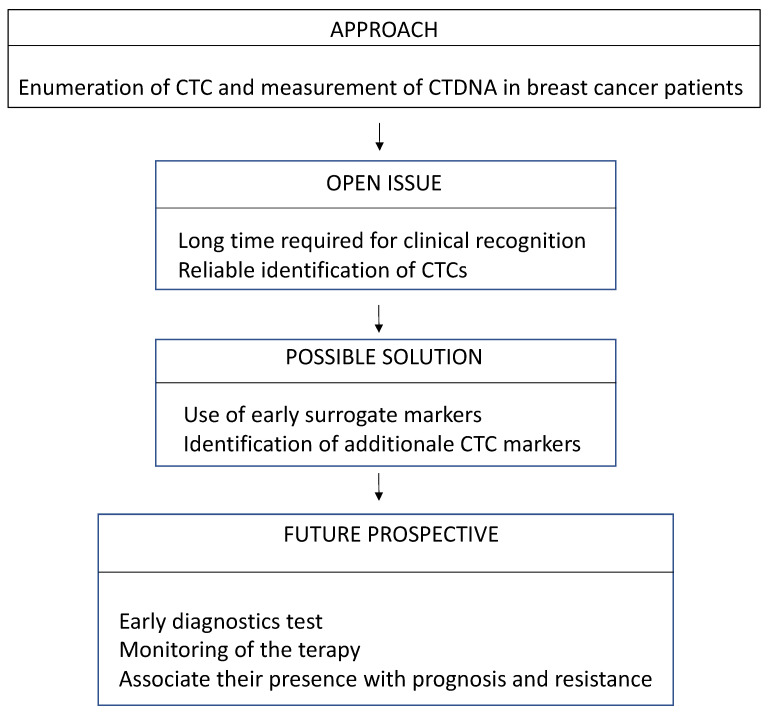
Liquid biopsy (LB) is an emerging diagnostic tool that analyzes biomarkers in the blood (and possibly in other body fluids) to provide information about tumor genetics and response to therapy. This review article provides an overview of LB applications in human cancer with a focus on breast cancer patients. LB methods include circulating tumor cells and cell-free tumor products, such as circulating tumor DNA. LB has shown potential in detecting cancer at an early stage, monitoring tumor progression and recurrence, and predicting patient response to therapy. Several studies have demonstrated its clinical utility in breast cancer patients. However, there are limitations to LB, including the lack of standardized assays and the need for further validation. Future potential applications of LB include identifying the minimal residual disease, early detection of recurrence, and monitoring treatment response in various cancer types. LB represents a promising non-invasive diagnostic tool with potential applications in breast cancer diagnosis, treatment, and management. Further research is necessary to fully understand its clinical utility and overcome its current limitations.
液体活检(LB)是一种新兴的诊断工具,它分析血液(可能还有其他体液)中的生物标志物,以提供有关肿瘤遗传学和治疗反应的信息。这篇综述文章概述了液体活检在人类癌症中的应用,重点是乳腺癌患者。液体活检方法包括循环肿瘤细胞和无细胞肿瘤产物,如循环肿瘤DNA。液体活检在早期检测癌症、监测肿瘤进展和复发以及预测患者对治疗的反应方面已显示出潜力。多项研究已证明其在乳腺癌患者中的临床实用性。然而,液体活检存在局限性,包括缺乏标准化检测方法以及需要进一步验证。液体活检未来的潜在应用包括识别微小残留病、早期检测复发以及监测各种癌症类型的治疗反应。液体活检是一种有前景的非侵入性诊断工具,在乳腺癌的诊断、治疗和管理中具有潜在应用。有必要进行进一步研究,以充分了解其临床实用性并克服其当前的局限性。