Department of Medicine, Division of Diabetes, Metabolism, and Endocrinology, Showa University School of Medicine, 1-5-8 Shinagawa, Tokyo 142-8666, Japan.
Division of Pharmacology, Department of Pharmacology, Toxicology and Therapeutics, School of Pharmacy, Showa University, 1-5-8 Hatanodai, Shinagawa-ku, Tokyo 142-8555, Japan.
Int J Mol Sci. 2023 Mar 30;24(7):6505. doi: 10.3390/ijms24076505.
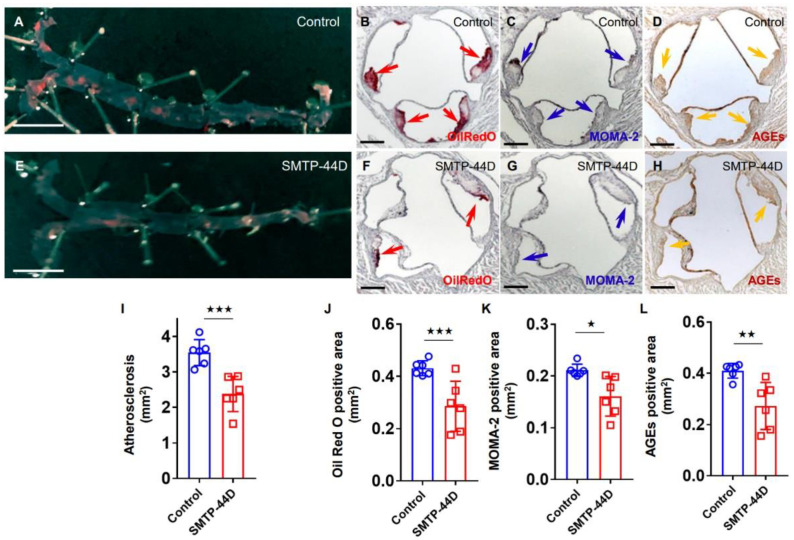
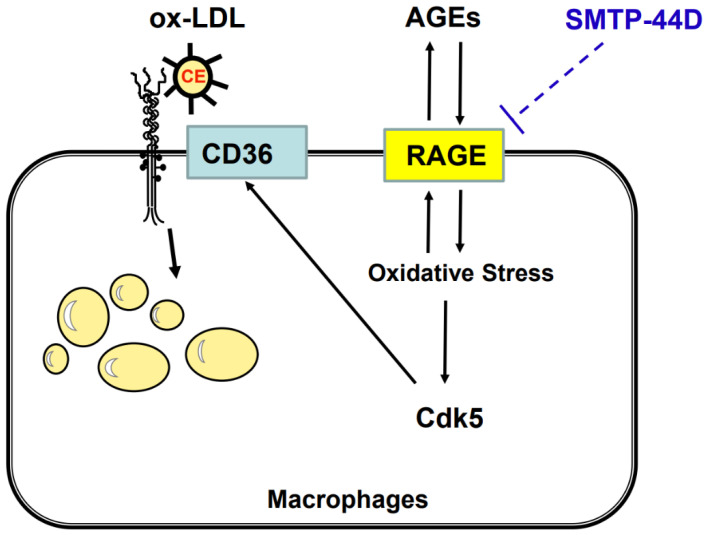
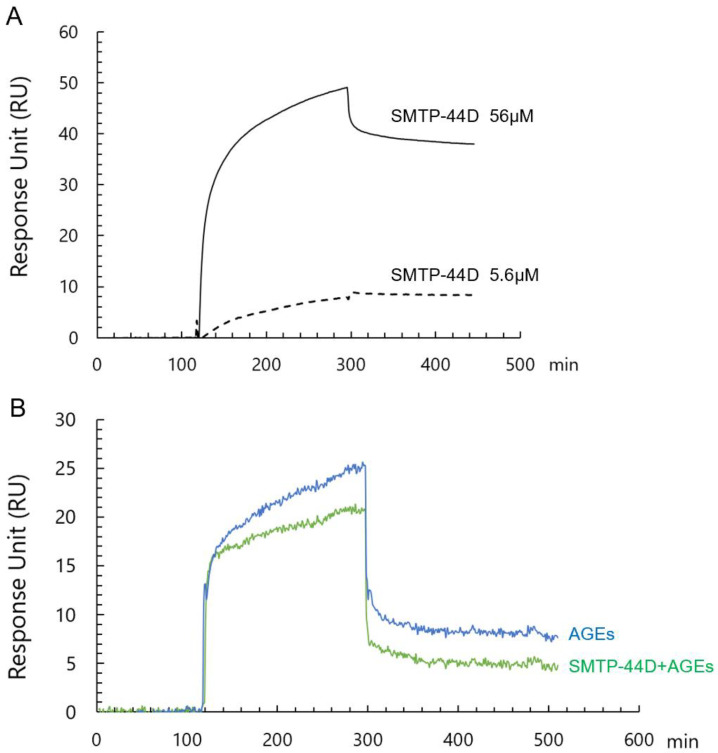
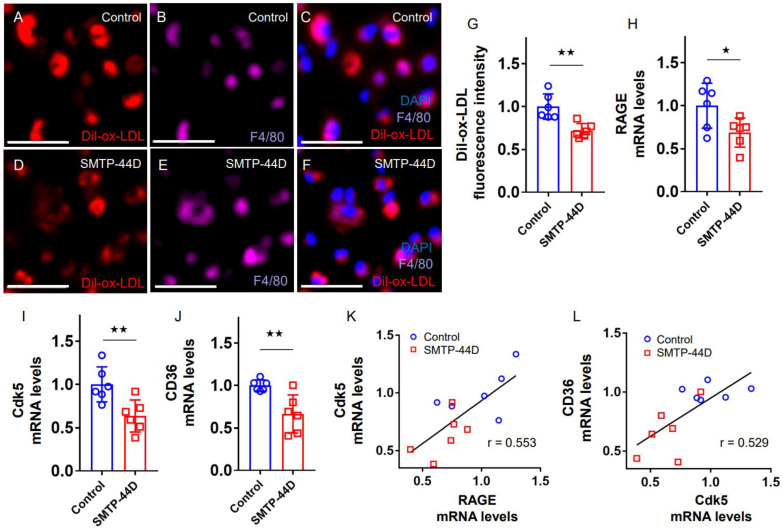
SMTP-44D has been reported to have anti-oxidative and anti-inflammatory reactions, including reduced expression of receptor for advanced glycation end products (RAGE) in experimental diabetic neuropathy. Although activation of RAGE with its ligands, and advanced glycation end products (AGEs), play a crucial role in atherosclerotic cardiovascular disease, a leading cause of death in diabetic patients, it remains unclear whether SMTP-44D could inhibit experimental atherosclerosis by suppressing the AGEs-RAGE axis. In this study, we investigated the effects of SMTP-44D on atherosclerotic plaque formation and expression of AGEs in apolipoprotein-E null () mice. We further studied here whether and how SMTP-44D inhibited foam cell formation of macrophages isolated from mice ex vivo. Although administration of SMTP-44D to mice did not affect clinical or biochemical parameters, it significantly decreased the surface area of atherosclerotic lesions and reduced the atheromatous plaque size, macrophage infiltration, and AGEs accumulation in the aortic roots. SMTP-44D bound to immobilized RAGE and subsequently attenuated the interaction of AGEs with RAGE in vitro. Furthermore, foam cell formation evaluated by Dil-oxidized low-density lipoprotein (ox-LDL) uptake, and gene expression of () and in macrophages isolated from SMTP-44D-treated mice were significantly decreased compared with those from saline-treated mice. Gene expression levels of and were highly correlated with each other, the latter of which was also positively associated with that of . The present study suggests that SMTP-44D may inhibit atherosclerotic plaque formation in mice partly by blocking the AGEs-RAGE-induced ox-LDL uptake into macrophages via the suppression of Cdk5-CD36 pathway.
SMTP-44D 已被报道具有抗氧化和抗炎反应,包括在实验性糖尿病神经病变中降低晚期糖基化终产物受体 (RAGE) 的表达。尽管 RAGE 与其配体和晚期糖基化终产物 (AGEs) 的激活在动脉粥样硬化性心血管疾病中发挥关键作用,这是糖尿病患者死亡的主要原因,但尚不清楚 SMTP-44D 是否可以通过抑制 AGEs-RAGE 轴来抑制实验性动脉粥样硬化。在这项研究中,我们研究了 SMTP-44D 对载脂蛋白 E 缺失 () 小鼠动脉粥样硬化斑块形成和 AGEs 表达的影响。我们还研究了 SMTP-44D 是否以及如何抑制来自 小鼠的巨噬细胞体外泡沫细胞形成。尽管给予 SMTP-44D 对 小鼠的临床和生化参数没有影响,但它显著减少了动脉粥样硬化病变的表面积,并减少了主动脉根部的粥样斑块大小、巨噬细胞浸润和 AGEs 积累。SMTP-44D 与固定化的 RAGE 结合,随后在体外减弱 AGEs 与 RAGE 的相互作用。此外,与生理盐水处理的小鼠相比,用 Dil-氧化低密度脂蛋白 (ox-LDL) 摄取评估的泡沫细胞形成以及来自 SMTP-44D 处理的 小鼠的巨噬细胞中的 和 基因表达显著降低。 和 基因表达水平彼此高度相关,后者与 基因表达呈正相关。本研究表明,SMTP-44D 可能通过抑制 Cdk5-CD36 通路抑制 AGEs-RAGE 诱导的 ox-LDL 摄取到巨噬细胞,从而部分抑制 小鼠的动脉粥样硬化斑块形成。