Department of Basic and Translational Sciences, University of Pennsylvania, Philadelphia, PA 19104, USA.
Penn Genomics and Sequencing Core, Department of Genetics, University of Pennsylvania, Philadelphia, PA 19104, USA.
Int J Mol Sci. 2023 Apr 4;24(7):6716. doi: 10.3390/ijms24076716.
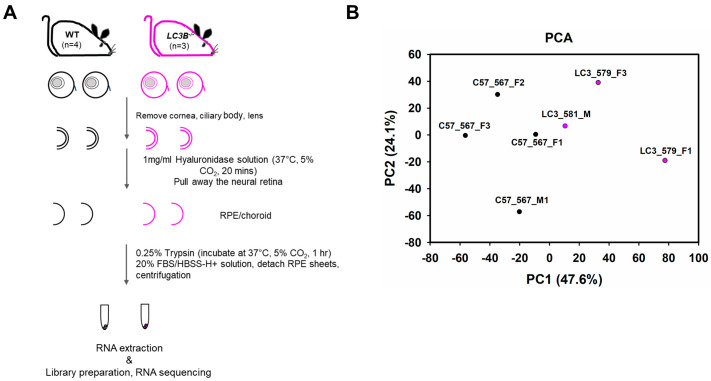
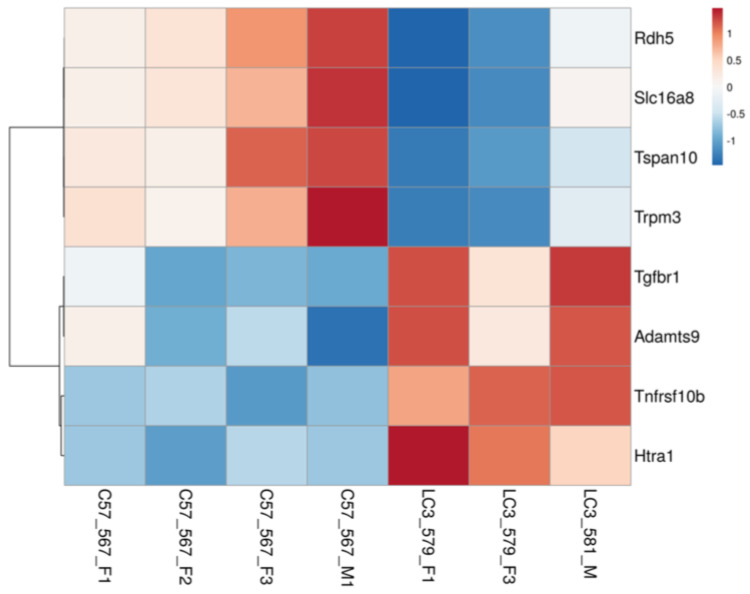
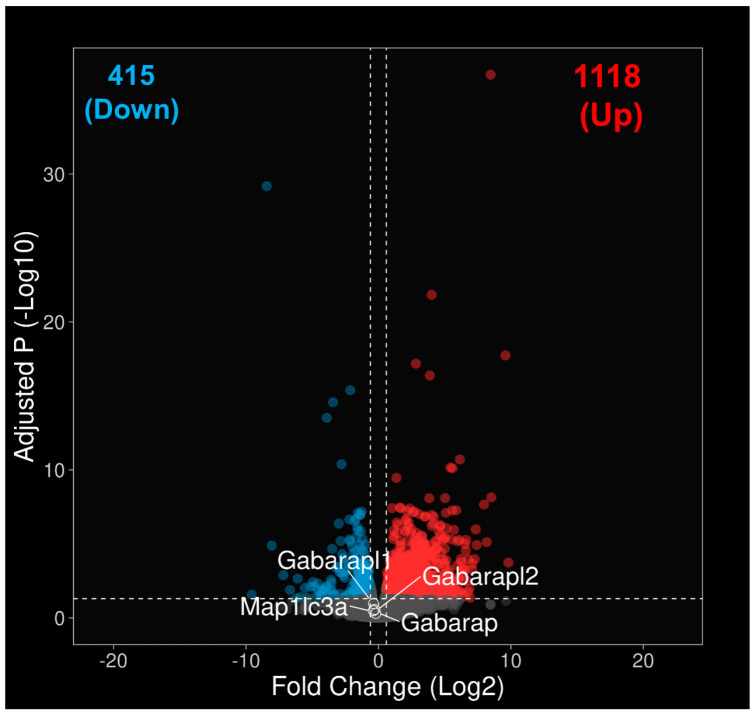
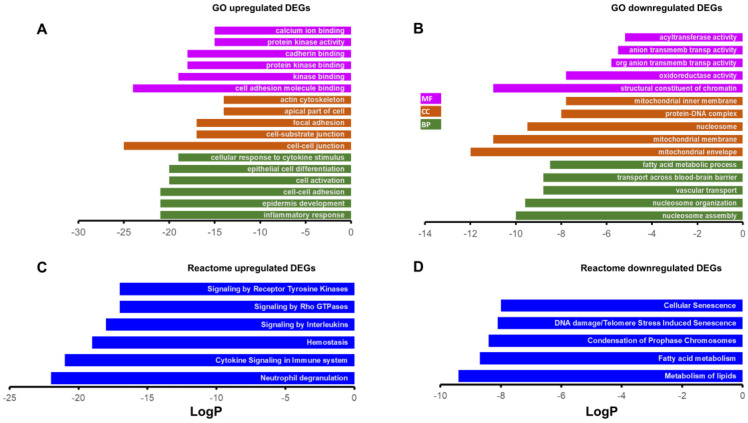
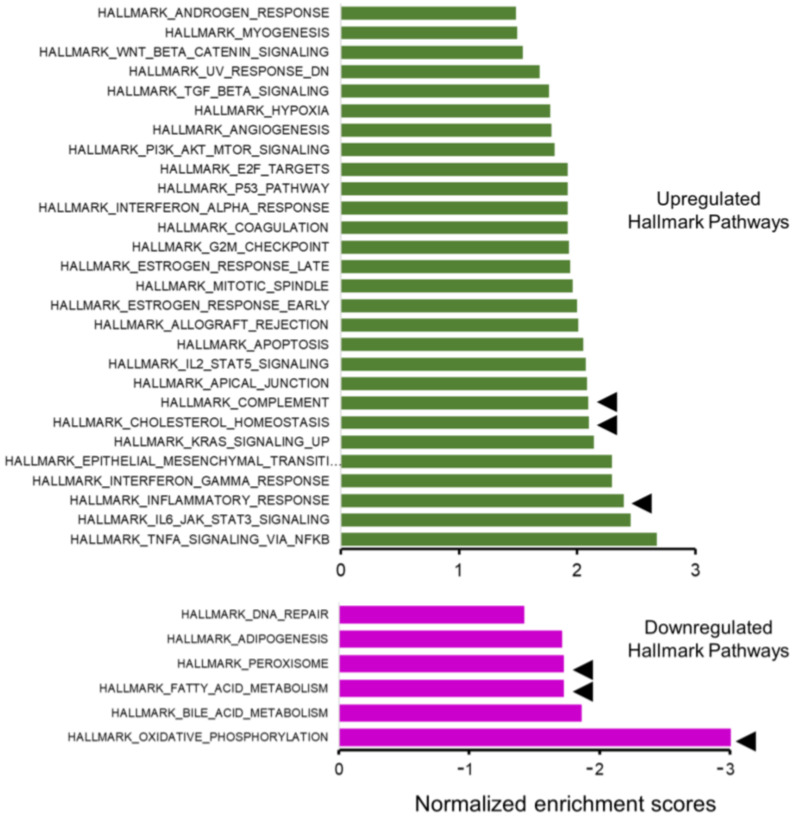
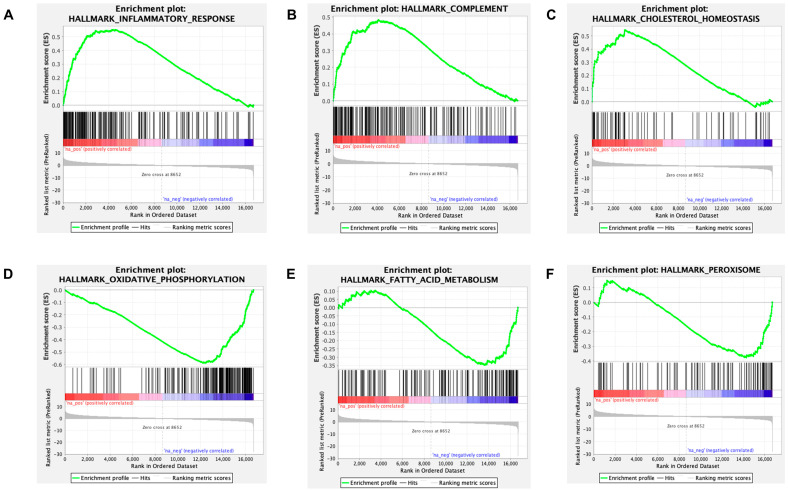
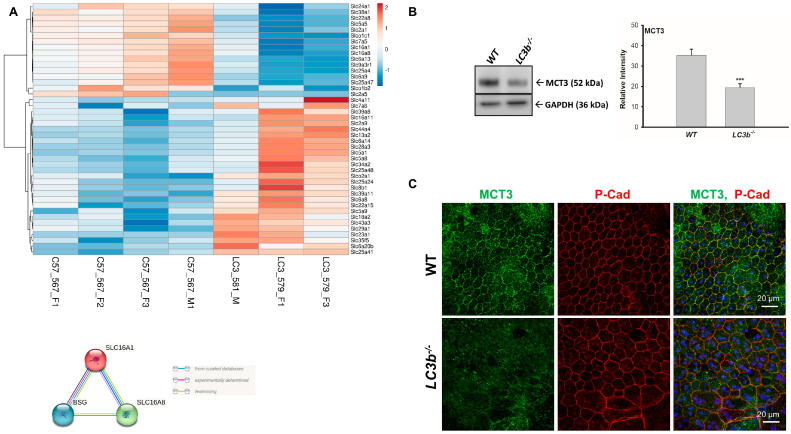
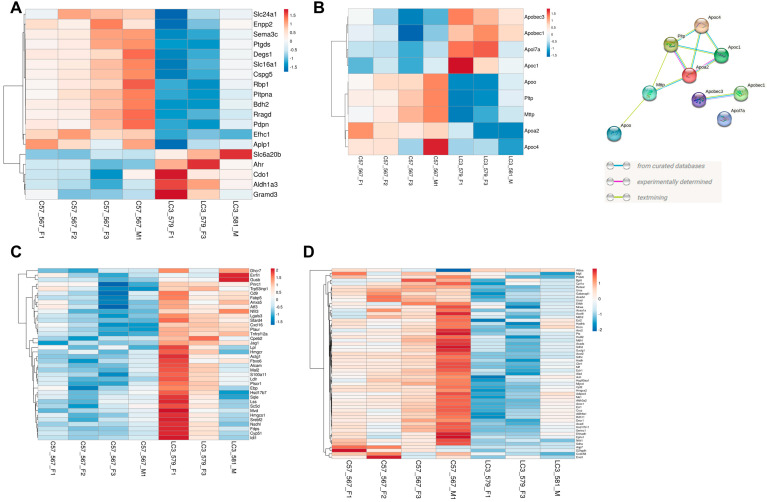
LC3b () plays an essential role in canonical autophagy and is one of several components of the autophagy machinery that mediates non-canonical autophagic functions. Phagosomes are often associated with lipidated LC3b to promote phagosome maturation in a process called LC3-associated phagocytosis (LAP). Specialized phagocytes, such as mammary epithelial cells, retinal pigment epithelial (RPE) cells, and sertoli cells, utilize LAP for optimal degradation of phagocytosed material, including debris. In the visual system, LAP is critical to maintain retinal function, lipid homeostasis, and neuroprotection. In a mouse model of retinal lipid steatosis-mice lacking LC3b (), we observed increased lipid deposition, metabolic dysregulation, and enhanced inflammation. Herein, we present a non-biased approach to determine if loss of LAP mediated processes modulate the expression of various genes related to metabolic homeostasis, lipid handling, and inflammation. A comparison of the RPE transcriptome of WT and mice revealed 1533 DEGs, with ~73% upregulated and 27% downregulated. Enriched gene ontology (GO) terms included inflammatory response (upregulated DEGs), fatty acid metabolism, and vascular transport (downregulated DEGs). Gene set enrichment analysis (GSEA) identified 34 pathways; 28 were upregulated (dominated by inflammation/related pathways) and 6 were downregulated (dominated by metabolic pathways). Analysis of additional gene families identified significant differences for genes in the solute carrier family, RPE signature genes, and genes with a potential role in age-related macular degeneration. These data indicate that loss of LC3b induces robust changes in the RPE transcriptome contributing to lipid dysregulation and metabolic imbalance, RPE atrophy, inflammation, and disease pathophysiology.
LC3b () 在经典自噬中起着至关重要的作用,是介导非经典自噬功能的自噬机制的几个组成部分之一。吞噬体通常与脂化的 LC3b 相关联,以促进吞噬体成熟,这一过程称为 LC3 相关的吞噬作用 (LAP)。专门的吞噬细胞,如乳腺上皮细胞、视网膜色素上皮 (RPE) 细胞和成纤维细胞,利用 LAP 来最佳地降解吞噬的物质,包括碎片。在视觉系统中,LAP 对于维持视网膜功能、脂质平衡和神经保护至关重要。在缺乏 LC3b () 的小鼠视网膜脂质沉积模型中,我们观察到脂质沉积增加、代谢失调和炎症增强。在此,我们采用一种无偏的方法来确定 LAP 介导的过程是否调节与代谢稳态、脂质处理和炎症相关的各种基因的表达。WT 和 小鼠的 RPE 转录组比较显示 1533 个 DEGs,其中约 73%上调,27%下调。富集的基因本体 (GO) 术语包括炎症反应 (上调的 DEGs)、脂肪酸代谢和血管运输 (下调的 DEGs)。基因集富集分析 (GSEA) 确定了 34 条通路;28 条通路上调 (主要由炎症/相关途径主导),6 条通路下调 (主要由代谢途径主导)。对其他基因家族的分析表明,溶质载体家族、RPE 特征基因和可能与年龄相关性黄斑变性有关的基因的基因存在显著差异。这些数据表明,LC3b 的缺失会导致 RPE 转录组发生强烈变化,导致脂质失调和代谢失衡、RPE 萎缩、炎症和疾病病理生理学的发生。