Tasara Taurai, Meier Anja Barbara, Wambui Joseph, Whiston Ronan, Stevens Marc, Chapwanya Aspinas, Bleul Ulrich
Institute for Food Safety and Hygiene, Vetsuisse Faculty, University of Zurich, 8057 Zurich, Switzerland.
MSD Animal Health Switzerland, 6005 Lucerne, Switzerland.
Animals (Basel). 2023 Mar 31;13(7):1221. doi: 10.3390/ani13071221.
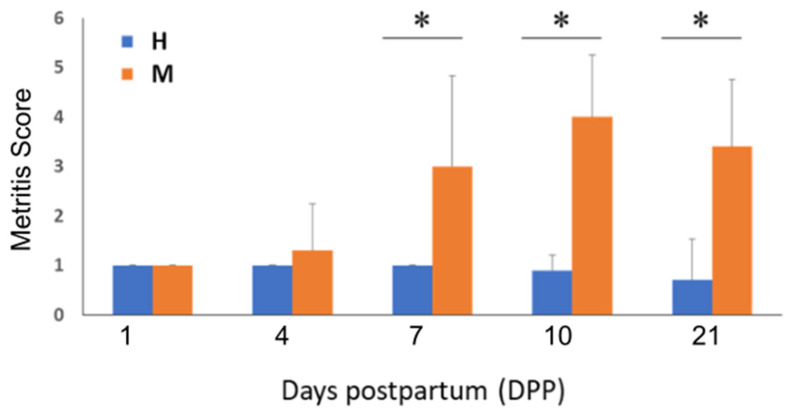
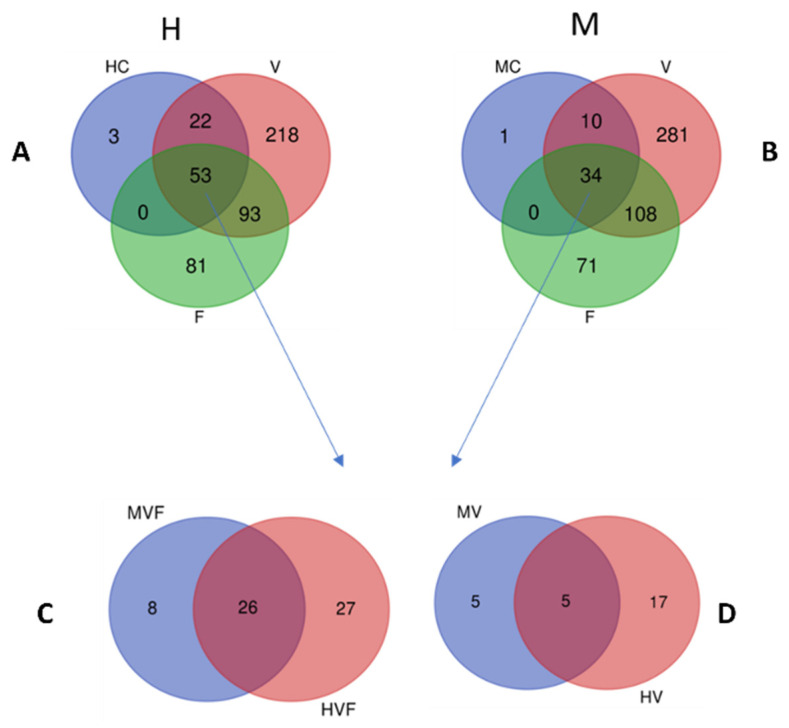
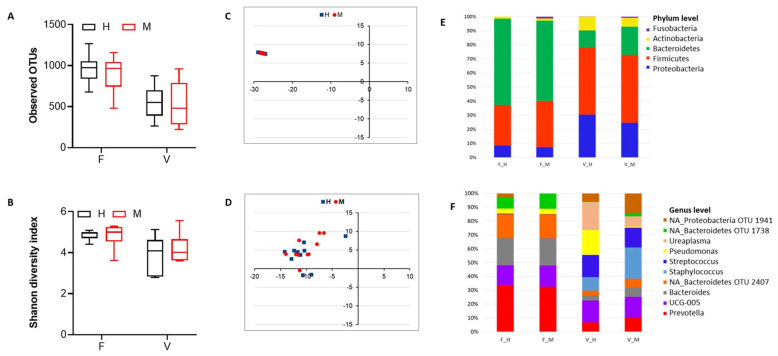
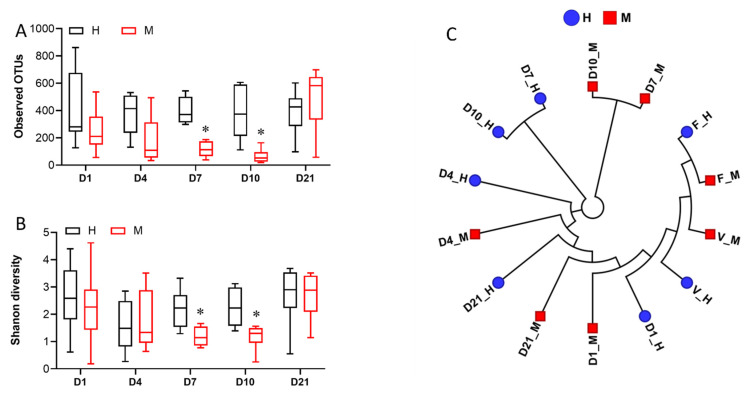
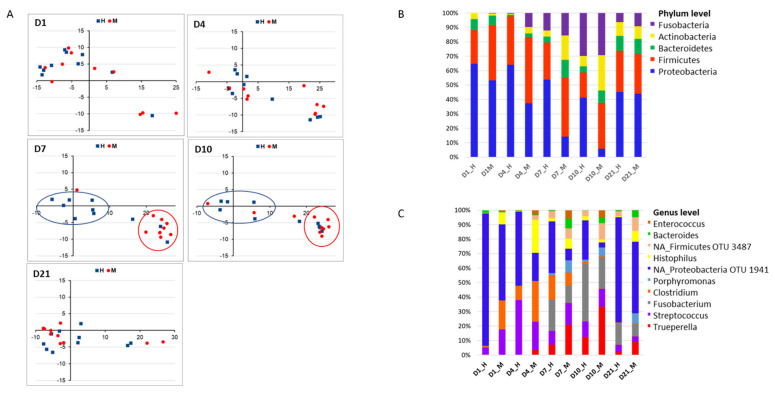
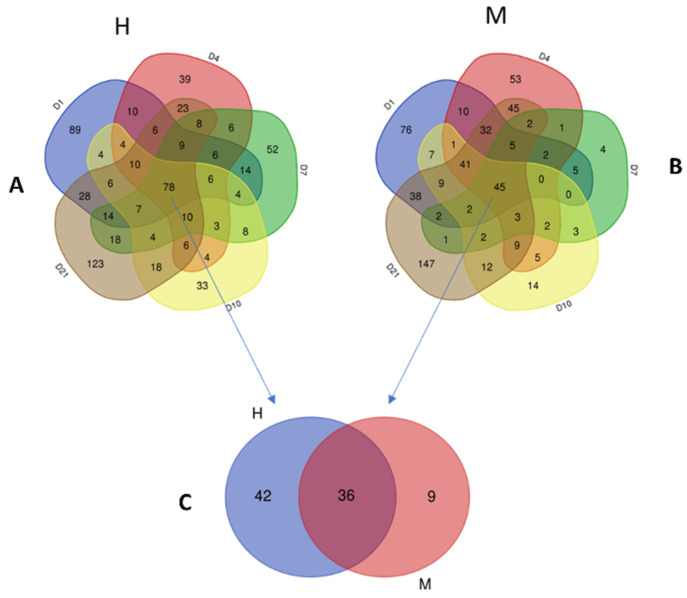
The bovine genital tract harbors a dynamic microbiome. Genital tract microbial communities in healthy animals have been characterized using next-generation sequencing methods showing that microbe compositions differ between the vagina and uterus, more so during the postpartum period. Pre-calving fecal and vaginal, and endometrial swabs at the different postpartum intervals were collected from dairy cows. Microbiomes in these samples were determined based on bacterial 16S amplicon sequencing and compared between healthy (H; = 10) control animals and cows that developed metritis (M; = 10) within 21 days postpartum (DPP). Compared to healthy animals the pre-calving fecal and vaginal microbiomes of metritis animals were more abundant in sequences from the phylum Fusobacteria and the bacterial genera such as and . In addition, compared to healthy animals, metritis cows harboured low microbial species diversity in the endometrium, as well as decreasing Proteobacteria and increasing Fusobacteria, Firmicutes, Actinobacteria, and Bacteroidetes abundances. The greatest taxonomic compositional deviations in endometrial microbial communities between the metritis and health cows were detected between 7 and 10 DPP. There was high taxonomic similarity detected between postpartum endometrial microbiomes and the prepartum vaginal and fecal microbiomes suggesting that colonization through bacteria ascending from the rectum and vagina to the uterine cavity might play a major role in establishing the endometrial microbiome postpartum. A deeper understanding of the establishment and dynamics of postpartum endometrial microbial communities in cows will thus provide crucial basic knowledge to guide the development of genital microbiome manipulation strategies for preventing uterine disease and improving fertility in dairy cows.
牛的生殖道中存在动态微生物群。已使用下一代测序方法对健康动物的生殖道微生物群落进行了表征,结果表明阴道和子宫中的微生物组成存在差异,产后期间差异更为明显。从奶牛身上采集了产犊前的粪便、阴道样本以及产后不同时间段的子宫内膜拭子。基于细菌16S扩增子测序确定了这些样本中的微生物群,并对健康(H;n = 10)对照动物和产后21天内发生子宫炎(M;n = 10)的奶牛的微生物群进行了比较。与健康动物相比,子宫炎动物产犊前的粪便和阴道微生物群中,梭杆菌门以及诸如[具体细菌属1]和[具体细菌属2]等细菌属的序列更为丰富。此外,与健康动物相比,子宫炎奶牛子宫内膜中的微生物物种多样性较低,变形菌门减少,梭杆菌门、厚壁菌门、放线菌门和拟杆菌门的丰度增加。子宫炎奶牛和健康奶牛之间,子宫内膜微生物群落的最大分类组成偏差出现在产后7至10天。产后子宫内膜微生物群与产前阴道和粪便微生物群之间存在高度分类相似性表明直肠和阴道细菌上行至子宫腔的定植可能在产后子宫内膜微生物群的建立中起主要作用。因此,更深入地了解奶牛产后子宫内膜微生物群落的建立和动态将为指导开发用于预防子宫疾病和提高奶牛繁殖力的生殖道微生物群操纵策略提供关键的基础知识。