Moraes Joao Gabriel Nascimento, Gull Tamara B, Ericsson Aaron C, Caldeira Monica O, Evans Tim J, Poock Scott E, Lucy Matthew C
Oklahoma State University.
University of Missouri.
Res Sq. 2024 Apr 12:rs.3.rs-4233045. doi: 10.21203/rs.3.rs-4233045/v1.
Postpartum uterine disease (metritis) is common in dairy cows. The disease develops within 1 week after calving and is associated with microbial dysbiosis, fever, and fetid uterine discharge. Cows with metritis have a greater likelihood of developing endometritis and infertility later postpartum. Antibiotic treatment is used to relieve symptoms of metritis but the capacity of antibiotic treatment to improve fertility later postpartum is inconsistent across published studies. We hypothesized that an antibiotic has only a short-term effect on the uterine microbiome and does not change the progression of disease from metritis to endometritis. To test this hypothesis, we studied the effects of systemic antibiotic given to cows diagnosed with metritis and healthy cows early postpartum on the development of endometritis and the uterine microbiome at 1 month postpartum.
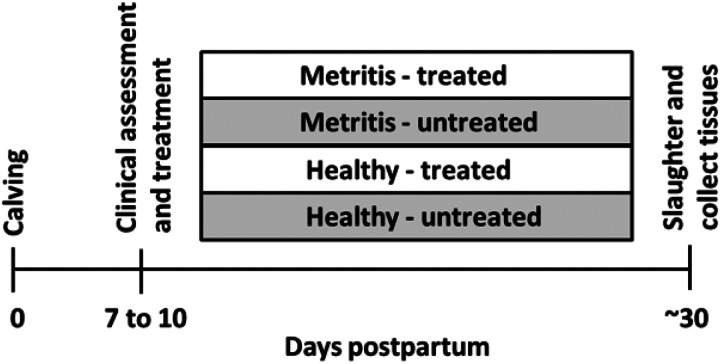
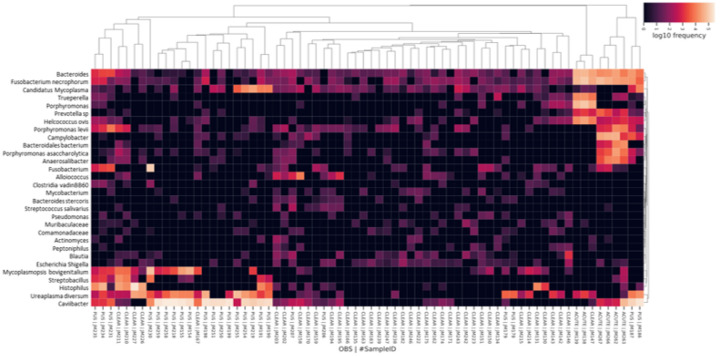
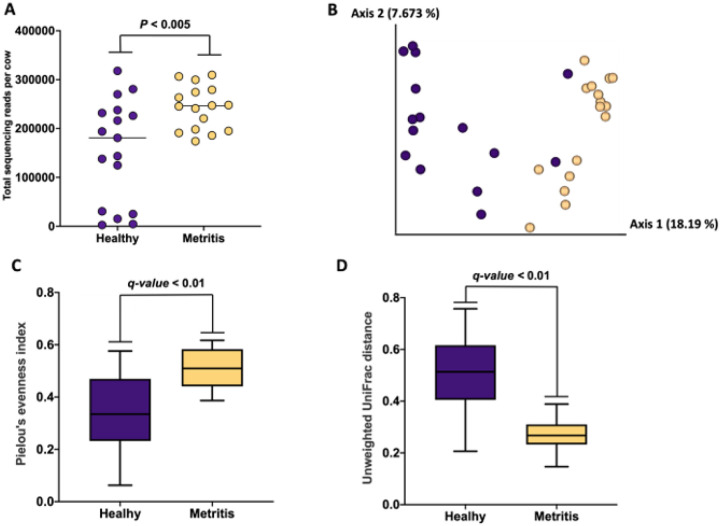
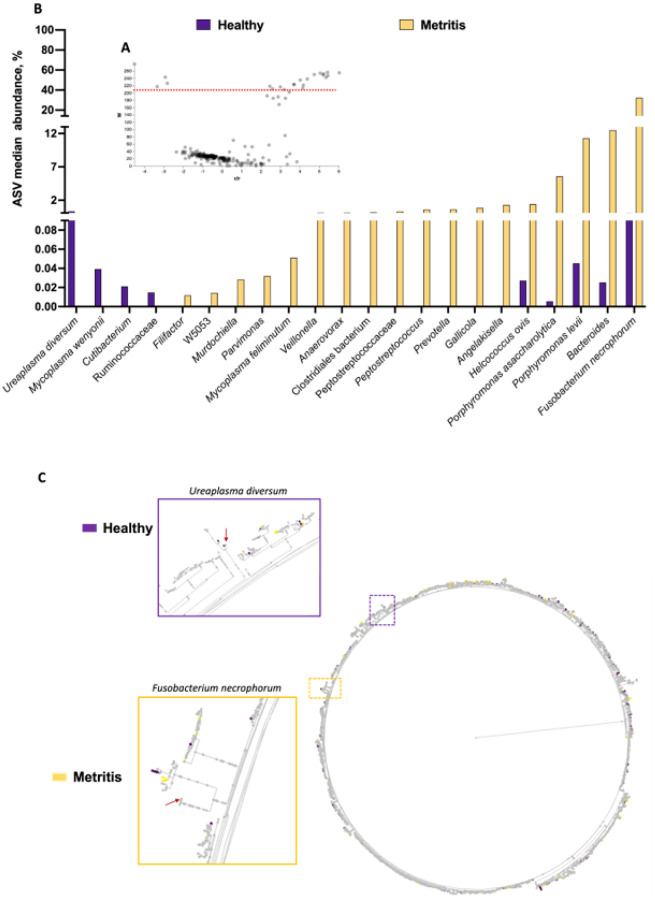
Cows diagnosed with metritis were compared to healthy ones in a 2 × 2 factorial design, where they were either treated with an antibiotic (ceftiofur hydrochloride) at 7 to 10 days postpartum or left untreated. Cows were slaughtered at one month postpartum and the uterus was assessed for endometritis (presence of purulent material in the uterine lumen and inflammation in the endometrium) and uterine samples were collected for bacteriology and metagenomics (16S rRNA gene sequencing). As expected, the uterine microbiome at disease diagnosis had dysbiosis of typical metritis pathogens (e.g., Fusobacterium, Bacteroides, and Porphyromonas) in diseased compared with healthy cows. At one month postpartum, there was a tendency for more endometritis in metritis cows compared with healthy but antibiotic treatment had no effect on endometritis prevalence regardless of the original disease diagnosis. Likewise, when bacteria were cultured or sequenced, there were a greater number of species (culture) or amplicon sequence variants (ASV; sequencing) in the uterine lumen of cows with metritis. However, antibiotic treatment had no effect on the prevalence of cultured species or the composition of the detected ASV. The uterine microbiome at 1 month postpartum was associated with the clinical observation of the uterus (endometritis or healthy).
Early postpartum antibiotic treatment only provides temporary resolution of uterine dysbiosis that is not sustained long-term. Failure to resolve the dysbiosis is associated with a greater prevalence of endometritis in cows with metritis, and the occurrence of endometritis significantly impacts fertility later postpartum.
产后子宫疾病(子宫炎)在奶牛中很常见。该疾病在产犊后1周内发病,与微生物群落失调、发热和恶臭的子宫分泌物有关。患有子宫炎的奶牛在产后后期发生子宫内膜炎和不孕症的可能性更大。抗生素治疗用于缓解子宫炎症状,但抗生素治疗对产后后期生育能力的改善能力在已发表的研究中并不一致。我们假设抗生素对子宫微生物群只有短期影响,不会改变疾病从子宫炎发展到子宫内膜炎的进程。为了验证这一假设,我们研究了给产后早期诊断为子宫炎的奶牛和健康奶牛全身性使用抗生素对产后1个月时子宫内膜炎发展和子宫微生物群的影响。
在2×2析因设计中,将诊断为子宫炎的奶牛与健康奶牛进行比较,其中一组在产后7至10天用抗生素(盐酸头孢噻呋)治疗,另一组不治疗。奶牛在产后1个月屠宰,评估子宫是否患有子宫内膜炎(子宫腔内存在脓性物质和子宫内膜炎症),并采集子宫样本进行细菌学和宏基因组学(16S rRNA基因测序)分析。正如预期的那样,与健康奶牛相比,疾病诊断时子宫微生物群中,患病奶牛存在典型子宫炎病原体(如梭杆菌、拟杆菌和卟啉单胞菌)的群落失调。在产后1个月时,子宫炎奶牛患子宫内膜炎的倾向比健康奶牛更高,但无论最初的疾病诊断如何,抗生素治疗对子宫内膜炎患病率均无影响。同样,当对细菌进行培养或测序时,子宫炎奶牛子宫腔内的物种数量(培养)或扩增子序列变体(ASV;测序)更多。然而,抗生素治疗对培养物种的患病率或检测到的ASV组成没有影响。产后1个月时的子宫微生物群与子宫的临床观察结果(子宫内膜炎或健康)相关。
产后早期抗生素治疗仅能暂时缓解子宫微生物群落失调,且不能长期维持。未能解决微生物群落失调与子宫炎奶牛中子宫内膜炎的更高患病率相关,而子宫内膜炎的发生会显著影响产后后期的生育能力。