Smith Kevin L, Gordon Emile B, Gunsaulus Megan E, Christopher Adam, Olivieri Laura J, Tadros Sameh S, Harris Tyler, Saraf Anita P, Kreutzer Jacqueline, Feingold Brian, Alsaied Tarek
Department of Pediatrics, UPMC Children's Hospital of Pittsburgh, University of Pittsburgh School of Medicine, Pittsburgh, PA 15224, USA.
Department of Radiology, UPMC Children's Hospital of Pittsburgh, University of Pittsburgh School of Medicine, Pittsburgh, PA 15224, USA.
J Clin Med. 2023 Apr 4;12(7):2689. doi: 10.3390/jcm12072689.
Sarcopenia is an increasingly recognized marker of frailty in cardiac patients. Patients with a history of congenital heart disease and Fontan procedure have a higher risk of developing progressive muscle wasting. Our objective was to determine if we could use routine cardiac MRI (CMR) for the surveillance of muscle wasting.
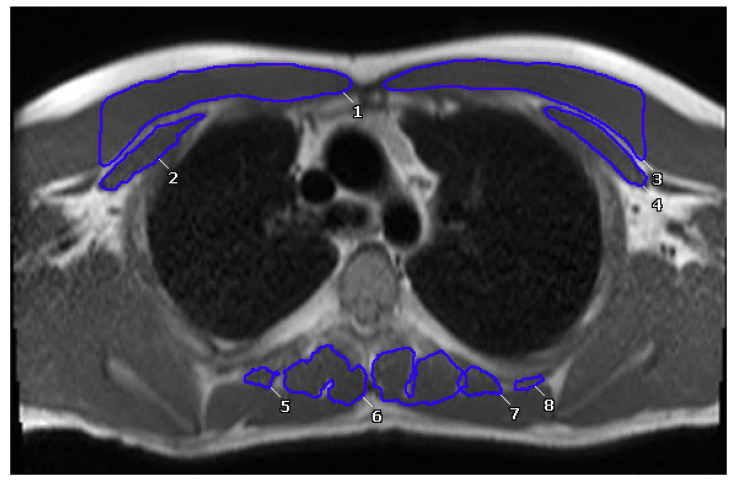
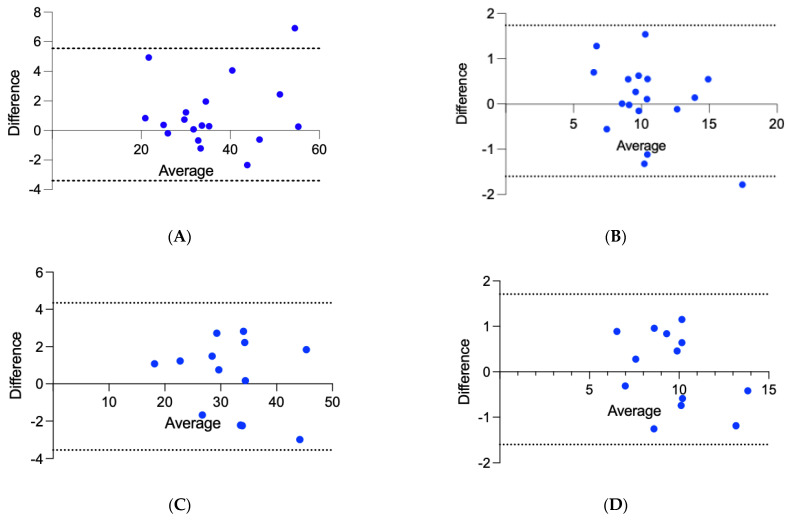
A retrospective study of all Fontan patients (n = 75) was conducted at our institution, with CMR performed from 2010 to 2022 and exercise stress testing performed within 12 months (4.3 ± 4.2 months). The skeletal muscle area (SMA) for the posterior paraspinal and anterior thoracic muscles were traced and indexed for body surface area (BSA). Patients were stratified by percentile into the upper and lower quartiles, and the two groups were compared. Multivariable regression was performed to control for sex and age.
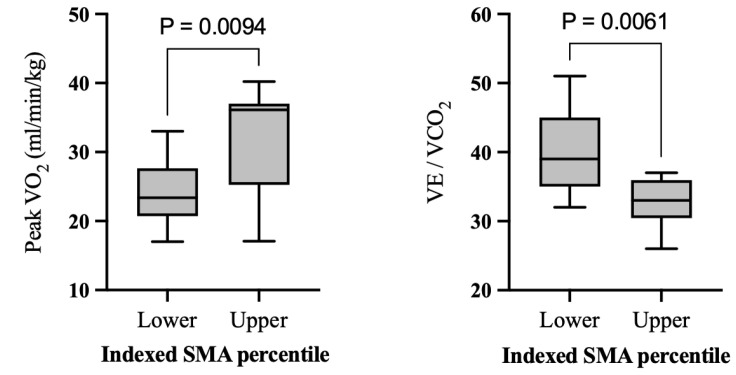
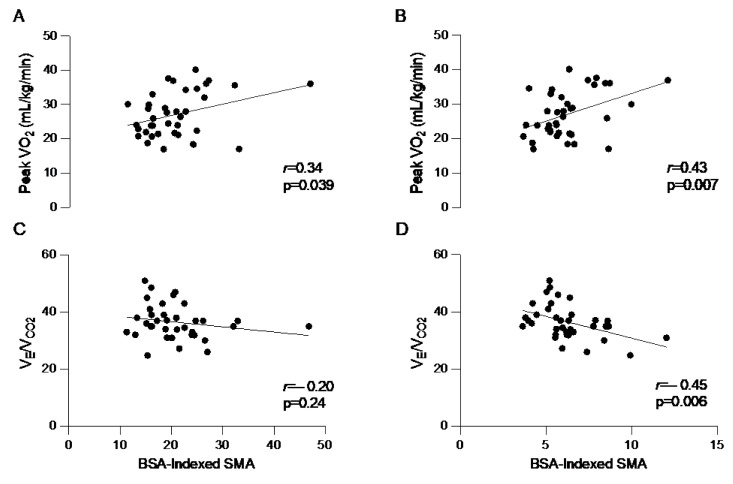
There was a significant positive association of both anterior (r = 0.34, = 0.039) and paraspinal (r = 0.43, = 0.007) SMA to peak VO. Similarly, paraspinal but not anterior SMA was negatively associated with the V/V (r = -0.45, = 0.006). The upper quartile group had significantly more males (18/19 vs. 8/20; = 0.0003) and demonstrated a significantly higher peak VO (32.2 ± 8.5 vs. 23.8 ± 4.7, = 0.009), a higher peak RER (1.2 ± 0.1 vs. 1.1 ± 0.04, = 0.007), and a significantly lower V/V (32.9 ± 3.6 vs. 40.2 ± 6.2, = 0.006) compared to the lowest quartile. The association of SMA to VO peak and V/V was redemonstrated after controlling for sex and age.
Thoracic skeletal muscle area may be an effective surrogate of muscle mass and is correlated to several measures of cardiorespiratory fitness post-Fontan. CMR would be an effective tool for the surveillance of sarcopenia in post-Fontan patients given its accessibility and routine use in these patients.
肌肉减少症是心脏病患者虚弱状态日益被认可的标志。有先天性心脏病病史且接受过Fontan手术的患者发生进行性肌肉萎缩的风险更高。我们的目的是确定是否可以使用常规心脏磁共振成像(CMR)来监测肌肉萎缩。
在我们机构对所有Fontan患者(n = 75)进行了一项回顾性研究,CMR检查于2010年至2022年进行,运动负荷试验在12个月内(4.3±4.2个月)进行。描绘并计算了椎旁肌后部和胸肌前部的骨骼肌面积(SMA),并根据体表面积(BSA)进行指数化。患者按百分位数分层为上四分位数组和下四分位数组,并对两组进行比较。进行多变量回归以控制性别和年龄。
胸肌前部(r = 0.34,P = 0.039)和椎旁肌(r = 0.43,P = 0.007)的SMA与峰值VO₂均存在显著正相关。同样,椎旁肌而非胸肌前部的SMA与Vₑ/Vₐ呈负相关(r = -0.45,P = 0.006)。上四分位数组男性显著更多(18/19对8/20;P = 0.0003),且与最低四分位数组相比,峰值VO₂显著更高(32.2±8.5对23.8±4.7,P = 0.009),峰值呼吸交换率更高(1.2±0.1对1.1±0.04,P = 0.007),Vₑ/Vₐ显著更低(32.9±3.6对40.2±6.2,P = 0.006)。在控制性别和年龄后,再次证实了SMA与VO₂峰值和Vₑ/Vₐ的相关性。
胸段骨骼肌面积可能是肌肉量的有效替代指标,并且与Fontan术后的多项心肺适能指标相关。鉴于CMR在这些患者中的可及性和常规应用,它将是监测Fontan术后患者肌肉减少症的有效工具。