Centre for Community Health Studies (ReaCH), Faculty of Health Sciences, Universiti Kebangsaan Malaysia, Kuala Lumpur 50300, Malaysia.
Sports Nutrition Centre, National Sports Institute of Malaysia, Bukit Jalil, Kuala Lumpur 57000, Malaysia.
Nutrients. 2023 Mar 30;15(7):1697. doi: 10.3390/nu15071697.
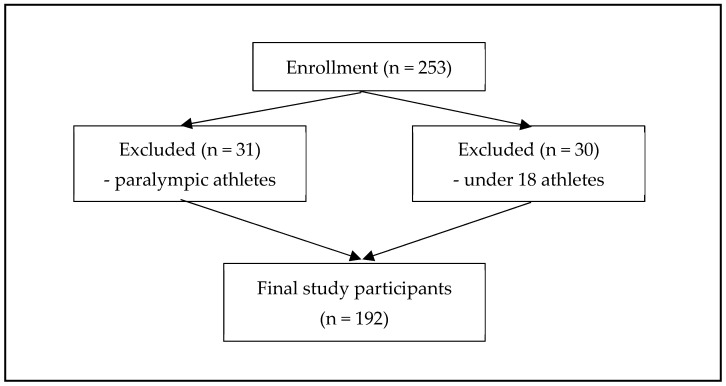
Relative energy deficiency in sport (RED-S), which underpins the concept of low energy availability (LEA), can negatively affect athletes' health and performance. This study aims to investigate the prevalence of RED-S among national athletes in Malaysia. A total of 192 national athletes (97 males, 18-39 years old) responded to an online survey regarding the RED-S risk. Most athletes (67.2%) were classified as having a medium/high RED-S risk. Female (41.2%), weight-class (23.9%), and intermittent sports (20.3%) had the highest prevalence of medium/high RED-S risk. Overall, most athletes spent 2-5 h daily (55.2%) and 6-7 days weekly (53.6%) practicing or playing their sport, and 47.9% reported feeling tired recently. The athletes were also terrified of being overweight (61.5%), worried about what they eat (64.7%), concerned about having fat on their bodies (62.6%), and thinking about burning calories while exercising (69.3%). Only 16.7% of the athletes had a prior history of stress fractures, and 40.6% continued to participate in activities 6-7 days per week while injured. The majority of female athletes (88.3%) had regular menstrual cycles. These findings support the notion that RED-S screening should be addressed in the athletic community. Future research is needed to clinically assess these athletes and investigate the impacts of RED-S on their health and sports performance.
运动性相关能量不足(RED-S),是能量不足状态(LEA)概念的基础,它可能对运动员的健康和表现产生负面影响。本研究旨在调查马来西亚国家运动员中 RED-S 的流行情况。共有 192 名国家运动员(97 名男性,年龄 18-39 岁)对 RED-S 风险的在线调查做出了回应。大多数运动员(67.2%)被归类为中/高 RED-S 风险。女性(41.2%)、体重级别(23.9%)和间歇性运动(20.3%)的中/高 RED-S 风险发生率最高。总体而言,大多数运动员每天(55.2%)和每周(53.6%)花费 2-5 小时和 6-7 天来进行运动或比赛,47.9%的人最近感到疲倦。运动员也非常担心超重(61.5%)、担心饮食(64.7%)、担心身体有脂肪(62.6%)和在运动时考虑燃烧卡路里(69.3%)。只有 16.7%的运动员有过应力性骨折史,40.6%的运动员在受伤的情况下仍继续每周进行 6-7 天的活动。大多数女运动员(88.3%)的月经周期规律。这些发现支持了 RED-S 筛查应该在运动群体中得到关注的观点。需要进一步的研究来对这些运动员进行临床评估,并调查 RED-S 对他们健康和运动表现的影响。