Department of Medical Microbiology and Parasitology, School of Basic Medical Sciences, Fudan University, Shanghai 200032, China.
Department of Clinical Laboratory, Shanghai Mental Health Center, Shanghai Jiao Tong University School of Medicine, Shanghai 200030, China.
Nutrients. 2023 Apr 3;15(7):1752. doi: 10.3390/nu15071752.
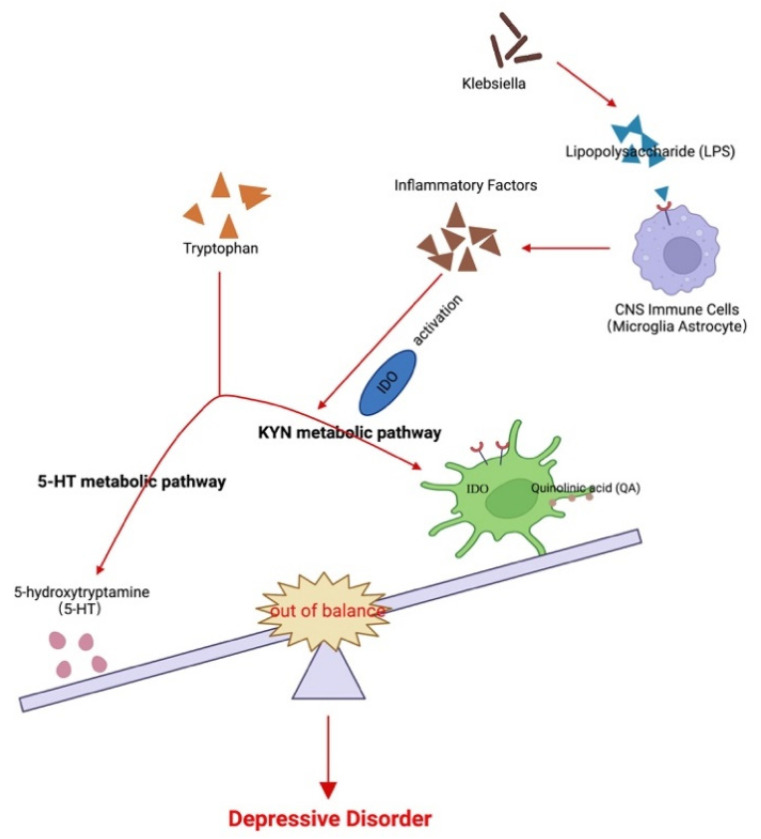
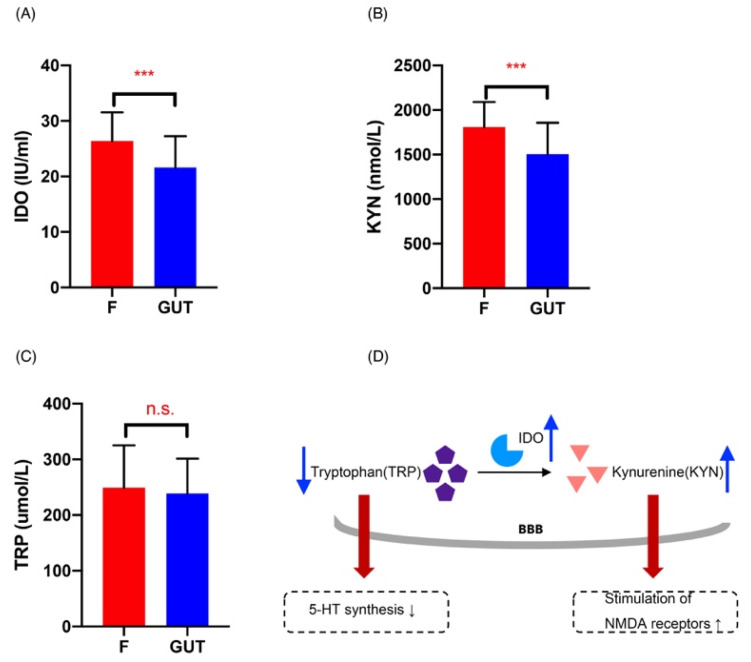
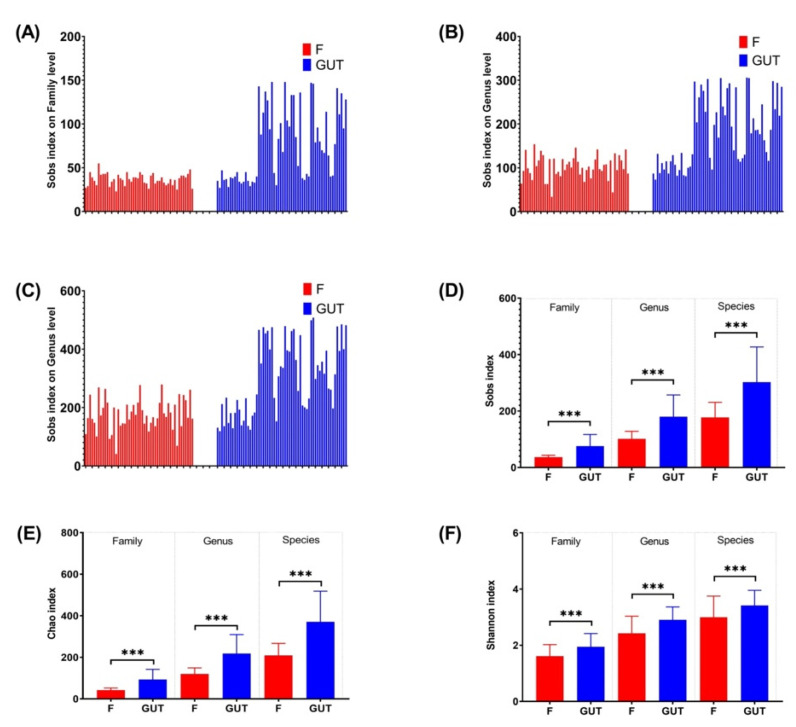
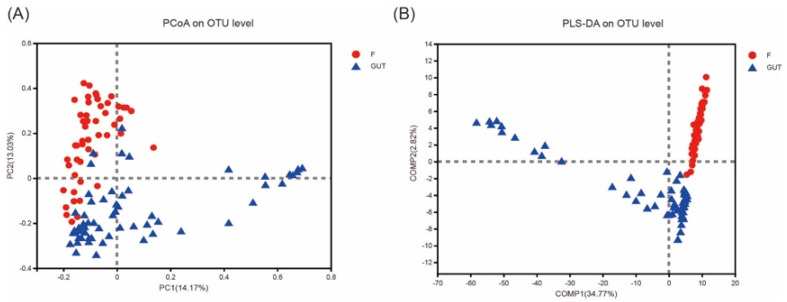
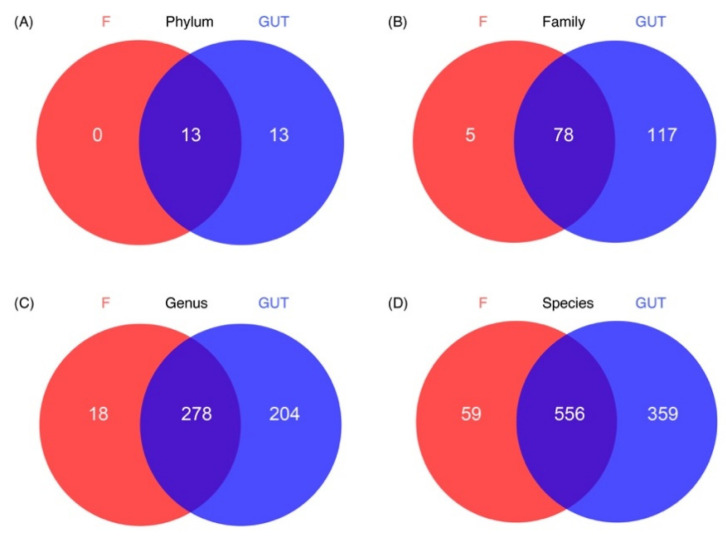
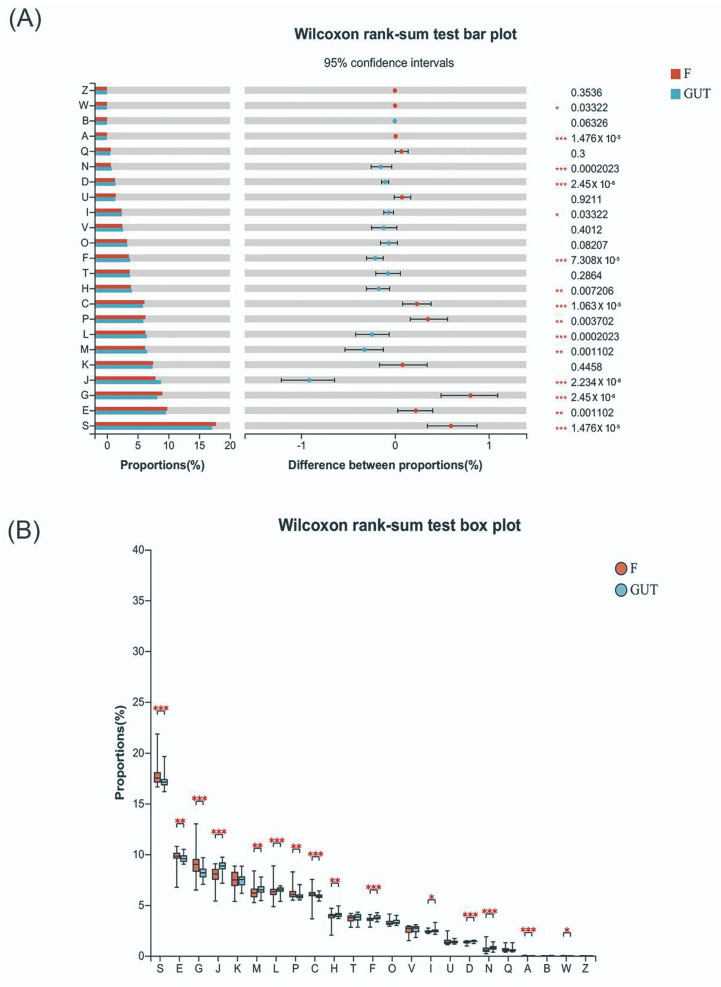
With increasing attention paid to the concept of the microbiota-gut-brain axis, mounting evidence reveals that the gut microbiota is involved in a variety of neurological and psychiatric diseases. However, gut microbiota changes in major depressive disorder (MDD) patients and their association with disease mechanisms remain undefined. Fifty MDD patients and sixty healthy controls were recruited from the Shanghai Healthy Mental Center, China. Fecal samples were collected, and the compositional characteristics of the intestinal flora were determined in MDD patients by MiSeq sequencing. Venous blood was collected for the detection of plasma indoleamine-2,3-dioxygenase (Ido), kynurenine (Kyn) and tryptophan (Trp) levels. Stool samples of bacterial 16S sequencing was carried out. A total of 2,705,809 optimized sequences were obtained, with an average of 54,116 per sample. More unique OTUs were observed at the family, genus and species levels in the control group compared with the MDD cases. Further analysis showed significant changes in the α- and β-diversities and relative abundance levels of gut microbial entities in MDD patients, as well as elevated amounts of Ido and Kyn indicating Kyn pathway activation, KEGG bacterial 16S function prediction analysis shows a variety of amino acids and metabolic (including Ido, Trp and Kyn) changes in the body of patients with MDD. These may result in increased neurotoxic metabolites and reduced generation of serotonin in the disease process. These changed factors may potentially be utilized as biomarkers for MDD in the future, playing more important roles in the disease course.
随着人们对微生物群-肠-脑轴概念的关注度不断提高,越来越多的证据表明,肠道微生物群与多种神经和精神疾病有关。然而,重度抑郁症(MDD)患者的肠道微生物群变化及其与疾病机制的关系仍未确定。本研究从中国上海精神卫生中心招募了 50 名 MDD 患者和 60 名健康对照者。采集粪便样本,通过 MiSeq 测序确定 MDD 患者肠道菌群的组成特征。采集静脉血检测血浆吲哚胺 2,3-双加氧酶(Ido)、犬尿氨酸(Kyn)和色氨酸(Trp)水平。对粪便样本进行细菌 16S 测序。共获得 2705809 个优化序列,平均每个样本 54116 个。与 MDD 病例相比,对照组在科、属和种水平上观察到更多的独特 OTUs。进一步分析显示,MDD 患者的 α-和β-多样性以及肠道微生物实体的相对丰度水平发生了显著变化,Ido 和 Kyn 水平升高表明 Kyn 途径激活,KEGG 细菌 16S 功能预测分析显示 MDD 患者体内多种氨基酸和代谢物(包括 Ido、Trp 和 Kyn)发生变化。这些变化可能导致疾病过程中神经毒性代谢物增加,而 5-羟色胺生成减少。这些变化的因素将来可能被用作 MDD 的生物标志物,在疾病过程中发挥更重要的作用。