Jiangsu Key Laboratory of New Drug Research and Clinical Pharmacy, Xuzhou Medical University, Xuzhou 221004, China.
Department of Pharmacy, The Affiliated Changzhou No. 2 People's Hospital of Nanjing Medical University, Changzhou 213164, China.
Molecules. 2023 Mar 24;28(7):2915. doi: 10.3390/molecules28072915.
The overall purpose of this study was to investigate the mechanism of macrophage polarization on chondrocyte injury in osteoarthritis and the protective effect of apigenin on chondrocytes in osteoarthritis.
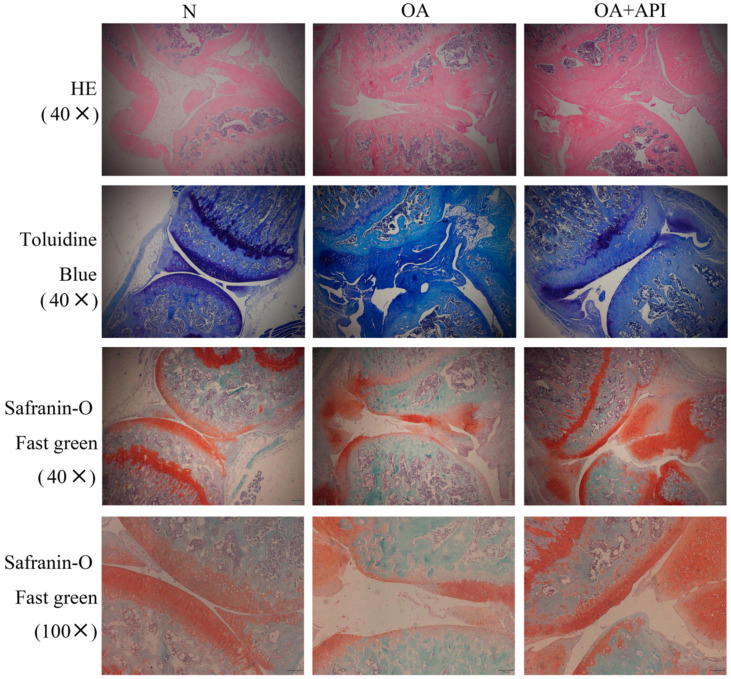
Primary chondrocytes were isolated from the knee cartilage of three-day-old mice, and cells positive for Alsine blue staining and type II collagen immunocytochemical staining were identified and used in followup experiments. Transwell coculture was performed. Chondrocytes were inoculated in the inferior compartment, and macrophages were inoculated in the upper compartment. The experimental groups were the N group, LPS group, and LPS+ apigenin group. The effect of macrophage polarization on chondrocyte inflammation and the protective effect of apigenin on chondrocytes were verified by the drug administration. Real-time quantitative PCR (qPCR) and Western blot were used to detect the expression of RNA and protein. Experimental OA was induced by modified Hulth surgery in mice. Modified Hulth surgery was performed on the mouse's right knee to induce experimental osteoarthritis in mice, with the nonoperative right knee serving as an ipsilateral control. The mice were randomly assigned to three groups (six mice per group): the sham group, the modified Hulth group, and the modified Hulth + apigenin group. Animals were given gavage for four weeks. The protective effect of apigenin on articular cartilage was verified by histological staining and immunohistochemical analysis.
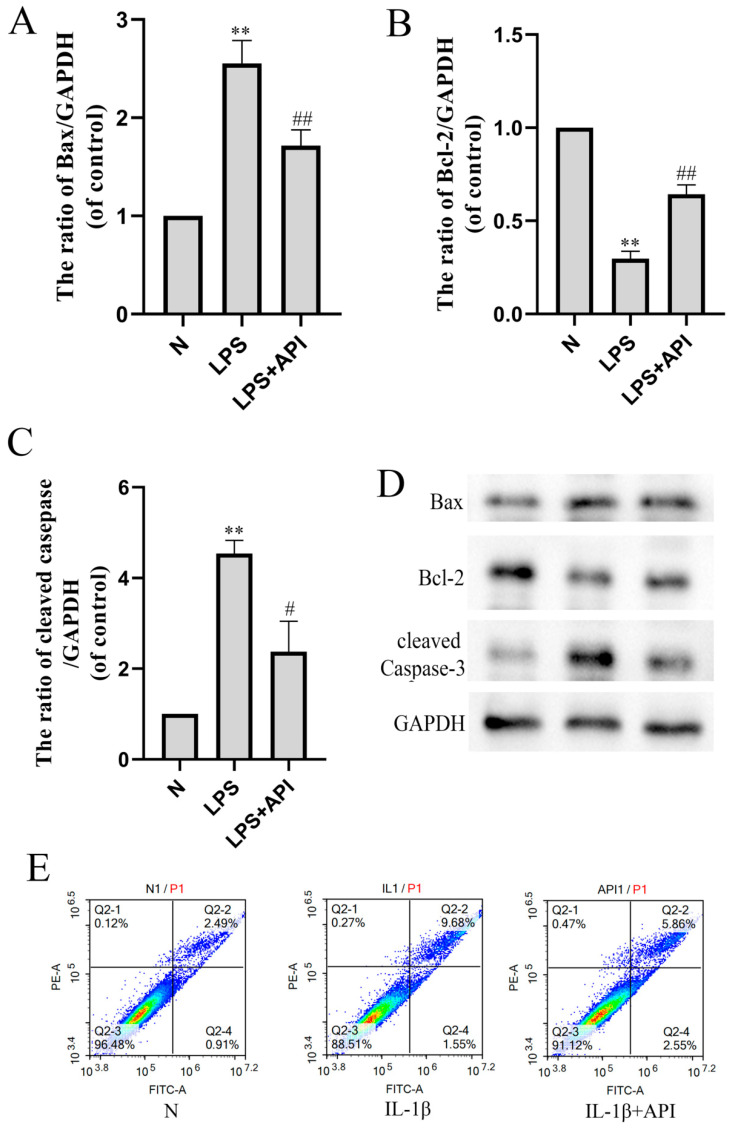
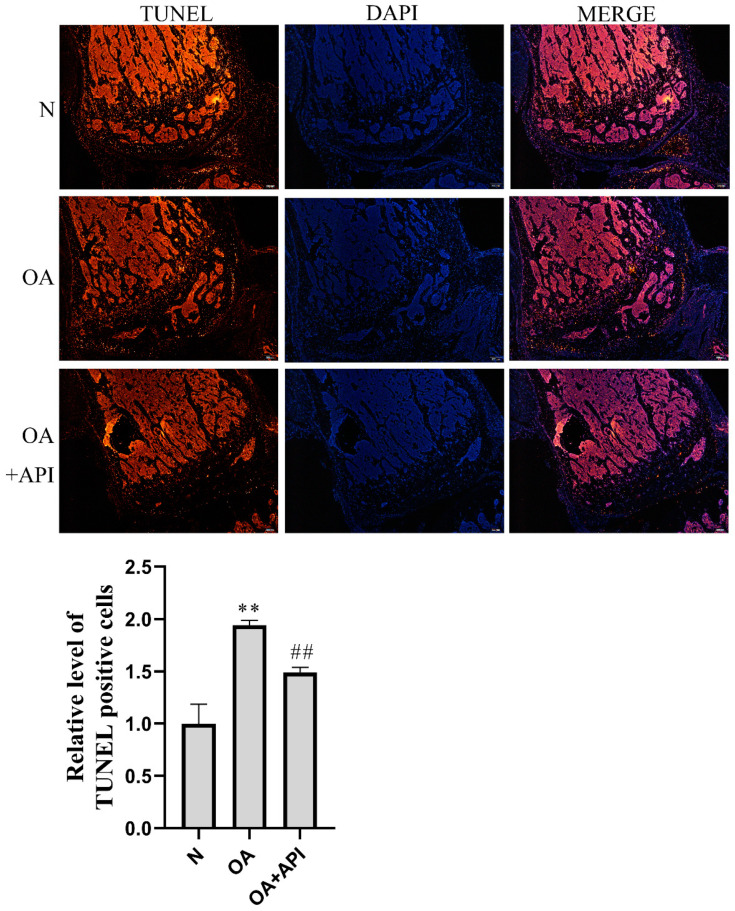
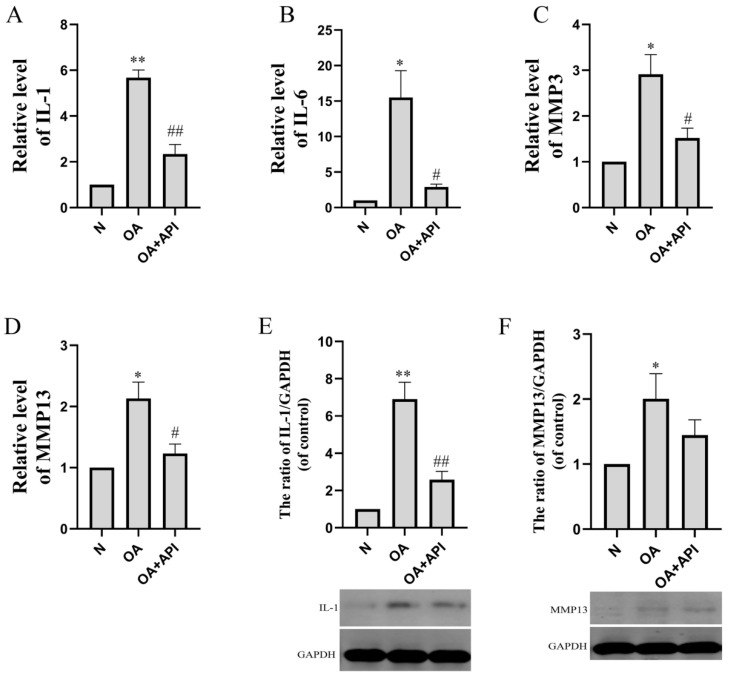
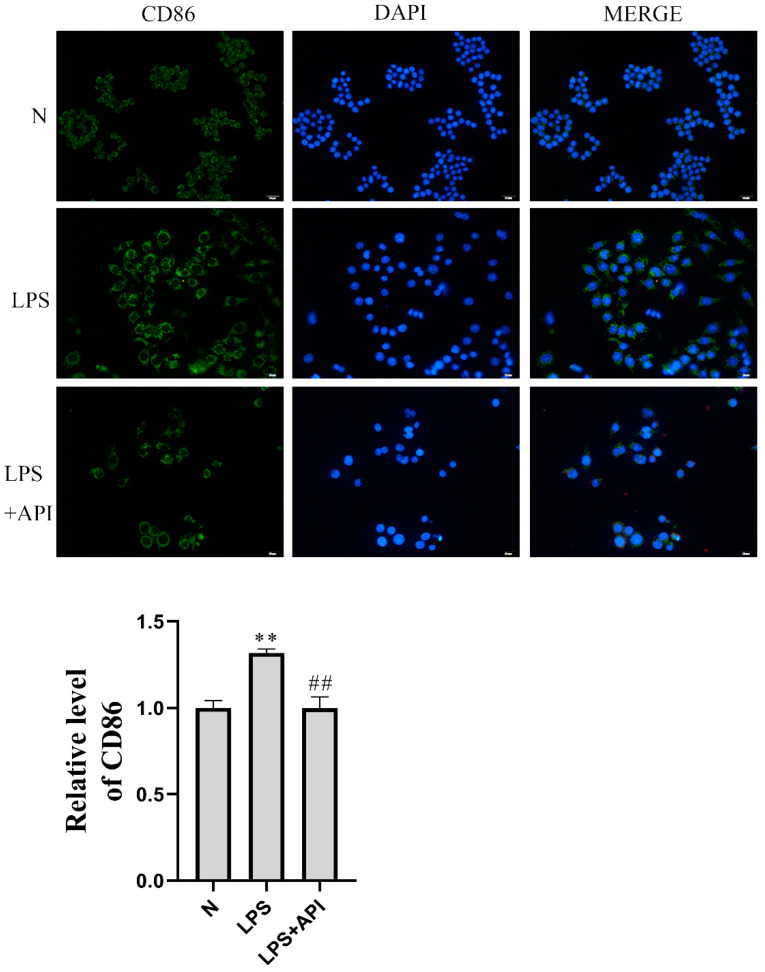
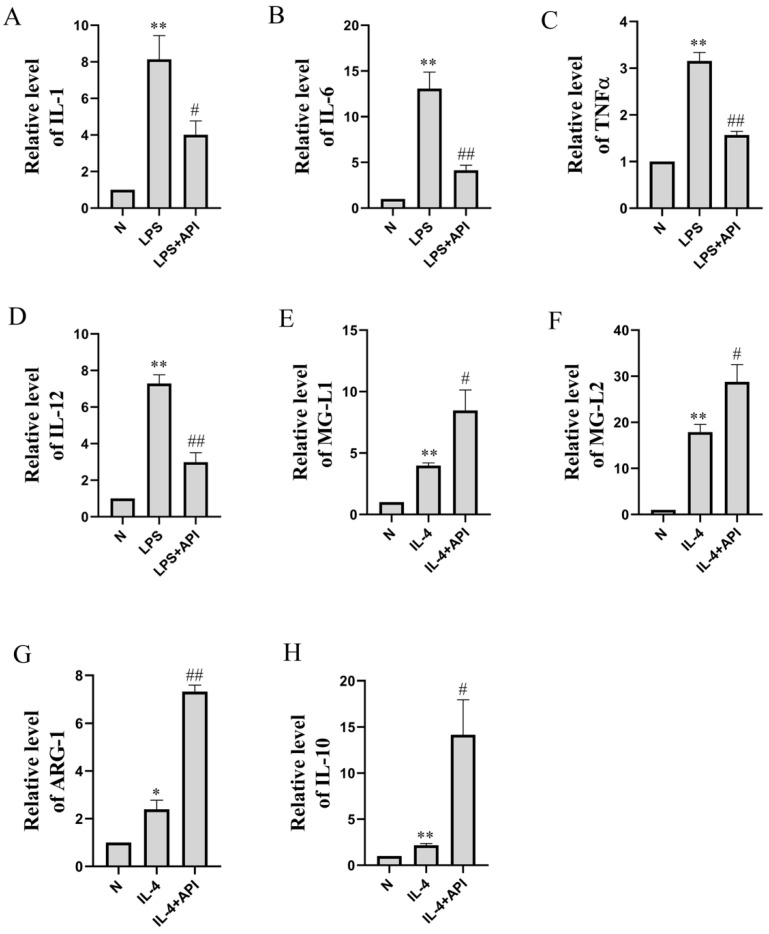
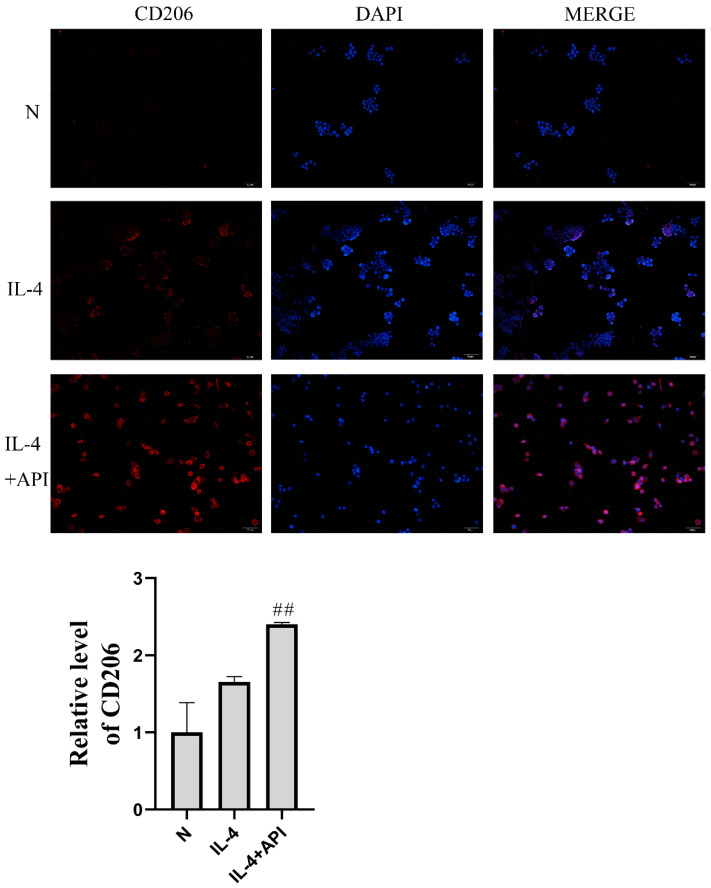
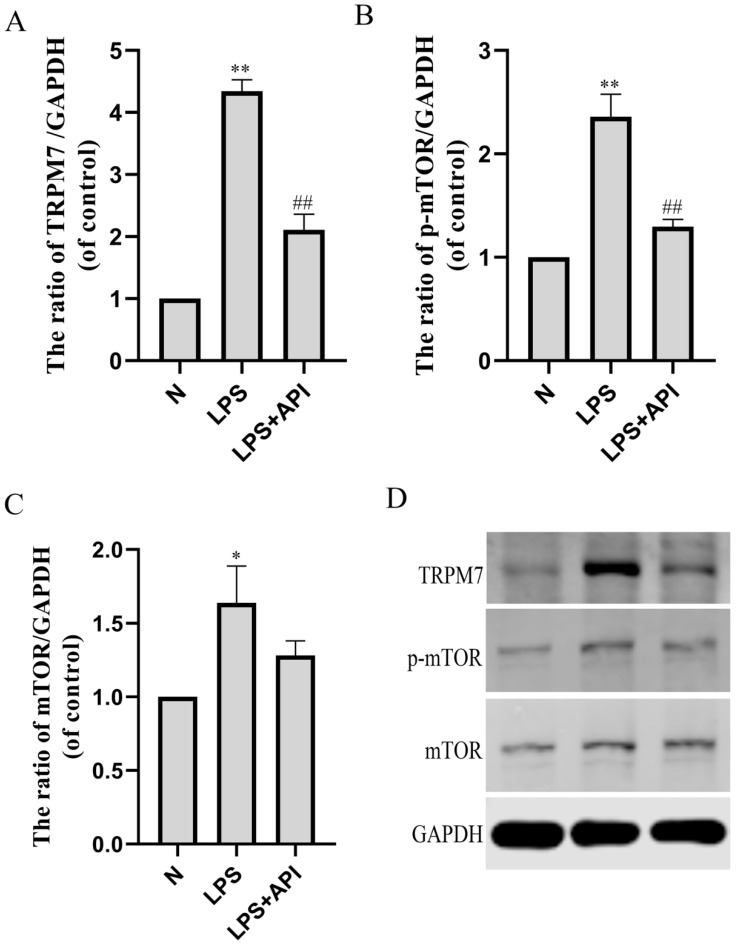
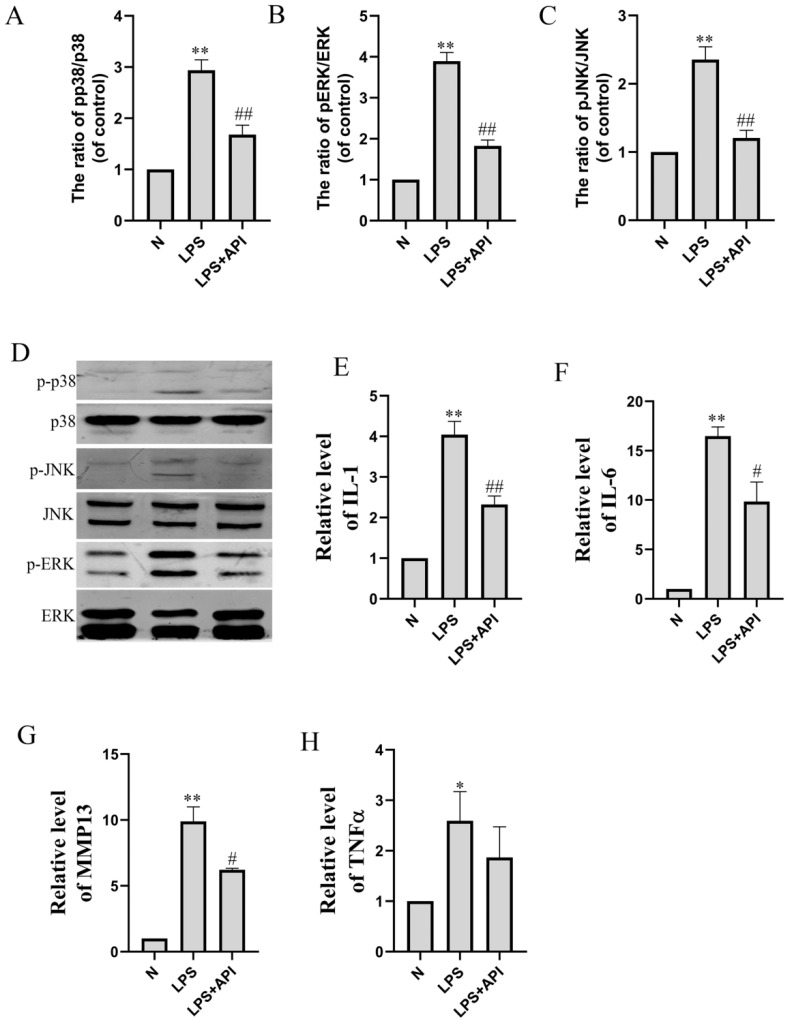
Histological staining showed that apigenin had a protective effect on cartilage degeneration induced by modified Hulth surgery. The PCR results showed that apigenin significantly reduced the expression levels of IL-1, IL-6, MMP3, and MMP13 in the articular cartilage of OA mice, and it had a protective effect on articular cartilage. Apigenin reduced the levels of IL-1, IL-6, TNF-α, and IL-12 in macrophages and increased the levels of MG-L1, MG-L2, ARG-1, and IL-10, which can inhibit the M1 polarization of macrophages and promote M2 polarization. In the coculture system, apigenin decreased the protein levels of TRPM7, P-mTOR, BAX, and c-caspase3 in macrophages, while significantly increasing the protein levels of Bcl2. The levels of IL-1, IL-6, MMP13, TNF-α, P38, JNK, and ERK phosphorylation were reduced in chondrocytes.
Apigenin alleviates cartilage injury in OA mice induced by modified Hulth. Apigenin inhibits chondrocyte inflammation through the MAPK pathway. Apigenin alleviates macrophage-polarization-induced inflammatory response and chondrocyte apoptosis in the macrophage-chondrocyte coculture system through the TRPM7-mTOR pathway.
本研究的总体目的是探讨巨噬细胞极化在骨关节炎软骨细胞损伤中的作用机制,以及芹菜素对骨关节炎软骨细胞的保护作用。
从 3 日龄小鼠的膝关节软骨中分离原代软骨细胞,用阿尔辛蓝染色和 II 型胶原免疫细胞化学染色鉴定细胞阳性,并用于后续实验。进行 Transwell 共培养。将软骨细胞接种在下室,巨噬细胞接种在上室。实验组为 N 组、LPS 组和 LPS+芹菜素组。通过药物干预验证了巨噬细胞极化对软骨细胞炎症的影响,以及芹菜素对软骨细胞的保护作用。实时定量 PCR(qPCR)和 Western blot 用于检测 RNA 和蛋白的表达。在小鼠中采用改良 Hulth 手术诱导实验性骨关节炎。对小鼠右膝关节进行改良 Hulth 手术以诱导小鼠实验性骨关节炎,对未手术的右膝关节作为同侧对照。将小鼠随机分为三组(每组 6 只):假手术组、改良 Hulth 组和改良 Hulth+芹菜素组。动物进行灌胃 4 周。通过组织学染色和免疫组织化学分析验证了芹菜素对关节软骨的保护作用。
组织学染色显示,芹菜素对改良 Hulth 手术诱导的软骨退变具有保护作用。PCR 结果显示,芹菜素显著降低了 OA 小鼠关节软骨中 IL-1、IL-6、MMP3 和 MMP13 的表达水平,对关节软骨具有保护作用。芹菜素降低了巨噬细胞中 IL-1、IL-6、TNF-α 和 IL-12 的水平,增加了 MG-L1、MG-L2、ARG-1 和 IL-10 的水平,可抑制巨噬细胞 M1 极化,促进 M2 极化。在共培养体系中,芹菜素降低了巨噬细胞中 TRPM7、P-mTOR、BAX 和 c-caspase3 的蛋白水平,而显著增加了 Bcl2 的蛋白水平。软骨细胞中 IL-1、IL-6、MMP13、TNF-α、P38、JNK 和 ERK 磷酸化水平降低。
芹菜素缓解了改良 Hulth 诱导的 OA 小鼠的软骨损伤。芹菜素通过 MAPK 通路抑制软骨细胞炎症。芹菜素通过 TRPM7-mTOR 通路缓解巨噬细胞-软骨细胞共培养体系中巨噬细胞极化诱导的炎症反应和软骨细胞凋亡。