
靶向肿瘤坏死因子受体超家族受体的抗体的基本特征。
Basic characterization of antibodies targeting receptors of the tumor necrosis factor receptor superfamily.
机构信息
Division of Molecular Internal Medicine, Department of Internal Medicine II, University Hospital Würzburg, Würzburg, Germany.
Department of Microbial Biotechnology, Institute of Biotechnology, National Research Center, Giza, Egypt.
出版信息
Front Immunol. 2023 Mar 27;14:1115667. doi: 10.3389/fimmu.2023.1115667. eCollection 2023.
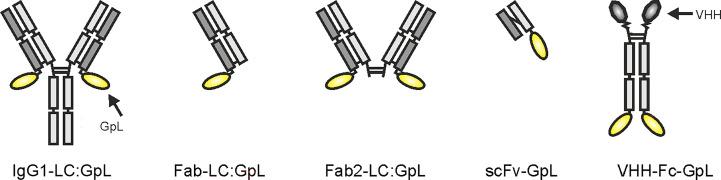
Many new immunotherapeutic approaches aim on the stimulatory targeting of receptors of the tumor necrosis factor (TNF) receptor superfamily (TNFRSF) using antibodies with intrinsic or conditional agonism. There is an initial need to characterize corresponding TNFRSF receptor (TNFR)-targeting antibodies with respect to affinity, ligand binding, receptor activation and the epitope recognized. Here, we report a collection of simple and matched protocols enabling the detailed investigation of these aspects by help of luciferase (GpL) fusion proteins and analysis of interleukin-8 (IL8) production as an easily measurable readout of TNFR activation. In a first step, the antibodies and antibody variants of interest are transiently expressed in human embryonal kidney 293 cells, either in non-modified form or as fusion proteins with GpL as a reporter domain. The supernatants containing the antibody-GpL fusion proteins can then be used without further purification in cell-free and/or cellular binding studies to determine affinity. Similarly, binding studies with mutated TNFR variants enable the characterization of the antibody binding site within the TNFR ectodomain. Furthermore, in cellular binding studies with GpL fusion proteins of soluble TNFL molecules, the ability of the non-modified antibody variants to interfere with TNFL-TNFR interaction can be analyzed. Last but not least, we describe a protocol to determine the intrinsic and the Fc gamma receptor (FcγR)-dependent agonism of anti-TNFR antibodies which exploits i) the capability of TNFRs to trigger IL8 production in tumor cell lines lacking expression of FcγRs and ii) vector- and FcγR-transfected cells, which produce no or only very low amounts of human IL8. The presented protocols only require standard molecular biological equipment, eukaryotic cell culture and plate readers for the quantification of luminescent and colorimetric signals.
许多新的免疫治疗方法旨在通过使用具有内在或条件激动性的抗体,刺激肿瘤坏死因子 (TNF) 受体超家族 (TNFRSF) 的受体。首先需要对相应的 TNFRSF 受体 (TNFR) 靶向抗体进行特征分析,包括亲和力、配体结合、受体激活和识别的表位。在这里,我们报告了一系列简单且匹配的方案,通过使用荧光素酶 (GpL) 融合蛋白和白细胞介素-8 (IL8) 产生的分析作为 TNFR 激活的易测量读数,帮助详细研究这些方面。在第一步中,将感兴趣的抗体和抗体变体瞬时表达在人胚肾 293 细胞中,要么以未修饰的形式,要么作为与 GpL 作为报告结构域融合的融合蛋白。然后可以在无细胞和/或细胞结合研究中使用含有抗体-GpL 融合蛋白的上清液,无需进一步纯化,以确定亲和力。同样,用突变的 TNFR 变体进行的结合研究可用于表征 TNFR 胞外域中的抗体结合位点。此外,在使用可溶性 TNFL 分子的 GpL 融合蛋白进行的细胞结合研究中,可以分析未修饰的抗体变体干扰 TNFL-TNFR 相互作用的能力。最后但同样重要的是,我们描述了一种确定抗 TNFR 抗体的内在和 Fcγ 受体 (FcγR) 依赖性激动性的方案,该方案利用 i)TNFR 触发缺乏 FcγR 表达的肿瘤细胞系中 IL8 产生的能力和 ii)载体和 FcγR 转染的细胞,这些细胞不产生或仅产生非常少量的人 IL8。所提出的方案仅需要标准的分子生物学设备、真核细胞培养和板读数器来定量发光和比色信号。



 Zotero 插件