Hunan University of Chinese Medicine Faculty of Pharmacy, Changsha, Hunan, China.
Hunan University of Chinese Medicine Faculty of Medicine, Changsha, China.
Turk J Gastroenterol. 2023 Jul;34(7):691-699. doi: 10.5152/tjg.2023.22451.
BACKGROUND/AIMS: This study aimed to investigate the effect of diarrhea induced by a high-fat and high-protein diet on lactase-producing bacteria in the intestinal contents of mice from the perspective of diarrhea-related genes.
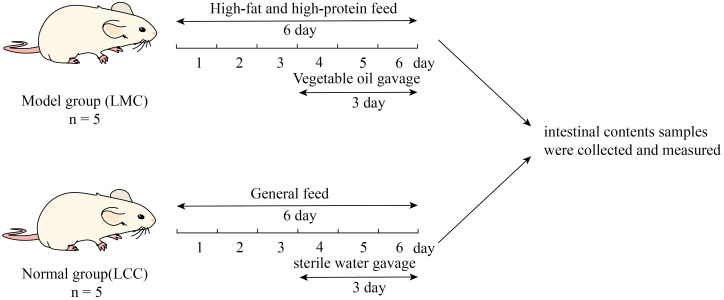
Ten specific pathogen-free Kunming male mice were chosen and randomly divided into the normal group and model group. The mice in the normal group were fed with high-fat and high-protein diet plus gavage of vegetable oil, while those in the model group were fed with general diet plus gavage of distilled water. After successful modeling, the distribution and diversity of lactase-producing bacteria in the intestinal contents were characterized by metagenomic sequencing technology.
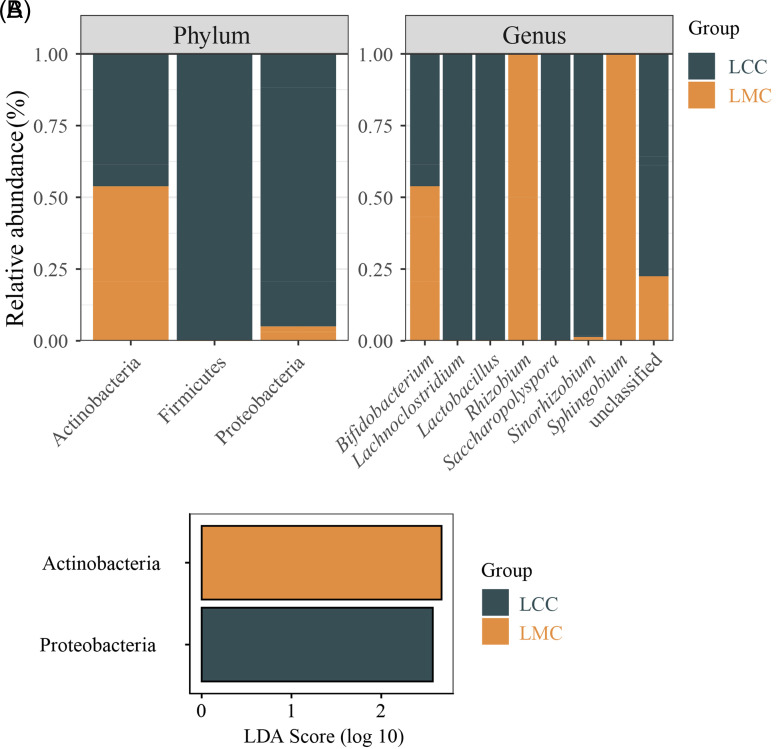
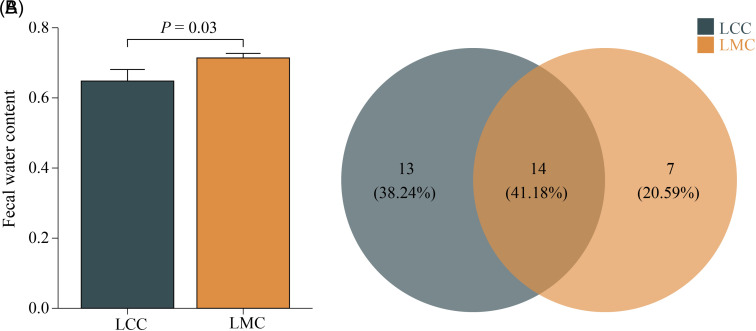
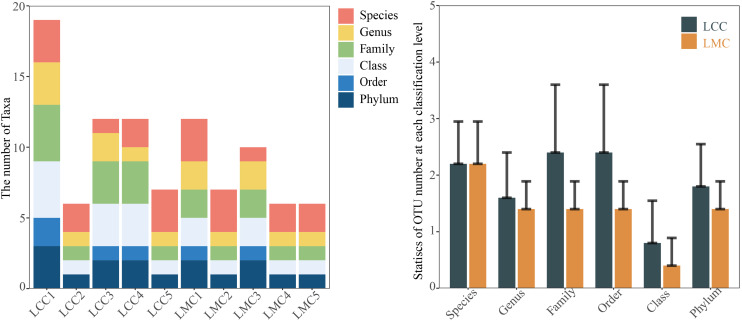
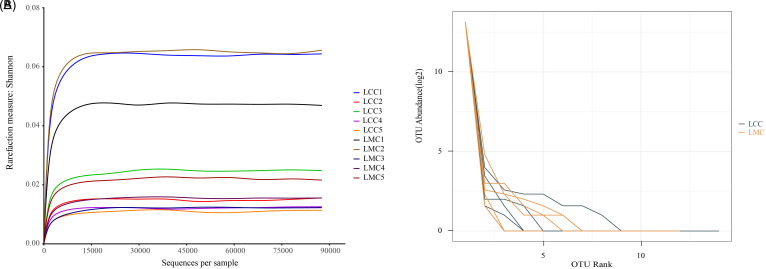
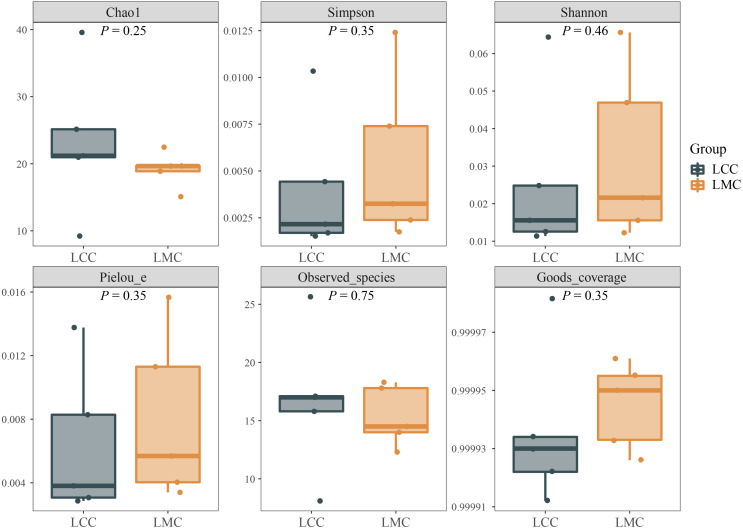
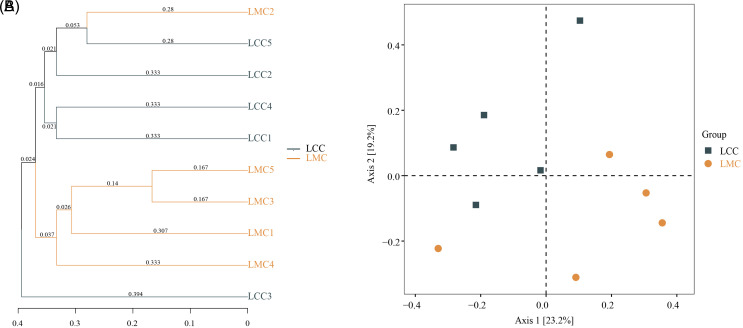
After high-fat and high-protein diet intervention, Chao1, observed species index, and operational taxonomic units number decreased in the model group (P > .05), while the Shannon, Simpson, Pielou's evenness, and Goods coverage indices increased (P > .05). The principal coordinate analysis showed that the composition of lactase-producing bacteria differed between the normal group and model group (P < .05). The lactase-producing bacterial source in the intestinal contents of mice was Actinobacteria, Firmicutes, and Proteobacteria, of which Actinobacteria was the most abundant phylum. At the genus level, both groups had their unique genera, respectively. Compared to the normal group, the abundance of Bifidobacterium, Rhizobium, and Sphingobium increased, while Lachnoclostridium, Lactobacillus, Saccharopolyspora, and Sinorhizobium decreased in the model group.
High-fat and high-protein diet altered the structure of lactase-producing bacteria in the intestinal contents, elevating the abundance of dominant lactase-producing bacteria, while decreasing the richness of lactase-producing bacteria, which may further induce the occurrence of diarrhea.
背景/目的:本研究旨在从与腹泻相关的基因角度探讨高脂肪高蛋白饮食诱导的腹泻对小鼠肠内容物中产乳糖酶细菌的影响。
选择 10 只无特定病原体昆明雄性小鼠,随机分为正常组和模型组。正常组给予高脂肪高蛋白饲料加灌服植物油,模型组给予普通饲料加灌服蒸馏水。建模成功后,采用宏基因组测序技术对肠内容中产乳糖酶细菌的分布和多样性进行分析。
高脂肪高蛋白饮食干预后,模型组的 Chao1、观察物种指数和操作分类单元数减少(P >.05),而 Shannon、Simpson、Pielou 均匀度和 Goods 覆盖率指数增加(P >.05)。主坐标分析显示,正常组和模型组中产乳糖酶细菌的组成存在差异(P <.05)。小鼠肠内容中产乳糖酶细菌的来源为放线菌门、厚壁菌门和变形菌门,其中放线菌门为最丰富的门。在属水平上,两组均有其独特的属。与正常组相比,模型组中双歧杆菌、根瘤菌和鞘氨醇单胞菌的丰度增加,而lachnoclostridium、乳杆菌、糖多孢菌和中华根瘤菌的丰度降低。
高脂肪高蛋白饮食改变了肠内容中产乳糖酶细菌的结构,增加了优势产乳糖酶细菌的丰度,同时降低了产乳糖酶细菌的丰富度,这可能进一步导致腹泻的发生。