Cupka Martin, Sedliak Milan
Comenius University in Bratislava, Faculty of Physical Education and Sport, Department of Biological and Medical Sciences, Bratislava.
Eur J Transl Myol. 2023 Apr 11;33(2):11104. doi: 10.4081/ejtm.2023.11104.
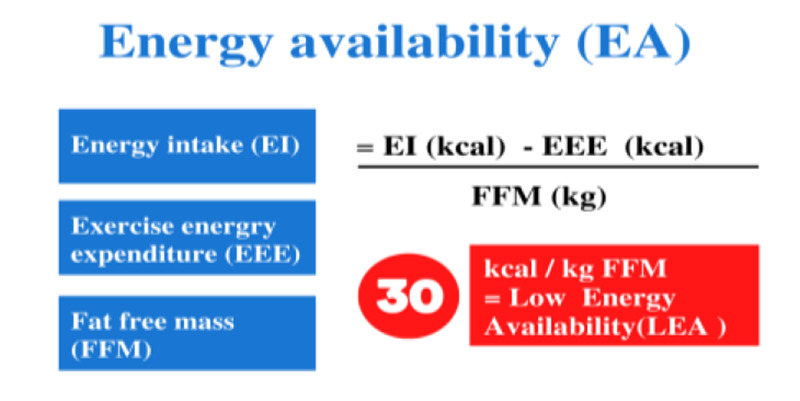
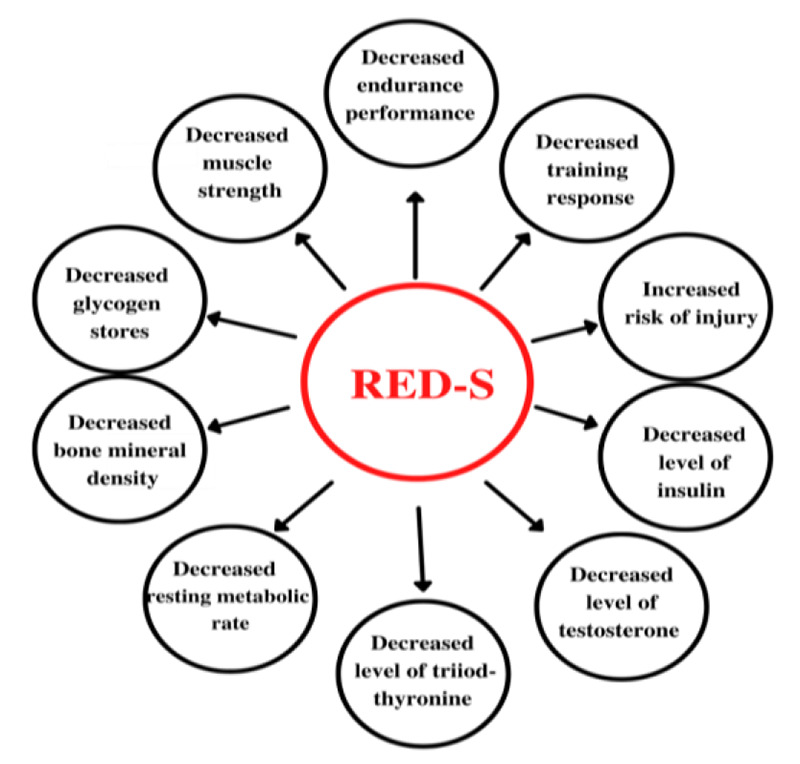
Low Energy Availability (LEA) arises from the inability to cover energy needs and requirements of training or normal physiological functions. This value differs from the energy balance, which takes into account the total daily energy intake compared to all the energy expended, regardless of the amount of fat-free mass. Insufficient energy consumption affects recovery, adaptation processes, increases the risk of injury or illness, so all of this can negatively affect performance. This mini-review is written on research articles in Pubmed database related to LEA in endurance-trained men and its impact on performance and testosterone. This article also clarifies the prevalence of LEA in male endurance athletes and its correlation to Relative Energy Deficiency in Sports (RED-S). LEA occurs in male endurance athletes and correlates with decreased testosterone levels, decreased bone density and also Resting Metabolic Rate. In endurance-trained men, there is great potential for the negative consequences of low energy availability. It can also be said that there are possibilities for primary screening, so we recommend regular check-ups of blood markers, body structure and keeping not only training but also dietary records, which can increase awareness of an adequate energy balance.
低能量可利用性(LEA)源于无法满足训练或正常生理功能的能量需求。该值与能量平衡不同,能量平衡考虑的是每日总能量摄入量与所有消耗能量的比较,而不考虑去脂体重的量。能量消耗不足会影响恢复、适应过程,增加受伤或患病的风险,因此所有这些都会对运动表现产生负面影响。这篇小型综述是基于PubMed数据库中与耐力训练男性的低能量可利用性及其对运动表现和睾酮影响相关的研究文章撰写的。本文还阐明了男性耐力运动员中低能量可利用性的患病率及其与运动相对能量缺乏症(RED-S)的相关性。低能量可利用性在男性耐力运动员中存在,且与睾酮水平降低、骨密度降低以及静息代谢率相关。在耐力训练的男性中,低能量可利用性产生负面后果的可能性很大。也可以说存在进行初步筛查的可能性,因此我们建议定期检查血液指标、身体结构,并不仅要记录训练情况,还要记录饮食情况,这可以提高对充足能量平衡的认识。