Center for Primary Health Care Research, Department of Clinical Sciences, Malmö, Lund University, Sweden.
Scand J Prim Health Care. 2023 Jun;41(2):160-169. doi: 10.1080/02813432.2023.2197951. Epub 2023 Apr 13.
Prior studies have reported that heart failure typically affects elderly, multimorbid and socioeconomically deprived men. Women with heart failure are generally older, have a higher EF (ejection fraction) and have more heart failure-related symptoms than men. This study explored the disparities in the prevalence of heart failure between men and women in relation to age, multimorbidity level and socioeconomic status of the population in southern Sweden.
A register-based, cross-sectional cohort study. The inhabitants from 20 years of age onwards ( = 981,383) living in southern Sweden in 2015. Prevalence and mean probability of having heart failure in both genders. CNI (Care Need Index) percentiles depend on the socioeconomic status of their listed primary healthcare centres.
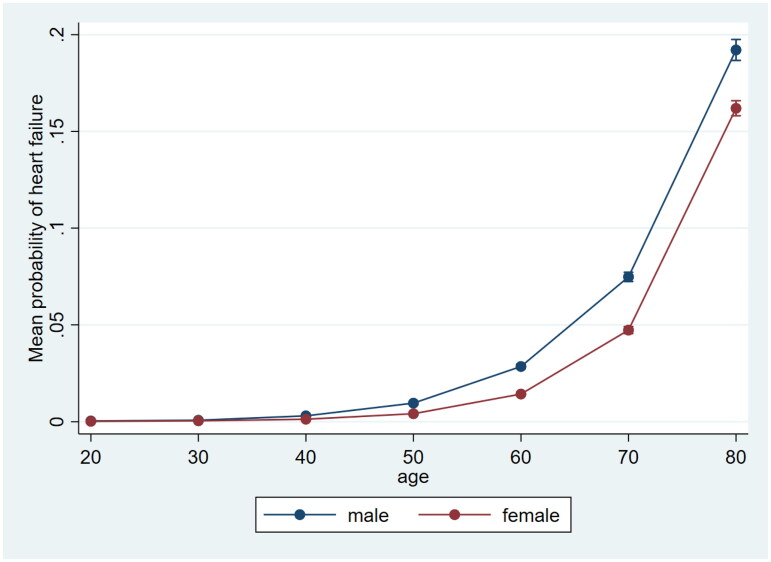
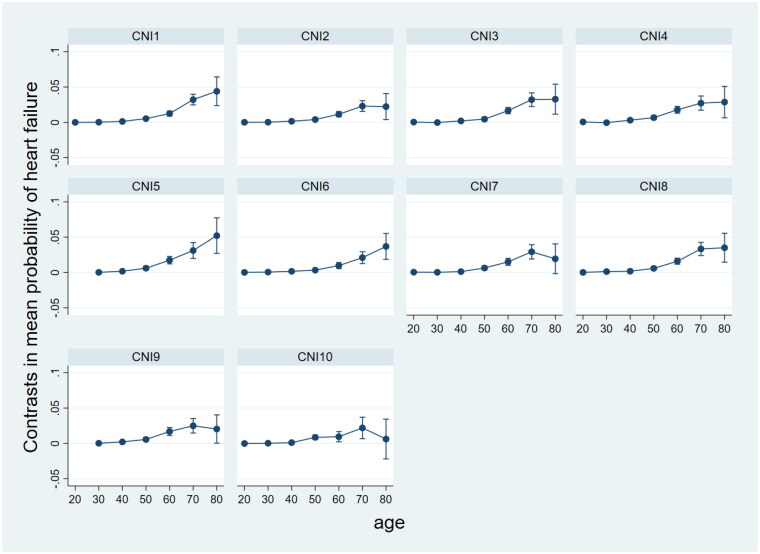
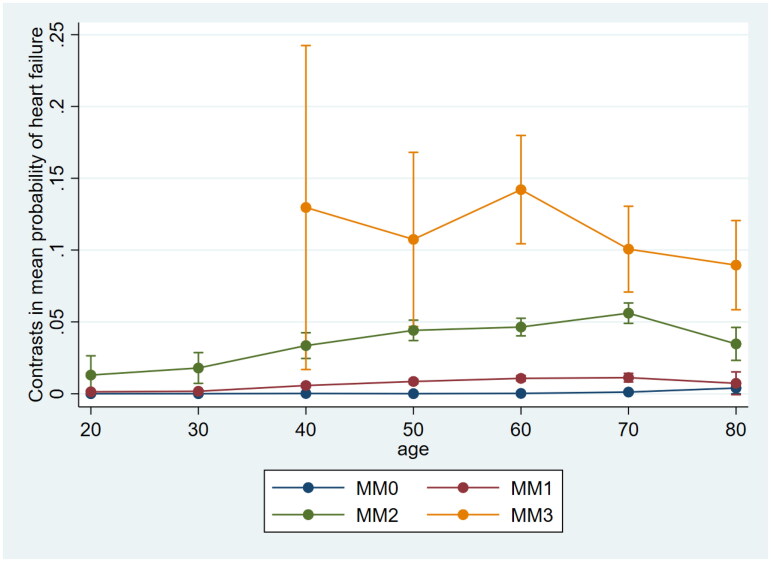
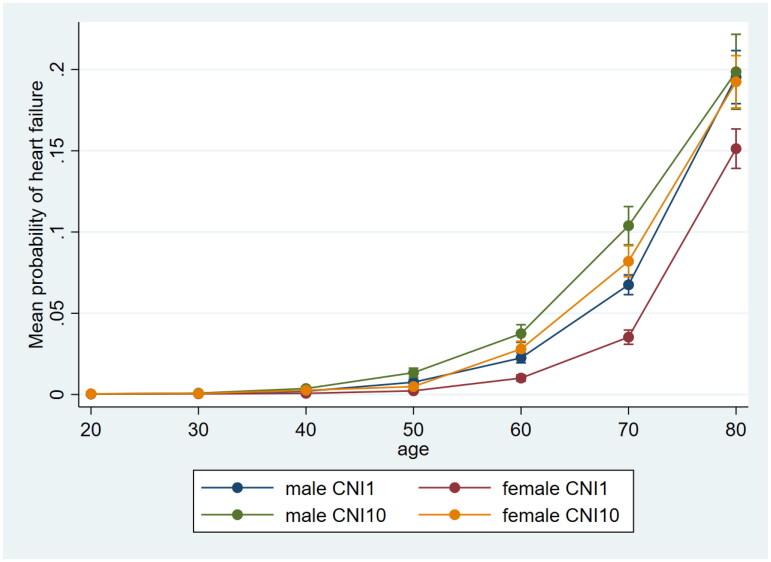
Men had a higher OR for HF - 1.70 (95% CI 1.65-1.75) - than women. The probability of men having heart failure increased significantly compared to women with advancing age and multimorbidity levels. At all CNI levels, the multimorbid patients had a higher prevalence of heart failure in men than in women. The disparity in the mean probability of heart failure between the most affluent and deprived CNI percentile was more apparent in women compared to men, especially from 80 years.
The prevalence of heart failure differs significantly between the genders. Men had an increasing mean probability of heart failure with advancing age and multimorbidity level compared to women. Socioeconomic deprivation was more strongly associated with heart failure in women than in men. The probability of having heart failure differs between the genders in several aspects.Key PointsIndependently of socioeconomic status, men had a higher prevalence of heart failure than women among the multimorbid patients.The mean probability of men having heart failure increased significantly compared to women with advancing age and multimorbidity level.Socioeconomic status was more strongly associated with heart failure in women than in men.
先前的研究报告表明,心力衰竭通常影响老年、多病和社会经济贫困的男性。心力衰竭女性一般年龄较大,射血分数(ejection fraction,EF)较高,与心力衰竭相关的症状也多于男性。本研究探讨了瑞典南部心力衰竭在男性和女性中的患病率差异与年龄、多病程度和人口社会经济地位的关系。
基于登记的横断面队列研究。2015 年居住在瑞典南部 20 岁及以上的居民( = 981383 人)。比较两性的心力衰竭患病率和心力衰竭的平均概率。CNI(护理需求指数)的百分位数取决于其所在初级保健中心的社会经济地位。
男性心力衰竭的 OR 高于女性(1.70,95%CI 1.65-1.75)。随着年龄和多病程度的增加,男性发生心力衰竭的概率明显高于女性。在所有 CNI 水平,多病患者中男性心力衰竭的患病率均高于女性。在最富裕和最贫困的 CNI 百分位数之间,心力衰竭的平均概率差异在女性中比男性中更为明显,尤其是 80 岁以上的女性。
心力衰竭的患病率在两性之间有显著差异。与女性相比,男性随着年龄和多病程度的增加,心力衰竭的平均概率呈上升趋势。与男性相比,社会经济剥夺与女性心力衰竭的相关性更强。在多个方面,心力衰竭的发生概率在两性之间存在差异。
独立于社会经济地位,多病患者中男性心力衰竭的患病率高于女性。
男性心力衰竭的平均概率随着年龄和多病程度的增加而显著高于女性。
与男性相比,社会经济地位与女性心力衰竭的相关性更强。