College of Life Sciences, Laboratory for Marine Biology and Biotechnology of Pilot National Laboratory for Marine Science and Technology (Qingdao) and Southern Marine Science and Engineering Guangdong Laboratory (Zhuhai), Zhejiang University, Hangzhou 310058, People's Republic of China.
Third Institute of Oceanography, Ministry of Natural Resources, Xiamen 361005, People's Republic of China.
J Adv Res. 2024 Feb;56:87-102. doi: 10.1016/j.jare.2023.04.003. Epub 2023 Apr 11.
Viruses are the most abundant and diverse life forms on the earth. Both DNA viruses and RNA viruses play important roles in marine ecosystems via regulating biogeochemical cycles.
However, the virome of marine RNA viruses has been rarely explored so far. In this study, therefore, the environmental viromes of deep-sea sediment RNA viruses were characterized on a global scale to reveal the global virosphere of deep-sea RNA viruses.
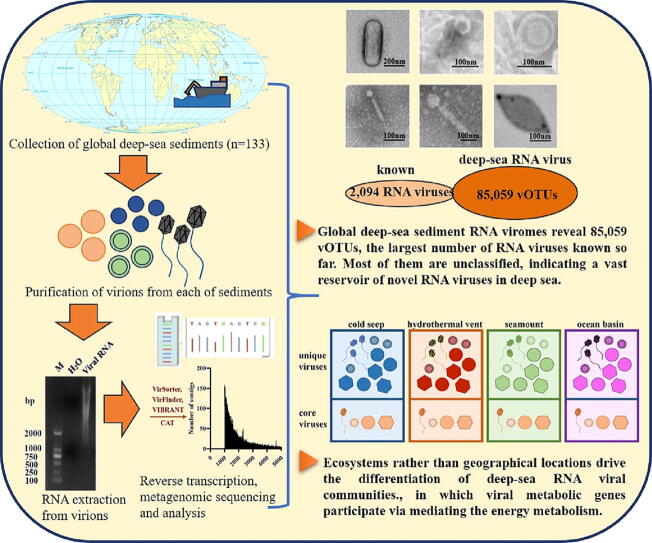
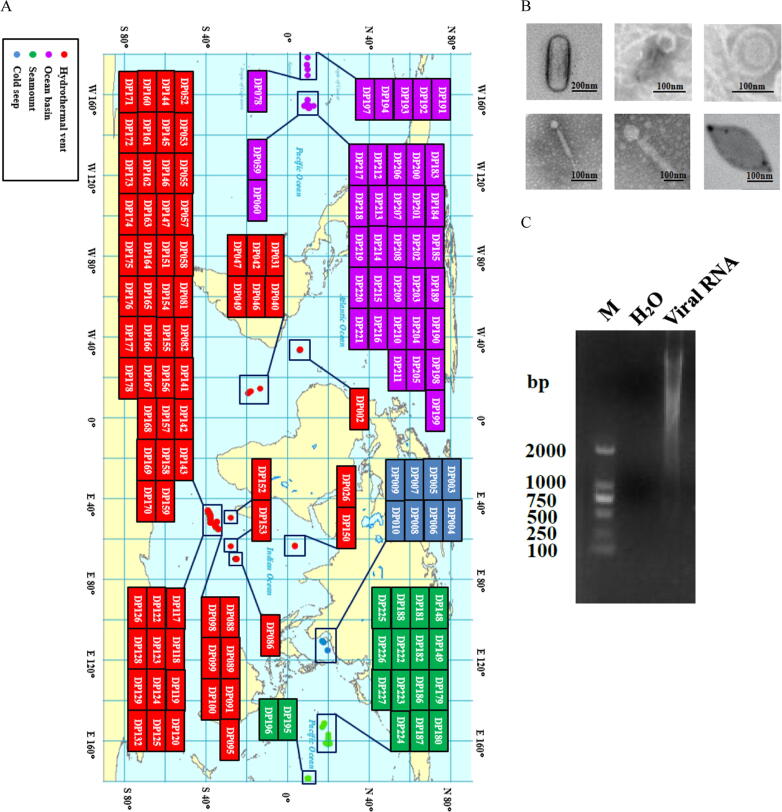
The viral particles were purified from each of 133 deep-sea sediment samples and then characterized based on metagenomes of RNA viruses.
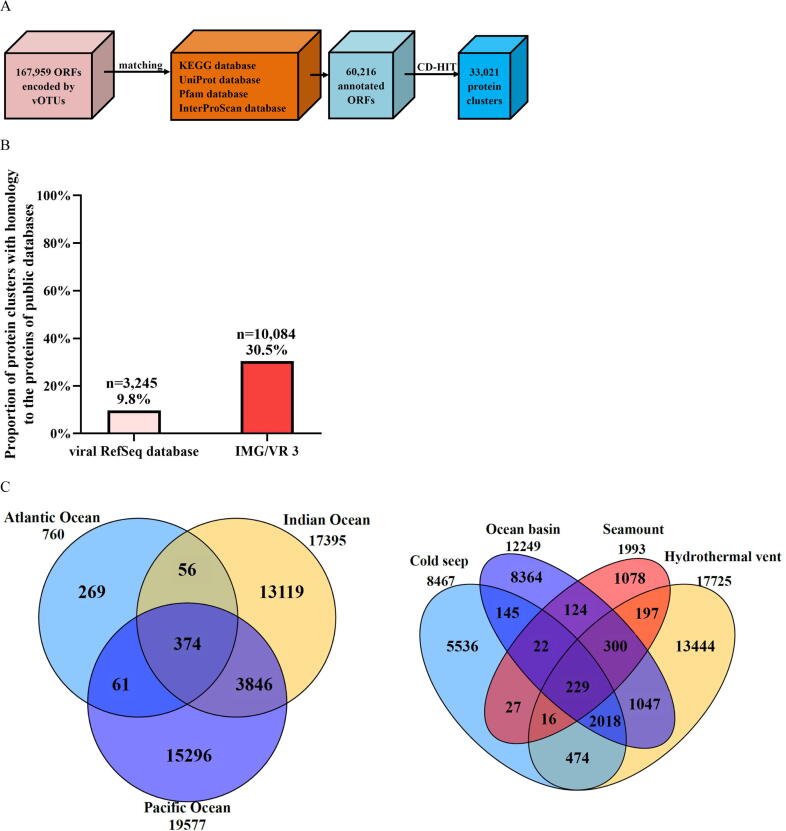
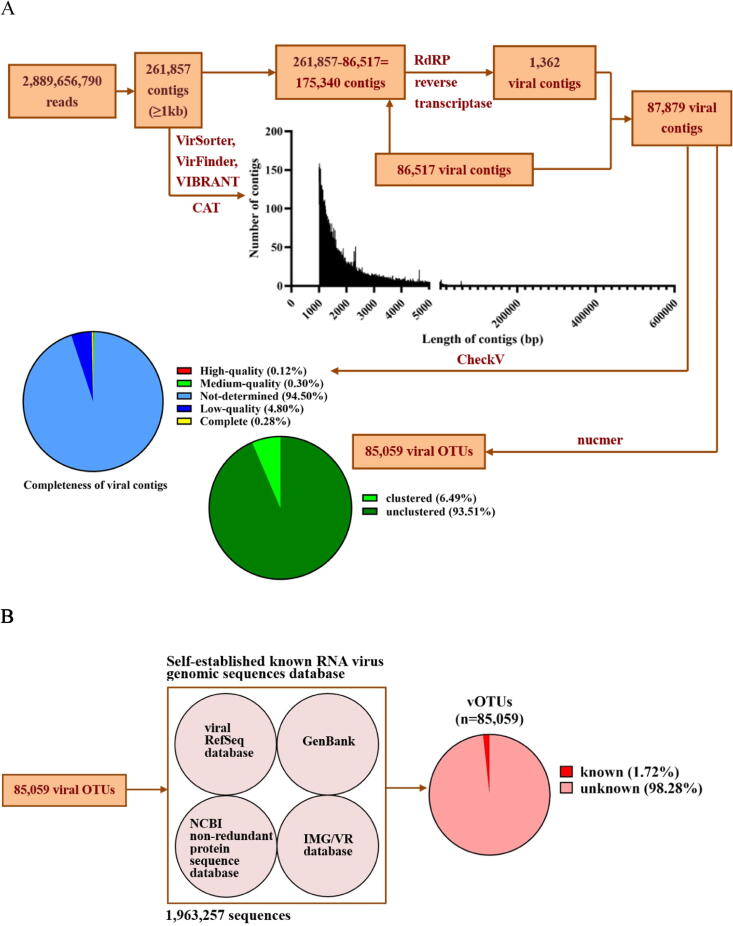
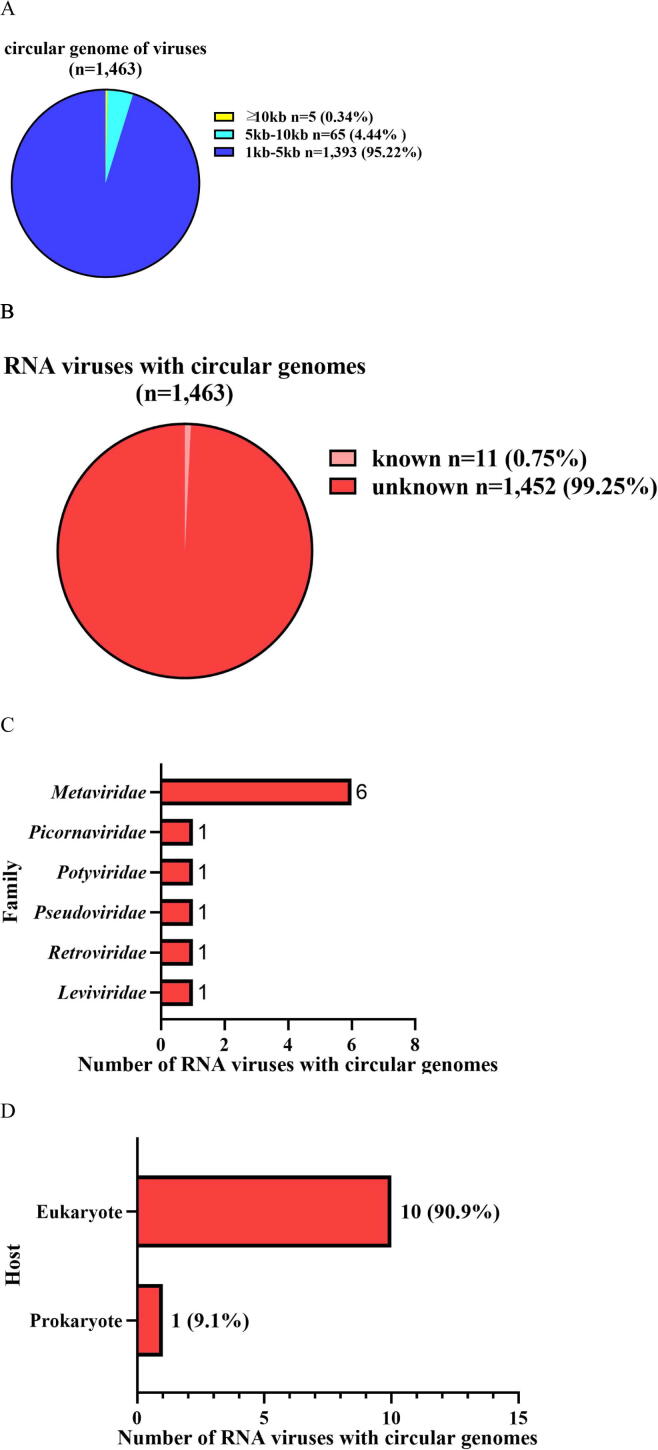
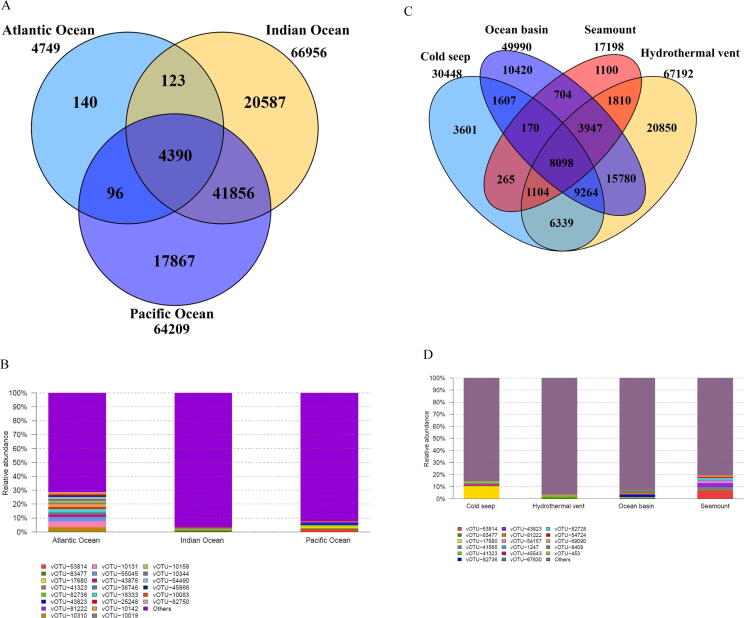
In this study, we established the global virome dataset of deep-sea RNA viruses purified from 133 sediment samples that were collected from typical deep-sea ecosystems of three oceans. A total of 85,059 viral operational taxonomic units (vOTUs) were identified, of which only 1.72% were hitherto known, indicating that the deep-sea sediment is a repository of novel RNA viruses. These vOTUs were classified into 20 viral families, including prokaryotic (7.09%) and eukaryotic (65.81%) RNA viruses. Furthermore, 1,463 deep-sea RNA viruses with complete genomes were obtained. The differentiation of RNA viral communities was driven by the deep-sea ecosystems as opposed to geographical region. Specifically, the virus-encoded metabolic genes took great effects on the differentiation of RNA viral communities by mediating the energy metabolism in the deep-sea ecosystems.
Therefore, our findings indicate that the deep sea is a vast reservoir of novel RNA viruses for the first time, and the differentiation of RNA viral communities is driven by the deep-sea ecosystems through energy metabolism.
病毒是地球上最丰富和最多样化的生命形式。DNA 病毒和 RNA 病毒通过调节生物地球化学循环,在海洋生态系统中都发挥着重要作用。
然而,海洋 RNA 病毒的病毒组到目前为止还很少被探索。因此,本研究在全球范围内对深海沉积物 RNA 病毒的环境病毒组进行了表征,以揭示深海 RNA 病毒的全球病毒组。
从 133 个深海沉积物样本中纯化病毒粒子,然后基于 RNA 病毒的宏基因组对其进行特征分析。
本研究建立了从三个大洋典型深海生态系统中采集的 133 个沉积物样本中纯化的深海 RNA 病毒的全球病毒组数据集。共鉴定出 85059 个病毒分类操作单元(vOTU),其中只有 1.72%是已知的,这表明深海沉积物是新型 RNA 病毒的储存库。这些 vOTU 被分为 20 个病毒科,包括原核(7.09%)和真核(65.81%)RNA 病毒。此外,还获得了 1463 个具有完整基因组的深海 RNA 病毒。RNA 病毒群落的分化是由深海生态系统驱动的,而不是地理位置。具体来说,病毒编码的代谢基因通过调节深海生态系统中的能量代谢,对 RNA 病毒群落的分化产生了很大的影响。
因此,我们的研究结果首次表明深海是新型 RNA 病毒的巨大储存库,而 RNA 病毒群落的分化是通过能量代谢由深海生态系统驱动的。