Yang Ding-Ding, Wan Xiang-Dong, Chen An-Di, Yan Zi-Qian, Lu Yi-Fan, Liu Jun-Chen, Wang Ya-Zhou, Wang Jing, Zhao Yan, Wu Sheng-Xi, Cai Guo-Hong
Department of Neurobiology, School of Basic Medicine, Forth Military Medical University, Xi'an, Shaanxi Province, China.
Department of Neurobiology, School of Basic Medicine, Forth Military Medical University, Xi'an, Shaanxi Province; Hebei Medical University, Shijiazhuang, Hebei Province, China.
Neural Regen Res. 2023 Oct;18(10):2268-2277. doi: 10.4103/1673-5374.369125.
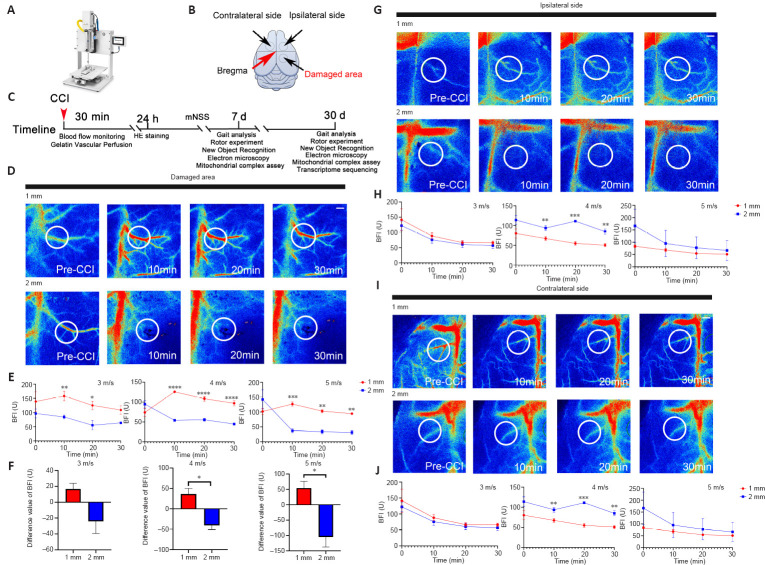
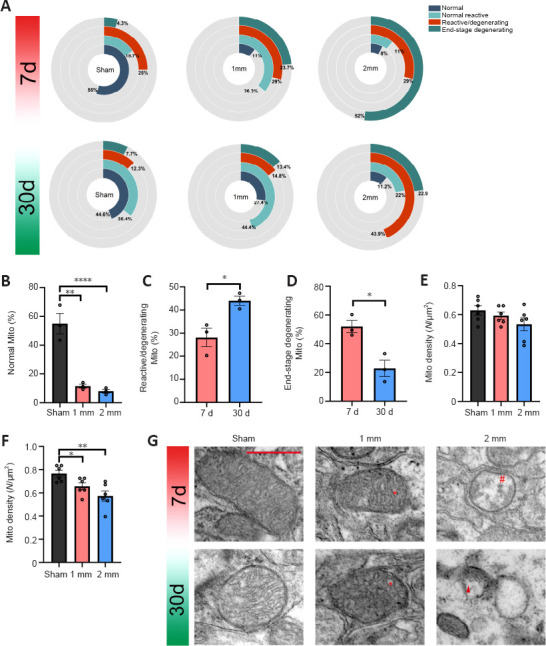
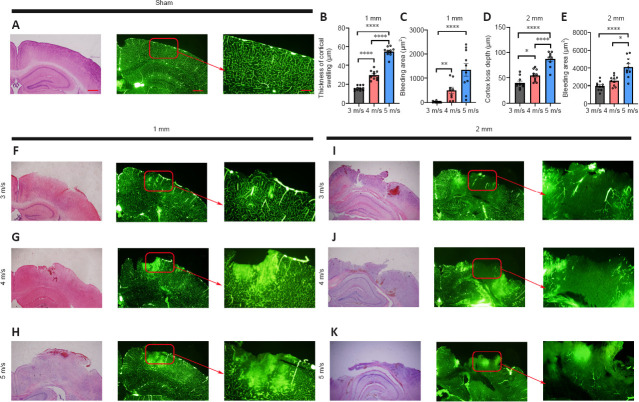
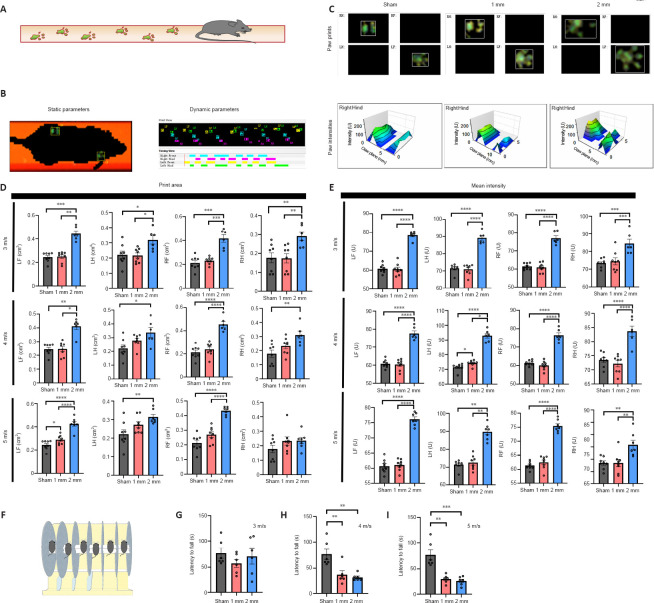
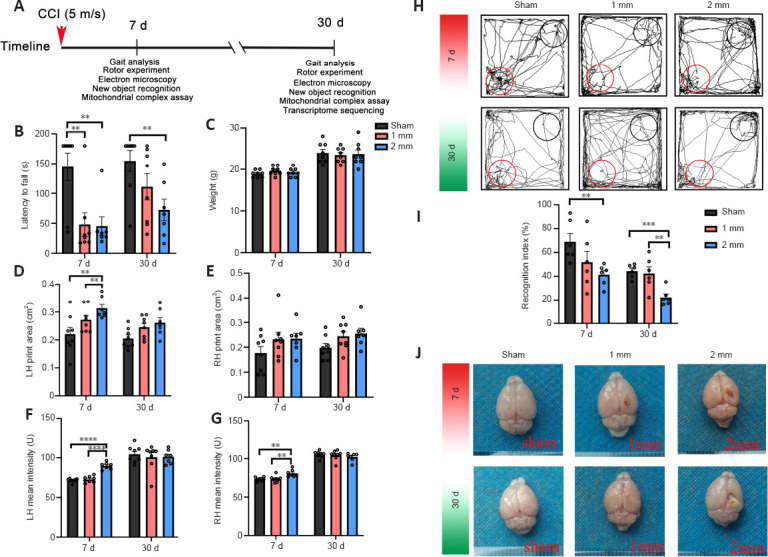
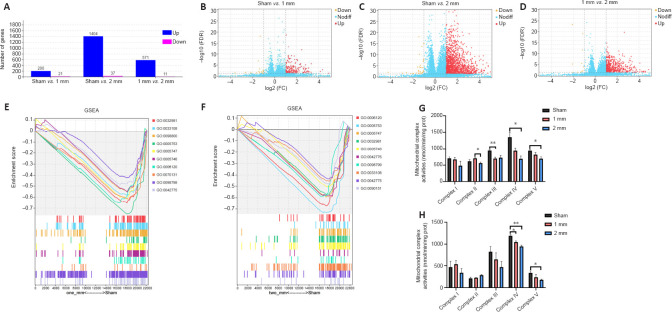
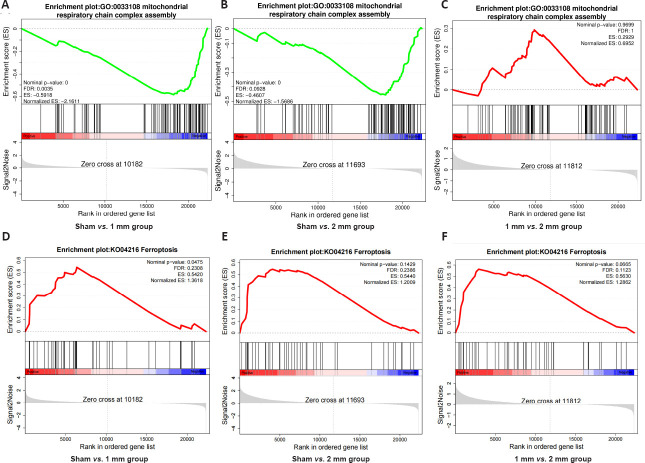
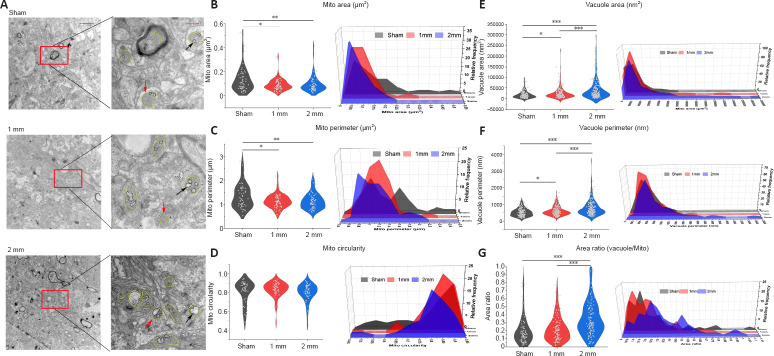
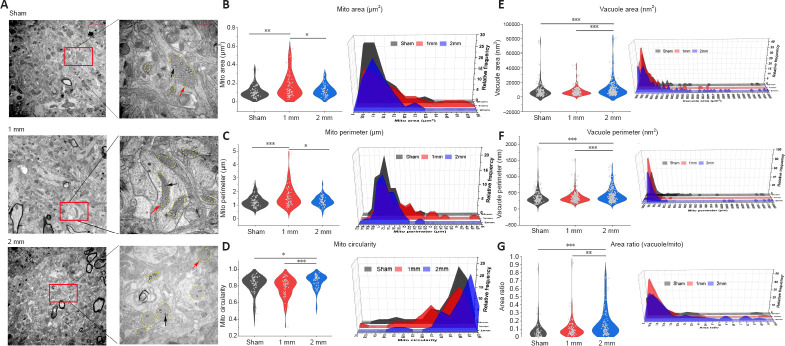
Controlled cortical impingement is a widely accepted method to induce traumatic brain injury to establish a traumatic brain injury animal model. A strike depth of 1 mm at a certain speed is recommended for a moderate brain injury and a depth of > 2 mm is used to induce severe brain injury. However, the different effects and underlying mechanisms of these two model types have not been proven. This study investigated the changes in cerebral blood flow, differences in the degree of cortical damage, and differences in motor function under different injury parameters of 1 and 2 mm at injury speeds of 3, 4, and 5 m/s. We also explored the functional changes and mitochondrial damage between the 1 and 2 mm groups in the acute (7 days) and chronic phases (30 days). The results showed that the cerebral blood flow in the injured area of the 1 mm group was significantly increased, and swelling and bulging of brain tissue, increased vascular permeability, and large-scale exudation occurred. In the 2 mm group, the main pathological changes were decreased cerebral blood flow, brain tissue loss, and cerebral vasospasm occlusion in the injured area. Substantial motor and cognitive impairments were found on day 7 after injury in the 2 mm group; at 30 days after injury, the motor function of the 2 mm group mice recovered significantly while cognitive impairment persisted. Transcriptome sequencing showed that compared with the 1 mm group, the 2 mm group expressed more ferroptosis-related genes. Morphological changes of mitochondria in the two groups on days 7 and 30 using transmission electron microscopy revealed that on day 7, the mitochondria in both groups shrank and the vacuoles became larger; on day 30, the mitochondria in the 1 mm group became larger, and the vacuoles in the 2 mm group remained enlarged. By analyzing the proportion of mitochondrial subgroups in different groups, we found that the model mice had different patterns of mitochondrial composition at different time periods, suggesting that the difference in the degree of damage among traumatic brain injury groups may reflect the mitochondrial changes. Taken together, differences in mitochondrial morphology and function between the 1 and 2 mm groups provide a new direction for the accurate classification of traumatic brain injury. Our results provide reliable data support and evaluation methods for promoting the establishment of standard mouse controlled cortical impingement model guidelines.
控制性皮质撞击是一种广泛接受的诱导创伤性脑损伤以建立创伤性脑损伤动物模型的方法。对于中度脑损伤,建议以一定速度撞击深度为1毫米,而撞击深度>2毫米则用于诱导重度脑损伤。然而,这两种模型类型的不同影响及潜在机制尚未得到证实。本研究调查了在3、4和5米/秒的损伤速度下,1毫米和2毫米不同损伤参数时脑血流量的变化、皮质损伤程度的差异以及运动功能的差异。我们还探究了急性(7天)和慢性期(30天)1毫米和2毫米组之间的功能变化和线粒体损伤。结果显示,1毫米组损伤区域的脑血流量显著增加,脑组织出现肿胀和膨出,血管通透性增加以及大量渗出。在2毫米组中,主要病理变化为损伤区域脑血流量减少、脑组织缺失以及脑血管痉挛闭塞。在损伤后第7天,2毫米组发现明显的运动和认知障碍;在损伤后30天,2毫米组小鼠的运动功能显著恢复,而认知障碍持续存在。转录组测序显示,与1毫米组相比,2毫米组表达更多铁死亡相关基因。使用透射电子显微镜观察两组在第7天和第30天的线粒体形态变化,结果显示在第7天,两组线粒体均萎缩且空泡变大;在第30天,1毫米组线粒体变大,而2毫米组空泡仍扩大。通过分析不同组中线粒体亚群的比例,我们发现模型小鼠在不同时间段具有不同的线粒体组成模式,这表明创伤性脑损伤组之间损伤程度的差异可能反映了线粒体变化。综上所述,1毫米和2毫米组之间线粒体形态和功能的差异为创伤性脑损伤的准确分类提供了新方向。我们的结果为促进标准小鼠控制性皮质撞击模型指南的建立提供了可靠的数据支持和评估方法。