Department of Orthopaedics, Orthopaedic Research Institute, West China Hospital, Sichuan University, No. 37 Guoxue Road, Chengdu, 610041, Sichuan, China.
Department of Operating Room, West China Hospital, Sichuan University, Chengdu, China.
J Orthop Surg Res. 2023 Apr 14;18(1):301. doi: 10.1186/s13018-023-03790-w.
To investigate whether adding magnesium sulfate to a periarticular infiltration analgesia (PIA) cocktail could improve pain control and functional outcomes in patients undergoing total knee arthroplasty (TKA).
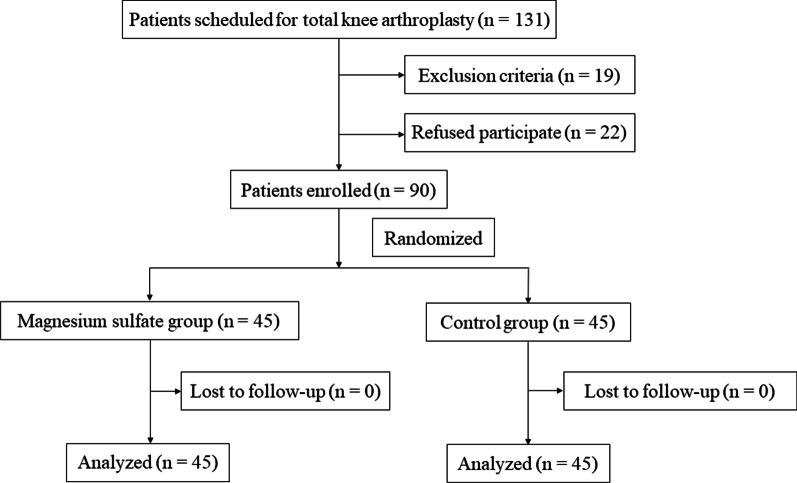
Ninety patients were randomly assigned to the magnesium sulfate and control groups, with 45 patients in each group. In the magnesium sulfate group, patients were given a periarticular infusion of a cocktail of analgesics consisting of epinephrine, ropivacaine, magnesium sulfate, and dexamethasone. The control group received no magnesium sulfate. The primary outcomes consisted of visual analogue scale (VAS) pain scores, postoperative morphine hydrochloride consumption for rescue analgesia, and time to first rescue analgesia. Secondary outcomes were postoperative inflammatory biomarkers (IL-6 and CRP), postoperative length of stay, and knee functional recovery (assessed by knee range of motion, quadriceps strength, daily mobilization distance, and time to first straight-leg raising). Tertiary outcomes included the postoperative swelling ratio and complication rates.
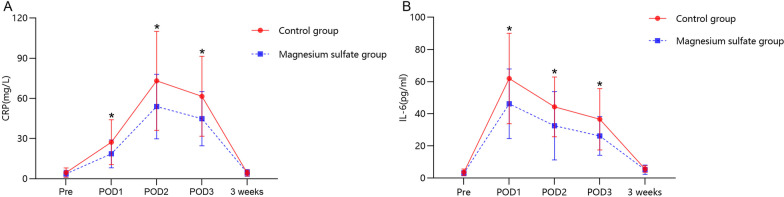
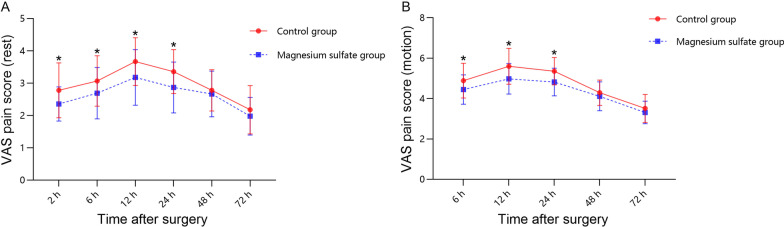
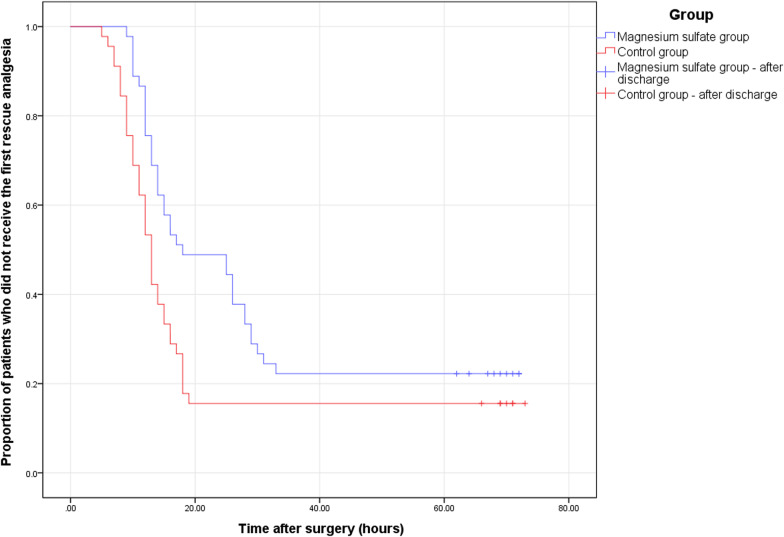
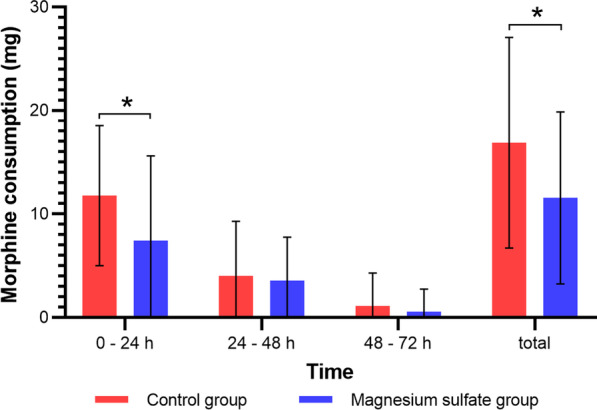
Within 24 h of surgery, patients in the magnesium sulfate group had markedly lower VAS pain scores during motion and at rest. After the addition of magnesium sulfate, the analgesic effect was dramatically prolonged, leading to a reduction in morphine dosage within 24 h and the total morphine dosage postoperatively. Postoperative inflammatory biomarker levels were significantly reduced in the magnesium sulfate group compared with the control. There were no considerable differences between the groups in terms of the postoperative length of stay and knee functional recovery. Both groups had similar postoperative swelling ratios and incidences of complications.
The addition of magnesium sulfate to the analgesic cocktail for PIA can prolong postoperative analgesia, decrease the consumption of opioids, and effectively alleviate early postoperative pain after TKA.
Chinese Clinical Trial Registry, ChiCTR2200056549. Registered on 7 February 2022, https://www.chictr.org.cn/showproj.aspx?proj=151489 .
研究在关节周围浸润镇痛(PIA)鸡尾酒中添加硫酸镁是否可以改善全膝关节置换术(TKA)患者的疼痛控制和功能结果。
90 名患者被随机分为硫酸镁组和对照组,每组 45 名患者。在硫酸镁组,患者接受含有肾上腺素、罗哌卡因、硫酸镁和地塞米松的镇痛剂关节周围输注。对照组未给予硫酸镁。主要结局包括视觉模拟评分(VAS)疼痛评分、术后盐酸吗啡消耗量用于解救性镇痛以及首次解救性镇痛时间。次要结局为术后炎症生物标志物(IL-6 和 CRP)、术后住院时间和膝关节功能恢复(通过膝关节活动范围、股四头肌力量、每日活动距离和首次直腿抬高时间评估)。三级结局包括术后肿胀比和并发症发生率。
术后 24 小时内,硫酸镁组患者在运动和休息时的 VAS 疼痛评分明显较低。加入硫酸镁后,镇痛效果显著延长,导致 24 小时内吗啡用量减少,术后总吗啡用量减少。与对照组相比,硫酸镁组术后炎症生物标志物水平显著降低。两组在术后住院时间和膝关节功能恢复方面无显著差异。两组的术后肿胀比和并发症发生率相似。
在 PIA 的镇痛鸡尾酒中添加硫酸镁可以延长术后镇痛时间,减少阿片类药物的消耗,并有效缓解 TKA 后早期的术后疼痛。
中国临床试验注册中心,ChiCTR2200056549。注册于 2022 年 2 月 7 日,https://www.chictr.org.cn/showproj.aspx?proj=151489。