Department of Psychology and Neuroscience, University of North Carolina at Chapel Hill, Chapel Hill, North Carolina.
Department of Psychology and Neuroscience, University of North Carolina at Chapel Hill, Chapel Hill, North Carolina; Mental Health Risk and Resilience Research Program, RTI International, Research Triangle Park, North Carolina.
Biol Psychiatry Cogn Neurosci Neuroimaging. 2024 Jan;9(1):30-40. doi: 10.1016/j.bpsc.2023.03.012. Epub 2023 Apr 14.
Recent research has aimed to characterize processes underlying general liability toward psychopathology, termed the p factor. Given previous research linking the p factor with difficulties in both executive functioning and affective regulation, the present study investigated nonaffective and positive affective inhibition in the context of a sustained attention/inhibition paradigm in adolescents exhibiting mild to severe psychopathology.
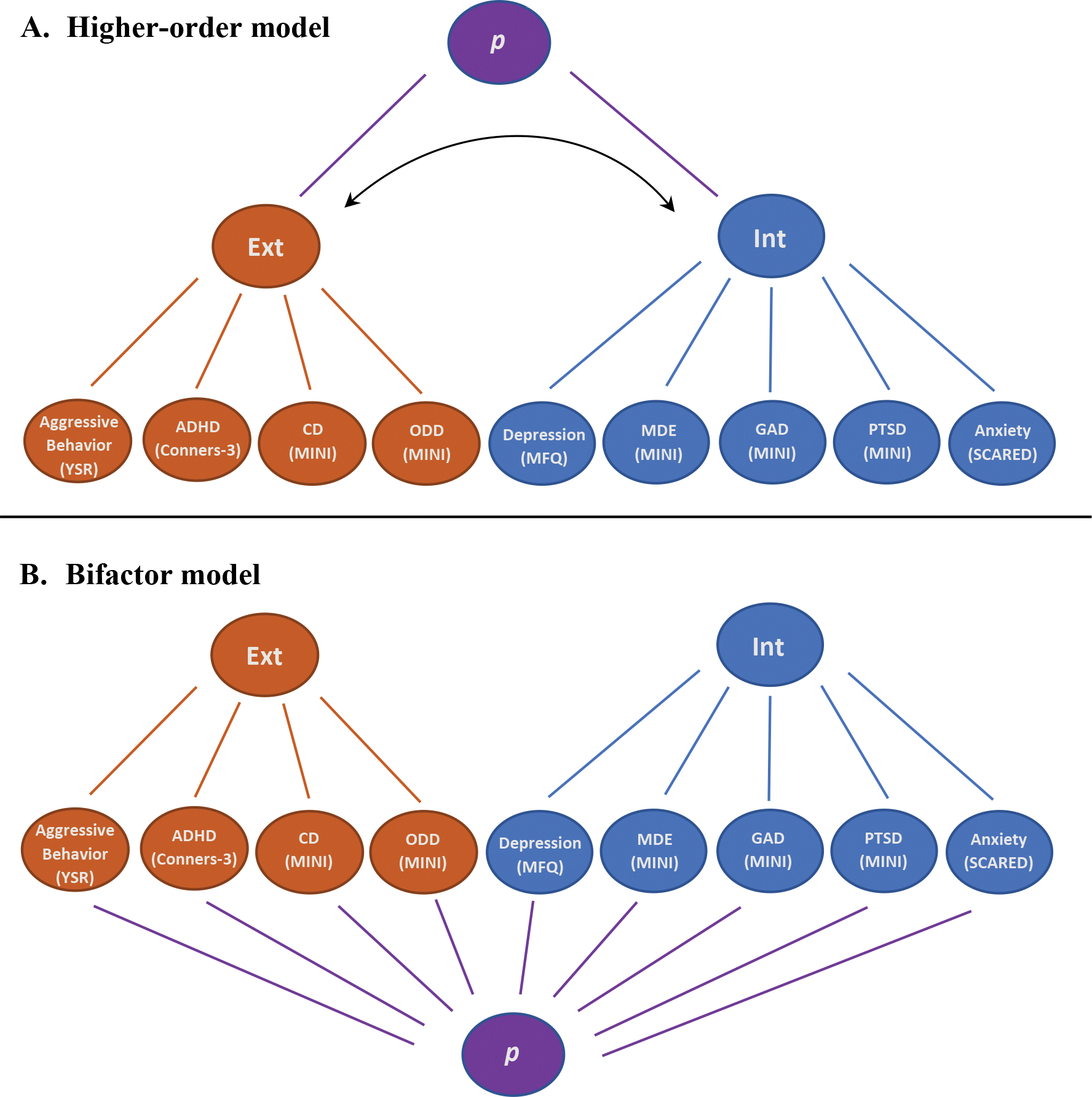
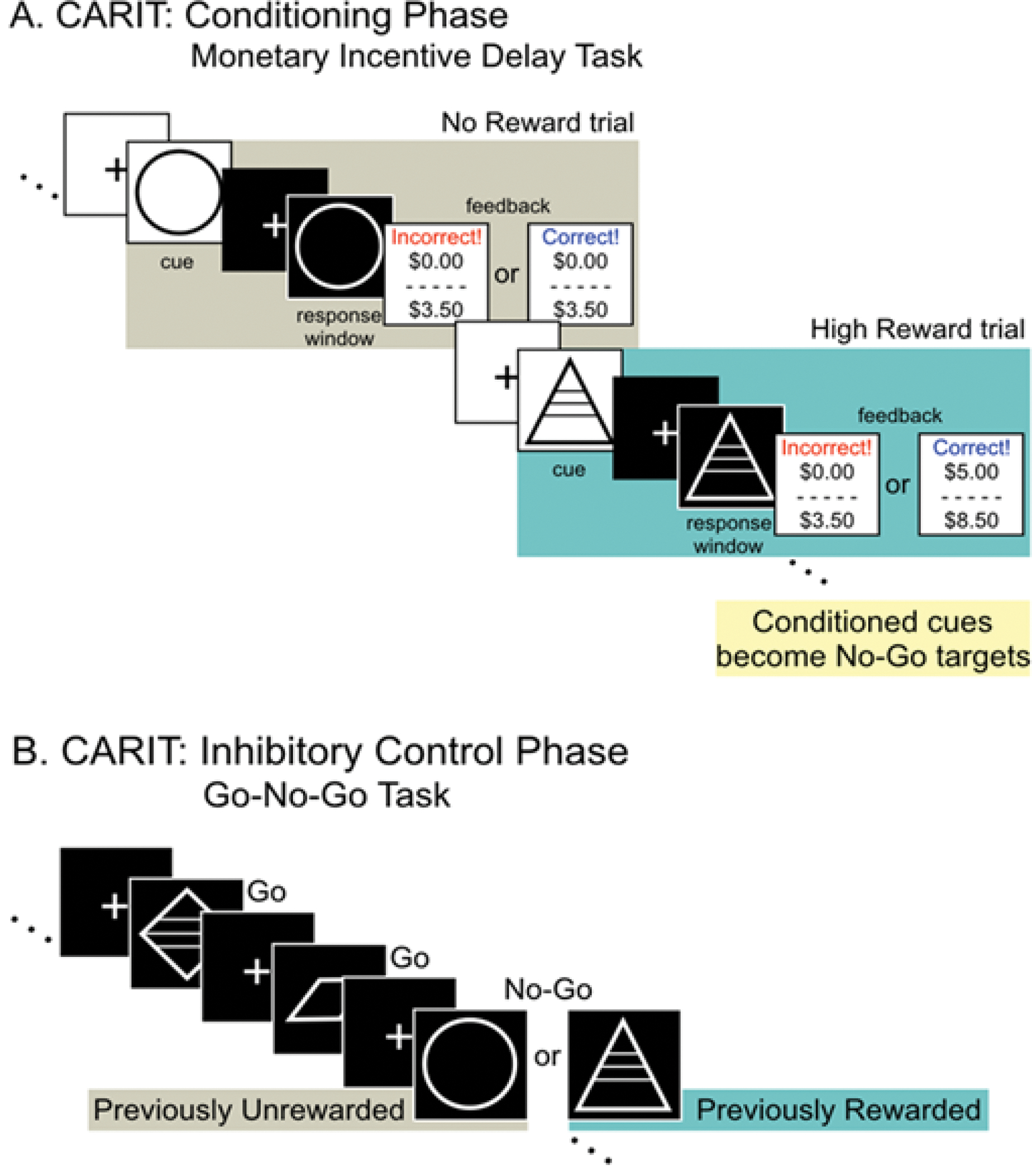
Functional magnetic resonance imaging data were collected during an integrated reward conditioning and go/no-go task in 138 adolescents assigned female at birth. We modeled the p factor using hierarchical confirmatory factor analysis. Positive affective inhibition was measured by examining responses to no-go stimuli with a history of reward conditioning. We examined associations between p factor scores and neural function and behavioral performance.
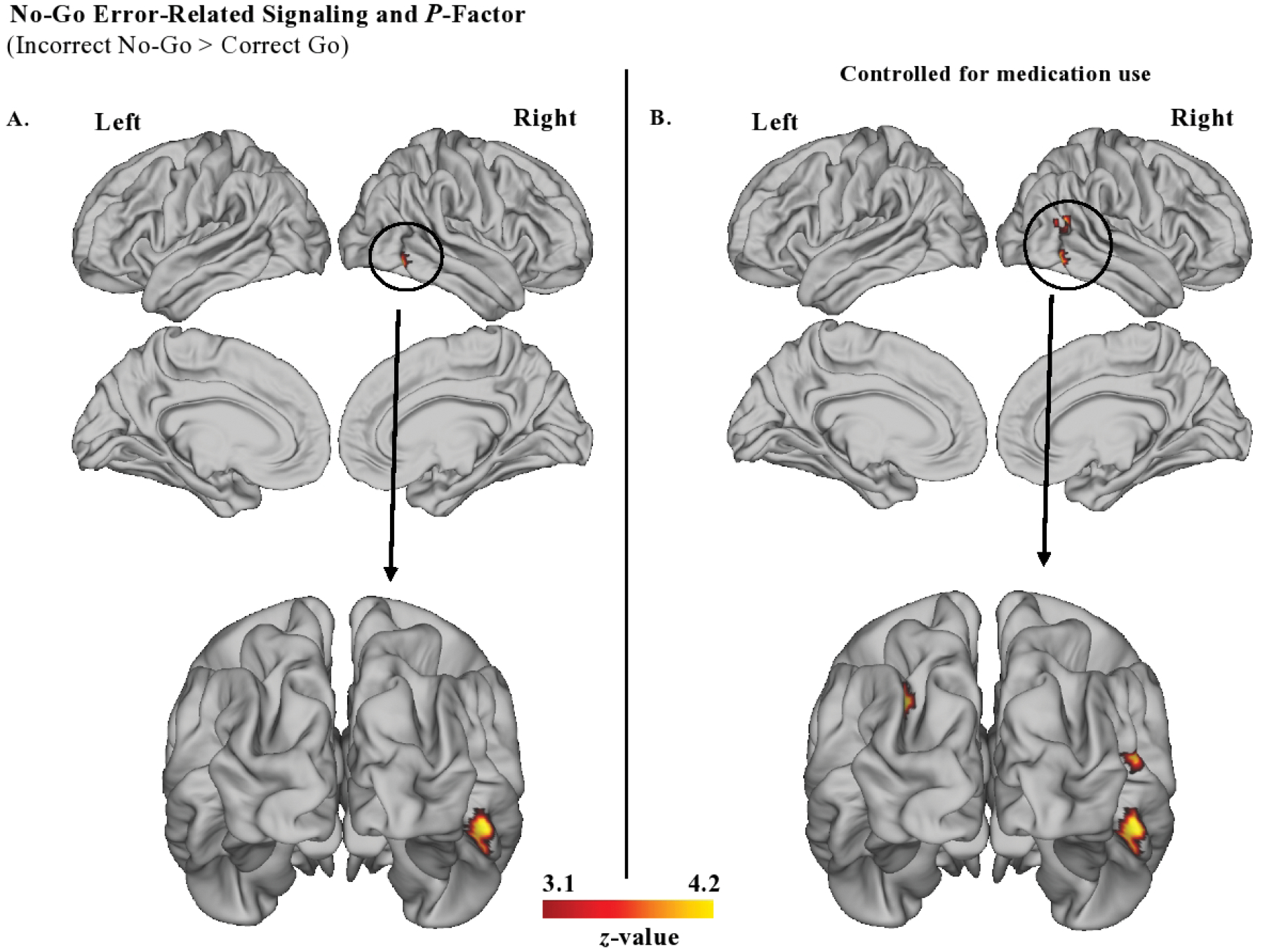
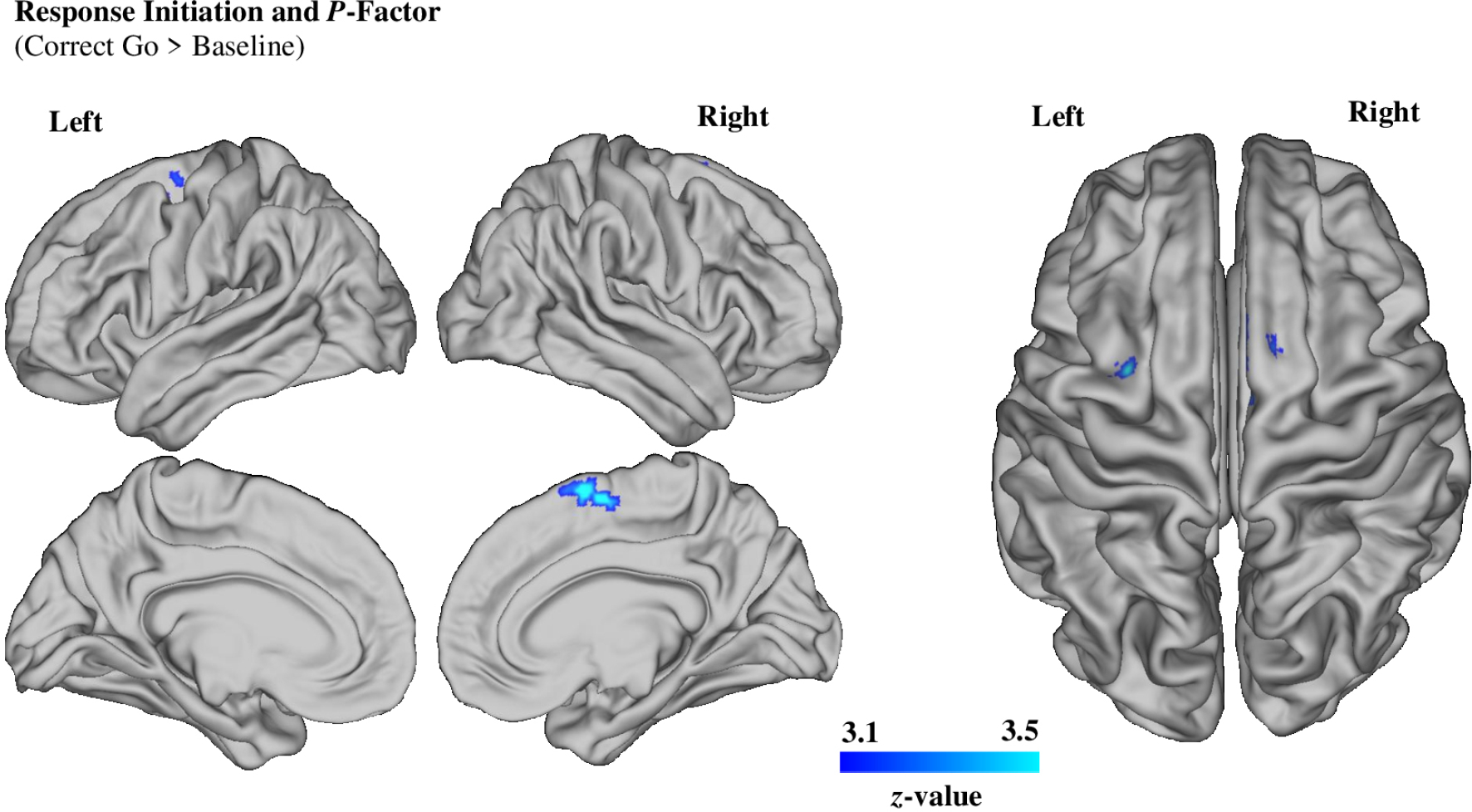
Consistent with nonaffective executive function as a primary risk factor, p factor scores were associated with worse behavioral performance and hypoactivation in the left superior frontal gyrus and middle frontal gyrus during response initiation (go trials). The p factor scores were additionally associated with increased error-related signaling in the temporal cortex during incorrect no-go trials.
During adolescence, a period characterized by heightened risk for emergent psychopathology, we observed unique associations between p factor scores and neural and behavioral indices of response initiation, which relies primarily on sustained attention. These findings suggest that shared variation in mental disorder categories is characterized in part by sustained attention deficits. While we did not find evidence that the p factor was associated with inhibition in this study, this observation is consistent with our hypothesis that the p factor would be related to nonaffective control processes.
最近的研究旨在描述普遍存在于精神病理学中的责任过程,称为 p 因素。鉴于先前的研究将 p 因素与执行功能和情感调节方面的困难联系起来,本研究在患有轻度至重度精神病理学的青少年中,在持续注意力/抑制范式的背景下,研究了非情感和积极情感抑制。
在 138 名女性出生的青少年中进行了综合奖励条件作用和 Go/No-Go 任务的功能磁共振成像数据采集。我们使用分层验证性因素分析来构建 p 因素模型。通过检查具有奖励条件作用历史的 No-Go 刺激的反应来测量积极情感抑制。我们研究了 p 因素得分与神经功能和行为表现之间的关联。
与非情感执行功能作为主要风险因素一致,p 因素得分与行为表现较差以及左额上回和额中回在反应启动(Go 试验)期间的低激活有关。p 因素得分还与在错误的 No-Go 试验期间颞叶皮层中与错误相关的信号增加有关。
在青少年时期,是精神病理学出现风险较高的时期,我们观察到 p 因素得分与反应启动的神经和行为指标之间存在独特的关联,这主要依赖于持续注意力。这些发现表明,精神障碍类别的共同变化部分由持续注意力缺陷所决定。虽然我们在这项研究中没有发现 p 因素与抑制有关的证据,但这一观察结果与我们的假设一致,即 p 因素与非情感控制过程有关。