Qin Aizhi, Aluko Oluwaseun Olayemi, Liu Zhixin, Yang Jincheng, Hu Mengke, Guan Liping, Sun Xuwu
State Key Laboratory of Crop Stress Adaptation and Improvement, State Key Laboratory of Cotton Biology, Key Laboratory of Plant Stress Biology, School of Life Sciences, Henan University, Kaifeng, China.
Front Plant Sci. 2023 Mar 29;14:1136636. doi: 10.3389/fpls.2023.1136636. eCollection 2023.
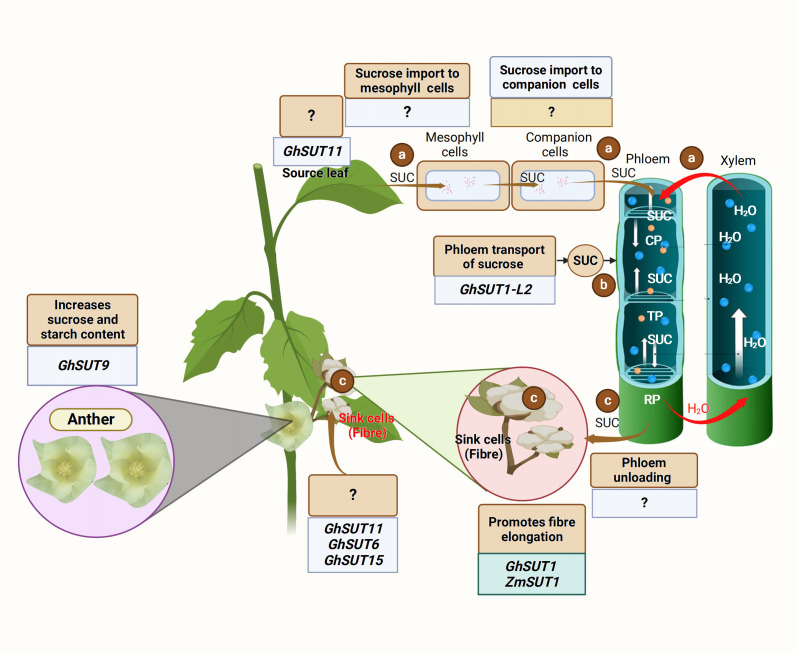
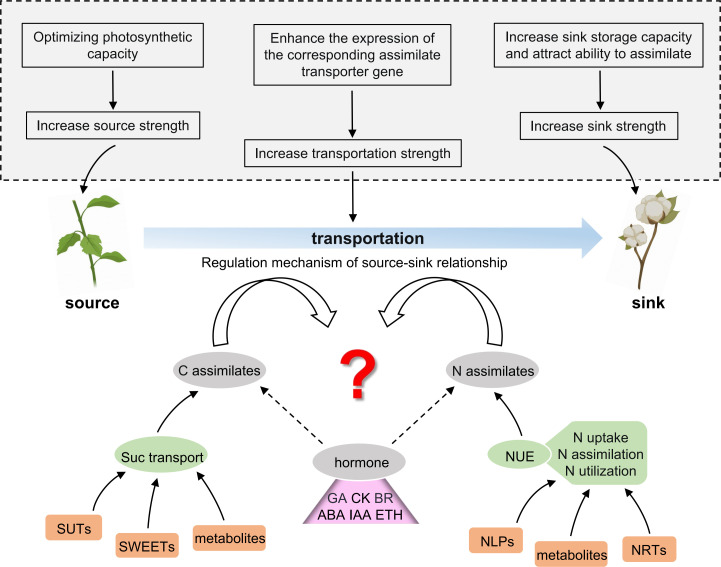
Cotton is one of the major cash crops globally. It is characterized by determinate growth and multiple fruiting, which makes the source-sink contradiction more obvious. Coordination between source and sink is crucial for normal growth, yield, and quality of cotton. Numerous studies reported how the assimilate transport and distribution under varying environmental cues affected crop yields. However, less is known about the functional mechanism underlying the assimilate transport between source and sink, and how their distribution impacts cotton growth. Here, we provided an overview of the assimilate transport and distribution mechanisms , and discussed the regulatory mechanisms involved in source-sink balance in relation to cotton yield. Therefore, this review enriched our knowledge of the regulatory mechanism involved in source-sink relationship for improved cotton yield.
棉花是全球主要的经济作物之一。其生长具有有限生长和多次结果的特点,这使得源库矛盾更加明显。源库之间的协调对于棉花的正常生长、产量和品质至关重要。众多研究报道了在不同环境条件下同化物的运输和分配如何影响作物产量。然而,关于源库之间同化物运输的功能机制以及它们的分配如何影响棉花生长,我们了解得较少。在此,我们概述了同化物的运输和分配机制,并讨论了与棉花产量相关的源库平衡调控机制。因此,本综述丰富了我们对源库关系调控机制的认识,有助于提高棉花产量。