Hamazaki S, Okada S, Ebina Y, Fujioka M, Midorikawa O
Am J Pathol. 1986 May;123(2):343-50.
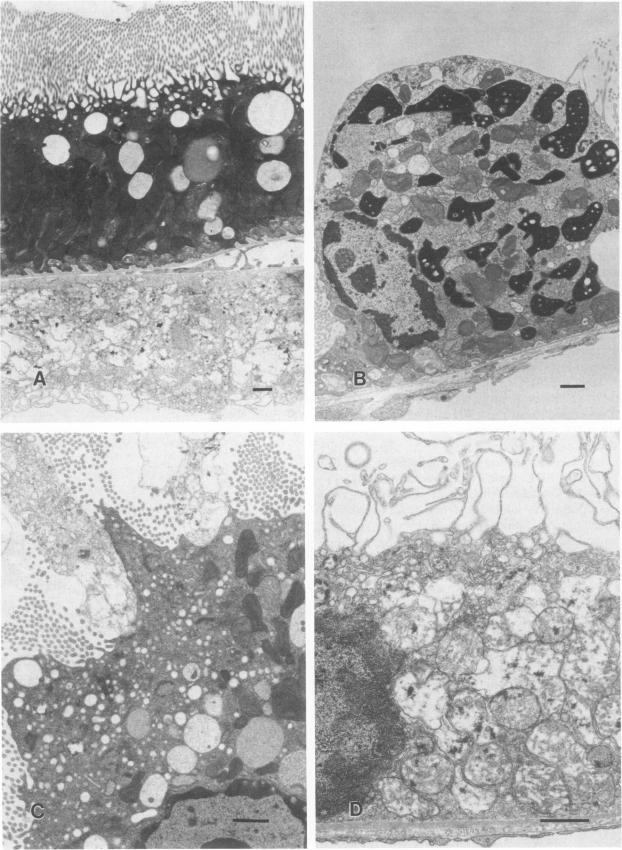
Repeated intraperitoneal injections of ferric nitrilotriacetate (Fe-NTA) induce nephrotoxic features such as proximal tubular necrosis and renal failure, an unexpected phenomenon for a ferric compound. The mechanism of Fe-NTA toxicity was investigated by electron microscopy and respiration studies of renal cortical mitochondria in rats. Four hours after a single intraperitoneal injection of Fe-NTA, 5 mg iron/kg body wt, loss of microvilli, increased number of cytoplasmic vacuoles, electron-dense cytoplasmic deposits, mitochondrial swelling, karyorrhexis, and rupture of cytoplasmic membrane were observed in proximal tubular epithelia. At 24 hours, an increased number of cells had become necrotic. Polarographic studies of mitochondria from renal cortex 4 hours after Fe-NTA treatment showed a significant decrease in State 3 respiration and DNP-uncoupled respiration, whereas little change was observed in State 4 respiration and ADP/O.
反复腹腔注射次氮基三乙酸铁(Fe-NTA)会诱发肾毒性特征,如近端肾小管坏死和肾衰竭,这对于一种铁化合物来说是意想不到的现象。通过电子显微镜和对大鼠肾皮质线粒体的呼吸研究来探究Fe-NTA毒性的机制。单次腹腔注射5毫克铁/千克体重的Fe-NTA 4小时后,在近端肾小管上皮细胞中观察到微绒毛丧失、细胞质空泡数量增加、电子致密的细胞质沉积物、线粒体肿胀、核碎裂以及细胞质膜破裂。24小时时,坏死细胞数量增加。对Fe-NTA处理4小时后的肾皮质线粒体进行极谱研究显示,状态3呼吸和二硝基苯酚(DNP)解偶联呼吸显著降低,而状态4呼吸和ADP/O几乎没有变化。