Gu Yeqing, Dong Jun, Li Jing, Luo Qianmin, Dong Xianlan, Tang Guowen, Zhang Jiaxiang, Du Xuan, Pu Qiqi, He Lin, Zhao Kaiwei, Han Diangang, Xin Jige
College of Veterinary Medicine, Yunnan Agricultural University, Kunming, China.
Animal Quarantine Laboratory, Technology Center of Kunming Customs, Kunming, China.
Front Vet Sci. 2023 Mar 30;10:1121082. doi: 10.3389/fvets.2023.1121082. eCollection 2023.
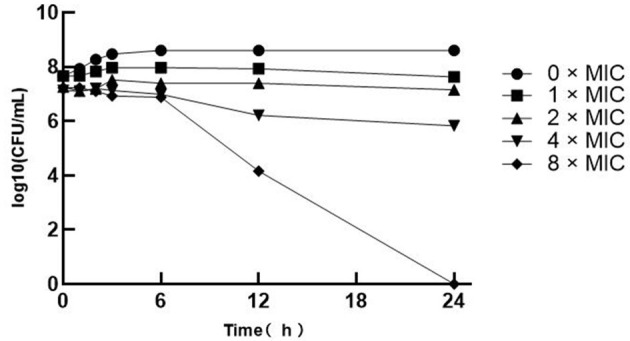
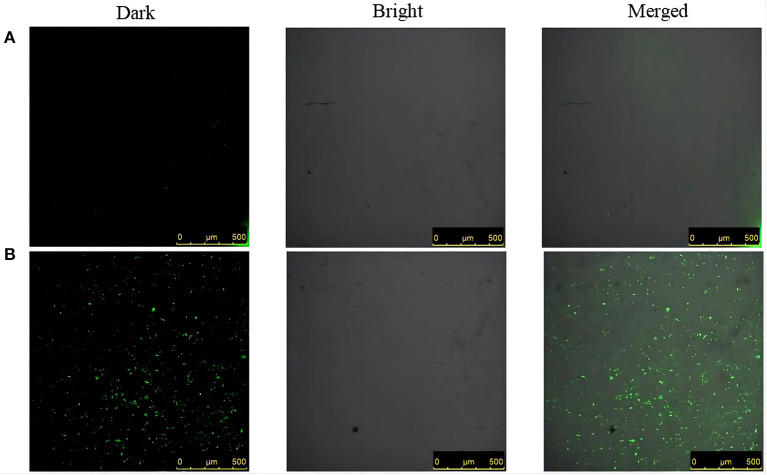
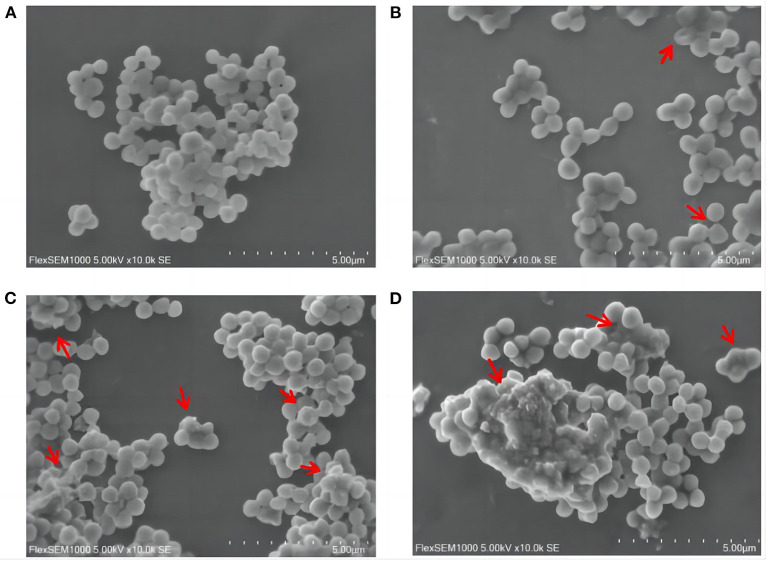
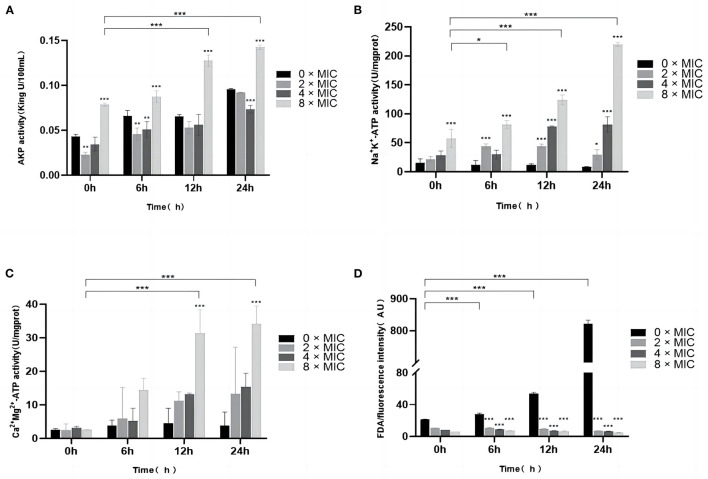
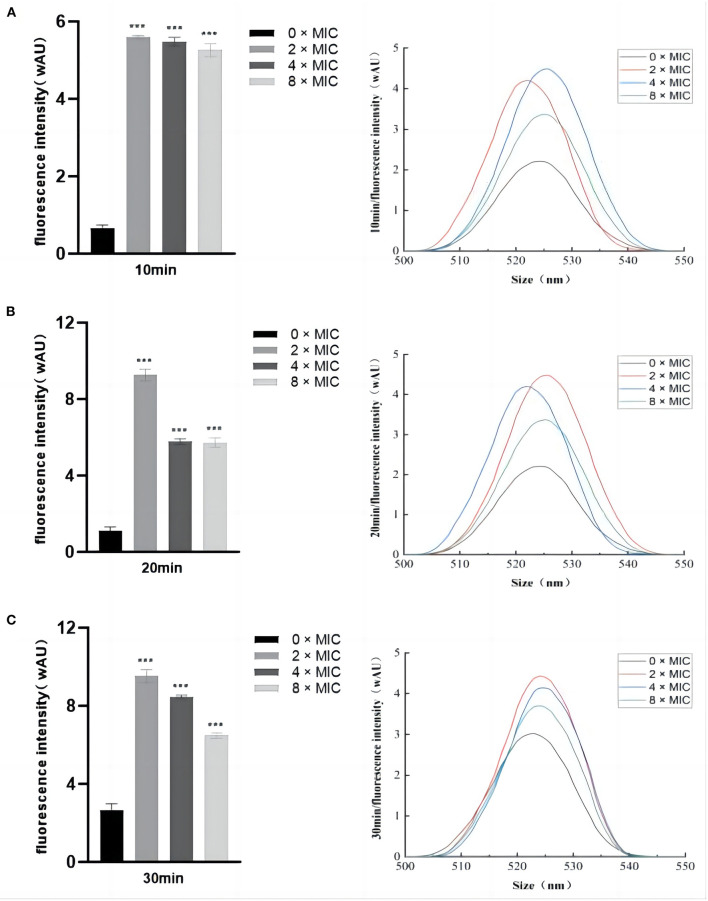
() is representative of gram-positive bacteria. Sanguinarine chloride hydrate (SGCH) is the hydrochloride form of sanguinarine (SG), one of the main extracts of Macleaya cordata (M. cordata). There are few reports on its antibacterial mechanism against . Therefore, in this study, we investigated the antibacterial activity and mechanism of SGCH against . The inhibitory zone, minimum inhibitory concentration (MIC), and minimum bactericidal concentration (MBC) were measured, and the bactericidal activity curve was plotted. In addition, the micromorphology, alkaline phosphatase (AKP) activity, NaK, CaMg-adenosine triphosphate (ATP) activity, intracellular reactive oxygen species (ROS), and fluorescein diacetate (FDA) were observed and detected. The results showed that the inhibitory zone of SGCH against was judged as medium-sensitive; the MIC and MBC were 128 and 256 μg/mL, respectively; in the bactericidal activity curve, SGCH with 8 × MIC could completely kill within 24 h. SGCH was able to interfere with the integrity and permeability of the cell wall and membrane, as confirmed by the scanning electron microscopy (SEM) images, the increase in extracellular AKP and Na K, Ca Mg-ATP activities as well as the fluorescein diacetate (FDA) staining experiment results. Moreover, a high concentration of SGCH could induce to produce large amounts of ROS. In summary, these findings revealed that SGCH has a preferable antibacterial effect on , providing an experimental and theoretical basis for using SG as an antibiotic substitute in animal husbandry and for the clinical control and treatment of diseases caused by .
()代表革兰氏阳性菌。氯化血根碱水合物(SGCH)是血根碱(SG)的盐酸盐形式,血根碱是博落回(Macleaya cordata)的主要提取物之一。关于其对()的抗菌机制的报道很少。因此,在本研究中,我们研究了SGCH对()的抗菌活性和机制。测量了抑菌圈、最低抑菌浓度(MIC)和最低杀菌浓度(MBC),并绘制了杀菌活性曲线。此外,观察并检测了微观形态、碱性磷酸酶(AKP)活性、钠钾、钙镁 - 三磷酸腺苷(ATP)活性、细胞内活性氧(ROS)和二乙酸荧光素(FDA)。结果表明,SGCH对()的抑菌圈判定为中度敏感;MIC和MBC分别为128和256μg/mL;在杀菌活性曲线中,8×MIC的SGCH可在24小时内完全杀死()。扫描电子显微镜(SEM)图像、细胞外AKP和钠钾、钙镁 - ATP活性的增加以及二乙酸荧光素(FDA)染色实验结果证实,SGCH能够干扰()细胞壁和细胞膜的完整性及通透性。此外,高浓度的SGCH可诱导()产生大量ROS。综上所述,这些发现表明SGCH对()具有较好的抗菌作用,为将SG用作畜牧业抗生素替代品以及临床控制和治疗由()引起的疾病提供了实验和理论依据。