Baharum Hafidza, Ismail Aniza, McKenna Lisa, Mohamed Zainah, Ibrahim Roszita, Hassan Nor Haty
Department of Community Health, Faculty of Medicine, Universiti Kebangsaan Malaysia, 56000, Kuala Lumpur, Malaysia.
School of Nursing and Midwifery, La Trobe University, Bundoora, Australia.
BMC Nurs. 2023 Apr 18;22(1):125. doi: 10.1186/s12912-023-01300-1.
Difficulties in adapting to the workplace can affect newly graduated nurses' transition. Such nurses must adapt quickly, as it can affect their future career prospects. Therefore, this review aimed to identify the success factors that promote newly graduated nurses' effective transition and adaptation.
The Joanna Briggs Institute scoping reviews methodology was used. Data were extracted from MEDLINE, Scopus, EBSCOhost, and Web of Science publications published between 2011 and 2020. A total of 23 articles were included in this review, which comprised qualitative, quantitative, and mixed methods primary research studies focusing on the contributing factors that aided newly graduated nurses' adaptation to the work environment during their transition period. Key emerging themes were identified with thematic analysis.
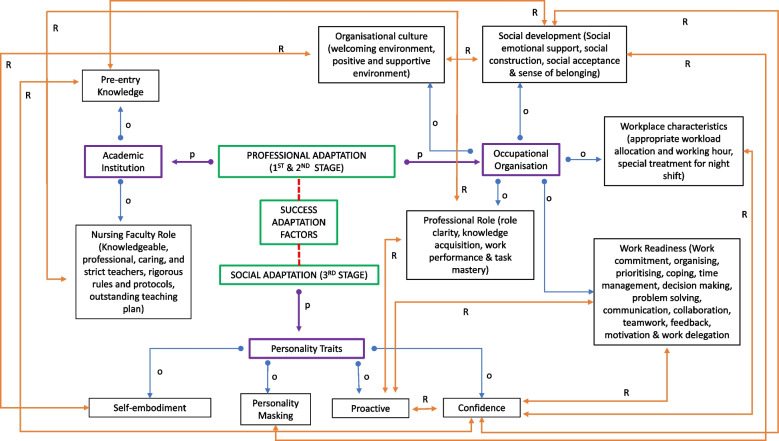
Three main themes were identified: (1) organisational contribution (social development, organisational culture, work characteristics, work readiness, work commitment, professional role), (2) personality traits (self-embodiment, personality masking, being proactive and confident), and (3) academic institutions (pre-entry knowledge and role of nursing faculty). Newly graduated nurses' adaptation should begin during nursing education, be supported by the workplace organisation, and driven by the nurse's personality. We determined that that the role of nursing education in aiding the provision of the required knowledge and actual clinical experiences to students profoundly affected developing nurses' self-confidence levels in delivering nursing care effectively. Additionally, a warm environment supported nurses emotionally and physically.
While organisations and educational institutions have undertaken numerous efforts to ensure that newly graduated nurses are adequately supported, the nurse's personality and values are also equally important to ease adaptation during the transition process. Academic and workplace programs designed for newly graduated nurses should apply and emphasise this knowledge to develop and strengthen their personalities and values, especially to increase confidence and promote proactive values that facilitate newly graduated nurses' rapid and effective adaptation to their new employment.
适应工作场所的困难会影响新毕业护士的角色转变。这类护士必须迅速适应,因为这会影响他们未来的职业前景。因此,本综述旨在确定促进新毕业护士有效转变和适应的成功因素。
采用乔安娜·布里格斯研究所的范围综述方法。数据从2011年至2020年发表的MEDLINE、Scopus、EBSCOhost和科学网出版物中提取。本综述共纳入23篇文章,包括定性、定量和混合方法的初级研究,重点关注有助于新毕业护士在过渡期适应工作环境的因素。通过主题分析确定关键的新出现主题。
确定了三个主要主题:(1)组织贡献(社会发展、组织文化、工作特征、工作准备、工作承诺、职业角色),(2)个性特质(自我体现、个性伪装、积极主动和自信),以及(3)学术机构(入学前知识和护理教师的作用)。新毕业护士的适应应在护理教育期间开始,得到工作场所组织的支持,并由护士的个性驱动。我们确定,护理教育在帮助学生获得所需知识和实际临床经验方面的作用,深刻影响了实习护士在有效提供护理时的自信心水平。此外,温暖的环境在情感和身体上支持护士。
虽然组织和教育机构已做出诸多努力,以确保新毕业护士得到充分支持,但护士的个性和价值观对于在过渡过程中缓解适应问题同样重要。为新毕业护士设计的学术和工作场所项目应应用并强调这些知识,以培养和强化他们的个性和价值观,特别是增强自信心并促进积极主动的价值观,从而有助于新毕业护士迅速有效地适应新工作。