Department of Crop Sciences, University of Illinois at Urbana-Champaign, Urbana, Illinois, 61801, USA.
Callout Biotech, Albuquerque, New Mexico, 87112, USA.
F1000Res. 2023 Mar 13;12:267. doi: 10.12688/f1000research.131522.1. eCollection 2023.
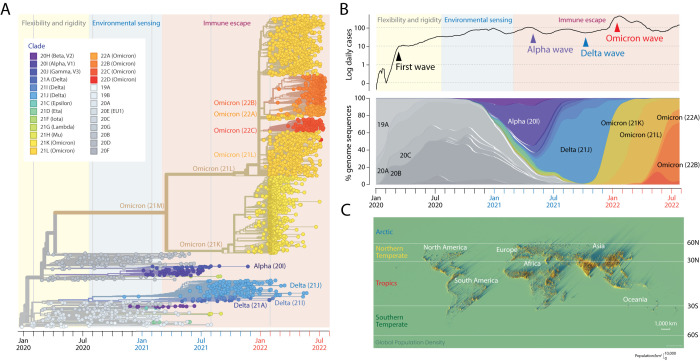
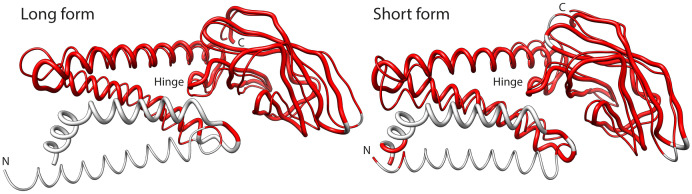
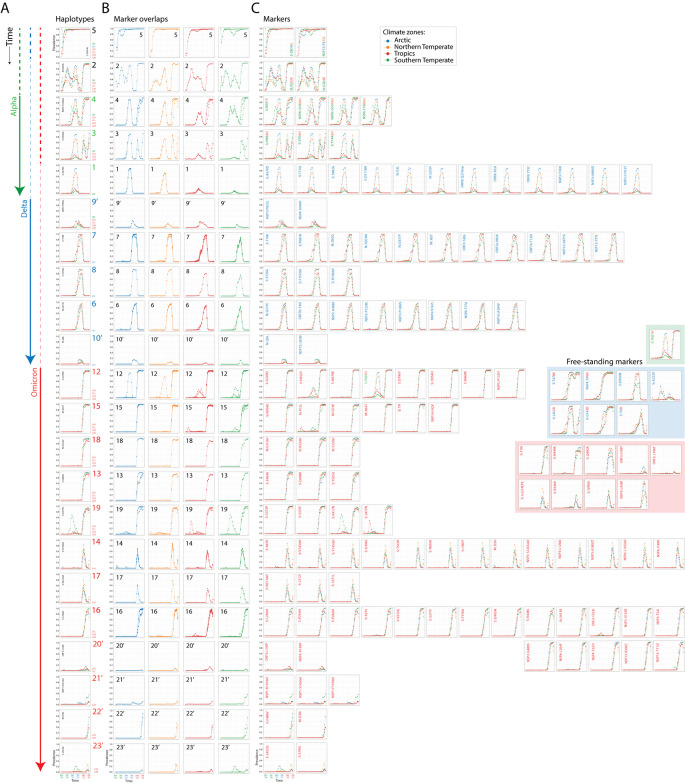
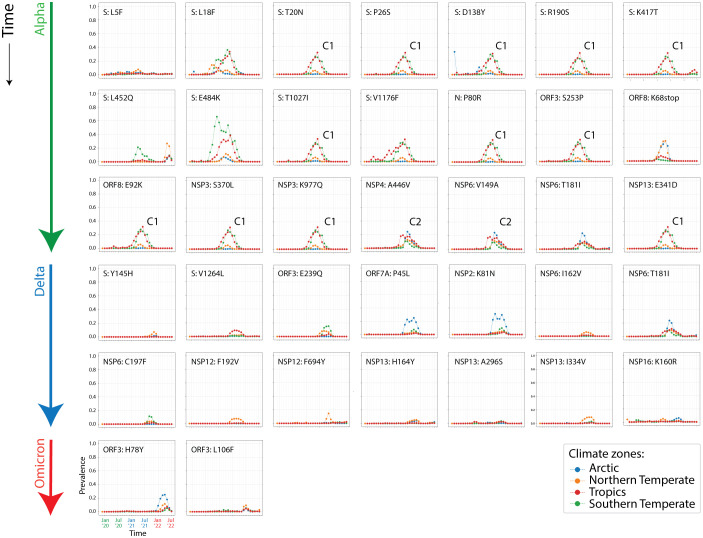
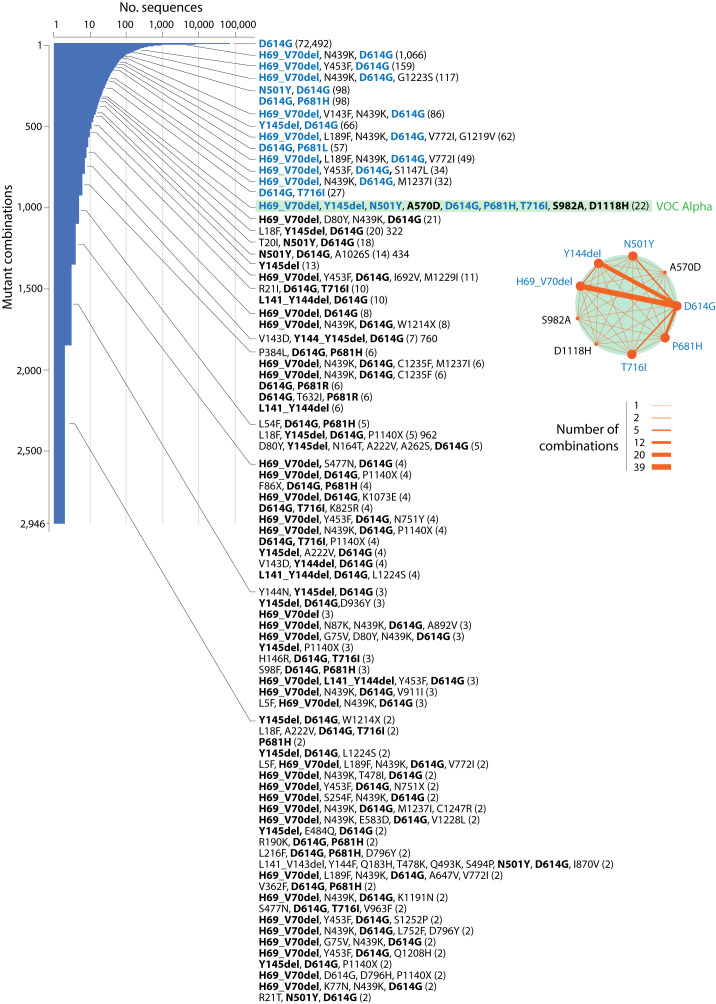
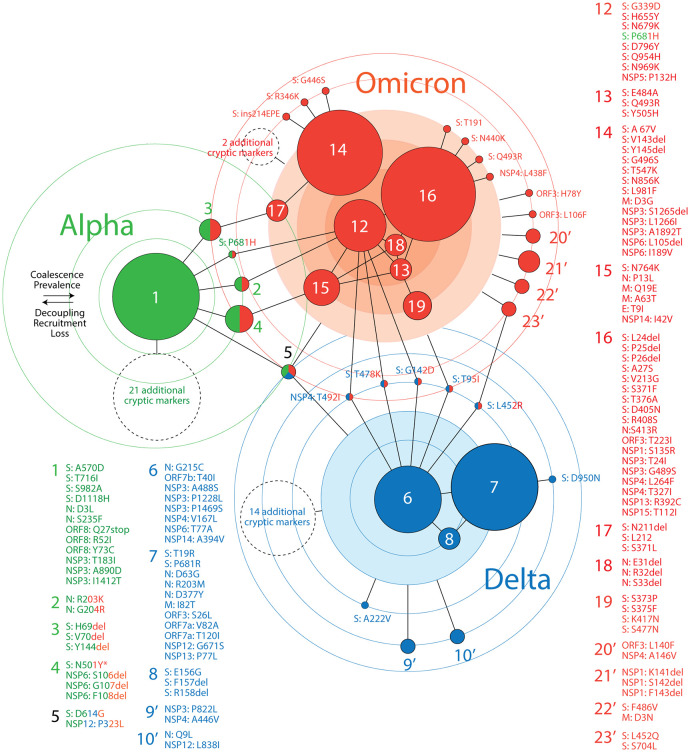
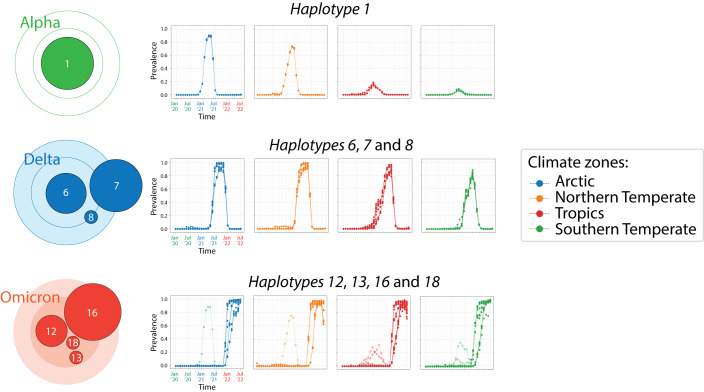
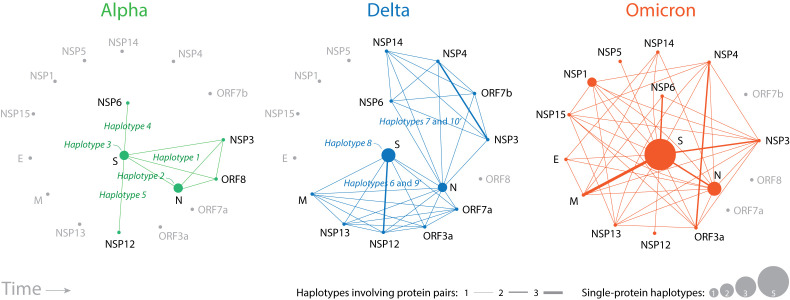
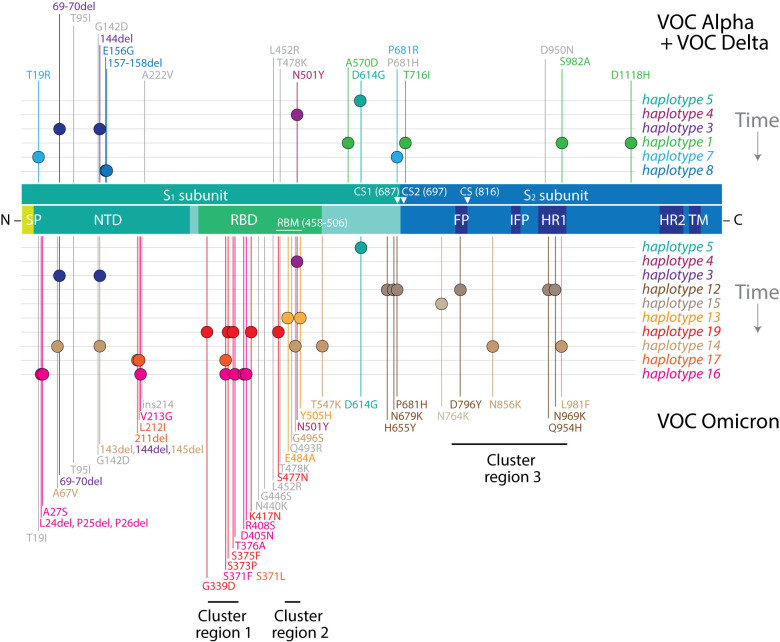
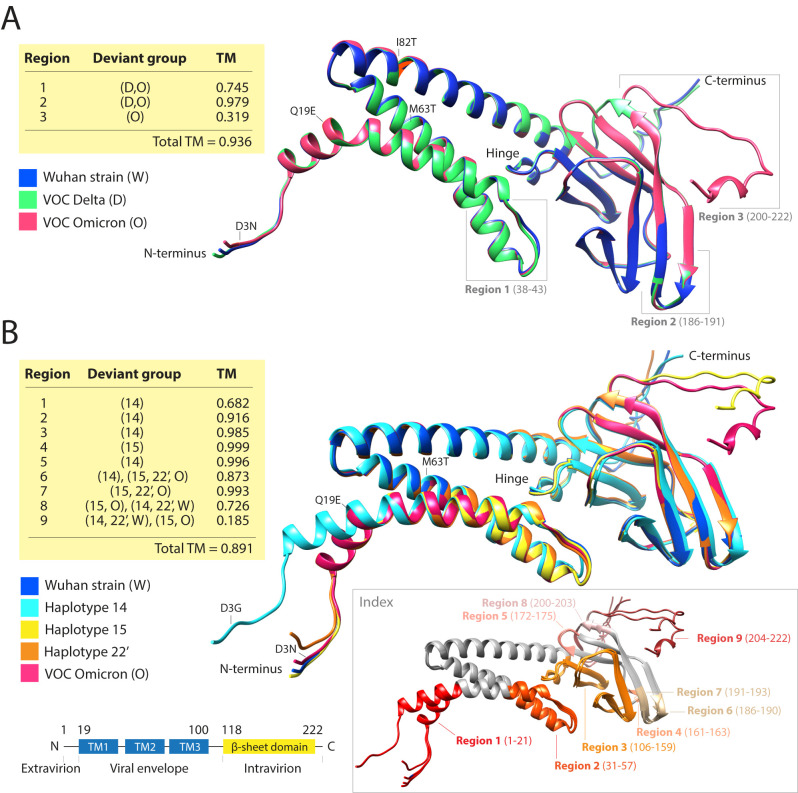
Variants of concern (VOCs) have been replacing each other during the still rampant COVID-19 pandemic. As a result, SARS-CoV-2 populations have evolved increasingly intricate constellations of mutations that often enhance transmissibility, disease severity, and other epidemiological characteristics. The origin and evolution of these constellations remain puzzling. Here we study the evolution of VOCs at the proteome level by analyzing about 12 million genomic sequences retrieved from GISAID on July 23, 2022. A total 183,276 mutations were identified and filtered with a relevancy heuristic. The prevalence of haplotypes and free-standing mutations was then tracked monthly in various latitude corridors of the world. A chronology of 22 haplotypes defined three phases driven by protein flexibility-rigidity, environmental sensing, and immune escape. A network of haplotypes illustrated the recruitment and coalescence of mutations into major VOC constellations and seasonal effects of decoupling and loss. Protein interaction networks mediated by haplotypes predicted communications impacting the structure and function of proteins, showing the increasingly central role of molecular interactions involving the spike (S), nucleocapsid (N), and membrane (M) proteins. Haplotype markers either affected fusogenic regions while spreading along the sequence of the S-protein or clustered around binding domains. Modeling of protein structure with AlphaFold2 showed that VOC Omicron and one of its haplotypes were major contributors to the distortion of the M-protein endodomain, which behaves as a receptor of other structural proteins during virion assembly. Remarkably, VOC constellations acted cooperatively to balance the more extreme effects of individual haplotypes. Our study uncovers seasonal patterns of emergence and diversification occurring amid a highly dynamic evolutionary landscape of bursts and waves. The mapping of genetically-linked mutations to structures that sense environmental change with powerful modeling tools demonstrates the potential of deep-learning for COVID-19 predictive intelligence and therapeutic intervention.
在 COVID-19 大流行仍在肆虐之际,关注变种(VOCs)一直在相互取代。结果,SARS-CoV-2 种群进化出越来越复杂的突变组合,这些突变往往增强了传染性、疾病严重程度和其他流行病学特征。这些组合的起源和进化仍然令人费解。
在这里,我们通过分析 2022 年 7 月 23 日从 GISAID 检索到的大约 1200 万基因组序列,研究了 VOC 在蛋白质组水平上的进化。总共鉴定并过滤了 183276 个相关性启发式突变。然后,每月在世界不同纬度走廊跟踪单倍型和独立突变的流行率。
22 个单倍型的年代表明,由蛋白质灵活性-刚性、环境感应和免疫逃逸驱动的三个阶段。单倍型网络说明了突变招募和凝聚到主要 VOC 组合以及去耦和丢失的季节性效应。由单倍型介导的蛋白质相互作用网络预测了影响蛋白质结构和功能的通讯,表明涉及刺突(S)、核衣壳(N)和膜(M)蛋白的分子相互作用的作用越来越重要。单倍型标记物要么在 S 蛋白序列中传播时影响融合区域,要么聚集在结合域周围。使用 AlphaFold2 对蛋白质结构进行建模表明,Omicron 变异株及其一个单倍型是导致 M 蛋白内域扭曲的主要原因,该内域在病毒粒子组装过程中充当其他结构蛋白的受体。值得注意的是,VOC 组合协同作用,平衡了个别单倍型更极端的影响。
我们的研究揭示了在爆发和波动的高度动态进化景观中发生的季节性出现和多样化模式。将遗传关联的突变映射到具有强大建模工具的环境变化感应结构上,证明了深度学习在 COVID-19 预测性智能和治疗干预中的潜力。